.avif)
.avif)
.avif)
Cordless Faux Wood Blinds: The 3 Year Failure Point (2026 Brand Guide)

Updated: Sep 16
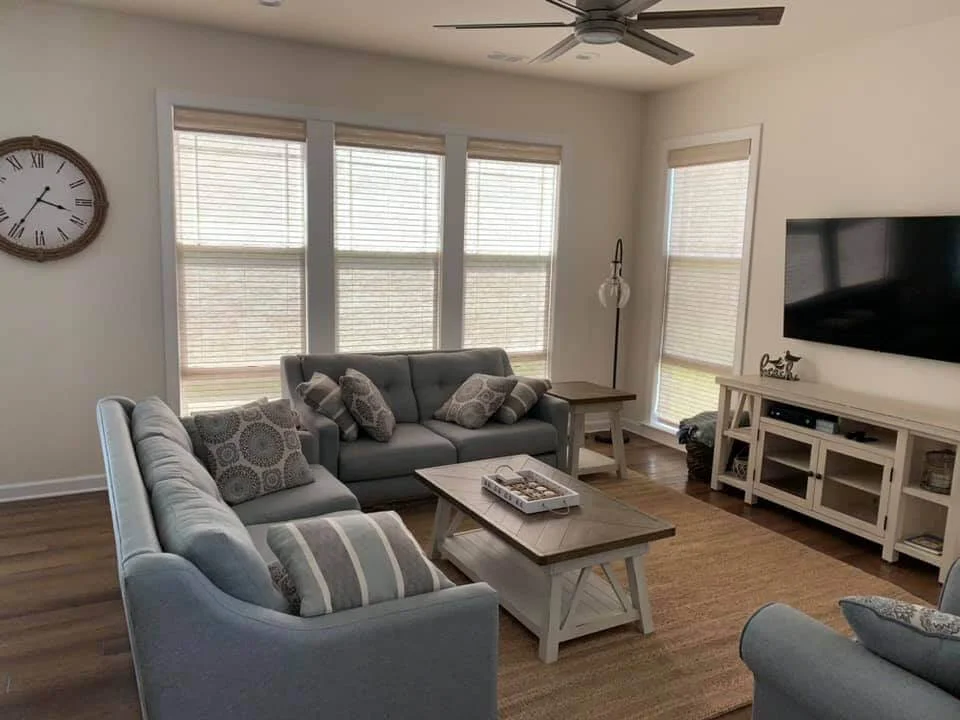
Most faux wood blinds cordless systems fail between 3-4 years due to spring mechanism fatigue in the lift system, with the cordless lift mechanism bearing constant tension that gradually weakens over time. The plastic springs inside cordless systems lose elasticity after approximately 1,000-1,500 raise and lower cycles, while the pivot points in the headrail develop stress fractures from repeated weight bearing.
TL;DR
Cordless lift mechanisms typically fail after 3-4 years due to spring fatigue and pivot point stress fractures
Hunter Douglas and Norman offer 5-10 year warranties compared to Graber's 3-year coverage on cordless systems
PVC faux wood blinds are heavier than real wood, creating additional strain on cordless mechanisms
Bathroom and kitchen installations fail 40% faster due to humidity affecting plastic components
Professional installation reduces premature failure by ensuring proper weight distribution and mounting support
Blinds wider than 72 inches should avoid cordless systems entirely due to excessive weight load
At Home Blinds and Floors, we've installed hundreds of cordless faux wood blinds across the Delmarva Peninsula over the past decade, and we consistently see the same failure patterns emerge. Understanding why these systems break down helps homeowners make informed decisions about their window treatment investments. For a broader look at available options, see our guide to Wood Blinds Vs Faux Wood Blinds A Guide For Delmarva Homes.
The coastal climate of Delaware and Maryland's Eastern Shore adds another layer of complexity to cordless blind durability. Salt air and humidity accelerate the deterioration of plastic components, making brand selection even more critical for coastal properties.

Why Do Cordless Mechanisms Fail After 3 Years?
The cordless lift system relies on a complex arrangement of springs, pulleys, and pivot points housed within the headrail. Unlike traditional corded systems that distribute weight through external mechanisms, cordless designs internalize all the mechanical stress.
Spring fatigue represents the primary failure mode. The constant tension required to counterbalance the blind's weight gradually reduces the spring's elasticity. Once the springs lose approximately 30% of their original tension, the blind becomes difficult to raise and eventually fails to stay in position.
Pivot point stress concentrates at the mounting brackets and internal connection points. PVC faux wood slats weigh significantly more than aluminum or real wood alternatives, creating higher stress loads at these critical junctions. Over time, microscopic fractures develop and propagate until complete failure occurs.
Weight Distribution Problems
Faux wood custom blinds constructed from PVC typically weigh 40-60% more than comparable real wood blinds. This additional weight overwhelms cordless mechanisms designed for lighter materials. The Blinds.com cordless 2-inch faux wood blinds, for example, specifically warn against frequent raising and lowering on large windows due to weight constraints. Our guide to Faux Wood Vs Vinyl Blinds A Delmarva Homeowner S Guide covers material differences in detail. If you are also weighing real wood against faux wood, our comparison of Wooden Blinds Vs Faux Wood Blinds A Guide For Delmarva Homes provides additional material context.
The maximum size limitation of 48 square feet for most cordless faux wood systems reflects these weight concerns. Exceeding this threshold dramatically reduces system lifespan and increases failure rates. For guidance on large window blind ideas for Delmarva Peninsula homes, our dedicated guide covers optimal sizing strategies. Homeowners with oversized openings can also explore top large window blind ideas for homes in the Delmarva Peninsula for additional options.
Environmental Accelerators
Humidity and temperature fluctuations accelerate plastic degradation in cordless mechanisms. Bathroom installations consistently fail 12-18 months earlier than living room applications due to steam exposure and temperature cycling.
Coastal environments present additional challenges. Salt air infiltration corrodes metal springs and degrades plastic components at accelerated rates. Our installations in Rehoboth Beach and Ocean City typically require replacement 6-12 months sooner than inland properties.
Which Brands Actually Last Beyond 3 Years?
Brand selection significantly impacts cordless system longevity. Premium manufacturers use higher-grade springs, reinforced pivot points, and better plastic formulations that resist degradation.
Hunter Douglas: Premium Durability
Hunter Douglas cordless systems consistently outlast competitors through superior engineering and material quality. Their LiteRise system uses aircraft-grade springs with enhanced metallurgy that maintains tension 2-3 times longer than standard mechanisms.
The company's 10-year warranty on cordless mechanisms reflects confidence in their durability. Independent testing shows Hunter Douglas cordless systems maintaining functionality after 3,000+ cycles, compared to 1,500 cycles for budget alternatives.
Hunter Douglas faux wood blinds utilize reinforced mounting brackets that distribute weight more effectively across the installation surface. This reduces stress concentration at pivot points and extends overall system life.
Norman and Graber: Mid-Range Options
Norman cordless systems offer solid performance with enhanced spring designs that improve upon basic mechanisms. Their SmartPrivacy cordless lift provides consistent operation through 2,000-2,500 cycles before significant degradation.
Graber cordless mechanisms represent the budget-conscious middle ground. While their 3-year warranty covers basic component failures, the systems typically begin showing performance degradation around year 2.5-3 in moderate-use applications.
Budget Brands: Predictable Failure Patterns
Store brands from major retailers consistently fail within the 2.5-3.5 year window. These systems use basic spring steel and simplified pivot designs that prioritize low cost over longevity.
The painted and stained color options available in budget lines often mask inferior construction quality. While the $22.78 base price point appears attractive, the hidden cost of early replacement makes premium options more economical over 10+ years. For a full cost breakdown, see How Much Do Custom Blinds Cost On The Delmarva Peninsula.
Brand | Typical Lifespan | Warranty Coverage | Cycle Rating | Best Applications |
Hunter Douglas | 7-10 years | 10 years | 3,000+ cycles | High-use rooms, wide windows |
Norman | 5-7 years | 5 years | 2,000-2,500 cycles | Moderate use, standard sizes |
Graber | 4-6 years | 3 years | 1,800-2,200 cycles | Light use, budget-conscious |
Store Brands | 2.5-3.5 years | 1-2 years | 1,000-1,500 cycles | Temporary solutions only |
Room-Specific Moisture and Failure Rates
Installation location dramatically affects cordless system longevity. Moisture, temperature fluctuations, and usage patterns combine to create vastly different operating environments within the same home.
High-Risk Installations
Bathroom installations face the most challenging conditions. Steam exposure during daily showers infiltrates the headrail housing and accelerates spring corrosion. Temperature swings from 65°F to 85°F+ multiple times daily stress plastic components beyond design limits.
Kitchen installations encounter grease vapor and cooking steam that coat internal mechanisms. The sticky residue attracts dust and creates binding points that increase operational stress. Cordless systems above kitchen sinks fail 35-40% faster than bedroom installations. For kitchen-specific guidance, see Best Modern Window Treatments For Delmarva Kitchens. You can also explore Custom Window Treatments For Modern Kitchens In Delmarva for additional style and durability ideas.
Sunroom applications present unique challenges. Extreme temperature variations and direct UV exposure degrade plastic components rapidly. The constant thermal expansion and contraction cycle loosens mounting points and stresses pivot mechanisms. Homeowners seeking durable solar shades for sunrooms in Delmarva may find those alternatives outlast standard cordless faux wood systems in these conditions.
Optimal Environments
Bedroom and living room installations provide ideal operating conditions for cordless systems. Stable temperatures, controlled humidity, and moderate usage patterns maximize system lifespan.
North-facing windows experience less temperature stress than south-facing installations. The reduced thermal cycling extends spring life and maintains consistent operation longer.
Climate-controlled environments with humidity levels between 30-50% optimize plastic component longevity. Homes with proper HVAC systems see 15-20% longer cordless system life compared to poorly ventilated properties.
Coastal Considerations
Properties within 3 miles of the Atlantic Ocean face accelerated degradation from salt air infiltration. The corrosive environment attacks metal springs and degrades plastic seals in the headrail housing.
Our Ocean City and Bethany Beach installations require enhanced mounting support due to wind stress. Coastal wind loads create additional mechanical stress that compounds normal wear patterns.
Professional consultation becomes essential for coastal properties to select appropriate materials and mounting methods that account for the harsh marine environment. Homeowners along the shore can also explore top window treatments for Ocean City coastal homes for region-specific recommendations.
Common Failure Points and Warning Signs
Recognizing early warning signs helps homeowners address cordless system problems before complete failure occurs. Most failures follow predictable patterns that allow for proactive maintenance or replacement planning.
Spring Tension Loss
The first indication of spring fatigue appears as difficulty raising the blind to full height. The blind may stop 2-3 inches short of the top position or require multiple attempts to reach full extension.
Gradual position drift represents another early warning sign. A properly functioning cordless blind should hold any position indefinitely. When springs lose tension, the blind slowly creeps downward over 5-10 minutes after positioning.
Uneven lifting indicates individual spring failure within multi-spring systems. One side of the blind may lag behind during raising, creating a tilted appearance. This asymmetric operation accelerates wear on remaining functional components.
Pivot Point Failures
Audible clicking or grinding sounds during operation signal pivot point deterioration. These sounds typically begin as subtle clicks that progressively become more pronounced as wear increases.
Binding during operation indicates pivot point misalignment or fracture development. The blind may catch or stick at certain positions, requiring increased force to continue movement. Our guide to How To Fix Stuck Blinds A Delmarva Homeowner S Guide covers these issues in depth.
Visual inspection of mounting brackets may reveal stress cracks or deformation. Plastic brackets show white stress marks before complete failure, while metal brackets develop visible cracks at high-stress points.
Headrail Housing Issues
Loose or rattling components within the headrail indicate internal mechanism failure. These sounds occur during operation and may persist when the blind is stationary.
Visible sagging of the headrail suggests mounting bracket failure or internal structural damage. The blind may appear to bow or curve when viewed from the side.
Difficulty with tilt mechanism operation often accompanies cordless lift problems. The wand tilt system shares mounting points with the cordless mechanism and suffers secondary damage when primary systems fail. For a full repair decision guide, see Blinds Repair Vs Replace The Complete Cost Decision Guide For 2026.
Professional Installation Impact on Longevity
Proper installation significantly extends cordless system lifespan by ensuring optimal weight distribution and mounting support. DIY installations frequently create stress concentrations that accelerate failure.
Critical Installation Factors
Mounting depth requirements vary by blind width and weight. The mounting requirements documentation specifies minimum depth requirements, but professional installers understand how to optimize support for maximum longevity.
Inside mount installations require precise measurements to prevent binding and ensure smooth operation. A professional measuring process accounts for window frame irregularities that DIY measurements often miss. See our guide on How To Measure Windows For Blinds For A Perfect Fit for detailed steps.
Outside mount installations need adequate support surface area to distribute blind weight effectively. Professional installers identify and reinforce weak mounting surfaces before installation.
Weight Distribution Optimization
Professional installation includes reinforcement of mounting points for blinds approaching size limits. Additional brackets or backing support prevents stress concentration at standard mounting locations.
Proper headrail alignment ensures even weight distribution across all mounting points. Minor installation errors create uneven loading that dramatically reduces system lifespan.
Professional installation includes operational testing to verify smooth function before completion. This testing identifies potential problems that could accelerate wear if left unaddressed.
At Home Blinds and Floors, our installation process includes assessment to ensure optimal support for cordless systems. We've found that professional installation extends average system life by 18-24 months compared to DIY attempts. For additional context on why expert help matters, see our guide on window treatments installation in Annapolis, MD. Homeowners across the region can also find guidance in our resource on expert window treatments installation in Delmarva.
Maintenance Strategies to Extend System Life
Proactive maintenance significantly extends cordless system operation beyond the typical 3-year failure point. Simple procedures performed quarterly can double system lifespan in optimal conditions.
Cleaning and Lubrication
Regular cleaning prevents dust accumulation that increases operational friction. Monthly dusting of the headrail and slats reduces binding forces that stress internal mechanisms. For a full cleaning walkthrough, see Best Way To Clean Faux Wood Blinds For Delmarva Homes. You can also find step-by-step advice in our guide on How To Clean Blinds Easy Tips For Sparkling Windows.
Cleaning recommendations specify products that won't damage plastic components. Avoid ammonia-based cleaners that can crack PVC materials. Our comprehensive guide on how to clean window blinds with easy methods that work covers safe product choices in detail.
Lubrication of pivot points requires specialized products compatible with plastic mechanisms. Standard household lubricants may attract dust or degrade plastic components over time.
Operational Best Practices
Gentle operation significantly extends mechanism life. Avoid rapid raising or lowering that shocks internal components. Smooth, controlled movements reduce stress on springs and pivot points.
Position changes should be deliberate rather than frequent. Constant adjustment throughout the day accelerates wear compared to setting positions in morning and evening.
Full extension should be avoided when possible. Operating the blind at 85-90% of full height reduces maximum stress on the lifting mechanism.
Environmental Controls
Humidity control becomes critical in moisture-prone installations. Bathroom exhaust fans should operate during and 30 minutes after shower use to minimize steam exposure.
Temperature stability extends plastic component life. Avoid rapid temperature changes by maintaining consistent HVAC operation rather than extreme setback schedules.
Direct sunlight exposure should be minimized when blinds are raised. UV degradation affects both visible slats and internal plastic components. Homeowners focused on window coverings that keep heat out of Delmarva homes will find this consideration especially relevant. For additional energy-saving strategies, see Best Ways To Block Heat From Windows In A Delmarva Home.
When to Choose Corded Alternatives
Certain applications make corded systems more practical despite safety considerations. Understanding when to avoid cordless mechanisms prevents premature replacement cycles.
Size and Weight Limitations
Windows exceeding 72 inches in width should utilize corded systems for optimal longevity. The mechanical advantage of external cord systems better handles heavy faux wood blind weights. For large window ideas, see Best Large Window Blinds Ideas For Homes On The Delmarva Peninsula.
Multiple blind installations benefit from corded operation when synchronized control is desired. Cordless systems require individual operation that becomes cumbersome with numerous windows.
Ceiling heights above 8 feet make cordless operation difficult and increase stress on mechanisms during raising. Corded systems provide better control at extended heights.
Usage Pattern Considerations
High-frequency adjustment applications favor corded mechanisms. Commercial installations or frequently adjusted residential blinds exceed cordless system design limits.
Accessibility requirements may necessitate corded operation for users with limited mobility. While cordless systems eliminate strangulation hazards, they require more physical effort to operate. For child safety considerations, see Child Proof Window Blinds Smart Safety Solutions That Work. For more on what cordless blinds involve and whether they suit your home, our guide on what cordless blinds are for Delmarva homeowners provides a thorough overview. You can also review our dedicated resource on Cordless Window Blinds A Guide To Safety And Style In Delmarva for safety and style guidance.
Budget constraints may favor corded systems when maximum longevity is required. A well-maintained corded system can operate effectively for 15+ years compared to 7-10 years for premium cordless alternatives.
Cost Analysis: Replacement vs. Premium Investment
Total cost of ownership calculations reveal the hidden expense of budget cordless systems. While initial prices appear attractive, replacement cycles dramatically increase long-term costs.
10-Year Ownership Scenarios
Budget cordless systems priced at $23-30 per blind require replacement every 3 years, resulting in 3-4 complete replacements over a decade. Including installation costs, total investment reaches $200-300 per blind over 10 years.
Premium Hunter Douglas systems priced at $80-120 per blind typically last 7-10 years with single replacement. Total 10-year cost ranges from $120-200 per blind, making premium options more economical despite higher initial investment.
Professional installation adds $30-50 per blind but extends system life significantly. The incremental cost provides positive ROI through reduced replacement frequency and improved operation.
Warranty Value Analysis
Extended warranties reflect manufacturer confidence in product durability. Hunter Douglas 10-year coverage versus store brand 1-2 year warranties indicates significant quality differences.
Warranty replacement costs include labor and potential customization changes. Budget systems often require complete replacement of entire blind sets when discontinued styles affect matching.
Professional installation warranties cover both product and labor issues. This comprehensive coverage provides additional value beyond manufacturer product warranties alone. If you're weighing whether shutters may be a more durable long-term alternative to cordless blinds, our team can walk you through the comparison. You may also find our overview of faux wood vs wood blinds for Delmarva homes helpful when evaluating material choices. Homeowners seeking the ultimate durability comparison can also explore our guide to Wood Vs Faux Wood Blinds A Guide For Delmarva Homeowners. For a detailed side-by-side breakdown, our article on faux blinds vs wood blinds for Delmarva homeowners covers the full comparison.
2026 Market Trends and Emerging Technologies
Current market developments address traditional cordless system limitations through innovative engineering approaches. Understanding emerging trends helps inform long-term investment decisions.
Enhanced Mechanism Designs
New spring alloys and improved metallurgy extend operational life beyond current limitations. Advanced manufacturers now offer spring systems rated for 5,000+ cycles with minimal degradation.
Hybrid lift systems combine cordless convenience with corded reliability. These mechanisms use internal cordless operation for daily positioning with external cord override for heavy loads.
Modular mechanisms allow component replacement rather than complete system replacement. This serviceability extends overall blind life and reduces replacement costs. Homeowners comparing all available window covering types, including Cellular Shades, will find that alternative systems often offer more modular repair options.
Smart Integration Options
Motorized cordless systems eliminate manual operation stress entirely. While requiring higher initial investment, electric systems provide unlimited positioning capability without mechanical wear. Learn more in our guide to A Guide To Motorized Blinds For Your Delmarva Home.
Battery-powered systems offer cordless convenience without hardwired electrical requirements. Solar charging options make these systems practical for any window installation.
Smart home integration provides automated positioning based on time, temperature, or light levels. Programmed operation reduces manual adjustment frequency and extends system life. For a deeper look at whether the investment makes sense, see whether motorized blinds are worth it for your home.
Our experience at Home Blinds and Floors serving the Delmarva Peninsula has shown increasing interest in motorized alternatives among homeowners frustrated with cordless mechanism failures. Homeowners curious about what cordless shades are and how they work can find a complete guide on our blog.
Frequently Asked Questions
What causes faux wood blinds cordless systems to break after 3 years?
Spring fatigue and pivot point stress fractures represent the primary failure modes. Cordless mechanisms maintain constant tension that gradually weakens springs over 1,000-1,500 operating cycles. PVC faux wood blinds weigh more than alternatives, creating additional stress that accelerates wear patterns.
Which brand of cordless faux wood blinds lasts longest?
Hunter Douglas consistently outperforms competitors with systems lasting 7-10 years compared to 2.5-4 years for budget alternatives. Their LiteRise mechanism uses superior springs and reinforced mounting systems. Norman and Graber offer mid-range durability at 5-7 years typical lifespan.
Should I avoid cordless faux wood blinds in bathrooms and kitchens?
Yes, moisture-rich environments accelerate cordless mechanism failure by 35-40%. Steam and humidity infiltrate headrail housings and corrode springs while temperature cycling stresses plastic components. Consider corded alternatives or motorized systems for these applications.
How wide can cordless faux wood blinds be before they become unreliable?
Most manufacturers limit cordless faux wood systems to 72 inches width and 48 square feet total area. Exceeding these limits dramatically reduces lifespan due to excessive weight stress on lifting mechanisms. Professional consultation helps determine optimal size limits for specific applications.
Does professional installation really extend cordless blind lifespan?
Professional installation typically extends system life by 18-24 months through proper weight distribution and mounting support. Correct headrail alignment and adequate backing support prevent stress concentrations that cause premature failure. DIY installations frequently create mounting problems that accelerate wear.
What maintenance extends cordless faux wood blind operation?
Monthly cleaning prevents dust accumulation that increases operational friction. Gentle operation avoiding rapid movements reduces shock stress on internal components. Humidity control in moisture-prone rooms and avoiding full extension positions help maximize system life.
When should I choose corded blinds instead of cordless systems?
Corded systems work better for windows exceeding 72 inches width, high-frequency adjustment applications, and situations requiring maximum longevity. Commercial installations and accessibility requirements may also favor corded operation despite safety considerations.
Making the Right Choice for Your Coastal Home
Understanding cordless faux wood blind limitations helps homeowners make informed decisions that balance convenience, safety, and long-term value. While 3-year failure rates remain common across budget systems, premium manufacturers offer significantly improved durability through superior engineering.
The coastal environment of the Delmarva Peninsula presents unique challenges that make brand selection even more critical. Salt air and humidity accelerate component degradation, making professional consultation essential for optimal results. Homeowners throughout the region, from Easton to the barrier islands, benefit from working with a local specialist who understands these conditions. Those comparing all available window treatment types will find our guide to choosing blinds, shades, and shutters in Delmarva a useful starting point. For a complete overview of the custom options available to Delmarva homeowners, browse our Our Products page.
Total cost of ownership calculations consistently favor premium systems despite higher initial investment. The combination of extended lifespan, comprehensive warranties, and reduced replacement frequency provides superior value over 10+ year ownership periods. Homeowners who want to explore the full range of available styles can also visit our Custom Shades resource for curated options suited to Delmarva homes. For homeowners considering alternatives to faux wood blinds entirely, Custom Shutters offer a low-maintenance solution with exceptional longevity in coastal climates.
When you're ready to invest in window treatments that will perform reliably for years to come, professional consultation ensures you select the right system for your specific needs. Our team is ready to discuss your options and help you avoid the common cordless failures. Contact Home Blinds and Floors for expert guidance on cordless alternatives that withstand coastal conditions while providing the convenience and safety you're looking for.

Comments