.avif)
.avif)
.avif)
Cellular Shades vs Blinds: Which Wins on Energy Savings


Cellular shades outperform regular blinds for energy savings because their honeycomb-shaped pockets trap air against the glass, creating an insulating barrier that flat blind slats cannot replicate. According to the Energy.gov cellular shades factsheet, cellular shades can save up to 20% on heating energy and 15% on total heating-and-cooling energy compared to bare windows, a margin regular blinds rarely reach.
Key Takeaways
Cellular shades reduce heat loss through windows by 40% or more when installed tightly, according to Oak Ridge National Laboratory and Department of Energy data, translating to roughly 10-24% heating energy savings depending on the study.
Pacific Northwest National Laboratory's Lab Homes testing (PNNL-24857Rev1) measured cellular shades cutting HVAC energy use by 17.6% in heating and 10.4% in cooling versus standard vinyl blinds.
Cellular shades can block up to 80% of solar heat gain in summer, while regular blinds typically block far less because their slats leave gaps for radiant heat to pass through.
Double-cell and triple-cell cellular shades add roughly R-2 to R-5 in insulating value at the window, effectively doubling the window's existing insulation in some configurations.
Regular blinds cost less upfront and offer more precise light-angle control, making them a reasonable choice for renters or short-stay situations where energy payback timelines don't matter as much.
For homes across the Delmarva Peninsula, where coastal humidity and long cooling seasons drive up HVAC bills, cellular shades typically pay for themselves within one to three years through reduced energy costs.
If you've compared window treatment options for a home in Rehoboth Beach, Salisbury, or anywhere along Delaware's Eastern Shore, you've probably run into the same question: do cellular shades actually save enough energy to justify the higher price tag over regular blinds? It's a fair question, especially in a region where summer humidity and salt air already put extra strain on HVAC systems.
At Home Blinds and Floors, we get this question in nearly every consultation where a homeowner is deciding between a budget-friendly blind and a more insulated shade option. The honest answer depends on your climate exposure, window orientation, and how long you plan to stay in the home, but the data leans firmly in one direction for most Delmarva households.
This guide breaks down what the research actually shows, how cellular shades compare to regular blinds room by room, and where the payback math works in your favor. We'll also cover the details most articles skip: how window orientation changes your savings, how single-cell versus double-cell designs perform, and how glazing type affects the numbers.
How Do Cellular Shades Compare to Regular Blinds for Energy Savings?
Cellular shades outperform regular blinds for energy savings because their accordion-style cells trap a layer of still air against the window, creating an insulating buffer that reduces heat loss in winter and heat gain in summer. Regular blinds, made of flat horizontal or vertical slats, control light angle but leave gaps that let conditioned air escape and outdoor heat radiate through. For example, Oak Ridge National Laboratory tested cellular shades in a Southeast residential home and found up to 24% heating-energy savings compared to generic venetian blinds in side-by-side rooms, as reported in an Oak Ridge National Laboratory news article on cellular shades and carbon emissions. That gap is meaningful, not marginal.
As a result, the performance difference shows up most during extreme-weather months. During Delmarva's hot, humid summers, cellular shades block up to 80% of solar heat gain according to DOE-cited figures, while blinds with open slats allow more direct solar radiation to hit interior surfaces. In winter, the trapped air pocket inside cellular shades slows heat loss through the glass, something a flat blind slat cannot do regardless of tilt angle. Additionally, cellular shades come in single-cell, double-cell, and blackout-lined versions, each adding progressively more insulating value, while regular blinds have one basic construction regardless of material, giving blinds a lower performance ceiling no matter how they're installed.

What Do the Energy Savings Studies Actually Show?
Three federal research bodies, Pacific Northwest National Laboratory, Oak Ridge National Laboratory, and the Department of Energy, have run controlled tests comparing cellular shades against vinyl blinds and bare windows. Their findings consistently place cellular shades ahead of regular blinds across both heating and cooling seasons, with savings ranging from roughly 10% to 24% depending on the study and baseline used.
Specifically, PNNL's Lab Homes evaluation (PNNL-24857Rev1) found cellular shades reduced HVAC energy use by 17.6% ±8.1% in heating and 10.4% ±6.5% in cooling versus standard vinyl blinds, with average whole-house HVAC savings around 13.3%. A follow-up PNNL report (PNNL-27663Rev1) testing high-efficiency double- and triple-cell shades found similar results: about 15% HVAC savings in summer and 17% in winter compared to vinyl blinds under identical control schedules.
For context, the table below summarizes the key findings from each source discussed throughout this article.
Source | Heating Savings | Cooling Savings | Comparison Baseline |
Oak Ridge National Laboratory (2022) | Up to 24% | Up to 15% | Venetian blinds |
PNNL Lab Homes (PNNL-24857Rev1) | 17.6% ± 8.1% | 10.4% ± 6.5% | Standard vinyl blinds |
PNNL Dynamic Control (PNNL-27663Rev1) | 17% | 15% | Vinyl blinds |
DOE / Lawrence Berkeley simulations | Up to 20% | Up to 15% total | No shades |
OSTI national analysis | 9 kWh/m2-year (cold climates) | Up to 15% total site energy | No shades, gas furnace homes |
Notably, these figures come from lab-controlled and field-tested conditions, so actual household savings will vary based on window size, orientation, climate zone, and how consistently a homeowner operates the shades. Still, the direction of the data is unambiguous across five independent studies.
Which Blinds Are Best for Insulation Compared to Cellular Shades?
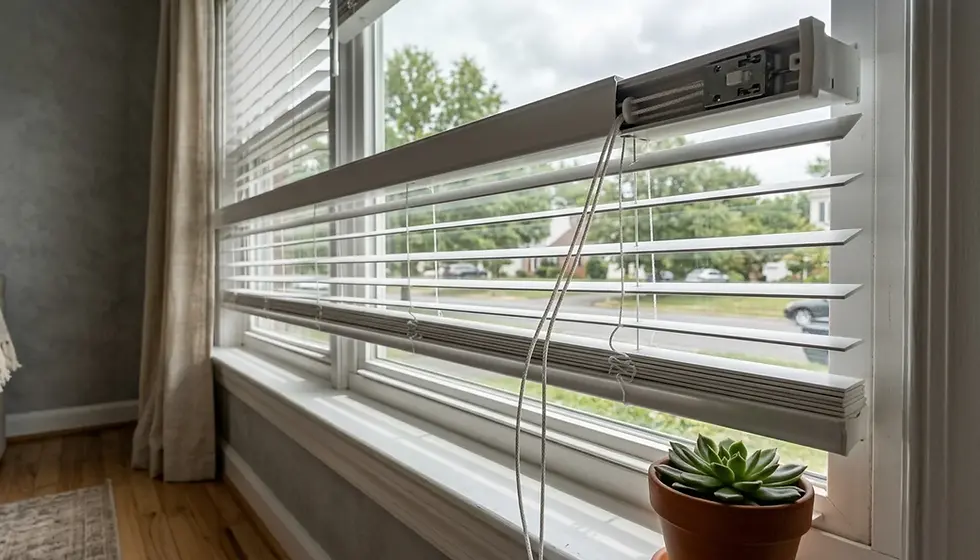
Wood and faux wood blinds are the best-insulating options within the regular blinds category, outperforming aluminum and vinyl mini blinds because their thicker slats create more of a barrier when fully closed. However, none of these blind types match cellular shades for thermal performance, since aluminum conducts heat rather than blocking it, making aluminum the weakest insulating choice among blinds. In coastal, high-humidity environments like Bethany Beach or Ocean City, faux wood blinds hold up better than real wood, which can warp from moisture exposure.
Even the best-insulating blind still leaves horizontal gaps between slats when closed, and those gaps are exactly where conditioned air escapes. By contrast, cellular shades close that gap entirely with a continuous honeycomb structure. This is why BlindsGalore's comparison of cellular shades and regular blinds notes that cellular shades outperform blinds in every climate tested, while conceding that regular blinds still make sense for renters who won't recoup a longer-term investment. For homeowners across Kent Island, Easton, and Centreville weighing faux wood versus real wood blinds, the insulation gap between blind types is real but modest; the bigger jump comes from switching categories entirely, from blinds to cellular shades.
Are Aluminum Blinds Better Than Vinyl for Energy Efficiency?
Aluminum blinds are not better than vinyl blinds for energy efficiency because aluminum is a highly conductive material that transfers heat rather than resisting it. Vinyl blinds insulate marginally better than aluminum, though both remain far behind cellular shades in overall thermal performance. Aluminum mini blinds are popular in rental units and commercial spaces because they're inexpensive and durable, not because they perform well thermally.
For example, thin aluminum slats heat up quickly in direct sun, which can actually radiate warmth back into a room during summer afternoons, a problem cellular shades avoid because their fabric cells absorb and diffuse light rather than reflecting concentrated heat. Vinyl blinds fare slightly better since vinyl conducts heat less readily than aluminum, but the difference is incremental. Neither material creates the sealed air pocket that drives cellular shade performance, so if energy efficiency matters more than budget or durability, both aluminum and vinyl blinds sit in the same lower performance tier compared to any cellular shade option.
How Does the Comparison Change Room by Room?
Cellular shades deliver the most noticeable energy savings in rooms with large window areas and direct sun exposure, such as living rooms and sunrooms, while bedrooms benefit most from blackout-lined cellular shades that combine insulation with light control. Kitchens, which often have smaller or multiple windows, see modest but still measurable gains. For example, a living room with west-facing floor-to-ceiling windows, common in newer construction on Kent Island and along the Rehoboth Beach corridor, absorbs intense afternoon solar heat, and cellular shades in that setting block a large share of that solar gain, easing the load on air conditioning during the hottest part of the day.
Bedrooms present a different priority: light control for sleep, paired with insulation. Double-cell blackout cellular shades address both, unlike blinds, which block light unevenly through slat gaps even when fully closed. In bathrooms and kitchens, where moisture and quick temperature swings from cooking are common, cellular shades still perform well, though smaller window sizes typically mean lower absolute energy savings than in a large living room. For multi-window rooms, the effect compounds: a great room with four or five large windows sees a proportionally larger energy benefit from cellular shades than a single small bathroom window, simply because there's more glass area losing or gaining heat.

How Do Single-Cell, Double-Cell, and Triple-Cell Shades Compare for Different Climates?
Single-cell cellular shades add roughly R-2 to R-3 of insulating value at the window, while double-cell and triple-cell designs push that figure higher, with blackout-lined double-cell versions offering the strongest thermal performance for extreme climates. The right choice depends on climate zone and how many months of the year a household relies on heating versus cooling.
For Delmarva's mixed humid climate, where summers bring sustained heat and winters bring damp cold off the Chesapeake Bay and Atlantic coast, double-cell shades typically offer the best balance of cost and performance. Single-cell shades work fine for secondary rooms or windows with less direct sun exposure, such as north-facing bedrooms or interior hallway windows. Triple-cell shades exist primarily for extreme heating climates and command a higher price without a proportional efficiency gain in a moderate coastal region like Delmarva. As a result, triple-cell shades are rarely recommended for homeowners in Lewes, Milton, or Ocean Pines, where the added insulation doesn't offset the extra cost as effectively as it would in a harsher inland winter climate. For a specific room, double-cell suits any window with more than four hours of direct daily sun, while single-cell fits shaded or north-facing windows with lower energy load.
How Does Window Glazing Type Affect Cellular Shade Performance?
Window glazing type directly affects how much additional insulation cellular shades provide: single-pane windows see the largest relative improvement, while triple-pane windows see the smallest, since triple-pane glass is already highly insulated on its own. Cellular shades act as a supplemental layer, so the less insulating the base window, the more dramatic the improvement.
For example, older Eastern Shore farmhouses and historic homes around Easton and Centreville often still have single-pane or early double-pane windows. In these homes, adding cellular shades produces a larger jump in comfort and energy savings because the shade compensates for a weaker starting point. In contrast, newer construction on Kent Island or in Ocean City's high-rise developments typically has double-pane or low-E double-pane glass already, meaning cellular shades provide a smaller incremental gain, though still a meaningful one during peak summer and winter months. Regular blinds don't interact with glazing type the same way, because their gapped slat structure doesn't create a sealed thermal layer regardless of what's behind them. As a result, the energy gap between cellular shades and blinds tends to widen in older homes with less efficient glass, and narrow slightly in newer, already well-insulated construction.
What Does the Cost-Per-Window Comparison Look Like?
Cellular shades typically cost $200 to $400 more per window than comparable roller or standard blinds, but that gap narrows in practical terms once ongoing energy savings of roughly $100 to $300 per year per well-covered room are factored in. For a standard 3-foot-by-4-foot window, the price difference is smaller in absolute dollars than for a large 5-foot-by-6-foot picture window, where both the upfront cost gap and the potential energy savings scale up together.
In practice, this means the payback period stays fairly consistent whether a homeowner is outfitting a small bathroom window or a large great room window, since both the incremental cost and the incremental savings scale with window size. Based on the energy savings ranges reported by BlindsGalore and other sources cited earlier in this article, most homeowners recoup the price difference within one to three years, after which the shades represent pure savings over the remaining life of the product. For a whole-house project covering eight to twelve windows, a common scope for a mid-size Delmarva home, the cumulative upfront cost difference is real, but so is the cumulative annual savings, which is exactly the kind of math a free in-home consultation at Home Blinds and Floors can run for a specific window count and orientation.
What Are the Best Practices for Opening and Closing Shades by Window Orientation?
The most effective way to maximize energy savings from cellular shades is to adjust them according to sun exposure by orientation: keep south- and west-facing shades closed during peak afternoon sun in summer, and keep them open during winter days to capture passive solar heat. East-facing windows benefit from closing shades during morning hours in summer, then opening them once direct sun passes.
For example, in a Bethany Beach or Rehoboth Beach home with west-facing windows catching intense late-afternoon summer sun, closing cellular shades from around midday through early evening blocks the most solar heat gain during the hottest part of the day. In winter, those same west-facing windows should stay open during daylight hours to let passive solar warmth into the room, then close at dusk to trap that heat before it escapes overnight. North-facing windows see the least direct sun and benefit less from this daily adjustment routine, since they primarily lose heat rather than gain it, meaning they're better left closed throughout cold months regardless of time of day. This orientation-specific scheduling is a detail most retailers skip, but it can meaningfully improve real-world savings beyond what's measured in a static lab test.
What Are the Trade-offs Between Cellular Shades and Regular Blinds?
Choosing between cellular shades and regular blinds comes down to weighing upfront cost, light control precision, and length of homeownership against long-term energy savings. Cellular shades win decisively on insulation, but regular blinds still offer advantages worth acknowledging honestly, as outlined below.
Upfront cost: Regular blinds cost less initially, making them the practical choice for rental properties or short-term ownership where the energy payback window won't be realized.
Light angle control: Blinds allow precise tilt adjustment for directing light without fully opening or closing, a flexibility cellular shades with top-down-bottom-up configurations can partially replicate but not fully match.
Durability in coastal humidity: Faux wood and vinyl blinds resist moisture better than real wood, an important consideration for homes near the water in Lewes or Ocean City.
Cleaning and maintenance: Blinds are generally easier to wipe down slat by slat, while cellular shade fabric can trap dust in the cell folds, requiring occasional vacuum attachment cleaning.
Motorization compatibility: Both categories now offer motorized options, though cellular shades with Hunter Douglas PowerView integration are increasingly popular for smart home setups.
Common mistakes homeowners make include choosing single-cell shades for a west-facing room that really needs double-cell insulation, or assuming all "energy efficient" blinds perform the same regardless of material. As covered earlier in this article, aluminum blinds marketed as an upgrade rarely deliver meaningful insulation gains over basic vinyl. Homeowners weighing single-cell versus double-cell shades for specific rooms should note that this decision matters more for energy performance than almost any other choice in the buying process. For unusually large windows, such as sliding glass doors facing a bay view, the best vertical shades for sliding glass doors guide covers how that category handles insulation differently than standard cellular shades.

Data and Evidence: What the Research Says About Long-Term Impact
Beyond individual household savings, the long-term energy impact of cellular shades extends into measurable regional and national effects, according to federal research. Oak Ridge National Laboratory's national-scale analysis suggests carbon emissions could drop by up to 3 million tons if 20% of U.S. homes installed cellular shades, a figure that illustrates the cumulative effect of a product often treated as a minor design choice.
At a household level, an OSTI report on national energy savings potential estimates cellular shades can save 9 kWh per square meter per year in cold climates, with total site energy savings up to 15% for homes with gas furnaces. At 20% market penetration nationally, the same report estimates 14.6 terawatt-hours in savings, a scale that reflects why the Department of Energy has flagged cellular shades as a leading interior window attachment for efficiency gains. Regular blinds simply don't appear in these national savings models with the same weight, largely because their thermal performance doesn't clear the threshold researchers use to model meaningful impact. This isn't a knock on blinds as a product category; it's a reflection of what the physical design of a honeycomb cell accomplishes that a flat slat cannot.
Practical Guidance: How to Choose Between Cellular Shades and Blinds for Your Home
Choosing between cellular shades and regular blinds should start with climate exposure and length of homeownership, then move to room-specific factors like window size and sun orientation. Here's a practical decision process:
Identify your highest-exposure rooms first. South- and west-facing rooms with large windows see the biggest energy impact from any upgrade, so prioritize cellular shades there before secondary rooms.
Match cell type to sun exposure. Double-cell for windows with more than four hours of direct daily sun; single-cell for shaded or north-facing windows.
Factor in your ownership timeline. If you're renting or plan to sell within a year, regular blinds may make more financial sense than an investment you won't fully recoup.
Check your existing glazing. Older single-pane windows see a bigger relative improvement from cellular shades than newer double-pane or low-E glass.
Consider blackout needs separately from insulation needs. A bedroom might need blackout lining regardless of energy performance, which should factor into the fabric choice, not just the cell structure.
Get a room-by-room quote, not a per-window estimate. Whole-house energy performance compounds differently than a single window calculation suggests.
A common mistake seen across consultations in Salisbury, Millsboro, and the greater Rehoboth Beach area is treating this as an all-or-nothing decision. Many homeowners mix categories instead, choosing cellular shades for high-exposure living areas and keeping cost-effective blinds in secondary bedrooms or a laundry room, which balances budget against actual energy impact room by room. For a deeper look at how these choices play out visually as well as functionally, the guide to modern window treatments for Delmarva kitchens covers how smaller, multi-window rooms handle both insulation and design differently than a single large living room window.
Frequently Asked Questions
How does 3 Day Blinds compare to Hunter Douglas and Budget Blinds for whole-house shutters, looking at durability, warranty, and installation quality?
National retailers like 3 Day Blinds and Budget Blinds typically offer standardized product lines with company-managed installation, while Hunter Douglas products are sold through certified dealers who often provide more specialized regional expertise. Warranty terms and installation quality vary by dealer and product line, so it's worth requesting specific warranty documentation and asking about the installer's experience with your home's specific window types before committing to any brand.
Which blinds are best for insulation?
Faux wood and real wood blinds are the best-insulating regular blinds because their thicker slats create more of a barrier when closed, outperforming aluminum or vinyl mini blinds in this category. However, none of these blind types match the insulating performance of cellular shades. Cellular shades use a sealed honeycomb cell structure to trap air directly against the window, a design that relies on an air-pocket barrier rather than slat thickness alone, which is why even the best-insulating blind still falls short of a basic cellular shade for overall thermal performance.
Are aluminum blinds better than vinyl for energy efficiency?
Aluminum blinds are not better than vinyl blinds for energy efficiency because aluminum conducts heat more readily than vinyl, meaning aluminum slats can actually radiate absorbed heat back into a room. Vinyl performs marginally better as an insulator, though both materials remain well behind cellular shades in overall thermal performance, since neither creates the sealed air pocket that drives cellular shade efficiency.
How do I clean vertical blinds?
Vertical blinds are cleaned by wiping each slat individually with a microfiber cloth, or by using a vacuum brush attachment set to low suction, working from top to bottom across the full width of the window. For fabric vertical blinds specifically, spot-clean stains with a mild detergent solution rather than soaking the material, since excess moisture can cause warping or discoloration over time. This slat-by-slat approach also makes it easy to check for dust buildup or wear on individual panels during routine cleaning, which helps extend the life of the blinds.
How do I remove Hunter Douglas blinds for cleaning or replacement?
Most Hunter Douglas blinds and shades detach from their mounting brackets by lifting the headrail slightly and pulling it forward and down, releasing it from the bracket clips. However, the exact release mechanism varies by product line, since removal methods differ between Hunter Douglas collections such as Duette, Silhouette, and Pirouette. As a result, homeowners should check the specific product's care instructions or contact their installer before attempting removal, since using the wrong technique on the wrong collection can damage the mounting hardware or the headrail itself.
How much are Hunter Douglas blinds and shades?
Hunter Douglas pricing varies widely based on product line, fabric selection, window size, and whether a homeowner chooses manual or motorized operation, so costs differ significantly between a basic cellular shade and a premium motorized Silhouette. A free in-home consultation is the most accurate way to get pricing specific to your windows, since per-window estimates found online rarely reflect the full scope of a whole-house project.
Do cellular shades work well in coastal, high-humidity climates like Delmarva's?
Cellular shades generally perform well in coastal humidity because their fabric construction resists warping better than real wood products, though moisture-resistant fabric coatings are worth requesting for bathrooms or rooms near the water. Homeowners in Rehoboth Beach, Bethany Beach, and Ocean City often pair cellular shades with moisture-tolerant materials to handle both energy performance and coastal air exposure.
What is the typical payback period for cellular shades versus regular blinds?
Most homeowners recoup the price difference between cellular shades and regular blinds within one to three years through reduced heating and cooling costs, based on energy savings data reported by BlindsGalore and consistent with the DOE and PNNL research cited throughout this guide. After that one-to-three-year payback period, the ongoing energy savings become a net financial benefit for the remaining life of the shades, which typically spans a decade or more with proper care, meaning the majority of a cellular shade's lifespan delivers savings with no offsetting cost.
Conclusion: The Verdict on Cellular Shades vs Regular Blinds
Cellular shades win the energy savings comparison against regular blinds, backed by consistent findings from Oak Ridge National Laboratory, Pacific Northwest National Laboratory, and the Department of Energy showing heating savings up to 24% and cooling savings up to 15% versus vinyl blinds. Regular blinds still have a place for renters, short-term situations, and rooms where precise light-angle control matters more than insulation.
For most homes across the Delmarva Peninsula, where humid summers and coastal winters both strain HVAC systems, the math favors cellular shades in high-exposure rooms, paired strategically with more budget-friendly blinds in secondary spaces. As energy costs continue shifting in 2026, that kind of room-by-room approach gives homeowners the best return without overspending on windows that don't need it.
Every home's window count, orientation, and glazing type changes the specific numbers, which is exactly why a generic online estimate only gets you so far. At Home Blinds and Floors, we walk through these calculations room by room during every in-home consultation across Rehoboth Beach, Salisbury, Kent Island, and the surrounding Delmarva communities we serve, using real samples and your home's actual light conditions rather than guesswork. Browse our shades collection or compare styles in our blinds lineup to see what fits your budget and energy goals.

If you're ready to see how much a cellular shade upgrade could actually save on your specific windows, get started with Home Blinds and Floors for a free in-home consultation. We'll bring fabric and cell samples to your home, evaluate your light conditions at different times of day, and give you a straightforward recommendation, not a generic quote.
Content powered by inkSTR.co


Comments