.avif)
.avif)
.avif)
Single vs. Double Cell Shades: A Guide for Delmarva Homeowners

TL;DR: The choice between single and double cell shades comes down to insulation and budget. Single cell shades are a versatile, affordable option perfect for everyday light filtering. Double cell shades offer superior insulation, sound absorption, and energy efficiency, making them a smart investment for maximizing comfort and reducing energy bills in Delmarva's varied climate.
Trying to decide between single and double cell shades for your Delmarva home? It’s a common question, and the right answer can significantly impact your home's comfort and energy bills. At Home Blinds & Floors, we help homeowners across the Eastern Shore find the perfect balance of style, light control, and efficiency with custom window treatments tailored to your space.
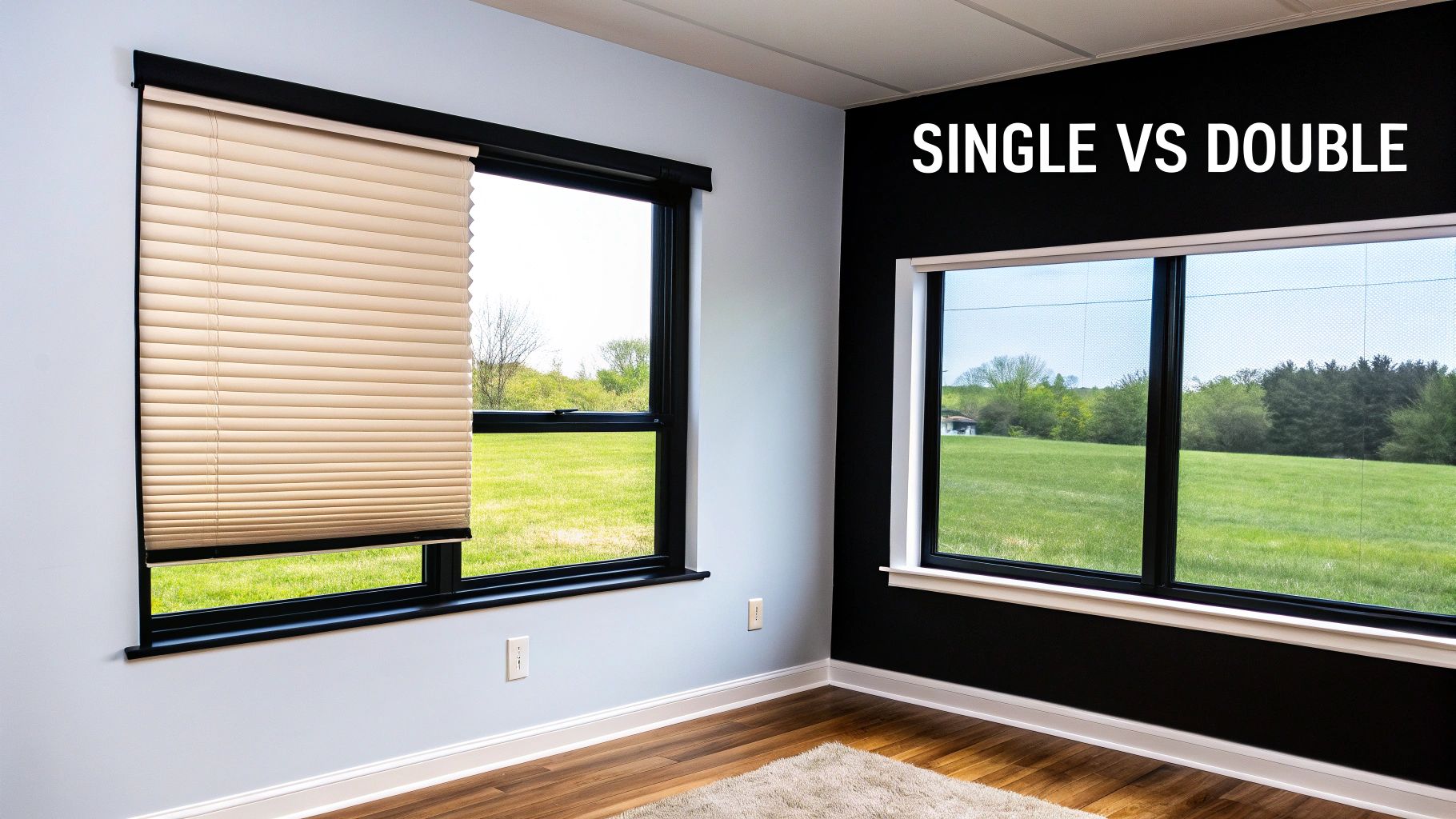
Choosing Between Single and Double Cell Shades
Choosing the right cellular shades for your Delmarva home shouldn't be a headache. For most homeowners in areas like Salisbury or Rehoboth Beach, the final decision comes down to a simple balance of budget, style, and performance.
Single Cell Shades: The Versatile Workhorse
Single cell shades are an incredible all-around option. They have a sleeker profile and a more accessible price point, which is perfect when you need to outfit several rooms at once without stretching the budget. They diffuse light beautifully and offer a significant upgrade in insulation compared to standard blinds.
Double Cell Shades: The Comfort Specialist
If comfort is your top priority, double cell shades are the clear winner. That extra layer of honeycomb-shaped cells creates a far more powerful thermal barrier against heat and cold. This is a game-changer for homes in places like Rehoboth Beach or Ocean City that get blasted by the summer sun and battered by cold coastal winds in the winter. As a bonus, that beefed-up structure is also fantastic at dampening outside noise, helping you create a quieter, more peaceful home.
From free in-home consultations to flawless installation, Home Blinds & Floors takes the stress out of selecting window treatments. We'll help you hold up samples of both single and double cell options right in your own windows, so you can see for yourself what works best for your home and your style.
At-a-Glance Comparison Single Vs Double Cell
This table gives you a quick snapshot of how these two popular shade styles stack up against each other.
Feature | Single Cell Shades | Double Cell Shades |
|---|---|---|
Insulation & Energy Efficiency | Good; a single layer of air-trapping cells provides solid insulation. | Excellent; two layers of cells create maximum thermal resistance and energy savings. |
Sound Absorption | Moderate; noticeably muffles some outside noise. | Superior; the double-layer construction significantly dampens sound. |
Light Control | Offers a wide range of opacities, from sheer to light filtering. | Provides enhanced light blocking, especially effective with blackout fabrics. |
Cost | More affordable, making it a fantastic budget-friendly choice. | Higher initial investment, often balanced by long-term energy savings. |
Best For | Living rooms, kitchens, and areas with moderate temperature fluctuations. | Bedrooms, nurseries, media rooms, and windows facing direct sun or drafts. |
Ultimately, both are great products. The right one for you just depends on the specific needs of each room in your home.
Understanding the Benefits of Honeycomb Shades
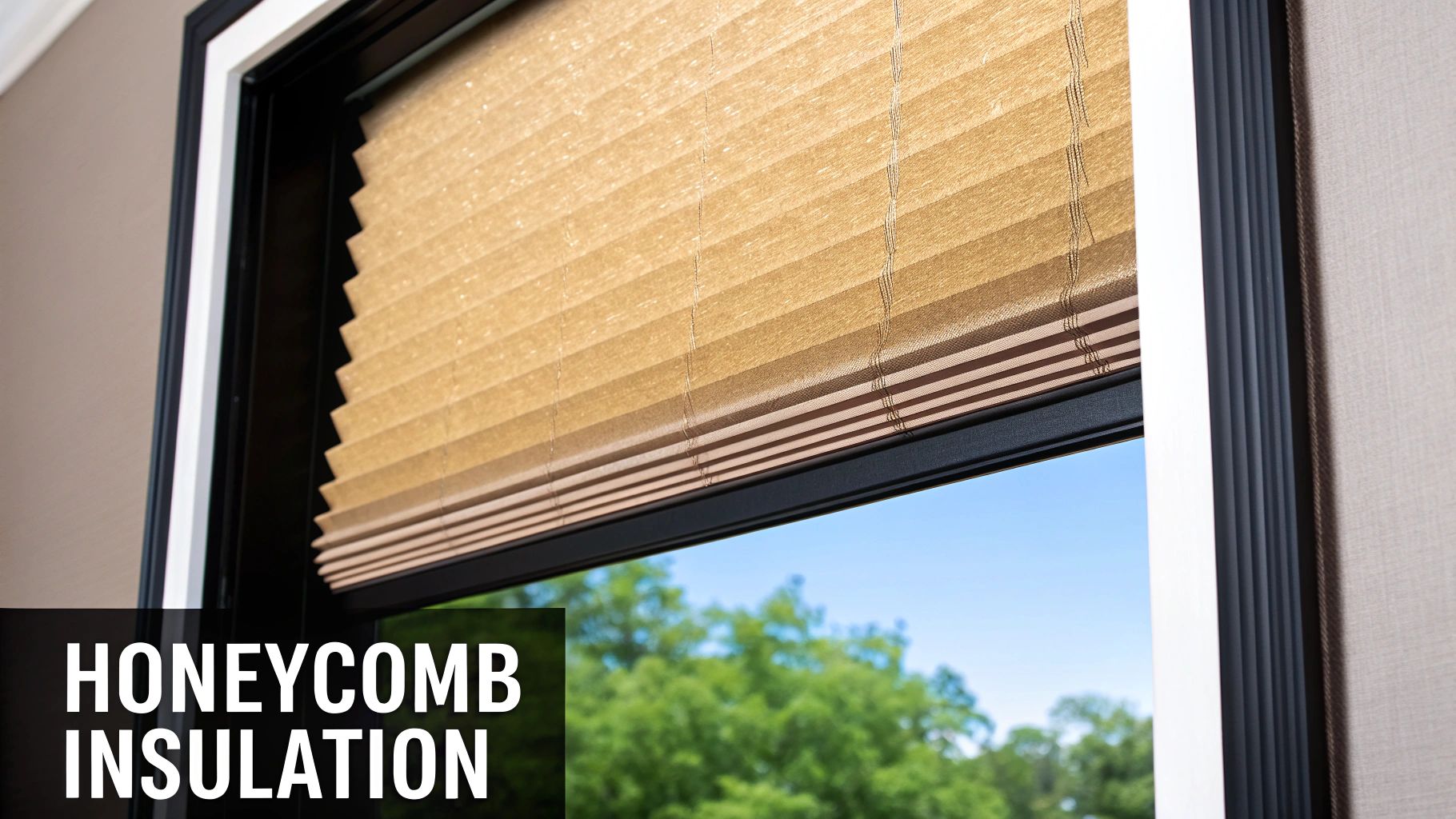
If you're hunting for window treatments that actually work for your Delmarva home, you’ve probably heard about cellular shades. Often called honeycomb shades, their unique design offers an elegant solution that goes far beyond just looks. The secret is in their structure: honeycomb shades are built with geometric fabric cells that trap air, creating a natural insulating barrier right at your window. It’s a simple but brilliant design that slows down heat transfer, which means your home stays cooler in the summer and warmer in the winter.
"Single cell" and "double cell" simply describe the number of these air-trapping layers. A single-cell shade has one layer of pockets, while a double-cell shade has two stacked layers. Grasping this simple difference is the key to understanding why these shades are so celebrated for their energy efficiency.
The Science Behind The Cells
The real insulating muscle of a honeycomb shade comes from its ability to hold still air. Think about how a double-pane window works—the air trapped between the glass panes acts as an insulator. Cellular shades use the very same principle, just with fabric.
Single-Cell Structure: One layer of cells creates a substantial thermal barrier, easily outperforming traditional blinds or basic curtains.
Double-Cell Structure: By adding a second layer of cells, you essentially double the insulating air pockets. This dramatically boosts the shade's power to resist temperature changes and cut down on energy loss.
This design is precisely why the choice between single vs. double-cell shades is so critical for homeowners in places like Salisbury or Easton, where we see those big seasonal temperature swings.
As a local, family-run business, Home Blinds & Floors provides personal service, competitive pricing, and professional installation throughout Sussex, Wicomico, Kent, and beyond.
Market Popularity And UV Protection
For years, single-cell cellular shades have been a go-to for homeowners, hitting that sweet spot of performance, affordability, and a clean, modern look. Market research consistently shows that single-cell designs capture a huge slice of cellular shade sales, which speaks volumes about their lasting appeal.
But insulation is only half the story. The honeycomb structure is also fantastic at filtering sunlight. This doesn't just cut down on glare—it also helps protect your furniture, floors, and artwork from the fading caused by harsh UV rays.
In fact, the way these shades diffuse light is a major perk. They can enhance sun safety inside your home by softening intense sunlight without leaving you in the dark. This protective quality, paired with their insulating power, makes them a smart, hardworking investment for any Delmarva property.
Single vs Double Cell Shades: A Detailed Comparison
Looks aside, the real difference between single and double cell shades boils down to how they perform day in and day out. For homeowners here on the Delmarva Peninsula, that means looking at four key things: energy efficiency, light control, sound absorption, and overall appearance. These are the factors that will truly impact your home's comfort and function.
Energy Efficiency and Insulation: Where the Difference is Clear
The biggest performance gap between single and double cell shades is, without a doubt, insulation. This isn’t just a small detail—it's a critical factor that can affect your comfort and your energy bills, especially with our hot summers and chilly winters on the Eastern Shore.
Single Cell Shades: These have one layer of honeycomb-shaped pockets. This single barrier does a good job of reducing heat transfer, offering a solid R-value (a measure of thermal resistance).
Double Cell Shades: With two layers of cells stacked together, these shades create multiple air pockets. This design drastically increases the R-value, giving you a much stronger defense against the temperatures outside.
Think about a home in Ocean City baking in the summer sun, or a historic house in Easton fighting off winter drafts. In either case, the superior insulation from a double cell shade can translate into real, noticeable energy savings.
Key Insight: Did you know that up to 30% of a home's heating and cooling energy can escape right through its windows? The enhanced thermal resistance of double cell shades directly tackles this problem, making them a smart investment for anyone looking to lower their energy costs.
Home Blinds & Floors offers a wide selection of custom blinds and shades in Delmarva, with expert installers who bring the showroom to your living room. We take the time to explain these performance metrics so you can pick a shade that truly solves your home's unique challenges.
Light Control and Privacy: Finding the Right Balance
How a shade handles sunlight is just as important as how well it insulates. Both single and double cell shades come in a range of light control options, but their structures create subtle differences in how that light is diffused.
The fabric's opacity is your main choice here:
Sheer: Lets the most light in, creating a soft, airy atmosphere with minimal privacy.
Light-Filtering: This is the crowd favorite. It gently diffuses sunlight to cut glare while keeping the room bright and offering a good amount of privacy.
Blackout: Blocks nearly all incoming light, making it the perfect choice for bedrooms, nurseries, or a media room.
While you can get any of these in both styles, the double cell structure has a slight edge when it comes to blocking light. That second layer of fabric adds extra density, which can make the blackout versions more effective at creating true, pitch-black darkness.
Sound Absorption: A Quieter Home Environment
An often-overlooked perk of cellular shades is their ability to muffle sound. If your home is near a busy road or in a lively neighborhood, this can be a huge bonus for creating a more peaceful space.
Single Cell: Provides a noticeable reduction in sound, taking the edge off traffic or neighborhood chatter.
Double Cell: Offers superior sound absorption, helping to create a much quieter and more serene atmosphere.
This makes double cell shades a fantastic option for a bedroom that faces the street or a home office where you need to concentrate.
Aesthetics and Durability: The Finer Details
From a few feet away, both types of shades offer that clean, pleated look that works well with just about any decor. Single cell shades usually have larger pleats and a slimmer profile, which is often preferred for windows with shallow frames. In contrast, double cell shades have smaller, tighter pleats, which gives them a slightly deeper profile. You might also want to explore how cellular shades compare to other window treatments in our guide: cellular shades vs pleated shades.
Calculating Your Return On Investment
When you're looking at single vs. double cell shades, the price tag is just the beginning of the story. To really understand the financial picture, you have to think about long-term value, and for us here on Delmarva, that almost always comes down to energy savings.
Upfront Cost vs. Long-Term Savings
Single cell shades are definitely easier on the wallet upfront. They're a fantastic solution if you're outfitting several rooms in Wicomico or Sussex County without a huge initial outlay. But the real magic of double cell shades shows up a few years down the road. Their superior insulation translates directly into real savings on your heating and cooling bills. They cost more to start, but those savings can eventually cover—and even exceed—the initial price difference.
From free in-home consultations to a flawless installation, Home Blinds & Floors takes the stress out of selecting window treatments. Our goal is to find a solution that fits your budget today and keeps delivering value for years to come.
Putting Numbers to the Energy Savings
It’s easy to say shades save energy, but the numbers really drive the point home. Research has shown that properly fitted cellular shades can cut heat loss through windows by about 40%. For a typical home, that can mean saving around 10% on your total heating costs. As utility prices keep climbing, that kind of energy conservation makes cellular shades a seriously smart investment. You can find more data on the window coverings market at fortunebusinessinsights.com.
This impressive performance is all about R-value:
Single Cell Shades: These offer a solid R-value, generally landing somewhere between 2.0 and 3.5.
Double Cell Shades: They can hit an R-value of 5.0 or higher, giving you significantly more insulating muscle.
That bigger R-value means your HVAC system isn't working nearly as hard to keep you comfortable. To dive deeper into how different shades boost your home's efficiency, take a look at our ultimate guide to energy-efficient shades for Delmarva homes.
This decision tree helps visualize how budget priorities can guide your choice between upfront cost and long-term savings.
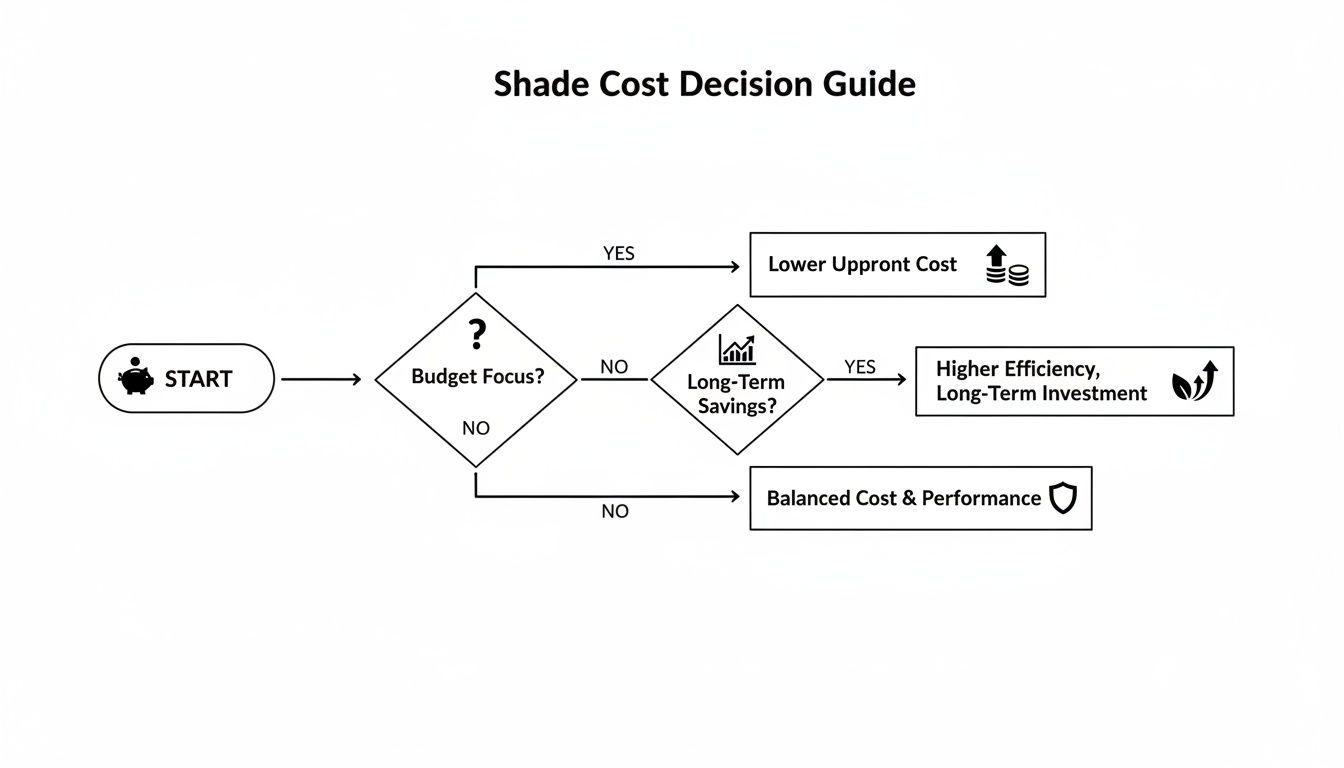
The flowchart makes it clear: while single cell shades are your best bet for immediate affordability, double cell shades are positioned as the smarter long-term play for homeowners focused on future energy savings.
For a deeper dive into selecting the right treatments, check out our guide on how to choose window treatments with expert tips for every room.
FAQs About Single vs. Double Cell Shades
Here are answers to the most common questions we hear from homeowners across the Delmarva Peninsula.
Are double cell shades worth the extra cost in Delmarva?
For most homeowners here, the answer is a resounding yes. Delmarva’s climate gives us the full range—hot, sticky summers and cold, drafty winters—making good insulation a smart investment. The enhanced energy savings and comfort from double cell shades often make the initial cost well worth it over time.
What are the best shades for privacy?
Both single and double cell shades offer excellent privacy when you choose a light-filtering or blackout fabric. Double cell shades with a blackout lining provide the highest level of light blockage and privacy, making them ideal for bedrooms and bathrooms.
What cities in Delmarva do you serve?
Home Blinds & Floors is proud to serve the entire Delmarva Peninsula. Our team provides free in-home consultations and professional installations for communities all across Delaware and Maryland's Eastern Shore, including Salisbury, Rehoboth Beach, Lewes, Ocean City, Easton, and all the great towns in between.
Do double cell shades look bulky?
It's a common concern, but modern designs are very streamlined. While they are technically thicker, the difference is often subtle once installed. The best way to know for sure is to see samples in your own home during a free consultation with our team at Home Blinds & Floors.
Which is better for blocking sound, single or double cell shades?
Double cell shades are superior for sound absorption. The two layers of fabric and trapped air create a more effective buffer against outside noise, helping to create a quieter, more peaceful indoor environment.
The Right Cellular Shades for Your Delmarva Home
In summary, choosing between single and double cell shades depends on your priorities. Single cell shades are a fantastic, budget-friendly choice for great looks and moderate insulation. Double cell shades are the premium option for homeowners in Salisbury, Easton, and across the Eastern Shore who want to maximize energy efficiency, sound absorption, and overall comfort.
Home Blinds & Floors provides custom window treatments, expert advice, and in-home service to homes across the Delmarva Peninsula. From Rehoboth Beach to Easton, our team is here to help you choose the best shades, shutters, or blinds for your space. Schedule your free in-home consultation today!
Comments