.avif)
.avif)
.avif)
Your Guide to Hunter Douglas Blinds Troubleshooting on the Delmarva Peninsula

TL;DR: This guide provides Delmarva homeowners with a step-by-step troubleshooting checklist for common Hunter Douglas blind issues. It covers power problems with PowerView® motorization, manual cord and tilting faults, fabric imperfections, and when to call a professional. Key tips include using only AA lithium batteries for motorized shades, checking for simple obstructions, and understanding the warranty. For expert help from Salisbury to Rehoboth Beach, Home Blinds & Floors offers professional repair and free in-home consultations.
Are your beautiful Hunter Douglas blinds suddenly refusing to cooperate? Before you panic, take a breath. At Home Blinds & Floors, we help homeowners across the Delmarva Peninsula solve these exact problems every day, and the fix is often surprisingly simple.
Most of the time, you're not looking at a major repair. It's usually something small—a dead battery, a lost remote connection, or something physically blocking the shade's path. A few quick checks can often get things moving again in minutes, saving you time and a service call.
Your First-Response Troubleshooting Checklist
So, where do you begin when your shades are acting up? Think of this as your "first-aid kit" for blind repair. It's all about ruling out the simple stuff first.
This little flowchart is a great visual guide for the first three things you should always check: power, obstructions, and the remote.

Working through these basics systematically is the fastest way to pinpoint what's going on.
Before we get into the nitty-gritty, this table can help you quickly match a symptom to a likely cause and a first-step solution.
Common Hunter Douglas Issues And First Steps
Symptom | Potential Cause | What to Try First |
|---|---|---|
Motorized blind won't move at all. | Power loss (dead batteries). | Replace the batteries in the wand or recharge the battery pack. |
Blind moves a little, then stops. | Physical obstruction. | Check the window sill and path for any objects blocking movement. |
Remote light blinks, but blind is unresponsive. | Lost pairing or connection. | Try re-pairing the remote to the shade. |
Slats are tilted and won't straighten. | Slats are misaligned in the headrail. | Gently guide the slats back into alignment by hand. |
This table covers the most frequent calls we get. If your issue isn't listed here or these first steps don't work, don't worry—we'll dig deeper next.
Start With The Obvious
I can't tell you how many service calls have been resolved by checking the most basic things. It's easy to overlook them when you're frustrated, but this is where the most effective troubleshooting begins.
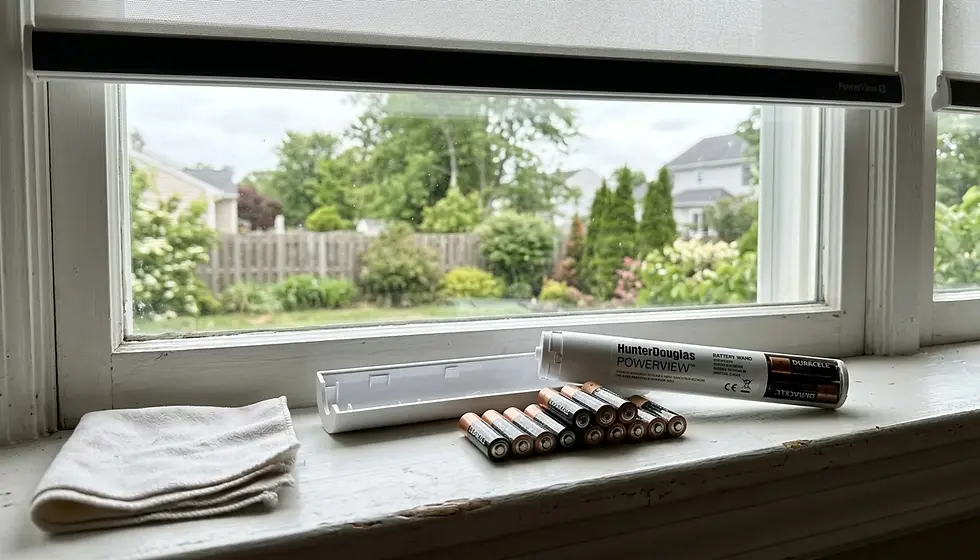
Check the Power Source: For any motorized shade, especially those with PowerView® Automation, the battery wand is your number one suspect. Are the batteries completely fresh? It's not unheard of to get a dud right out of the package.
Look for Physical Blockages: Carefully inspect the window sill and the entire path of the blind. I’ve seen everything from a small toy to a picture frame or even a plant leaf jam the mechanism completely.
Investigate the Remote Control: Take a look at your remote. Is the indicator light blinking when you press a button? If not, the remote's own battery is likely dead. If it is blinking but the shade isn't responding, it’s probably lost its connection and needs to be re-synced.
Pro Tip: When you're replacing batteries in a PowerView system, always use AA lithium batteries. We recommend this for a reason—alkaline batteries can leak over time and corrode the contacts. They also don't provide the steady, consistent power the motors need, which can lead to sluggish performance long before they're fully drained.
Sometimes, the problem isn't about operation but about maintenance. If you're trying to remove your blinds for a deep clean or a window replacement, we have a complete walkthrough in our guide on how to take down Hunter Douglas blinds safely.
As a local, family-run business, Home Blinds & Floors provides personal service, competitive pricing, and professional installation throughout Sussex, Wicomico, Kent, and beyond.
Solving PowerView Motorization And Battery Headaches
It’s one of the most frustrating things: you invest in the convenience of motorized PowerView shades, and then one day, they just stop working. They’re stuck, unresponsive, and the high-tech solution you paid for is suddenly a high-tech headache.
Let’s walk through how to get to the bottom of these power-related issues, from motors that won't budge to batteries that seem to die overnight.

Often, the fix for an unresponsive motor is surprisingly simple and starts with its power source. But before you even think about swapping batteries, you need to make sure you’re using the right kind.
Diagnosing Battery and Power Issues
When a PowerView motor starts acting up, the very first thing I check is the battery. A motor with low power will get sluggish and slow, or it just won't respond at all.
This part is critical: always use high-quality, non-rechargeable AA lithium batteries. It's tempting to grab a pack of standard alkalines, but they just don't provide the consistent voltage these motors demand. Using them can lead to poor performance and, even worse, corrosion inside the battery wand.
Unfortunately, we’ve seen cases where rapid battery drain becomes a real pain point for homeowners. One of the most stubborn issues we've encountered involves certain PowerView systems burning through a fresh set of expensive lithium batteries in just 7-10 days. This often points to a deeper issue with the motor’s software or hardware. It’s a frustrating situation, and you can read about similar documented consumer complaints on the Better Business Bureau website to see you're not alone.
Resetting And Re-Pairing Your System
So, you've put in a fresh set of the correct lithium batteries and the shade still won't move. What's next? The problem is likely a lost connection between the remote, the motor, and maybe even your PowerView Hub. It doesn't take much to disrupt it—a brief power outage in your Salisbury home or even a simple Wi-Fi router update can knock the whole system offline.
Here’s how to get them talking again.
Performing a Motor Reset: Look for the small manual control button on the motor head of the shade (it’s usually nestled right where the wires come out). Press and hold that button for about 6–10 seconds. You'll see the motor's indicator light flash red, which confirms it has been reset. Now, it's ready to be paired with your remote again.
Troubleshooting the Remote: If the shade is fine but the remote isn't doing anything, it probably just needs to be re-paired. The exact process can differ slightly depending on which remote you have. We've got a complete walkthrough right here in our guide on how to program your Hunter Douglas remote.
Checking the PowerView Hub: Is your phone app or scheduled scene not working? Your PowerView Hub (or Gateway) is the likely culprit. First, make sure it’s powered on and connected to your home network. A quick reboot—just unplugging it for 30 seconds and plugging it back in—can often clear up the connectivity glitches.
A Note on Signal Interference: Remember, your home is filled with wireless signals. Other smart devices can sometimes interfere with the radio frequency your PowerView system uses. If you've recently installed a new smart speaker, baby monitor, or security camera near your windows, try moving it further away to see if communication with your blinds improves.
From free in-home consultations to flawless installation, Home Blinds & Floors takes the stress out of selecting window treatments.
Fixing Manual Blinds With Cord and Tilting Issues
Not every window treatment issue is a high-tech headache. The classic, manual Hunter Douglas blinds are built like tanks, but even the most durable mechanical parts can act up after years of daily use. We see it all the time—a shade that refuses to lock in place or one side that hangs stubbornly lower than the other.
Nine times out of ten, these problems come down to the cord system tucked away inside the headrail. The good news? You can often solve these frustrating cord and tilting issues with a bit of patience and a basic understanding of how the whole thing works.
When Your Blind Is Stuck or Crooked
Let's paint a picture. You have a gorgeous faux wood blind in your Rehoboth Beach home, but the right side sags an inch lower than the left. It's a classic problem and one of the most common calls we get. This almost always points to an internal lift cord that's gotten tangled or has simply slipped off its track.
Before you do anything else, try a simple reset. Lower the blind all the way down. Now, gently tug on the lift cords to see if you can manually even out the bottom rail. Once it looks level, raise it back up very slowly, guiding it with your hand. If it still goes crooked, you've likely got a snag inside the headrail.
For a more detailed walkthrough on these kinds of snags, we've put together a guide specifically on how to fix stuck blinds for Delmarva homeowners.
If the blind slides down instead of locking, the culprit is probably the cord lock mechanism. This tiny, spring-loaded part is responsible for gripping the cord. Over time, dust and debris can work their way in, preventing it from properly engaging.
Safety First: When inspecting any cord-operated blind, take a moment to check the cord tensioner. This is the small device mounted to your window frame that keeps the cord loop taut—a critical safety feature to prevent entanglement. If it's loose or broken, it needs to be fixed right away.
Troubleshooting Slat Tilting Problems
Another common frustration is when the slats just won't tilt open or closed. Whether you have a traditional cord tilter or a modern wand, the internal mechanism can get jammed up.
Here’s a quick breakdown of what to look for:
Wand Tilters: The wand connects to a small gear inside the headrail. If turning the wand does nothing, that connection might have slipped, or the plastic gear inside may have stripped.
Cord Tilters: These rely on a pair of cords to rotate the slats. If one cord feels limp or pulling it has no effect, the tilting mechanism is likely jammed or the cord has jumped off its pulley.
You can try gently working the slats back and forth by hand to see if you can dislodge a minor jam. But if you feel any real resistance, stop. Pushing it too hard is a surefire way to break a delicate internal component, turning a small problem into a bigger one. That's usually the point where a professional repair is your best bet.
Home Blinds & Floors offers a wide selection of custom blinds and shades in Delmarva, with expert installers who bring the showroom to your living room.
What To Do About Fabric And Material Imperfections
It's one thing when blinds stop working mechanically, but it's a whole different kind of frustration when the fabric itself starts to fail. You chose Hunter Douglas for their quality and beauty, so seeing frayed edges, warping slats, or fabric that's literally coming apart at the seams is a major letdown. These aren't just signs of normal use; they often point to a deeper problem.

One of the most common issues we see is something called delamination. If you're not familiar with the term, it’s when the bonded layers of a shade start to separate. You’ll notice it as unsightly bubbles, ripples, or a complete split in the material. This is a well-known problem, especially with cellular and pleated styles.
While things like sun and humidity can be contributing factors, delamination is often a straight-up manufacturing defect. Unfortunately, it's been a known issue for a while, and based on what we've seen and heard from clients, getting a warranty claim approved can sometimes be a struggle. Looking at consumer reviews online, unresolved warranty disputes account for about 25% of all grievances, with some complaints about delamination going back more than 10 years.
Inspecting Your Shades For Early Warning Signs
Spotting these material problems early is your best bet for a smooth warranty process. Every so often, it’s a good idea to give your shades a close look. Pay special attention to the ones that get blasted by direct sun all day or live in high-humidity spots like bathrooms and kitchens.
Here’s what you should be looking for:
Fraying Edges: Are there loose threads or a "fuzzy" look along the sides of your roller or cellular shades?
Warping or Curling: This is a big one for faux wood and vinyl blinds. See if the slats are starting to bow or if the edges are curling upwards.
Bubbling Fabric: Check your cellular or Roman shades for any areas where the fabric looks like it has a bubble under it. That’s the classic first sign of delamination.
For our neighbors here on the Delmarva Peninsula, that coastal humidity can definitely speed up these kinds of fabric issues. Keeping your indoor humidity in a stable range can really help protect your investment.
Navigating The Hunter Douglas Warranty
So, what’s actually covered? The Hunter Douglas warranty is pretty comprehensive, covering defects in materials and workmanship for the original owner. This should include delamination. What it doesn't cover is damage from accidents, fading from the sun over many years, or just general wear and tear.
When you have a legitimate defect, filing a claim can feel a bit overwhelming. That's where we come in. As a local, family-owned business, we at Home Blinds & Floors pride ourselves on helping our clients from Kent Island to Easton. We can help you figure out your options and handle the warranty claim to make sure you get the fair resolution you're entitled to.
If you'd like to learn more, check out our guide on repairing cellular shades for Delmarva homeowners.
Knowing When to Call In the Pros
I’m a big fan of a good DIY fix, and many minor blind issues are perfect for a quick Saturday morning project. But with high-quality systems like Hunter Douglas, there’s a clear line between a simple fix and a job for a professional. Getting it wrong can lead to bigger headaches, more costs, and can even void your warranty.
My rule of thumb is simple: if the solution involves taking the headrail apart, it’s time to pick up the phone.

Some symptoms are immediate red flags that signal a serious internal failure. These aren't the kind of problems a new set of batteries or untangling a cord can solve.
Signs of a Serious Problem
If you notice any of these issues, stop what you're doing. Trying to force the blind to move will almost certainly make things worse.
Grinding or Clicking Noises: A healthy motor should be whisper-quiet. If you hear loud grinding or persistent clicking, it's a sure sign that internal gears are stripped or broken.
Completely Unresponsive Lift System: You’ve gone through all the basic troubleshooting, and the blind is still completely dead. This usually points to a failed internal lift mechanism or a burned-out motor.
Visible Damage to Cords or Tapes: Look for frayed internal cords or damaged lift tapes. This is a critical sign of wear and tear, and if one snaps, the entire blind could come crashing down.
We see it all the time—motor failure is a common issue. Many units last only 5-7 years before they need to be replaced. Consumer reviews often tell stories of irreparable mechanisms, turning a significant investment into a non-functional fixture far too soon.
The Risks of a DIY Motor Swap
I get it. It’s tempting to hop online, order a replacement motor, and try to tackle the job yourself. But this is a gamble I wouldn't recommend. Hunter Douglas systems are intricate, and an improper installation can easily damage the brand-new motor or the blind itself.
More importantly, performing unauthorized repairs will void your product warranty.
Our technicians are trained to diagnose the root cause of a problem correctly on the first visit. We only use genuine Hunter Douglas parts and have the specialized tools needed for safe, effective repairs that protect your investment.
For homeowners on the Delmarva Peninsula, expert help is just a call away. You can find out more about our work in the area in our guide to expert blind installation and repair.
Answering Your Top Hunter Douglas Troubleshooting Questions
We've walked through the most common fixes, but chances are, you still have a few lingering questions. Below, we’ve gathered the top questions we hear from homeowners all over the Delmarva Peninsula, with straight-to-the-point answers to get your blinds back on track.
Do I really need special batteries for my PowerView blinds?
Yes, you absolutely do. This is one area where you can't cut corners. For any PowerView system that uses a battery wand, you must use AA lithium batteries. Alkaline batteries don't deliver the steady voltage the motors need and will lead to sluggish performance and a much shorter lifespan. Worse, they can leak and permanently damage your battery wand and motor.
How long should the batteries in my motorized blinds last?
In a perfect world, the batteries in your PowerView blinds should last about one year, based on raising and lowering the shades once per day. However, larger, heavier shades or more frequent use will drain batteries faster. If you're changing batteries every few months, it’s a good idea to have a professional take a look.
Why is my Hunter Douglas blind hanging crooked?
A lopsided blind is almost always a sign of a tangled or slipped internal lift cord. When this happens, one side can't lift at the same speed as the other, leaving the bottom rail askew. You can try lowering the blind all the way, gently leveling it by hand, and then raising it slowly. If it still goes crooked, the snag is more serious and needs a professional to untangle it safely.
Can I fix a broken cord myself?
We strongly advise against it. Repairing a broken lift cord on a Hunter Douglas blind is surprisingly tricky. It requires taking the headrail apart, navigating a maze of internal parts, and getting the tension perfect. An incorrect repair can damage the mechanism or create a safety hazard, especially with complex systems like UltraGlide.
What cities on the Delmarva Peninsula do you serve?
Home Blinds & Floors proudly serves homeowners and businesses across the Delmarva Peninsula. Our service areas include Salisbury, Ocean City, and Berlin in Maryland, as well as Rehoboth Beach, Lewes, Bethany Beach, and all of Sussex and Kent counties in Delaware. We bring the showroom to you with our free in-home consultations.
In summary, Home Blinds & Floors provides custom window treatments, expert advice, and in-home service to homes across the Delmarva Peninsula. From Rehoboth Beach to Easton, our team is here to help you choose the best shades, shutters, or blinds for your space. Schedule your free consultation today and let's get started.
Comments