.avif)
.avif)
.avif)
Repairing Cellular Shades: A Delmarva Homeowner's Guide

TL;DR: This guide provides step-by-step instructions for repairing common cellular shade issues like broken cords and faulty cordless mechanisms. For simple fixes, a DIY approach can work. For complex problems, such as a broken motor or torn fabric, professional repair is recommended. Homeowners on the Delmarva Peninsula can rely on experts for lasting solutions.
Are your cellular shades hanging unevenly or refusing to stay up? At Home Blinds & Floors, we know how frustrating a broken shade can be for homeowners across the Eastern Shore. This guide will walk you through diagnosing and fixing common honeycomb shade problems, helping you decide between a DIY repair and calling in a professional to get your window treatments in Salisbury, Rehoboth Beach, and beyond working perfectly again.
Common Cellular Shade Problems and How to Fix Them
There’s nothing more frustrating than a honeycomb shade that's stuck or won't lift properly. Before you grab any tools, you've got to play detective. The first and most important step is figuring out exactly why your shade isn't working. Getting this right from the start saves a ton of frustration and prevents you from making a small problem worse.
For more tips on keeping your window treatments in top shape, feel free to explore our other articles on cellular shades.
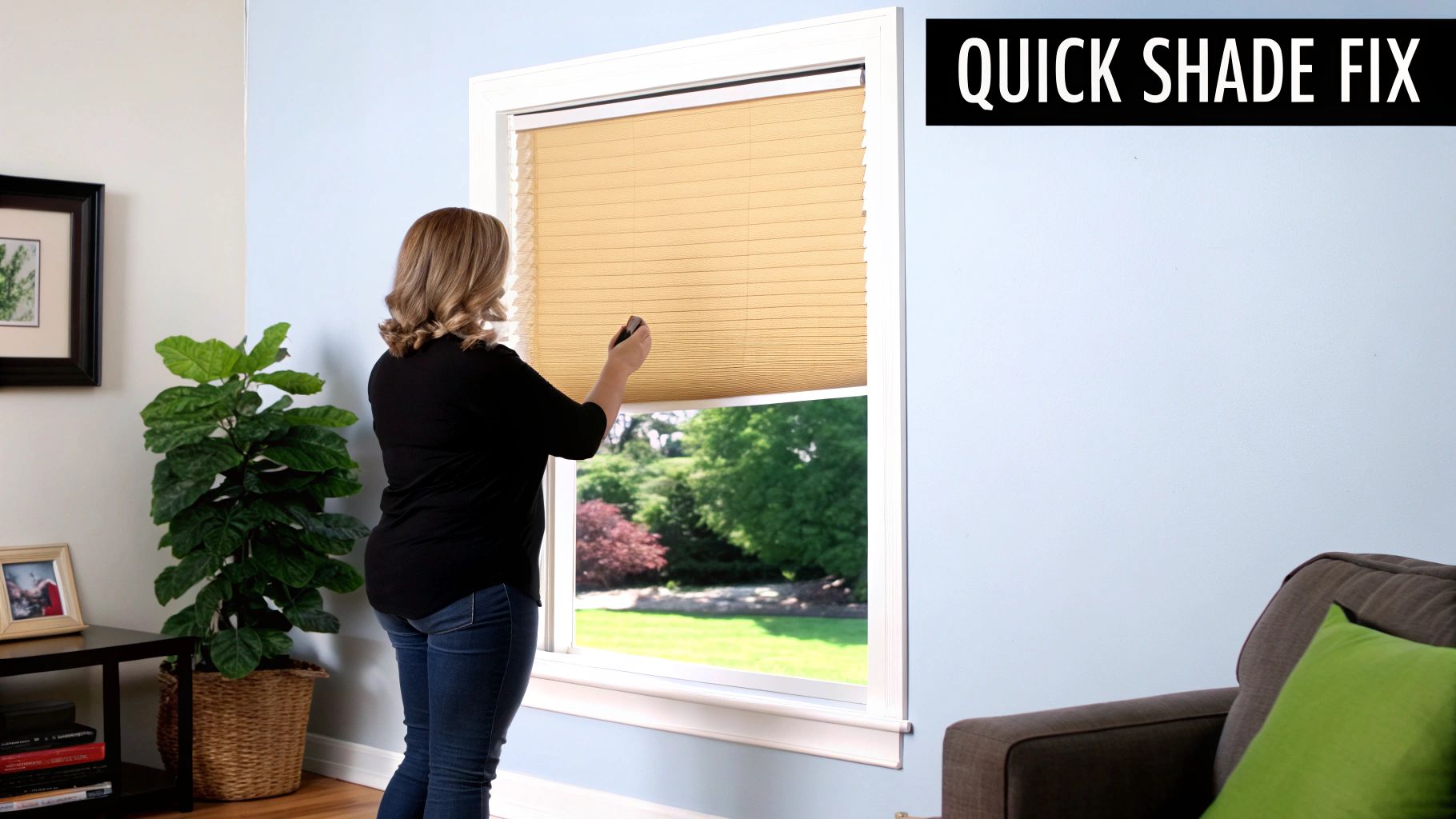
What to Look for With Corded Shades
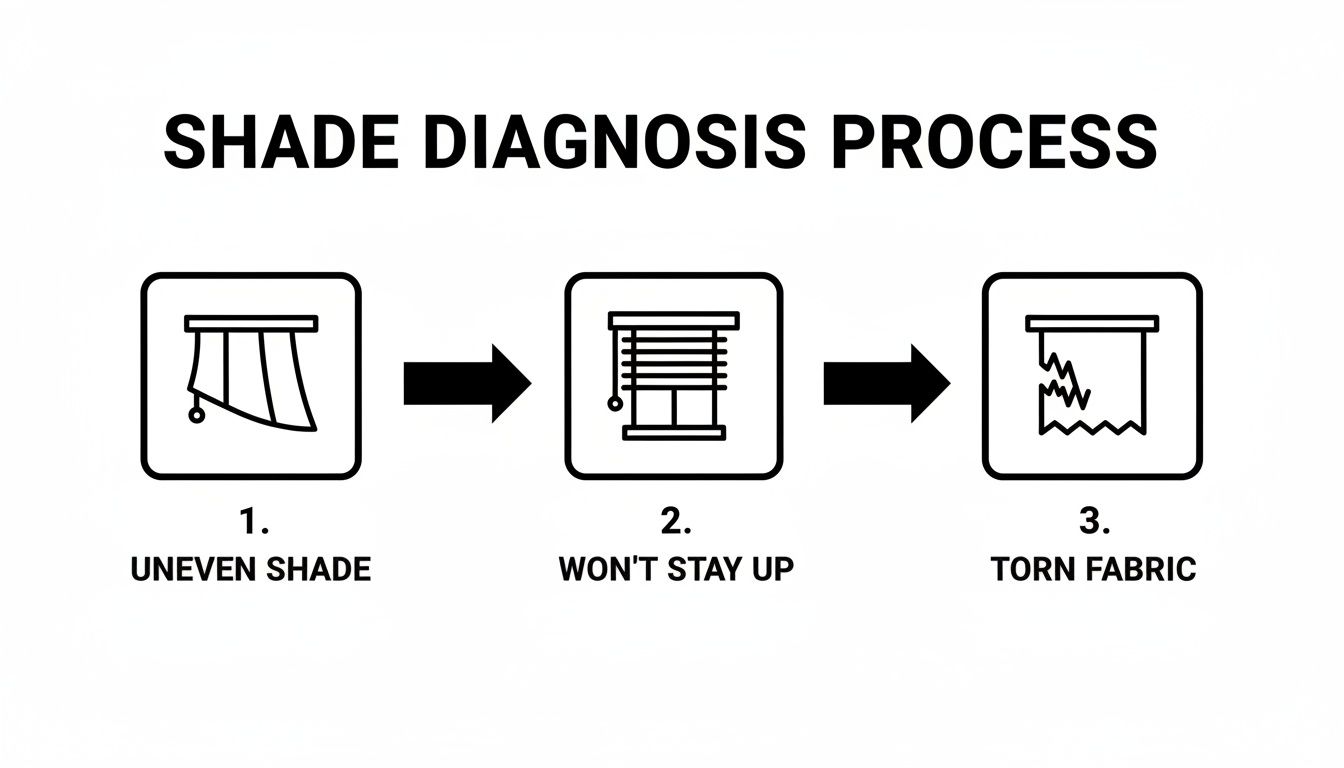
Is the shade hanging lopsided? Or maybe one side lifts perfectly while the other is completely stuck? This is a classic symptom of a snapped or frayed internal lift cord. You won't always see the cord, but the uneven movement is a dead giveaway. Another common issue is a jammed cord lock mechanism, which can prevent the shade from moving at all.
What to Look for With Cordless And Motorized Shades
Cordless shades have their own quirks. If your shade suddenly refuses to stay up or has gone limp, the culprit is almost always the spring-loaded tension motor inside the headrail. These mechanisms can wear out over the years, lose their tension, and just give up.
For motorized shades that have stopped working, don't panic just yet. More often than not, it's something simple like dead batteries in the remote control or in the shade's motor unit itself. Always check the power source first.
From free in-home consultations to flawless installation, Home Blinds & Floors takes the stress out of selecting and maintaining your window treatments. Our experts can quickly diagnose any issue, whether you're in Salisbury or Rehoboth Beach.
To help you get started, here's a quick cheat sheet for diagnosing the most common issues.
Common Cellular Shade Problems And Their Causes
Use this quick reference table to diagnose what's wrong with your shade before you start a repair.
Symptom | Likely Cause | DIY Feasibility |
|---|---|---|
Shade hangs unevenly or won't lift straight | Broken or frayed internal lift cord | Moderate |
Cordless shade won't stay up | Worn-out spring tension motor | Difficult |
Motorized shade is unresponsive | Dead batteries (remote or headrail) | Easy |
Fabric cells are separating | Adhesive failure (delamination) | Very Difficult |
Shade is completely stuck | Jammed cord lock mechanism | Moderate |
Choosing to repair instead of replace can make a big difference in your budget, a trend seen across the global blinds and shades market. While we're focused on cellular shades here, many of these troubleshooting tips apply to other styles, too. For more on that, check out our guide on how to fix stuck blinds.
By carefully observing how your shade is misbehaving, you'll be able to pinpoint the root cause and choose the right path to get it working again.
Repairing Cellular Shades: A Step-by-Step Guide
Sooner or later, it happens to every well-loved cellular shade: the lift cord gives out. A snapped or frayed cord is probably the number one reason these shades fail, but don't call for a replacement just yet. This is a fix many homeowners on Delmarva can absolutely handle themselves.
Before you start, let's get your tools lined up. A little prep work now saves a ton of frustration later. You don't need a fancy workshop—just a few simple items from your toolbox or the local hardware store.
What You'll Need to Get Started
Having everything within arm's reach before you even think about taking the shade down is the secret to a smooth repair. Here’s your go-to list:
Replacement Lift Cord: This is the star of the show. The most important thing is to get the right thickness, so try to measure the diameter of the old cord before you buy.
Sharp Scissors: For making clean, non-frayed cuts.
Re-stringing Needle or a Paperclip: A proper re-stringing needle makes life easier, but honestly, a straightened paperclip with a tiny hook bent into the end will get the job done.
A Lighter: You’ll need this to very gently melt the ends of the new cord. This simple step keeps it from unraveling down the road.
Screwdriver: Have both a Phillips and a flat-head handy, since mounting brackets can vary.
Once you have your tools, you'll need to get the shade down from the window. If you're not sure how, our guide on how to install cellular shades walks you through the removal process step-by-step.
Threading the New Cord
Lay the shade out on a flat, clean surface like a table or the floor. You'll need to pop the end caps off the headrail (the top part) and the bottom rail to get a look at the cord channels. Go ahead and pull out all the pieces of the old, broken cord, but pay close attention to the path it followed—you're about to recreate it.
Take your new cord and, using your re-stringing needle or paperclip, start threading it through the exact same route. This usually means going down from the headrail, weaving through each of the honeycomb cells, and popping out of the bottom rail. After you secure the cord at the tassel or plug on the bottom, you'll guide it back up through the cells on the other side and into the cord lock mechanism inside the headrail.
As a local, family-run business, Home Blinds & Floors provides personal service, competitive pricing, and professional installation throughout Sussex, Wicomico, Kent, and beyond. If re-stringing a shade feels like more than you want to take on, our experts are always here to help.
How To Fix Cordless And Motorized Shade Mechanisms
There's no denying the clean look and safety that cordless and motorized shades bring to a room. But when that smooth, modern mechanism suddenly stops working, it can feel like a complicated, high-tech problem. The reality is, most fixes are surprisingly straightforward.
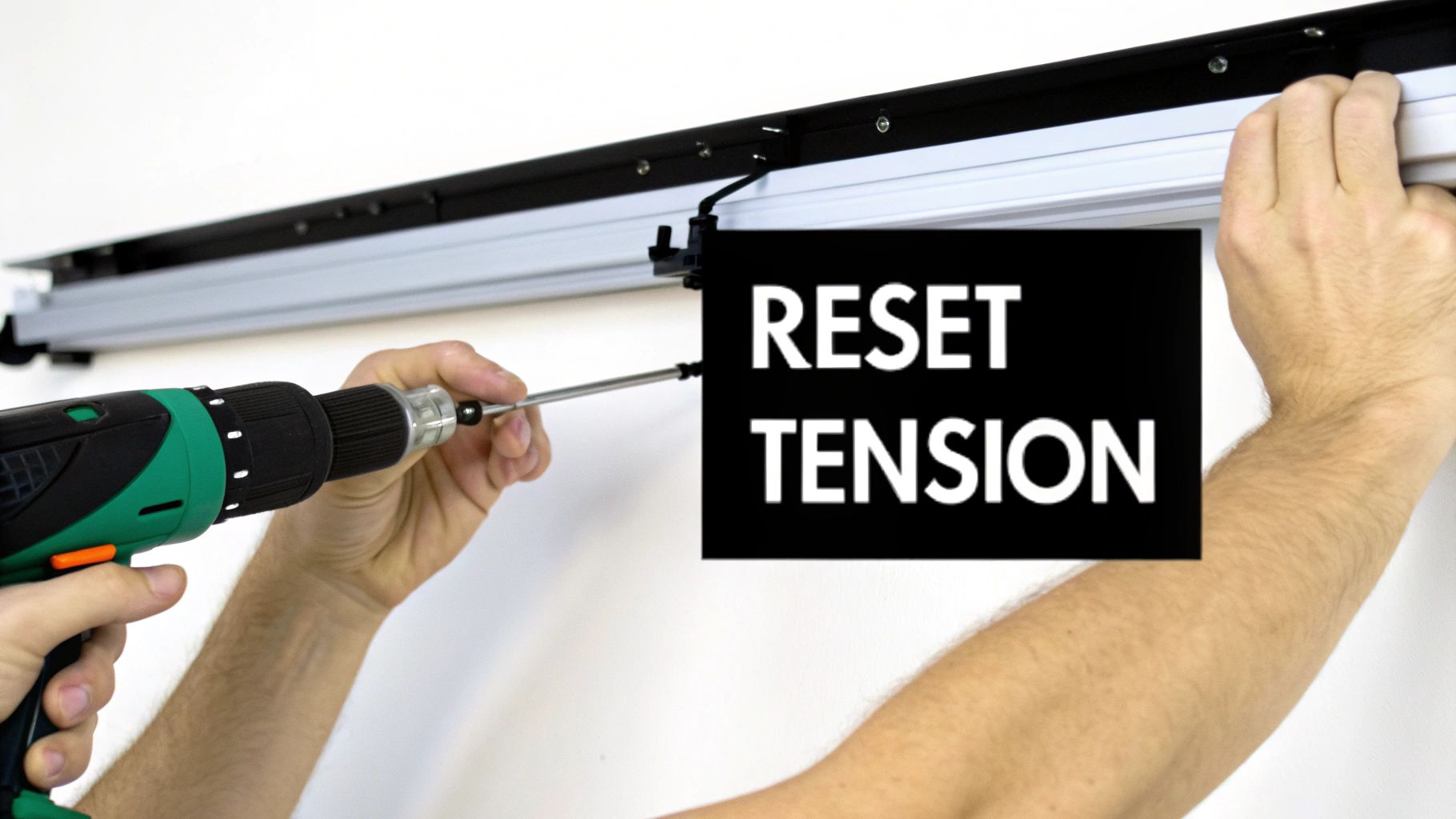
If your cordless shade has gone limp and refuses to retract, the culprit is almost always the internal tension motor. This spring-loaded device is the magic behind the cord-free lift, but over time, it can simply lose its calibration.
Resetting A Cordless Tension Motor
To get that spring back in its step, you'll need to adjust the tension. First, carefully take the shade down from its brackets. Look inside the headrail for a small dial or screw on one end of the motor mechanism. This is your adjustment point.
Using a flathead screwdriver, you can gently turn this component to either increase or decrease the tension. It doesn't take much.
Adjust and test. Make a small turn, then hang the shade back up (or just hold it) to test the retraction. Pull it down and see if it lifts smoothly.
Don't crank it. Your goal is a smooth, controlled lift, not a violent snap. Overtightening can strip the gears or damage the spring, so easy does it.
A few minor tweaks are usually all it takes to recalibrate the spring, giving it the strength to lift the fabric again.
Troubleshooting Motorized Shades
When it comes to motorized shades, the problem is usually electrical, not mechanical. Before you assume the motor is dead, run through this simple checklist. Nine times out of ten, one of these is the issue:
Check the batteries. This is the number one reason for a motorized shade to stop working. Replace the batteries in the remote control and, more importantly, in the shade’s motor unit or battery wand.
Confirm the connection. Wiggle the plug connecting the battery wand or power supply to the motor. Sometimes they just come loose.
Re-sync the remote. Remotes can lose their pairing with the shade. Grab your manufacturer’s guide and follow the steps to re-pair the remote to the motor. It’s usually a quick process.
Home Blinds & Floors offers a wide selection of custom blinds and shades in Delmarva, with expert installers who bring the showroom to your living room. For a deeper dive, check out our guide to motorized blinds for your Delmarva home. You can also find some great general information on motorised blinds that covers common questions.
Why Work With Home Blinds & Floors For Your Shade Repair?
There’s a great feeling that comes with fixing something yourself, but it’s just as important to know when a DIY job might do more harm than good. When it comes to your cellular shades, some problems really need an expert touch to avoid turning a simple fix into a permanent mess.
Knowing the signs is half the battle. If you're looking at a cracked headrail, find that several internal cords have snapped at once, or see a tear in the honeycomb fabric that’s more than a simple seam split, it's time to step back. Trying to force a repair on a complex internal mechanism without the right experience or specialized tools can quickly turn a fixable problem into a costly replacement.
This is where we come in. At Home Blinds & Floors, we take the guesswork out of the equation with everything from free in-home consultations to seamless repairs and installations. We’re proud to serve homeowners and businesses all over the Delmarva Peninsula, from Easton to Ocean City, with reliable window treatment solutions.
If your cellular shade repair feels a bit over your head, professionals like general handyman services can sometimes help. Still, going with a specialist who lives and breathes window treatments ensures the job gets done right the first time. Professional repair services, which typically run $50-100 per shade, saved homeowners an estimated $2.5 billion last year by helping them avoid buying brand new shades. If you're curious, you can discover more insights about window treatment economics. Our team has the specific expertise needed to tackle these intricate repairs, ultimately giving your favorite shades a much longer life.
Frequently Asked Questions About Repairing Cellular Shades
When it comes to fixing honeycomb shades, we get a lot of the same questions from homeowners across Delmarva. Here are the answers to the ones we hear most often.
What's the typical cost to repair a cellular shade?
The cost really depends on what's broken. A simple cord replacement is usually the most common fix, and you can expect a professional to charge somewhere between $50 and $100 for that service. If the problem is more complex, like a jammed mechanism inside the headrail, the price might go up a bit. Repairing a shade is almost always cheaper than buying a brand new one.
Can I just glue the honeycomb fabric myself?
For a tiny separation right on the seam, a very small amount of fabric glue might hold it together for a little while. However, for anything more significant—like a real tear, crushed cells, or if the original adhesive is failing—a DIY glue job usually ends up looking messy and doesn't last. We can quickly tell you if a solid, long-lasting repair is possible.
What cities in Delmarva do you serve?
Home Blinds & Floors is a local business, and we proudly serve the entire Delmarva Peninsula. Our team brings the showroom right to your door for a free consultation. You'll find us working in communities all over the peninsula, including Salisbury, Ocean City, Easton, Rehoboth Beach, Lewes, and Seaford. We cover all of Sussex, Wicomico, and Kent counties.
Is it worth fixing an older cellular shade?
This is a great question. If your shades are less than 10 years old and the fabric itself is still in good shape (not faded, stained, or brittle), then a repair is an excellent investment. On the other hand, if the shades are quite old, the fabric is worn, and you're dealing with multiple mechanical issues, it might be time to think about a replacement. Investing in new, more energy-efficient cellular shades is often the smarter long-term move.
Your Local Window Treatment Experts in Delmarva
In summary, Home Blinds & Floors provides custom window treatments, expert advice, and in-home service to homes across the Delmarva Peninsula. From Rehoboth Beach to Easton, our team is here to help you choose the best shades, shutters, or blinds for your space. Don't let a broken shade get the best of you. If you're curious about what's new or just ready for an upgrade, you can explore our collection of modern Delmarva window shades to get inspired.
Schedule your free consultation today.


Comments