.avif)
.avif)
.avif)
How to Install Hunter Douglas Blinds: A Delmarva Homeowner's Guide

TL;DR: Installing Hunter Douglas blinds requires precise measurements for inside vs. outside mounts, the right tools (steel tape measure, level, drill), and careful handling. Popular types like Duette® shades and Parkland® wood blinds have unique mounting needs. For PowerView® motorized blinds, setup involves pairing a remote and connecting to a smart hub. To avoid common mistakes and protect your warranty, consider professional installation from a local expert like Home Blinds & Floors, which serves the entire Delmarva Peninsula.
Thinking about a DIY project to install Hunter Douglas blinds in your Delmarva home? It’s a project many homeowners can tackle, but the secret to success is all in the details. At Home Blinds & Floors, we know that getting measurements just right and placing brackets securely is what makes the difference between a beautiful, functional window treatment and a frustrating headache.
Understanding the Hunter Douglas Installation Process
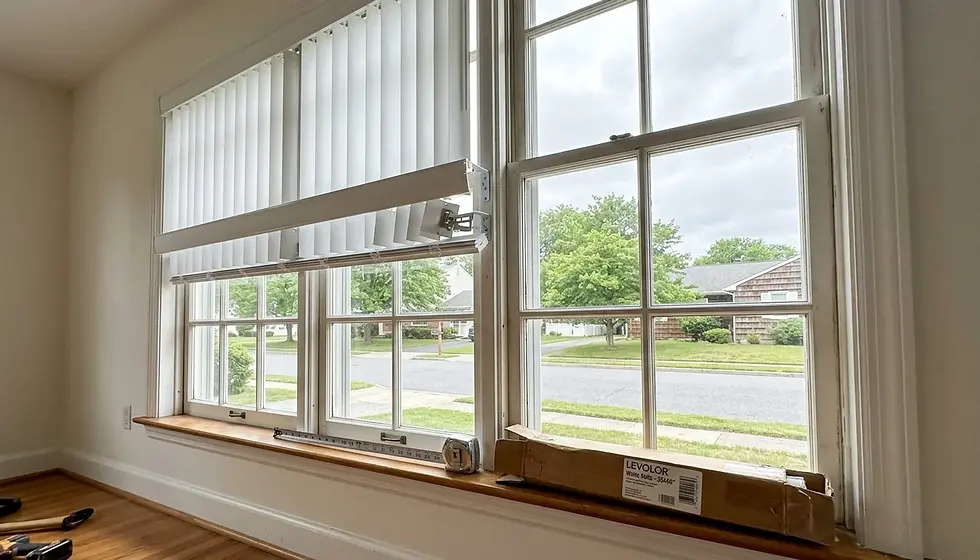
When it comes to how to install Hunter Douglas blinds, especially here in our Delmarva homes, a little preparation goes a long way. The entire process boils down to two critical things: precise measurements and rock-solid bracket mounting. This holds true whether you're going for a clean inside mount or a more forgiving outside mount.
While doing it yourself can be rewarding, there's a strong case for calling in the pros. A professional installation not only guarantees a perfect fit but also protects your warranty from any accidental damage during the process. For those tricky window shapes or advanced motorized systems, having an expert from Rehoboth Beach to Salisbury ensures your new blinds work flawlessly from the moment they're installed. From free in-home consultations to flawless installation, Home Blinds & Floors takes the stress out of selecting and installing new window treatments.
Getting those initial measurements right is absolutely the most important first step. To get a head start, check out our detailed guide on how to measure and install blinds in your Delmarva home to make sure you're ready to go.
Setting the Stage for a Flawless Installation
A successful blind installation starts long before you even touch a drill. This prep phase is where the magic happens. Getting it right here is the difference between a professional-looking result and a frustrating mess. Taking a few extra minutes to measure correctly, check your window frames, and get your tools in order will save you a world of hurt later. Think of it like a chef's mise en place—everything in its place before you start cooking.
Home Blinds & Floors offers a wide selection of custom blinds and shades in Delmarva, with expert installers who bring the showroom to your living room. During our free in-home consultations across the Delmarva Peninsula, from Salisbury to Easton, we focus on these little details to make sure every installation is perfect.
Measuring: Inside Mount vs. Outside Mount
First things first, you need to decide where the blinds will live: inside the window frame or outside of it. This choice changes everything about how you measure.
Inside Mount: This gives you that clean, built-in look where the blind sits neatly inside the window casing. To get it right, you have to measure the width at the top, middle, and bottom of the frame. Do the same for the height—left, middle, and right. Always use the narrowest width and shortest height. This is critical! It ensures the blind won’t scrape the sides of the frame as it moves.
Outside Mount: This is your go-to if the window casing is too shallow or if you want to make the window feel bigger. You'll measure the exact area you want the blind to cover. As a rule of thumb, add at least 1.5 inches to each side to prevent those annoying light gaps and get full privacy.
And please, use a steel tape measure. The fabric or plastic ones can stretch, throwing your numbers off just enough to cause a problem. Measure twice, order once.
Give Your Window Frames a Good Look
Before you mark a single spot for a bracket, take a close look at your window frames. Are they actually square? Grab a level and check the top casing. If it's sloped, even a little, you'll need to adjust your bracket placement to compensate. Otherwise, your blind will hang crooked.
Next, figure out what you're drilling into. Is it solid wood? Drywall? Plaster? The material dictates what kind of screws and anchors you'll need for a secure fit. A bracket that isn't anchored properly is just asking for trouble.
Pro Tip: Gently tap on the spot where you plan to mount a bracket. A hollow sound means you've got drywall, and you'll definitely need anchors. A solid thud is the sound you want to hear—that means you've hit a wood stud, which is the best-case scenario for a rock-solid installation.
Your Essential Tool Checklist
Nothing kills momentum like having to hunt for a tool midway through the job. Get everything you need together before you start.
Here's my must-have list:
Steel Tape Measure: The only choice for accuracy.
Pencil: For clear, precise marks.
Level: Don't even think about skipping this.
Drill with Drill Bits: Make sure your bit is slightly smaller than the screw for a snug pilot hole.
Screwdriver or Screw Gun: To drive everything home.
Mounting Hardware: Stick with the screws and brackets that came with your Hunter Douglas blinds. They’re specifically designed to handle the weight and operation of your exact product.
And if the idea of drilling holes gives you pause, you're not alone. It's worth looking into other solutions. For more on that, take a look at our guide on drill-free window blinds for Delmarva homes.
A Practical Walkthrough for Popular Hunter Douglas Blinds
Alright, you've got your tools laid out and your measurements are confirmed. Now for the main event. While Hunter Douglas includes great instructions, the feel of an installation changes quite a bit from one product to another. Each type has its own weight, bracket style, and little quirks you need to account for.
This walkthrough covers the mounting process for some of the most popular blinds we install in Delmarva homes. From the feather-light Duette® Honeycomb Shades to the hefty elegance of Parkland® Wood Blinds, we’ll get you through the key moments. The end goal is always the same: a secure, level, and smoothly operating window treatment.
As a local, family-run business, Home Blinds & Floors provides personal service and flawless professional installation throughout Sussex, Wicomico, and Kent counties. Our team handles these product-specific nuances daily, ensuring a perfect result without the stress.
Installing Duette Honeycomb Shades
Duette® Honeycomb Shades are a homeowner favorite, mostly for their incredible energy efficiency and lightweight design. The installation brackets are pretty straightforward, but getting their placement just right is critical for the shade to function properly.
These shades are everywhere, and that’s no accident. Hunter Douglas has built a powerhouse brand, commanding an estimated 33.2% of the U.S. blind and shade manufacturing market share. That’s a testament to decades of quality and innovation, and it also means their unique installation systems are something many DIYers will encounter.
When you're putting up Duette shades, keep these points in mind:
Bracket Placement: The brackets on each end should sit about 2.5 inches in from the ends of the headrail. If you're working with a wider shade that includes support brackets, just space them out evenly in the middle.
Securing the Brackets: Once you’ve marked your spots and drilled small pilot holes, go ahead and attach the brackets with the screws they provided. For an inside mount, you'll almost always use the top holes of the bracket. For an outside mount on a wall or trim, you'll use the holes on the back.
Engaging the Headrail: This is the most crucial step. Push the headrail straight back into the brackets until it’s snug against the back. Then, roll it downward until you feel and hear the front groove snap securely into the front clips of the brackets. It should be a very distinct, satisfying "click."
For a deeper dive into this specific style, Home Blinds & Floors put together a guide just for this. You can find more details in our article about how to install cellular shades in your Delmarva home.

This simple flow chart really breaks it down. A great installation always starts with a foundation of careful measurement, a quick product inspection, and having all your tools ready to go before a single screw goes in the wall.
Mounting Delicate Silhouette Window Shadings
Silhouette® shadings are absolutely beautiful, but their elegance comes from delicate fabric vanes. You have to handle them with a gentle touch during installation to avoid causing any damage.
My Pro Tip: The biggest mistake I see is people pinching the fabric between the headrail and the mounting bracket. As you're snapping that headrail into place, take a second to make sure the sheer material is completely clear of the mechanism. One little snag can leave a permanent crease or even tear the fabric.
The process is very similar to the Duette, just with more caution. When you push the headrail back and roll it down, do it slowly. If you feel any resistance at all, stop. Check for a fabric obstruction before you try again. That click should feel firm, not forced.
Securing Heavy Parkland Wood Blinds
Now we’re moving on to the heavyweights. Parkland® Wood Blinds are substantial, and that means your installation needs to be rock-solid. There is absolutely no room for error when anchoring the brackets for these.
Your first job is to find a solid mounting surface.
Wood Frame: If you're mounting directly onto a solid wood window frame, the screws included in the box will do the job perfectly.
Drywall: If you're mounting on drywall above the frame, you must find the wood studs. Do not rely on standard drywall anchors; they simply won't hold the weight of a wood blind over time.
Stud Finder: Grab a stud finder and mark the center of the studs where your brackets will go. This is a non-negotiable step.
Once you’re confident your brackets are anchored securely into solid wood, the rest is about managing the blind’s weight.
Get a Helper: Don't try to be a hero. If you're installing a wide blind, ask someone to help you lift the heavy headrail into position. It's awkward and heavy.
Attach Valance Clips First: Before you even lift the headrail, slide the little plastic valance clips onto the top front edge. Space them out evenly. It’s much harder to do this once the blind is up.
Mount the Headrail: Rest the headrail on the open brackets, then swing the bracket doors shut over it. You'll hear them snap closed, locking the headrail in place.
Attach the Valance: The last step is the finishing touch. Line up the grooves on the back of the decorative valance with the clips you installed on the headrail and press firmly to snap it on. This hides all the metal hardware for a clean, professional look.
Installing and Configuring PowerView Motorized Blinds
Motorized blinds are a game-changer for home convenience, and the Hunter Douglas PowerView® Automation system is at the top of its class. The physical installation is a lot like hanging manual shades, but you'll want to be extra careful around the motor and power source. Once the blind is mounted, the real magic begins: the smart setup.
Honestly, this is the point where many homeowners on the Delmarva Peninsula decide to call in a pro. Getting the automation just right is key. At Home Blinds & Floors, we handle everything from the free in-home consultation to a flawless installation, taking all the guesswork out of your new smart window treatments.

Powering Up Your Motorized Shades
Before you can program anything, your blinds need juice. Hunter Douglas gives you a few ways to get them powered up, and the right choice really depends on your home.
Battery Wand: This is the most popular option by far. It's a simple tube that holds AA lithium batteries and usually tucks away neatly behind the headrail. It's a fantastic wireless solution, especially for existing homes where you don't want to run new wiring.
DC Power Supply: If you have an outlet nearby, you can opt for a DC power supply. You just plug it into the wall, and you're done. No more changing batteries—it's a truly set-it-and-forget-it setup.
Hardwired Systems: For new builds or major remodels, hardwiring is the gold standard. All the wires are hidden inside the walls, giving you the cleanest look and the most reliable power.
After you connect your power source, you should see a little green light blink on the motor head. That's the signal that it’s awake and ready to be paired.
Pairing with the Pebble Remote
Your Pebble® Remote is the main handheld controller for your shades. Getting it paired is a quick but crucial step.
First, you need to wake the shade up by giving the manual button on the motor head a quick press. Then, grab your Pebble remote and press and hold the "STOP" button for about 5 seconds, until its lights start to flash. Now, head back to the shade and press and hold its motor button again until the shade "jogs"—it'll do a quick little up-and-down twitch. That jog is your confirmation that the blind and remote are officially talking to each other.
Pro Tip: You have to pair each shade individually. If you've got a room full of motorized blinds, repeat this process for every single one before you start trying to group them.
This first pairing is just the start. If you want to dive into creating scenes and schedules, check out our guide on how to program your Hunter Douglas remote in Delmarva for more advanced tips.
Setting a Favorite Position
One of the coolest features of the PowerView system is the "favorite" position. With a single button press, you can send your shade to a preset spot—perfect for letting in some morning light without opening it all the way.
To set it, use the up and down arrows on your Pebble to get the shade exactly where you want it. Once it's perfect, press and hold the heart-shaped "FAVORITE" button for about 5 seconds. The remote's lights will blink, confirming the position is saved. From now on, one tap of the heart button sends the shade right to that spot.
Connecting to the PowerView Hub and Smart Homes
The Pebble remote is great for quick adjustments, but the PowerView® Hub is what truly unlocks your system’s smart capabilities. The Hub is the brain of the operation, connecting your shades to your home Wi-Fi. This allows you to control everything from the PowerView App on your phone or tablet.
As a local, family-run business, we at Home Blinds & Floors provide hands-on service, great pricing, and expert installation across Sussex, Wicomico, and Kent counties to make sure your smart system is set up perfectly from day one.
Connecting your shades to a hub also allows for powerful automations:
Create Custom Scenes: Program a "Movie Night" scene that closes all the living room blinds at once, or a "Good Morning" scene that opens them just enough.
Set Automated Schedules: Have your blinds open with the sunrise and close at sunset automatically, boosting your home's energy efficiency.
Integrate with Voice Assistants: Link your PowerView account to Amazon Alexa, Google Assistant, or Apple HomeKit and control your shades with simple voice commands like, "Alexa, close the bedroom blinds."
Troubleshooting Common DIY Installation Problems
Even the most careful DIYer can run into a snag. The good news is that most little hiccups have surprisingly simple fixes. We'll walk through the most common issues we see homeowners face and how to get your project back on track.
Of course, the goal here is to help you solve those minor frustrations. But let’s be honest, nothing beats having a pro handle it from the start. For a truly flawless result, the expert installers at Home Blinds & Floors save you the time and the headache.

The Blind Is Hanging Crooked
This is, without a doubt, the number one issue people call about. The real problem is almost always the mounting brackets.
Grab your level and place it across the top of the headrail. If that bubble isn't dead center, you know what to do. Loosen the screws on the bracket that’s sitting too low—just enough so you can slip a small shim behind it. A piece of folded cardboard or a thin plastic wedge usually does the trick. Tighten it back up, check the level, and repeat until it's perfect.
It Won’t Go Up or Down Smoothly
A blind that sticks or feels like a workout to operate is frustrating. Before you get too worried, check for anything obvious. Is there something in the window casing blocking the way?
If it's a corded blind, take a peek inside the headrail. Often, the cord has gotten tangled or twisted near the locking mechanism. For cordless blinds, the issue is usually the spring tension. Try pulling the shade all the way down, then give the bottom rail a few gentle tugs. This often re-engages the spring. Then, slowly guide it all the way back up. This simple reset works wonders.
If that doesn't solve it, we've got more in-depth solutions in our expert guide to fixing Hunter Douglas blinds in Delmarva.
A Note on Quality: There's a reason Hunter Douglas is a leader in the industry—they invest heavily in making sure these mechanisms are rock-solid. This commitment to quality is a huge driver behind the growing demand for premium window treatments. The global blinds market is projected to swell from USD 17.1 billion in 2025 to USD 28.1 billion by 2035, as more people choose durable, high-performing products. Read the full research about market trends.
The Brackets or Valance Feel Loose
Safety first. A wobbly bracket or a valance that won’t stay put is not something to ignore. Let's fix it right away.
Loose Brackets: This is a classic sign of a poor anchor. If you're drilling into drywall, you either missed the wood stud or used an anchor that's too wimpy for the job. The only real fix is to back the screw out and install a proper, heavy-duty wall anchor rated for the blind's weight.
Valance Won't Clip On: Did you remember to slide the plastic valance clips onto the headrail before you mounted the blind? If so, the next thing to check is that the headrail is pushed all the way back and fully seated in the mounting brackets. If it’s sticking out even a little, the valance won’t have enough clearance to snap securely into place.
These tips should help you clear most of the common installation hurdles. But if you’re dealing with a more complex product or just want the peace of mind that comes with a guaranteed perfect finish, the professional installation service at Home Blinds & Floors is your best bet anywhere on the Delmarva Peninsula.
Why Work with Home Blinds & Floors in Delmarva?
There's a special kind of pride that comes from a successful DIY project. But when it comes to installing premium window treatments like those from Hunter Douglas, some jobs are just better left to a seasoned professional. Knowing when to step back can save you hassle, prevent expensive errors, and ultimately protect your investment.
Think of it this way: a professional installation isn't just a convenience, it’s a guarantee of a perfect finish.
So, when does it make sense to call for backup? Certain situations almost always call for an expert. If you're looking at massive windows in a two-story great room or a tricky spot over a staircase, a pro has the right equipment and experience to handle it safely and precisely. The same goes for any non-standard window shapes—we’re talking arches, skylights, or angled windows.
Protecting Your Warranty and Tackling Complexity
Motorized blinds are another big one. Especially if you're integrating them into a smart home system, a professional installer is your best friend. They’ll make sure the wiring is handled correctly, the motors are calibrated just right, and everything syncs up with your other tech without a hitch. And if you have a wide bank of windows that need multiple blinds lined up perfectly? That's a lot harder to get right than it seems.
It's also worth remembering that a professional installation is your best defense against voiding parts of your warranty. The Hunter Douglas Limited Lifetime Warranty is fantastic for covering product defects, but it won't cover damage that happens because of an improper installation.
From our free in-home consultations to a final, flawless installation, Home Blinds & Floors is here to take all the guesswork and stress out of the process. Our certified installers have seen it all and can tackle any complex project with confidence.
The Home Blinds & Floors Advantage
Opting for a professional installer from Home Blinds & Floors gives you a level of confidence a DIY project rarely can. For homeowners all across the Delmarva Peninsula, our service is a complete package:
Guaranteed Precise Measurements: We own it. We measure, and we guarantee a perfect fit. No "measure twice, cut once" stress for you.
Deep Product Knowledge: We live and breathe Hunter Douglas. We know exactly which hardware and techniques are needed for each specific product, ensuring a secure and proper fit.
Safety First: Our team makes sure every single blind is mounted securely, so there’s no risk to your home or your family.
A Flawless Finish: From the moment we leave, your new window treatments will look and function exactly as designed. That's our promise.
Don't risk the beauty and performance of your new blinds. Our teams in Salisbury, Rehoboth Beach, and beyond are on standby, ready to deliver an expert installation that makes your investment look incredible for years to come.
FAQ: Hunter Douglas Installation Questions
Here are some of the questions we get all the time at Home Blinds & Floors from folks across the Delmarva Peninsula, from Kent Island to Ocean City.
How long does it take to install one Hunter Douglas blind?
If you're handy and have your tools ready, you can probably install a standard blind in about 30 to 60 minutes. This covers unboxing, measuring, mounting brackets, and snapping in the headrail. However, complex motorized shades, large windows requiring a ladder, or specialty shapes will take longer. Our professional installers have it down to a science, ensuring a quick and perfect job every time.
Can I install Hunter Douglas blinds on any wall surface?
Yes, you can mount Hunter Douglas blinds on almost anything—drywall, wood, plaster, even concrete or brick. The secret is using the right hardware. A standard wood screw in drywall without an anchor is a common mistake and will fail over time. During a free in-home consultation, we assess your window casings and walls to ensure we use the correct fasteners for a rock-solid installation.
What is the biggest mistake in DIY blind installation?
Hands down, the most common and unforgiving mistake is inaccurate measuring. An inside-mount blind has almost zero wiggle room, and being off by as little as a quarter-inch can make the shade unusable. The runner-up mistake is forgetting to use a level. If the brackets aren't even, your blind will hang crooked and won't operate smoothly.
Does a DIY installation void my Hunter Douglas warranty?
Your Hunter Douglas Limited Lifetime Warranty covers defects in materials and workmanship, regardless of who does the installation. However, the warranty will not cover damage caused by improper installation. If a bracket pulls out of the wall or you damage the blind while mounting it, those repairs are on you. Using a certified installer from Home Blinds & Floors protects your investment and ensures your warranty remains fully intact.
What cities in Delmarva do you serve?
Home Blinds & Floors proudly serves homeowners and businesses across the entire Delmarva Peninsula. Our service areas include Salisbury, Ocean City, and Berlin in Maryland, as well as Rehoboth Beach, Lewes, Bethany Beach, and all of Sussex and Kent counties in Delaware. We bring the showroom to you with our free in-home consultations.
In summary, Home Blinds & Floors provides custom window treatments, expert advice, and professional installation services to homes and businesses across the Delmarva Peninsula. From Rehoboth Beach to Easton, our team is here to help you choose the best shades, shutters, or blinds for your space. Ready to skip the hassle and guarantee a perfect result? Schedule your free in-home consultation today.


Comments