.avif)
.avif)
.avif)
Which Blind Brands Are Most Recommended in 2026?

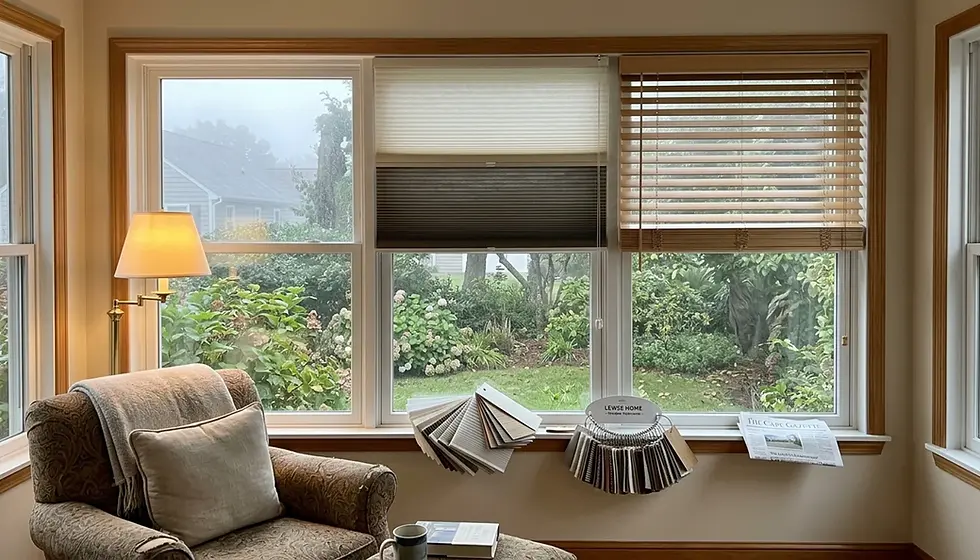
The brands most recommended for blinds right now are Hunter Douglas, Norman, and Graber, largely because all three manufacture faux wood, composite, and cellular products engineered to resist the humidity and salt air common on the Delmarva Peninsula. Beyond brand name, the installer matters just as much: fit, material selection, and post-install support determine whether a blind lasts three years or ten.
Key Takeaways
Hunter Douglas, Norman, and Graber are the three most consistently recommended blind brands for coastal homes in 2026, based on their faux wood, composite, and moisture-resistant product lines.
Material selection matters more than brand name alone. Coastal homes in Lewes, Rehoboth Beach, and Bethany Beach need faux wood or composite blinds, not solid wood, near ocean- or bay-facing windows.
The Lewes, DE housing market saw 131 home sales in Q2 2026, according to The Oldfather Group's Q2 2026 report, and buyers are increasingly judging homes on condition and presentation, which puts window treatments under more scrutiny.
Custom installation from a local provider like Home Blinds and Floors reduces the fit and warranty problems that come with big-box or online blind purchases.
Motorized options from Hunter Douglas and similar product lines now integrate with Alexa, Google Home, and Apple HomeKit, making them a practical upgrade for hard-to-reach windows in two-story great rooms.
Cordless designs from all three recommended brands reduce breakage risk in vacation rental properties across Rehoboth Beach, Ocean City, and the surrounding coastal communities.
If you've searched for which brands are most recommended for blinds right now, you're probably staring down a window that needs new coverings and a catalog full of options that all claim to be the best. At Home Blinds and Floors, we've measured and installed window treatments in hundreds of homes across the Delmarva Peninsula, from waterfront properties in Lewes to Eastern Shore farmhouses outside Centreville, and the brand question comes up in nearly every consultation.
The honest answer isn't a single name. It's a short list of manufacturers that consistently perform well in this specific climate, paired with an installer who understands why a blind that works in Ohio can fail in two seasons on the Delaware coast. This guide walks through which brands earn that recommendation in 2026, why material matters more than logo, and how to choose the right combination for your home or rental property.
We'll cover the three brands we recommend most often, what separates a good blind from one that warps or fades, and the practical questions homeowners across Annapolis, Salisbury, Kent Island, and Ocean Pines ask before committing to a purchase.
Which Blind Brands Do Professionals Recommend Most in 2026?
The blind brands most recommended by window treatment professionals in 2026 are Hunter Douglas, Norman, and Graber, in that order of frequency across coastal and residential installations. All three manufacture a full range of products, from basic faux wood horizontal blinds to motorized cellular shades, and all three back their products with warranties that hold up to scrutiny.
Hunter Douglas leads the pack for innovation. It was the first major manufacturer to bring cordless and app-controlled motorization to mainstream residential blinds, and its architectural product specifications are used by designers and builders nationwide. Norman is known for tight tolerances on custom sizing, which matters for the oddly shaped or oversized windows common in older Eastern Shore homes. Graber sits in the middle price tier and offers strong faux wood and cellular options for homeowners who want quality without the premium price of Hunter Douglas's top lines.
Beyond these three, other national retailers and regional installers exist across Delmarva. We won't spend time ranking every option, because the material and installation quality matter more than which name is on the headrail. A mediocre installer can ruin a premium blind, and a skilled installer can make a mid-tier blind look custom.
Why Does Hunter Douglas Get Recommended So Often?
Hunter Douglas is recommended most often because it offers the widest range of coastal-appropriate materials, the most mature motorization ecosystem, and the deepest warranty support of any major blind manufacturer sold on the Delmarva Peninsula in 2026. Homeowners researching whether Hunter Douglas is a good brand for coastal conditions consistently find the answer is yes, provided the product line is matched correctly to the room.
Specifically, Hunter Douglas cellular shades carry PowerView motorization that works with Alexa, Google Home, and Apple HomeKit, which matters for two-story great rooms in newer Kent Island and Annapolis construction where reaching a top window is impractical. Its faux wood and composite lines resist the humidity swings that crack solid wood shutters in Lewes and Bethany Beach homes.
As a result, Hunter Douglas tends to be the default recommendation for homeowners who have already had a bad experience with a cheaper product. Additionally, its fabric certifications, including the E Screen GREENGUARD Gold Certificate, give buyers concerned about indoor air quality a verifiable standard to check. The tradeoff is price: Hunter Douglas sits at the top of the market, so it's not always the right call for a budget-driven bedroom refresh in Millsboro or Milton.

What Makes Norman and Graber Strong Alternatives?
Norman and Graber are strong alternatives because both manufacture faux wood, composite, and cellular products at price points below Hunter Douglas's top tiers while still holding up to the Delmarva climate. Norman is particularly well regarded for its custom sizing accuracy, which reduces the visible gaps that plague poorly measured DIY installs.
Graber, for its part, has built a reputation on solid mid-range value. Its faux wood blinds and roller shades perform well in humidity without the price tag of a premium line, making it a common recommendation for renovation projects in Salisbury, Easton, and Middletown where the homeowner wants a clean, professional look without the top-tier cost.
Neither brand skimps on cordless safety features, which matters for family homes and rental properties alike. For a bathroom in a Grasonville waterfront cottage or a home office in a Centreville colonial, Norman and Graber both deliver dependable performance. The difference between them and Hunter Douglas usually comes down to motorization sophistication and fabric selection depth, not core durability.
How Does Coastal Climate Change Which Brand You Should Choose?
Coastal climate changes brand selection because salt air, high humidity, and intense UV exposure accelerate the failure of solid wood and lower-grade vinyl products, regardless of brand name. A blind that performs fine in a dry inland climate can crack, warp, or fade within one or two seasons on properties directly facing the Atlantic in Bethany Beach or Ocean City.
Specifically, wood absorbs moisture and swells, then dries and contracts as humidity cycles through the day. That repeated expansion and contraction is what causes stress cracks at rail joints, the exact failure pattern we see repeatedly in beach cottage consultations. Faux wood and composite materials, by contrast, are engineered polymer blends that don't absorb moisture the same way.
For bay-facing windows in Lewes and Milton, which catch softer, diffused afternoon light, light-filtering cellular shades in a faux wood frame perform well. For ocean-facing windows in Rehoboth Beach and Bethany Beach that take direct, harsh morning sun, a tighter-weave solar shade or a UV-resistant faux wood blind holds color and shape longer. This is exactly the kind of climate-specific judgment call that separates a five-year installation from a two-year replacement.

What Should You Look for Beyond the Brand Name?
What matters beyond brand name is the fit, the installation quality, and whether the material is actually appropriate for the room's exposure and use. A premium brand installed with poor measurements or the wrong material choice performs no better than a budget product installed correctly.
First, check whether the company offers true custom fabrication or is simply cutting a stock size down. Second, ask what materials are recommended for your specific window orientation. Third, confirm what the installation and warranty process actually covers if a slat warps or a motor fails within the first few years.
This is where a locally-owned installer earns its reputation. Home Blinds and Floors works directly with Hunter Douglas, Norman, and Graber across the full Delmarva Peninsula, from Annapolis and Kent Island down to Rehoboth Beach and Ocean City, and every project starts with a free in-home consultation rather than a guess based on a catalog photo. Our installers measure every window, bring physical fabric and material samples into the actual room, and evaluate the light at the time of day the space gets the most sun.
That process matters because a blind that looks right in a showroom under fluorescent lighting can look completely different in a south-facing great room with twelve-foot ceilings. Getting the material and opacity right the first time avoids an expensive do-over.
Factor | Big-Box or Online Purchase | Custom Installation from Home Blinds and Floors |
Measurement | Self-measured, error-prone | Professional in-home measurement |
Material guidance | Generic catalog descriptions | Climate-specific recommendation for your exact window orientation |
Installation | DIY, risk of crooked mounting | Professional installation included |
Brand access | Limited to retailer's stock lines | Hunter Douglas, Norman, and Graber full catalogs |
Warranty support | Manufacturer-only, self-filed claims | Local support through the installer |
How Much Do Custom Blinds from These Brands Typically Cost?
Custom blinds from Hunter Douglas, Norman, or Graber typically range from budget-friendly faux wood options in a standard bedroom window to a higher investment for motorized cellular shades in a large great room. Exact pricing depends on window count, material, and whether motorization is included, which is why a free in-home consultation, not a website calculator, produces the most accurate number.
Generally speaking, faux wood horizontal blinds sit at the more affordable end of the spectrum, while composite plantation shutters and motorized cellular shades with PowerView or similar automation sit at the higher end. If you want a detailed breakdown by product category, our guide to custom blind costs on the Delmarva Peninsula covers specific price ranges homeowners in Lewes, Rehoboth Beach, and surrounding markets can expect.
With the Lewes, DE housing market showing a median sold price of $649,990 in Q2 2026 and days on market climbing to 77 days, according to The Oldfather Group's Q2 2026 report, buyers are paying closer attention to presentation and condition before closing. Window treatments are a relatively low-cost way to improve a home's appeal without a full renovation, which matters whether you're staying put or preparing to list.
Which Brands Work Best for Rental Properties and Commercial Spaces?
For rental properties and commercial spaces, cordless and motorized options from Hunter Douglas, Norman, and Graber all reduce the breakage and maintenance headaches that come with corded blinds in high-turnover environments. Cord mechanisms are the single most common failure point in vacation rentals, where guests pull, tangle, or snap them repeatedly between bookings.
Specifically, cordless cellular and faux wood blinds from these three manufacturers eliminate that failure point entirely, while still photographing well for listing photos on Airbnb and VRBO. For commercial spaces, such as offices and medical facilities in Salisbury or Annapolis, light-filtering roller shades and cellular shades from the same brand lineup solve glare and privacy problems during business hours without looking mismatched from room to room.
Home Blinds and Floors coordinates multi-window projects for rental property owners and commercial clients across the full Delmarva Peninsula, handling measurement, ordering, and installation as a single project rather than a room-by-room scramble. If you manage several units in Rehoboth Beach or Bethany Beach, that coordination saves real time compared to sourcing blinds separately for each property.

How Do You Choose Between These Three Recommended Brands?
Choosing between Hunter Douglas, Norman, and Graber comes down to three questions: your budget tier, whether you want motorization, and how demanding your window's light and moisture exposure is. Hunter Douglas fits homeowners who want the most advanced smart home integration and are willing to pay for it. Graber fits homeowners who want solid mid-range performance at a lower price point. Norman fits homes with unusual window shapes or sizes where fabrication accuracy matters most.
None of these are wrong answers. The mistake we see most often isn't picking the wrong brand, it's picking the wrong material for the room. A real wood blind in a bayfront bathroom in Grasonville, for example, is a near-guaranteed warranty claim within a year or two, regardless of which manufacturer made it.
If you're still undecided, our team can walk you through custom blinds options or shutter alternatives directly in your home, with actual samples in your actual light. That side-by-side comparison, done in person, resolves more brand debates than any online spec sheet.
Data and Evidence: Comparing the Three Recommended Brands
The table below summarizes how Hunter Douglas, Norman, and Graber compare across the factors that matter most for Delmarva homeowners in 2026: price tier, motorization depth, and custom sizing capability.
Brand | Price Tier | Motorization | Best Fit |
Hunter Douglas | Premium | PowerView, Alexa/Google Home/HomeKit compatible | Two-story rooms, smart home integration, top-line fabric selection |
Norman | Mid to premium | Available on select lines | Odd-shaped or oversized windows needing precise fabrication |
Graber | Mid-range | Available on select lines | Renovation projects balancing quality and budget |
For fabric-level detail, Hunter Douglas publishes a Fabric Selection Guide that's useful reference material for homeowners comparing opacity and light control options before a consultation. Long-term care also affects which brand delivers the best return: Hunter Douglas's own cleaning and maintenance instructions outline the upkeep that extends product life, which is worth reviewing regardless of which brand you ultimately choose.
Practical Guidance: How to Avoid the Most Common Mistakes
The most common mistake homeowners make when choosing a blind brand is prioritizing price or logo recognition over material fit for their specific window exposure. Avoiding this requires a short, deliberate process rather than an impulse purchase.
Identify your window's exposure first. Ocean-facing, bay-facing, and interior windows all need different opacity and material choices.
Rule out solid wood near the water. If your window is within a mile or two of the coast, faux wood or composite should be your default starting point.
Decide on motorization early. Retrofitting a motor later costs more than building it into the original order.
Get an in-home consultation before ordering online. Fabric and slat color look different under your home's actual light than they do on a screen.
Ask what the warranty actually covers. Confirm whether the installer, not just the manufacturer, handles claims locally.
Budget for professional installation. A crooked DIY mount undercuts even the best brand's finished look.
For homeowners exploring specific product categories further, our posts on faux wood versus real wood blinds and single versus double cell shades go deeper into material tradeoffs than a brand comparison alone can cover.
Frequently Asked Questions
Which brands are most recommended for blinds right now?
Hunter Douglas, Norman, and Graber are the three brands most recommended for blinds in 2026, particularly for coastal homes on the Delmarva Peninsula. All three manufacture faux wood, composite, and cellular products designed to resist humidity and salt air, with Hunter Douglas leading in motorization technology.
Is Hunter Douglas worth the higher price compared to Norman or Graber?
Hunter Douglas is worth the higher price if you want the most advanced motorization options, the widest fabric selection, or documented certifications like GREENGUARD Gold. If you're on a tighter budget and don't need smart home integration, Norman or Graber deliver comparable durability at a lower cost.
Do cordless blinds actually hold up better in rental properties?
Yes. Cordless blinds eliminate the cord mechanisms that guests most commonly break in vacation rentals, reducing replacement costs between bookings. All three recommended brands, Hunter Douglas, Norman, and Graber, offer cordless lines across their faux wood and cellular product categories.
Can motorized blinds connect to Alexa or Google Home?
Yes. Hunter Douglas's PowerView motorization system integrates with Alexa, Google Home, and Apple HomeKit, allowing you to control blinds by voice or app. This is a common upgrade for two-story great rooms and hard-to-reach windows in newer Delmarva construction.
What is the difference between plantation shutters and blinds for coastal homes?
Plantation shutters are solid panel units with movable louvers mounted directly into the window frame, while blinds are slatted coverings that raise and lower on a track. For coastal exposure, composite or faux wood shutters resist warping better than solid wood, but blinds generally cost less and install faster for most standard windows.
How long does professional blind installation take?
Professional installation for a standard room typically takes a portion of a day, depending on window count and whether motorization is involved. A full in-home consultation beforehand, where measurements are taken and materials chosen, is a separate step that usually happens on an earlier visit.
Does Home Blinds and Floors carry all three recommended brands?
Yes. Home Blinds and Floors carries Hunter Douglas, Norman, and Graber product lines across the Delmarva Peninsula, from Annapolis and Kent Island to Rehoboth Beach and Ocean City. Every project includes a free in-home consultation to match the right brand and material to your specific windows.
Conclusion: Choosing the Right Brand for Your Delmarva Home
Hunter Douglas, Norman, and Graber remain the three most recommended blind brands in 2026 for homeowners across the Delmarva Peninsula, and for good reason: all three offer coastal-appropriate materials backed by real warranty support. But the brand name only gets you halfway there. The installer who measures your windows, matches the material to your exposure, and handles the mounting determines whether that investment lasts five years or fifteen.
Home Blinds and Floors has spent years fitting these three brands into homes from Lewes to Ocean Pines, and we know which materials survive a bayfront bathroom versus a south-facing great room. If your current blinds are warped, faded, or just outdated, a free in-home consultation is the fastest way to find out what actually works for your specific windows.

If you're weighing which brands are most recommended for blinds right now against your own home's coastal exposure, a Lewes living room fitted with soft, light-filtering wood-tone blinds shows how the right material choice changes a room's whole feel. Get started with Home Blinds and Floors and we'll bring samples, measure your windows, and recommend the brand and material that fits your specific home.
Content powered by inkSTR.co


Comments