.avif)
.avif)
.avif)
Half Cafe Shutters: The Complete Delmarva Buying Guide

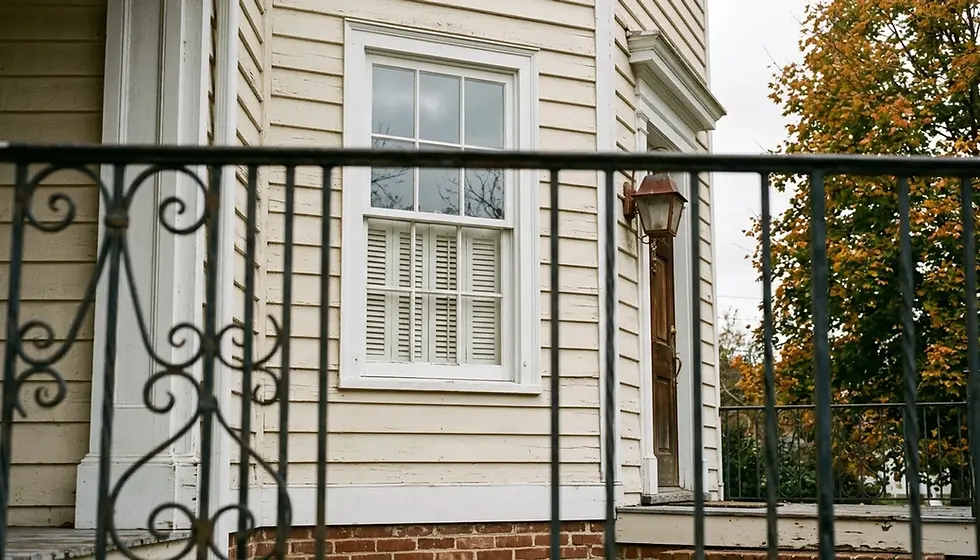
Half cafe shutters are plantation shutters installed to cover only the bottom portion of a window, leaving the top sash open to natural light while blocking street-level sightlines into the room. They work on kitchens, bathrooms, and front-facing living rooms where you want privacy at eye level but don't want to lose the light coming through the top half of the glass.
Key Takeaways
Half cafe shutters cover roughly the bottom half of a window (sometimes a bit more or less depending on the sill height) and leave the top sash uncovered, unlike full-height or tier-on-tier shutters that cover the entire window.
Because they use less material and fewer louvers, half cafe shutters typically cost less than full-height shutters on the same window, though exact pricing depends on width, louver size, and material.
Industry material breakdowns show wood held roughly a 46% share of the North America plantation shutters market in 2021, according to Transparency Market Research, though composite and vinyl options are gaining ground in coastal climates.
Quality plantation shutters, including cafe-style installations, typically hold up for 20 or more years with basic care, per industry benchmarks cited by Blindsgalore.
The U.S. Department of Energy estimates around 30% of a home's heating energy is lost through windows, which is why insulating shutter styles matter even on a half-covered window.
In coastal Delmarva homes, material choice matters more than louver size: wood shutters near the water face a different set of problems than they do inland, and Home Blinds and Floors guides homeowners through that decision during a free in-home consultation.
If you've spent any time browsing shutter styles online, you've probably come across the term "half cafe shutters" without a clear explanation of what makes them different from the full-height shutters your neighbor just installed. The distinction matters more than it seems. A half cafe shutter is a design decision about where privacy stops and light begins, and getting that line wrong means either squinting through gapped louvers or losing your view entirely.
At Home Blinds and Floors, we install shutters across the Delmarva Peninsula, from Rehoboth Beach and Lewes out to Salisbury, Easton, and Kent Island, and cafe-style requests have become one of the more common conversations we have with homeowners who want privacy without shutting out the view entirely. This guide covers what half cafe shutters actually are, where they perform best, what they cost compared to full-height alternatives, and the coastal material questions that most shutter articles skip entirely.
As of 2026, cafe shutters remain a strong seller across the region, particularly in kitchens and street-facing rooms where full coverage feels like overkill. We'll walk through the practical decisions: louver size, material, and whether a half-height installation actually saves you money once labor and hardware are factored in.
What Are Half Cafe Shutters Called?
Half cafe shutters are most commonly called cafe shutters or cafe-style shutters, though you'll also see them referred to as half-height plantation shutters or bottom-up shutters. All four terms describe the same product: a shutter panel that covers only the lower portion of a window opening, typically the bottom sash on a double-hung window, while leaving the upper glass fully exposed.
The name comes from the style's origin in European street-level cafes, where shop owners needed to block the view of passersby at eye level without darkening the entire dining room. Specifically, the design solved a privacy problem that full curtains or blinds couldn't: keeping the top half bright enough to read a menu by while shielding table conversations from the sidewalk.
You may also hear the term used loosely to describe shutters mounted at counter height in kitchens, even when they're not tied to a specific window sash division. In practice, most Delmarva installations follow the sash line on a double-hung window, since that gives the shutter frame a natural stopping point and a cleaner finished look than an arbitrary height cut.
It's worth noting that cafe shutters differ from tier-on-tier shutters, a related style that sometimes gets confused with them. Tier-on-tier shutters cover the entire window height but split it into two independently operable panels, so you can open the bottom for airflow while keeping the top closed for shade, or vice versa. Cafe shutters only ever cover the bottom; the top stays permanently open.

Are Cafe Style Shutters Cheaper Than Full-Height Shutters?
Yes, cafe style shutters are generally cheaper than full-height shutters on the same window, because they use roughly half the material, fewer louvers, and a smaller frame. Exact savings depend on width, louver size, and material choice, but the reduction in panel height is the primary driver of the lower price point.
The math is straightforward once you break it down. A full-height plantation shutter on a standard window might require two or three horizontal panels stacked with hinges, while a cafe shutter needs only the bottom panel and a simpler frame kit. Fewer louvers mean less material cost, and a shorter panel is faster to hang, which trims labor time as well.
That said, the savings aren't as dramatic as some marketing suggests. Frame costs, hardware, and the base labor charge for a service call don't scale down proportionally with panel height, so a cafe shutter isn't automatically "half the price" of a full-height version. In our experience quoting jobs across Bethany Beach, Ocean City, and Milton, cafe shutters typically run 30% to 45% less than full coverage on the same window, though wide bay windows and specialty shapes can narrow that gap.
Composite plantation shutters typically run in the range of $250 to $550 installed for a standard-size full window, so a comparable cafe shutter on the same opening usually lands in a lower bracket once you account for the reduced panel size. If budget is the deciding factor, cafe shutters give you the classic plantation look at a lower entry cost, without switching to a cheaper material altogether.
How Do Half Cafe Shutters Compare to Other Half-Window Treatments?
Half cafe shutters compete most directly with cafe curtains, roman shades hung at half height, and privacy window film, but shutters outperform all three on durability and light control precision. Unlike fabric options, louvered shutters let you angle light in fine increments rather than choosing between fully open or fully closed.
Cafe curtains are the traditional alternative and remain popular in farmhouse-style kitchens across the Eastern Shore. They're inexpensive and easy to swap seasonally, but they don't tilt for adjustable light control, they collect kitchen grease and moisture over time, and they need regular washing to stay presentable. A cafe shutter never needs laundering and holds its finish for decades rather than a few wash cycles.
Half-height roman shades solve the light-control problem better than curtains but introduce cords or lift systems that wear out with repeated use, particularly in high-traffic kitchens or rental properties where the shade gets adjusted multiple times a day. Window film offers permanent privacy at the lowest price point of the group, but it's a fixed solution. You can't open it for full light in the evening or on overcast days, and most films degrade or bubble within five to eight years in direct sun exposure.
For homeowners weighing style options more broadly, our custom shutters guide breaks down the full range of plantation shutter styles beyond cafe height, including full coverage and tier-on-tier configurations for windows where you want the option to close off the entire opening.
Are Shutters Out of Style in 2026?
No, plantation shutters, including cafe-style installations, remain firmly in style in 2026 and continue gaining market share against blinds and curtains. Industry research from Transparency Market Research values the North America plantation shutters market at roughly $4.5 billion in 2021, projected to reach approximately $7.1 billion by the end of 2026, a compound annual growth rate of about 9.0%.
That growth isn't evenly distributed across every shutter style, though. Full-height wood shutters remain the largest single segment, but composite and vinyl cafe shutters have picked up demand specifically because of their weather resistance and lower price point, according to the same market research. Residential installations accounted for roughly 73% of total plantation shutter demand in the same 2021 baseline year, which tells you this is overwhelmingly a homeowner-driven category rather than a commercial one.
Several factors are keeping shutters, cafe-style and otherwise, in demand as we move through 2026. First, rising energy costs have pushed more homeowners toward insulating window treatments, since shutters offer meaningfully better R-values than curtains or bare glass. Second, growing interest in cordless and child-safe window coverings has shifted demand away from corded blinds, and shutters have no cords at all in most configurations. Third, smart home integration is expanding into motorized shutter systems, giving the category a tech-forward angle that curtains simply can't match.
What's changed is less about whether shutters are trendy and more about which shutter style fits which room. Cafe shutters specifically have moved from a niche farmhouse detail into a mainstream option for kitchens, bathrooms, and street-facing rooms across coastal and suburban markets alike.

Are Cafe Shutters in Style for Coastal and Delmarva Homes?
Cafe shutters are very much in style along the Delmarva coast in 2026, particularly for kitchen windows, ground-floor bathrooms, and street-facing rooms in beach communities like Rehoboth Beach, Bethany Beach, and Lewes. Norman USA, a shutter manufacturer, described cafe-style shutters as a trending window treatment as far back as 2023, and that momentum has carried through into the current market.
The coastal context adds a specific reason cafe shutters work so well here. Beach cottages and bungalows in Rehoboth and Bethany often sit close to the sidewalk or a well-trafficked street, with kitchen and dining windows facing foot traffic during the summer season. A full-height shutter would block the ocean-adjacent light these homes are built around; a cafe shutter keeps the top of the window open for that light while shielding the counter and table area from passersby.
Inland toward Salisbury, Easton, and Centreville, the style shows up differently. Farmhouse and colonial-style homes on the Eastern Shore often pair cafe shutters with exposed brick or shiplap in kitchen renovations, using the half-height format as a design statement rather than a strict privacy necessity. In both settings, the appeal is the same: light on top, privacy on the bottom, and a look that reads as intentional rather than retrofitted.
We've also seen growing interest in cafe shutters for vacation rental properties across the coastal Delmarva market. Owners want a window treatment that photographs well for listing photos, doesn't require guest instruction to operate, and holds up to repeated adjustment between bookings, all of which cafe shutters handle better than cord-based alternatives.
What Materials Work Best for Half Cafe Shutters Near the Coast?
Composite and vinyl materials perform best for half cafe shutters in coastal Delmarva homes, because both resist the humidity, salt air, and UV exposure that cause real wood shutters to warp, crack, or fade within a few seasons. Wood remains the top-selling material nationally, holding roughly 46% of the North America plantation shutters market as of the 2021 baseline cited by Transparency Market Research, but that national figure includes plenty of inland, low-humidity markets where wood performs fine.
On a window facing the Atlantic in Bethany Beach or the Delaware Bay in Lewes, the calculus changes. Salt-laden air accelerates paint failure at joints and rail seams, and humidity cycles cause wood to swell and contract repeatedly, which is exactly the stress pattern that produces the stress cracks and bowed louvers we see in coastal service calls. Composite shutters, by contrast, resist moisture absorption entirely and hold their finish without repainting.
Industry data backs this up on the energy side as well. Composite shutters reduce heat loss by approximately 60% compared to a bare window, the highest reduction of any common window treatment, ahead of wooden shutters at roughly 51%, roller blinds at 28%, and curtains at just 14%. For a half-height cafe shutter, that insulating benefit only applies to the covered portion of the window, but it's still a meaningful improvement over an uncovered lower sash, particularly in older Eastern Shore homes with single-pane glass.
Vinyl and PVC-core composite options also hold up better in ground-floor bathroom installations, where humidity from showers creates the same swelling and warping risk as coastal salt air. If you're choosing cafe shutters for a bathroom anywhere on the peninsula, not just directly on the water, composite is the safer long-term bet over solid wood.
What Louver Sizes and Customization Options Work for Cafe Shutters?
Cafe shutter louvers most commonly range from 2.5 inches to 4.5 inches wide, with some manufacturers offering sizes as narrow as 1⅞ inches or as wide as 5½ inches for specific design aesthetics. Larger louvers, in the 3.5-inch to 4.5-inch range, let in more light when tilted open and give a more modern, less busy look on a kitchen window. Smaller louvers create a more traditional, cottage-style appearance but block slightly more light even when open.
Material options for cafe shutters typically include real wood, engineered wood composite, vinyl, and faux wood blends, each with a different balance of cost, weight, and moisture resistance. Finish options extend well beyond basic white, with most manufacturers offering stain colors that mimic natural wood grain alongside painted finishes in cream, gray, and custom color matches for homeowners coordinating with existing trim.
Cafe shutters can be configured for standard double-hung windows, bay windows, and specialty shapes, though specialty configurations typically add cost and lead time. Custom shutter orders generally ship faster in standard vinyl and composite ranges (often within 1-2 weeks) compared to premium wood lines, which can take 10-12 weeks depending on the manufacturer and finish selected. If you're planning an installation around a specific date, like getting a rental property ready before peak season, ask about lead times during your consultation rather than assuming standard timing.
For homeowners still deciding between shutter styles more broadly, our guide on faux wood versus real wood blinds for Delmarva homes covers many of the same material tradeoffs that apply directly to cafe shutter selection.
Where Do Half Cafe Shutters Work Best in a Delmarva Home?
Half cafe shutters work best on kitchen windows above the sink, ground-floor bathroom windows, and street-facing living or dining room windows where privacy at eye level matters more than full coverage. The format is purpose-built for rooms where you want to keep working, cooking, or living with natural light overhead while blocking a direct sightline from the sidewalk or neighboring property.
Kitchens remain the single most common application we see across the peninsula. A kitchen window over the sink typically sits at counter height, which lines up naturally with a cafe shutter's coverage zone. You get privacy while washing dishes without losing the daylight that makes a kitchen feel open, and the shutter frame holds up to splashes and steam far better than curtains would.
Ground-floor bathrooms are the second-most-requested application, particularly in older Eastern Shore farmhouses and beach cottages where the bathroom window sits at a height visible from the street or a neighboring yard. Cafe shutters solve the privacy problem without requiring frosted glass or a permanent film application.
Street-facing living rooms and dining rooms in denser beach communities, think blocks in Rehoboth Beach or Dewey Beach where homes sit close together, benefit from the same logic. You keep the upper window open for light and a partial view while blocking the direct eye-level sightline from passing foot traffic. Where a full-height shutter would feel like closing off the room entirely, a cafe shutter keeps the space feeling connected to the outside.
Where cafe shutters work less well: bedrooms that need full blackout capability, and any window where you want complete privacy control at night. For those rooms, a full-height or tier-on-tier shutter, or a layered approach combining cafe shutters with a top-mounted shade, gives you more flexibility.

How Much Do Half Cafe Shutters Cost to Install?
Half cafe shutters typically cost less than full-height shutters on the same window, largely because they use less material and require less installation time, though the exact price depends on window width, louver size, and material choice. As a general reference point, U.S. homeowners spent a combined $27.4 billion on door and window improvements between 2017 and 2019, with a median project expense of $1,500, according to industry reporting, giving you a sense of where a shutter project fits into typical home improvement spending.
The table below breaks down general cost expectations by material tier for a standard-width kitchen or bathroom window. These are general industry ranges, not fixed quotes, since window size, louver count, and finish selection all move the final number.
Material | Typical Installed Cost Range (per window) | Best For |
Vinyl/PVC composite | $150 to $350 | Bathrooms, kitchens, coastal humidity exposure |
Faux wood composite | $200 to $400 | General living areas, balance of cost and look |
Engineered wood composite | $250 to $450 | Coastal homes wanting a wood look without wood risk |
Solid real wood | $350 to $600+ | Inland homes, formal rooms, low humidity exposure |
These figures assume a standard cafe-height panel on a typical double-hung window. Wider windows, bay configurations, or premium finish selections push costs toward the higher end of each range. The only way to get an accurate number for your specific windows is an in-home measurement, since louver count and frame complexity vary house to house.
If you're comparing cafe shutters against full custom blind installation costs more broadly, our guide to custom blind costs on the Delmarva Peninsula covers pricing across the full range of window treatment categories, not just shutters.
What Should You Know About Installation and Building Considerations?
Half cafe shutters require standard interior mounting and generally don't trigger the building code or egress considerations that apply to full window coverings on emergency exit windows, since the top sash remains fully operable and unobstructed. That said, if a bedroom window doubles as a required egress point under local building code, confirm with your installer that the shutter frame doesn't interfere with the window's ability to open fully, and check current requirements with your local building or permitting office before installation.
Professional installation matters more for cafe shutters than the smaller panel size might suggest. Because the frame stops mid-window rather than running the full height, precise measurement at the cut line is critical. A frame installed even a half-inch off the sash meeting rail looks noticeably crooked in a way that full-height installations tend to hide better. This is one of the most common DIY mistakes we see when homeowners attempt cafe shutter installation themselves: an uneven or visibly gapped division line between the shutter top and the open glass above it.
Child safety is a genuine consideration if you have young kids in the home, even though most modern shutters, cafe-style included, eliminate the cord hazard that corded blinds and curtains present. The U.S. Consumer Products Safety Commission has documented that a child between 7 months and 8 years old dies each month from window cord strangulation, which is part of why the CPSC worked with the Window Coverings Manufacturers Association to push operating cords toward cordless or shortened designs. Cafe shutters, which operate via a tilt rod or hidden mechanism rather than a pull cord, sidestep this risk entirely, making them a strong choice for family homes and rental properties alike.
For homes with unusually shaped or oversized kitchen windows, or bay window configurations common in Kent Island and Grasonville waterfront homes, custom fabrication becomes necessary since off-the-shelf cafe shutter kits rarely fit non-standard openings correctly.
How Does Home Blinds and Floors Approach Half Cafe Shutter Installations?
Home Blinds and Floors handles half cafe shutter consultations and installations across the entire Delmarva Peninsula, from Annapolis and Kent Island down through Rehoboth Beach, Bethany Beach, and Ocean City, with a process built around an in-home visit rather than a catalog guess. Every project starts with a free consultation where we measure the actual window, evaluate the room's specific light exposure at different times of day, and bring physical material samples so you can see how a composite finish compares to real wood in your own kitchen light.
That in-home step matters more for cafe shutters than for many other treatments, because the placement of the cut line, exactly where the shutter stops and the open glass begins, has to be measured against your window's actual sash division, not a generic template. We've corrected more than a few DIY attempts where an online kit didn't account for a slightly uneven sill or a non-standard sash height, both of which are common in older Eastern Shore homes.
We carry a range of materials suited to different Delmarva conditions, including composite and vinyl options engineered to resist coastal humidity and salt air, alongside traditional wood shutters for inland homes where that exposure isn't a factor. Our team also handles multi-window projects for vacation rental owners who need several units outfitted efficiently, coordinating measurement, ordering, and installation across an entire property rather than window by window.
Compared to ordering a cafe shutter kit online and installing it yourself, professional installation from Home Blinds and Floors eliminates the measurement guesswork, ensures the sash cut line sits exactly where it should, and comes with a properly fitted frame that won't gap or shift over time. Other regional options exist in the market, but few combine true custom fabrication with the coastal material expertise that Delmarva homes specifically require.
What Interior Design Styles Pair Well With Cafe Shutters?
Cafe shutters pair especially well with farmhouse, coastal, and modern minimalist interior styles, since the half-open format complements the light, airy aesthetic each of those design languages prioritizes. In a farmhouse kitchen, cafe shutters in a warm wood-look composite finish sit naturally alongside shiplap walls and open shelving, echoing the historic European cafe origin of the style.
Coastal Delmarva homes, particularly beach cottages in Bethany Beach and Rehoboth Beach, favor white or light gray cafe shutters that mirror the beach house palette while letting in the maximum amount of daylight above the shutter line. This combination gives you the classic plantation shutter look without the visual weight of full coverage, which can feel heavy in a small beach cottage kitchen or bath.
Modern minimalist interiors, more common in newer construction across Kent Island and Grasonville, tend to favor larger louver sizes (the 3.5-inch to 4.5-inch range) in a clean white or matte finish, keeping the shutter line simple and letting the architecture of the window itself stay visible. In contrast, traditional Eastern Shore colonials near Easton and Centreville often lean toward smaller louvers and a stained wood-look finish that echoes historic trim details elsewhere in the home.
Whatever the design direction, the practical rule holds across every style: match the material to the room's humidity exposure first, and adjust the finish and louver size to fit the surrounding decor second.
What Mistakes Should You Avoid When Choosing Cafe Shutters?
The most common mistake homeowners make is choosing real wood shutters for a coastal-facing kitchen or bathroom window, then dealing with warping and cracking within a couple of seasons. If your window faces the water directly, or even sits within a mile or two of the coast in Bethany Beach or Ocean City, composite or vinyl is almost always the safer call regardless of how much you love a natural wood look.
A second frequent error is measuring the cut line based on a generic "half window" assumption rather than the actual sash division of the specific window. Double-hung windows don't always split evenly at the midpoint, and an off-center cut line is one of the most visible signs of a DIY or poorly measured installation.
Third, some homeowners skip the light-exposure evaluation and choose a louver size purely on appearance. A north-facing kitchen window with limited natural light benefits from wider louvers that maximize the light passing through when tilted open, while a south-facing window with strong afternoon sun can handle narrower louvers without feeling dark.
Finally, don't assume a cafe shutter alone solves privacy needs for every room type. Bedrooms and rooms where you want full nighttime privacy are usually better served by full-height or tier-on-tier configurations, sometimes paired with a cafe shutter below and a simple shade above for flexibility.
Frequently Asked Questions
What are half cafe shutters called?
Half cafe shutters are most often called cafe shutters or cafe-style shutters, and sometimes half-height plantation shutters. All refer to the same product: a shutter panel covering only the bottom portion of a window while leaving the top sash open.
Are cafe style shutters cheaper than full-height shutters?
Yes, cafe style shutters typically cost less than full-height shutters on the same window because they use fewer louvers and less frame material. Savings commonly fall in the 30% to 45% range compared to full coverage, though exact pricing depends on width, louver size, and material.
Are shutters out of style in 2026?
No, shutters remain popular in 2026, with industry research projecting the North America plantation shutters market to reach roughly $7.1 billion by year's end, up from $4.5 billion in 2021. Cafe-style shutters specifically continue gaining traction for kitchens and street-facing rooms.
Are cafe shutters in style for coastal homes?
Cafe shutters are especially popular in coastal Delmarva communities like Rehoboth Beach, Bethany Beach, and Lewes, where homeowners want privacy at street level without blocking the natural light that beach cottage design depends on. Manufacturer trend reports have flagged cafe-style shutters as a growing category since 2023.
What is the difference between cafe shutters and tier-on-tier shutters?
Cafe shutters cover only the bottom half of a window, leaving the top permanently open, while tier-on-tier shutters cover the entire window height but split it into two independently operable panels. Tier-on-tier gives you the option to close the top, bottom, or both; cafe shutters only ever cover the bottom.
Which material holds up best for cafe shutters in a coastal Delmarva home?
Composite and vinyl materials hold up best in coastal conditions because they resist the humidity, salt air, and UV exposure that cause real wood to warp, crack, or fade. Composite shutters also reduce heat loss by roughly 60%, the highest performance among common window treatments.
How long do half cafe shutters typically last?
Quality plantation shutters, including cafe-style installations, typically perform well for 20 or more years with basic care, according to industry benchmarks. Longevity depends heavily on material choice and environmental exposure, which is why coastal homes benefit from composite over solid wood.
Do half cafe shutters work in bathrooms?
Yes, half cafe shutters are a popular choice for ground-floor bathroom windows because they provide privacy at eye level while allowing daylight through the top sash. Vinyl or composite materials are recommended in bathrooms specifically because they resist the humidity that causes wood to swell and warp over time.
Conclusion
Half cafe shutters solve a specific problem: privacy at eye level without sacrificing the light and openness a full-height treatment would block. They typically cost less than full-height shutters, hold up for 20 or more years with the right material choice, and work best on kitchen, bathroom, and street-facing windows across the Delmarva Peninsula. The material decision, composite versus real wood, matters more near the coast than almost any other factor in the project.
As you weigh options for your own home in Rehoboth Beach, Lewes, Salisbury, or anywhere in between, the measurement and material choice deserve more attention than a quick online order can offer. Home Blinds and Floors brings that evaluation directly to your window, with samples in hand and a clear read on how your specific room's light and humidity should shape the final decision.

If your kitchen or bathroom window is a candidate for half cafe shutters, Home Blinds and Floors offers a free in-home consultation across the Delmarva Peninsula to measure your windows, compare composite and wood samples in your actual light, and handle installation from start to finish.
Content powered by inkSTR.co


Comments