.avif)
.avif)
.avif)
7 Shutter Styles That Increase Home Value (And 3 That Hurt Resale)

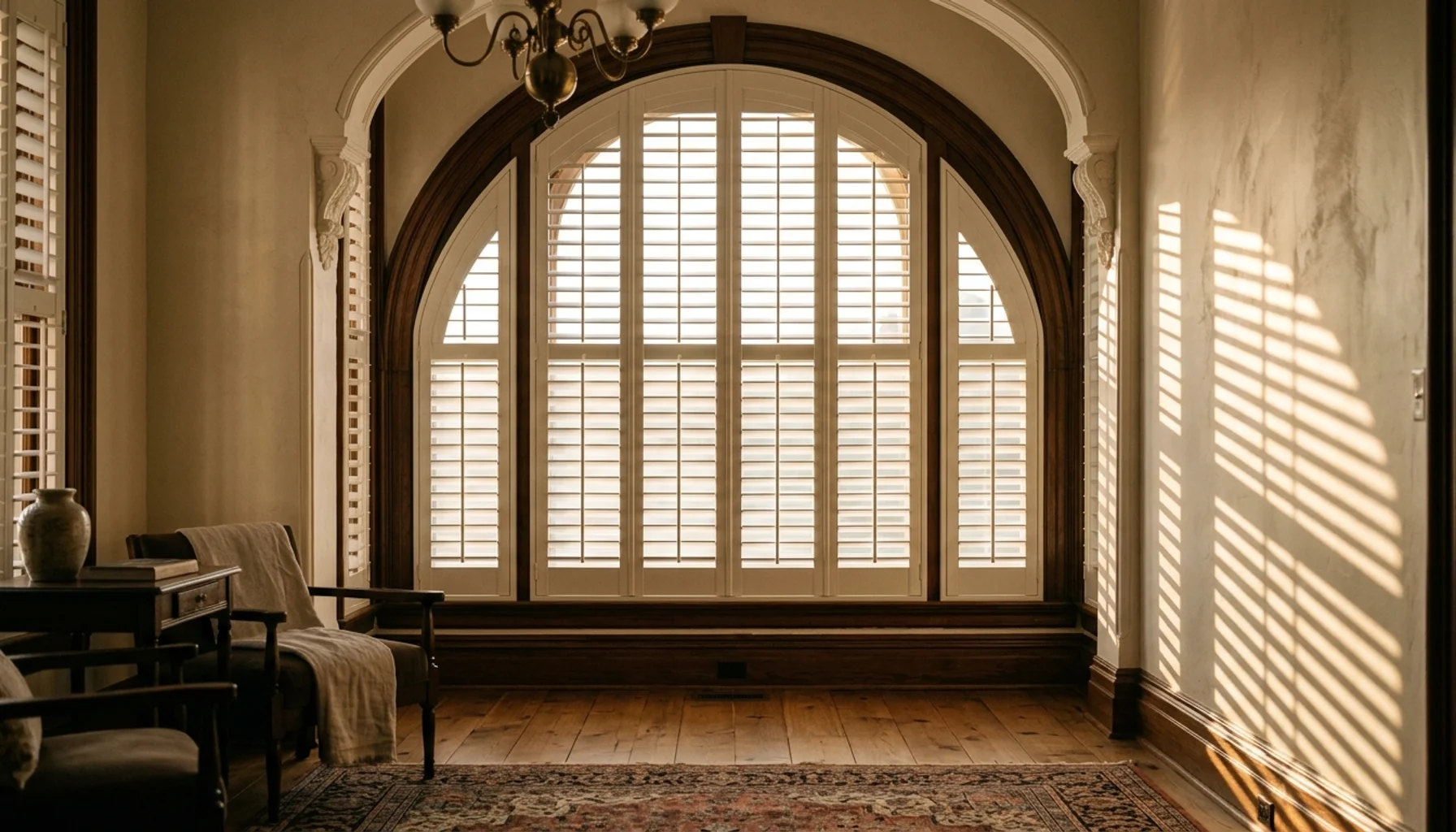
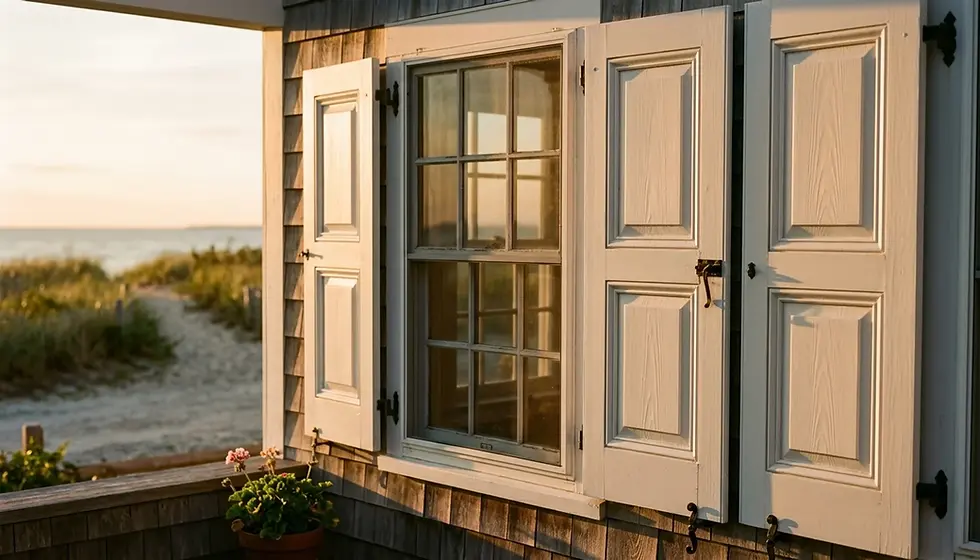
Different styles of shutters affect your home's resale value more than most homeowners realize. The right shutter style, properly sized and matched to your home's architecture, can elevate curb appeal, improve energy efficiency, and signal quality to buyers. The wrong choice, whether a style mismatch, oversized decorative panels, or a regional misfit, can actually raise red flags with buyers and appraisers before they step through the front door.
Plantation shutters offer the highest interior R-value (3 to 6) among common window treatments and are the most broadly marketable style across U.S. regions in 2026.
Board and batten shutters score 9/10 for both curb appeal and durability in independent shutter comparisons, making them a strong investment for Farmhouse and Craftsman homes.
Arched shutters carry the highest investment rating (9/10) among non-storm styles due to their rarity and architectural specificity.
Bahama shutters add value in coastal and Caribbean markets but actively hurt resale in New England and the Mid-Atlantic interior where they look architecturally out of place.
Decorative shutters that are clearly the wrong size for the window are a documented buyer deterrent and a common source of negative inspection commentary.
According to Transparency Market Research, the North America plantation shutters market is projected to reach US$7.1 billion by end of 2026, driven by rising energy costs and homeowner investment in durable window treatments.
If you are preparing to sell, renovating a coastal property, or simply want your window treatment investment to pay off long-term, understanding which shutter styles buyers reward and which ones they quietly penalize is essential knowledge. At Home Blinds and Floors, we consult with homeowners across the Delmarva Peninsula every week on exactly this question, and the answers are more nuanced than most shutter guides acknowledge.
This guide fills the gap that competing resources ignore: not just what the different styles of shutters look like, but what they do to your home's perceived and appraised value depending on your region, your architectural style, and how well the installation is executed. We cover the seven styles that consistently impress buyers and the three that regularly work against sellers.

What Are the Different Kinds of Shutters?
Shutters are window coverings, either mounted on a home's exterior or installed inside the window frame, that control light, provide privacy, protect against weather, and contribute to a property's architectural character. The category divides into two broad families: exterior shutters, which are attached to the outside of the home flanking each window, and interior shutters, which mount inside the window opening and operate via hinged panels or tracks.
Within those two families, you encounter a wide range of named styles. Exterior types include louvered shutters (fixed or movable slats), raised panel and recessed panel shutters, board and batten shutters, Bahama (Bermuda) shutters, combination shutters, Mission style shutters, and arched or shaped shutters. Interior types include plantation shutters, café-style shutters, tier-on-tier shutters, solid panel shutters, and specialty ABS waterproof shutters for kitchens and bathrooms.
The distinction between functional and purely decorative shutters matters enormously for resale value. A functional shutter, sized so that each panel could realistically close and meet at the window's center, reads as a genuine architectural feature to buyers. A decorative shutter that is clearly too narrow or too short to cover the glass reads as a cheap cosmetic shortcut, and experienced buyers notice immediately.
For a full overview of installation options across shutter categories, the team at Home Blinds and Floors's shutters page covers the styles and materials available for Delmarva homeowners.
What Is the Most Popular Style of Shutters?
Plantation shutters are the most popular shutter style in North America by both market share and consumer demand. According to Transparency Market Research, the North America plantation shutters market was valued at US$4.5 billion in 2021 and is expected to reach US$7.1 billion by the end of 2026, advancing at a compound annual growth rate of 9.0%. Residential applications account for 73% of that demand, confirming that homeowners, not commercial buyers, drive the category.
Plantation shutters originated in the southeastern United States and are characterized by wider slat spacing compared to traditional louvered shutters. That wider slat, typically 2.5 to 4.5 inches, allows more light to pass through when open while still providing full privacy when closed. The style translates well across architectural contexts from Colonial to contemporary, which is a primary reason buyers respond to it so positively in most U.S. markets.
Wood plantation shutters held a 46% share of the North American market by material type as of 2021, making wood the category's dominant segment. Composite alternatives are gaining ground, however, particularly in coastal regions like Maryland's Eastern Shore, Delaware beaches, and similar salt-air environments where real wood warps and deteriorates under humid, corrosive conditions.
Energy performance is a genuine driver of plantation shutter popularity. According to the U.S. Department of Energy, approximately 30% of a home's heating energy is lost through windows. Plantation shutters, with an R-value range of 3 to 6, outperform standard blinds (R-value 1.5 to 4) and curtains (R-value roughly 1) as insulating barriers. That quantifiable energy benefit is something buyers and appraisers increasingly factor into valuations in 2026.
1. Plantation Shutters: The Broadest Market Appeal
Plantation shutters are the single safest shutter investment for resale because they appeal to the widest buyer demographic across the most architectural styles. Interior plantation shutters with 3.5-inch or 4.5-inch louvers read as a premium finish in both traditional and contemporary interiors, and their energy efficiency credentials give you a factual talking point with buyers.
The insulation numbers are worth knowing. Wooden shutters reduce heat loss by approximately 51%, while composite shutters achieve approximately 60% heat loss reduction, according to Transparency Market Research data. For context, roller blinds reduce heat loss by only 28%, and curtains by just 14%. In a coastal home on Delmarva where summer air conditioning bills run high, that performance difference is a genuine selling point.
For coastal properties specifically, composite or vinyl-core plantation shutters are the smarter choice over solid wood. Real wood plantation shutters in humid environments can warp within a few years without aggressive maintenance. Composite frames, particularly those engineered with a PVC or ABS core, maintain their shape and finish for decades. Some composite shutter systems carry finish warranties of up to 50 years.
Best for: Colonial, Craftsman, Coastal, Traditional, and Contemporary homes. Exceptionally versatile. Regional fit: Works in every U.S. market. No regional penalty. Value rating: High. Interior plantation shutters are one of the few window treatments that appraisers and real estate professionals consistently cite as a value-add finish.

2. Board and Batten Shutters: Maximum Curb Appeal for Farmhouse Homes
Board and batten shutters are one of the oldest shutter styles in American residential architecture, constructed from vertical wood boards held together by horizontal or diagonal battens. In independent shutter performance analyses, board and batten shutters score 9/10 for both durability and curb appeal, placing them among the highest-rated exterior styles for visual impact.
The style's resale value is highly architecture-dependent. On a Modern Farmhouse, Craftsman bungalow, or rural Colonial, board and batten shutters feel authentic and intentional. Buyers in those markets respond strongly to the look. On a Georgian brick townhouse or a formal Federal-style home, the same shutters look incongruous, and that mismatch can undercut the property's perceived value.
One honest caveat: board and batten shutters score just 1/10 for light control and temperature regulation because they are almost always installed as exterior decorative elements, not functional closeable panels. If buyers in your market prioritize energy efficiency as a decision factor, lead with a separate interior treatment for that conversation and let the shutters carry the curb appeal argument.
In markets like Easton, MD, Milton, DE, and the historic districts around Cambridge, MD, board and batten shutters on the right home consistently photograph well and attract positive buyer comments in listing feedback.
Best for: Modern Farmhouse, Craftsman, Cottage, and Rustic Colonial homes. Regional fit: Strong in rural, suburban, and historic coastal markets. Avoid on formal urban townhomes. Value rating: High when architecturally appropriate. Moderate when used on mismatched home styles.
3. Combination Shutters: The Transitional Style That Converts Buyers
Combination shutters blend two shutter styles in a single panel, most commonly louvers on the upper portion and a recessed or raised panel on the lower half. The result satisfies buyers who want traditional detail without the rigidity of a single-style approach, which is why combination shutters perform well in Transitional and Modern Farmhouse markets where architectural identity is deliberately mixed.
The practical benefit of the combination format is proportion flexibility. On a tall, narrow window, a full-louver exterior shutter can look monotonous. Breaking the panel into louver-over-panel sections creates visual interest and breaks up the height in a way that reads as considered design rather than a standard product selection.
Manufacturer Timberlane lists combination shutters among their six core exterior styles, noting their particular suitability for custom and transitional home designs. From a buyer psychology standpoint, the combination style signals a homeowner who made a deliberate, design-aware choice rather than defaulting to the cheapest available option at a home improvement store.
Best for: Transitional, Modern Farmhouse, and custom home designs with taller window openings. Regional fit: Broadly applicable across U.S. suburban markets. Works in both coastal and inland settings. Value rating: Moderate to high. Particularly strong in markets with active design-conscious buyer pools.
4. Bahama (Bermuda) Shutters: A Coastal Value-Add with a Regional Catch
Bahama shutters, also called Bermuda shutters, are top-hinged exterior shutters that prop open at an angle, originally developed for tropical climates to provide shade and ventilation simultaneously. In the right regional market, they are a genuine value differentiator. In the wrong market, they are an architectural liability that buyers quietly note as a style mismatch.
In coastal markets like Rehoboth Beach, Bethany Beach, Ocean City, and similar Lowcountry or Caribbean-influenced communities, Bahama shutters read as authentic and regionally appropriate. They provide genuine shade on west-facing windows, reduce solar heat gain, and carry a relaxed coastal aesthetic that resonates with vacation home buyers. In hurricane-prone areas, locally sourced Bahama shutter systems may also meet high-wind code requirements, adding a practical safety credential to the aesthetic appeal.
The regional penalty is real and worth stating plainly. A Bahama shutter on a New England Colonial or a Maryland brick Georgian looks wrong to buyers familiar with those architectural traditions. Real estate professionals in Mid-Atlantic interior markets and northeastern markets frequently describe Bahama shutters on incompatible homes as a cosmetic issue that raises questions about the seller's judgment. That perception can create friction in negotiations.
Best for: Coastal, Caribbean, Mediterranean, and Lowcountry home styles. Second-story and west-facing windows in beach communities. Regional fit: High value in coastal resort markets. Potential resale detractor in northern, inland, or formal historic markets. Value rating: High in coastal markets. Low in architecturally incompatible settings.
For homeowners in Ocean City, MD or Millsboro, DE considering Bahama shutters, the team at Home Blinds and Floors can assess your home's specific architectural style before you commit to an exterior shutter system.
5. Arched Shutters: The Highest Investment Rating Among Non-Storm Styles
Arched shutters, also called shaped shutters, are custom-fabricated panels designed to follow the curved or angled geometry of non-rectangular windows. In independent performance analyses, arched shutters score 9/10 for investment value, the highest investment rating among all non-storm shutter styles. That score reflects a straightforward reality: arched windows without the correct shutter treatment look unfinished, and a properly fitted arched shutter is a clear signal of a quality, detail-oriented renovation.
The value argument for arched shutters is strongest in homes where the arched or elliptical windows are a primary architectural feature. A Federal-style home with fanlight windows, a Colonial Revival with eyebrow dormers, or a Mediterranean villa with arched casements all carry architectural identity that arched shutters complete. Buyers touring those homes notice immediately whether the windows are finished correctly.
Cost is the realistic constraint. Custom arched shutters require individual fabrication to match each window's radius, and that fabrication time increases per-unit cost meaningfully compared to standard rectangular shutters. The investment rating stays high, however, because the right buyer, specifically one who chose that home for its architectural character, recognizes the quality and is typically willing to pay a premium for a home where even the difficult windows are handled correctly.
Best for: Federal, Colonial Revival, Mediterranean, and any home with arched, elliptical, or geometrically complex windows. Regional fit: Applicable wherever arched windows exist. Value is tied to the window's architectural prominence. Value rating: Very high for architecturally appropriate installations. Not applicable where arched windows are absent.
For homes with specialty window shapes across Kent Island, Annapolis, or the historic sections of Easton, MD, our custom shutters resource covers the fabrication and installation process in detail.

6. Louvered Exterior Shutters: The Colonial Standard That Sells
Louvered shutters are the most architecturally versatile exterior shutter style in the United States, featuring angled horizontal slats that allow air circulation while providing shade and partial privacy. They divide into two subcategories with meaningfully different value profiles: fixed-louver shutters and movable-louver shutters. Fixed versions are standard on Colonial and Georgian homes. Movable louvers extend suitability to Lowcountry and Transitional styles and carry a higher functional value because buyers can actually operate them.
The resale argument for louvered exterior shutters is straightforward. On a Colonial, Georgian, or Southern Traditional home, correctly sized louvered shutters that could realistically close and cover the glass are an expected architectural element. Their presence reads as correct and complete. Their absence, or the presence of shutters that are clearly undersized, reads as a cut corner that subtracts from perceived value.
Sizing is the detail most homeowners get wrong. Architecturally correct shutters are sized to match the glass opening, not the trim. Each panel should be wide enough that two panels meeting in the center would cover the window completely. Shutters that are half the width they should be, a common result of buying off-the-shelf sizes, are one of the most frequently cited buyer objections in listing feedback on Colonial-style homes.
Best for: Colonial, Georgian, Southern Traditional, and Lowcountry homes. Fixed louver for formal styles; movable louver for Transitional and Coastal. Regional fit: Strong across the Eastern Seaboard, including all Delmarva Peninsula markets. Value rating: High when correctly sized. Low when undersized or disproportionate.
7. Café-Style Interior Shutters: The Underused Value Signal for Street-Level Rooms
Café-style shutters cover only the lower half of a window, taking their name from French cafés that used this configuration to give patrons privacy from street-level pedestrians while preserving natural light above. As an interior window treatment, café-style shutters are an underused but genuinely effective value signal in specific room contexts: kitchen windows overlooking a neighbor's yard, street-facing dining rooms, and lower-floor bedrooms where privacy matters but a fully shuttered look feels too heavy.
The value case for café shutters is more selective than for full-height plantation shutters. They do not contribute meaningfully to energy efficiency because the unshuttered upper half allows heat transfer. But in the right application, they add a design detail that reads as intentional and considered to buyers who appreciate it. Kitchen café shutters, particularly in white-painted wood or composite on a farmhouse or traditional kitchen, photograph exceptionally well in listing photos, which influences buyer interest before the first showing.
Our team at Home Blinds and Floors sees café-style shutters work particularly well in older homes around Centreville, MD and Lewes, DE where street-facing living spaces benefit from lower-half privacy without blocking the character of the window's upper profile. In contemporary open-plan homes, the style can feel mismatched, so architectural context matters here as well.
Best for: Traditional, Farmhouse, and Cottage kitchens; street-facing dining rooms; lower-floor rooms needing selective privacy. Regional fit: Strong in historic and charming coastal markets. Less applicable in contemporary or minimalist homes. Value rating: Moderate. A positive detail signal when well-matched but not a primary value driver.
What Are the Different Types of Window Shutters That Hurt Resale Value?
Three shutter types consistently generate negative buyer responses or neutral appraisal outcomes, either because they signal dated taste, architectural mismatch, or poor installation judgment. Understanding these is as valuable as knowing which styles to choose.
1. Decorative Shutters That Are Clearly Undersized
Undersized decorative shutters are the single most common shutter-related buyer complaint in home inspection reports and listing feedback. When exterior shutters are installed at a fraction of the window's actual width, experienced buyers recognize immediately that they are purely ornamental additions with no structural or functional purpose. That recognition triggers a broader question about the quality of other cosmetic improvements on the property.
The standard is clear: architecturally correct exterior shutters should be sized so that each panel, when closed, would cover exactly half the window glass. A standard 36-inch-wide double-hung window needs two shutters that are each at least 18 inches wide. Many big-box decorative shutters run 12 to 14 inches wide regardless of the window they accompany. That gap is visible from the street, and buyers in 2026 are more design-informed than any previous generation of buyers, partly because of how much home content circulates on social media and real estate platforms.
2. Traditional/New England Decorative Panel Shutters on Contemporary Homes
Raised panel and flat panel decorative shutters score the lowest overall in independent shutter style analyses, with Traditional/New England styles rating 2.4/10 overall and Raised Panel at 2.3/10. Both styles score 1/10 for storm protection, UV protection, security, temperature regulation, light control, and privacy because they are essentially non-functional decorative additions in most modern installations.
On a Georgian brick estate or a formal New England saltbox, raised panel shutters are architecturally appropriate and add value by completing the home's period character. On a 1990s vinyl-sided ranch or a contemporary craftsman, the same shutters look like a generic afterthought. Buyers in that context often interpret decorative panel shutters as a sign that the seller invested in cosmetic improvements without understanding the home's architectural identity, which raises doubts about the quality of other updates.
3. Bahama Shutters on Architecturally Incompatible Homes
Bahama shutters deserve a second mention here in the context of architectural mismatch because the negative resale consequences are specific and regional. A top-hinged tropical shutter propped open at a 45-degree angle reads as a design error on a formal Colonial, a mid-century modern, or a brick Georgian townhouse. Real estate professionals in Annapolis, MD and similar Mid-Atlantic markets with strong architectural tradition frequently note this mismatch as a buyer concern in feedback sessions.
The issue is not the shutter style itself, which is excellent in coastal resort markets. The issue is context. Buyers who seek out architecturally specific homes, and in markets like Annapolis and Easton that buyer pool is significant, are often knowledgeable enough to notice when a window treatment contradicts the home's design language. That incongruity creates hesitation, and hesitation costs time and negotiating leverage in competitive sales situations.
Are Shutters Out of Style in 2026?
Shutters are not out of style in 2026. Consumer demand for plantation shutters, specifically, is at its highest measured point in market history, with the North American market on track to reach US$7.1 billion by the end of 2026 according to Transparency Market Research. What has shifted is buyer sophistication: generic, poorly fitted decorative shutters are out of style, while architecturally intentional and properly scaled shutters remain a strong design signal.
Several specific trends define the 2026 shutter landscape. First, composite and PVC-core plantation shutters have overtaken solid wood as the practical choice in coastal and humid markets, driven by superior moisture resistance and multi-decade finish warranties. Second, the demand for child-safe window treatments is rising, with plantation shutters gaining preference over corded blinds in family homes. The U.S. Consumer Product Safety Commission data on cord strangulation risks has increased awareness, and buyers with young children actively favor cordless solutions, which shutters inherently provide.
Third, architects and designers are specifying aluminum and composite exterior shutter systems that replicate wood aesthetics without the maintenance burden. These systems are increasingly standard on higher-end residential projects in coastal communities from Rehoboth Beach to Ocean Pines. According to an architectural blog published in February 2026 on columnsandbalustrades.com, composite and aluminum shutter systems now dominate new construction specifications in hurricane-adjacent coastal markets.
The category is evolving, not declining. Homeowners who choose current materials in historically appropriate styles are making investments that hold value. Those who treat shutters as a quick cosmetic addition without considering scale, material, or architectural compatibility are the ones seeing buyer skepticism in 2026.
Shutter Style vs. Resale Value: A Comparative Framework
Shutter Style | Curb Appeal Score | Investment Rating | Energy Benefit | Best Architectural Match | Regional Fit |
Plantation (Interior) | High | Very High | R-value 3-6; ~51-60% heat loss reduction | Colonial, Craftsman, Coastal, Contemporary | All U.S. markets |
Board and Batten (Exterior) | 9/10 | High | Decorative; minimal insulation | Farmhouse, Craftsman, Cottage | Rural, suburban, coastal |
Combination (Exterior) | High | Moderate-High | Decorative; minimal insulation | Transitional, Modern Farmhouse | Broad U.S. suburban markets |
Bahama/Bermuda (Exterior) | High (coastal); Low (inland) | High in coastal markets only | Shade/solar gain reduction | Coastal, Caribbean, Mediterranean | Coastal resort markets only |
Arched/Shaped (Custom) | Very High | 9/10 (highest non-storm rating) | Moderate (interior versions) | Federal, Colonial Revival, Mediterranean | Wherever arched windows exist |
Louvered (Exterior, Movable) | High | High (when correctly sized) | Ventilation; shade | Colonial, Georgian, Lowcountry | Eastern Seaboard, South |
Café-Style (Interior) | Moderate | Moderate | Minimal | Traditional, Farmhouse, Cottage kitchens | Historic and coastal markets |
Undersized Decorative (Any) | Low (buyer negative) | Negative | None | No architectural match | Detractor in all markets |
Raised Panel (Decorative Only) | 2.3/10 | Low on contemporary homes | None | Georgian, Federal (formal historic only) | Negative on mismatched homes |
Bahama on Non-Coastal Homes | Low (architectural mismatch) | Negative | None relevant | No match | Mid-Atlantic interior; New England |
Performance scores for board and batten, arched, and raised panel styles are drawn from independent 11-category shutter analysis data compiled by ERS Shading. Energy performance data is sourced from Transparency Market Research's North America Plantation Shutters Market report.
How Do You Choose the Right Shutter Style to Maximize Value?
Choosing the right shutter style for resale value requires answering four questions in sequence. Skipping any one of them is how homeowners end up with shutters that look wrong, underperform, or actively hurt their listing.
What is your home's architectural style? Identify it specifically. Colonial, Craftsman, Farmhouse, Mediterranean, Federal, Contemporary, and Coastal all have different correct shutter vocabularies. A resource like Bob Vila's shutter style overview is a useful starting reference for matching style to architecture before making any purchase.
What is your regional buyer market? Bahama shutters in Rehoboth Beach, DE are a value-add. The same shutters on a home in Annapolis, MD's historic district raise buyer concerns. Know your buyer pool's design expectations before selecting an exterior style.
Are you choosing exterior, interior, or both? Exterior shutters serve curb appeal and weather protection. Interior shutters, particularly plantation shutters, serve energy efficiency, light control, privacy, and appraisal value. The highest-value installations typically address both, but they require different decision criteria.
Are the shutters sized correctly? This is the most common error and the most visible to buyers. If you are installing exterior shutters, measure the glass opening, not the trim, and select shutter panels wide enough that a closed pair would cover the glass fully. If you cannot find off-the-shelf shutters in the right dimensions, custom fabrication is the correct answer, not scaling down to what is available.
For Delmarva homeowners navigating material choices, our guide to faux wood vs. wood blinds for Delmarva homes covers the material durability question in coastal and humid environments, and the same principles apply directly to shutter material selection.

Frequently Asked Questions About Different Styles of Shutters
What shutter style adds the most resale value to a home?
Interior plantation shutters add the most broadly applicable resale value because they appeal to the widest buyer demographic across all home styles and U.S. regions. Their energy efficiency credentials, specifically an R-value of 3 to 6 and heat loss reduction of 51 to 60% depending on material, provide a quantifiable benefit that buyers and appraisers recognize. For exterior value, arched shutters and correctly sized louvered shutters score highest on investment ratings in independent analyses.
Do exterior shutters increase home value?
Exterior shutters increase home value when they are architecturally appropriate, correctly sized, and made from durable materials. Shutters that match the home's style (for example, louvered shutters on a Colonial or board and batten on a Farmhouse) signal quality and completeness to buyers. Exterior shutters that are undersized, stylistically mismatched, or made from deteriorating materials can actively reduce perceived value and create negative buyer feedback before negotiations begin.
What shutter style is best for coastal homes in Delaware and Maryland?
Composite or PVC-core plantation shutters are the best interior choice for coastal homes in Delaware and Maryland due to their resistance to humidity and salt air, which causes real wood to warp and deteriorate. For exterior applications, Bahama shutters are appropriate on coastal-style and vacation properties near Rehoboth Beach, Bethany Beach, and Ocean City. Composite or aluminum exterior shutter systems are preferred over wood in these markets because they maintain structural integrity without annual maintenance.
Are shutters better than blinds for home resale value?
Shutters generally outperform blinds for resale value because they are a permanent architectural feature rather than a removable accessory. Plantation shutters, specifically, have a higher R-value than standard blinds (3 to 6 versus 1.5 to 4) and are perceived by buyers as a premium finish. Blinds are cost-effective window treatments but are rarely cited as a value-add feature in real estate listings or appraisals. For buyers who prioritize energy efficiency and design quality, shutters carry more weight.
What are the most common shutter sizing mistakes that hurt resale?
The most common sizing mistake is installing exterior shutters that are too narrow to realistically close over the window glass. Architecturally correct exterior shutters should be sized so each panel, when closed, covers exactly half the glass opening. Many decorative shutters sold at big-box retailers are standardized at 12 to 14 inches wide regardless of the window, which looks visibly wrong to buyers familiar with traditional residential architecture. Undersized shutters are frequently noted in listing feedback and sometimes in inspection reports as a cosmetic concern.
Can shutters help with child safety in family homes?
Yes. Plantation shutters and other fixed-panel shutter styles are inherently cordless, which eliminates the strangulation hazard associated with corded blinds. The U.S. Consumer Product Safety Commission has documented monthly fatalities of children between the ages of 7 months and 8 years from window cord strangulation, and has proposed rules requiring operating cords on custom window coverings to be cordless or inaccessible. Buyers with young children in 2026 increasingly favor shutters over corded window treatments for this reason, which adds a safety-based value dimension to the shutter category.
How do different shutter materials compare for longevity?
Composite and PVC-core shutter materials outlast real wood in humid or coastal environments by a significant margin. Composite plantation shutters can carry finish warranties of up to 50 years, while real wood plantation shutters in coastal conditions may begin showing warp or finish deterioration within 5 to 10 years without proper maintenance. Aluminum exterior shutter systems offer the highest resistance to corrosion and can be engineered to meet hurricane-rated performance standards in coastal building codes. PVC shutters are durable but limited in color options, typically constrained to white and off-white finishes.
Making the Right Investment in Window Shutters
Different styles of shutters carry very different resale implications, and the gap between a value-adding installation and a value-neutral or negative one often comes down to three factors: architectural fit, correct sizing, and material quality suited to your local climate. Plantation shutters remain the safest bet for broad market appeal in 2026, supported by strong consumer demand data and quantifiable energy efficiency performance. Board and batten, louvered, combination, arched, and café-style shutters all add value when matched correctly to the home's architectural identity and regional buyer expectations.
The three styles that hurt resale, undersized decorative shutters, architecturally mismatched panel shutters, and Bahama shutters on non-coastal homes, share a common problem: they signal that a cosmetic decision was made without considering the home's design language or the buyer's perspective. Avoiding those mistakes costs nothing. Correcting them after the fact, or absorbing the price reduction a savvy buyer negotiates, costs considerably more.
As you weigh your options, keep the sizing rule front of mind, consult the architectural compatibility table above, and prioritize materials that will hold up in your specific climate. If you are in the Delmarva market and want a professional assessment before you commit, that is exactly the conversation our team is built for.

If you are planning a shutter installation on the Delmarva Peninsula and want to get the architectural fit and sizing right the first time, the team at Home Blinds and Floors offers in-home consultations across Rehoboth Beach, Lewes, Bethany Beach, Ocean City, Easton, Annapolis, and surrounding communities. We carry Hunter Douglas, Norman, and Graber shutter systems and can help you match the right style, material, and scale to your home's specific architecture before a single panel is ordered. Schedule your consultation here.

Mình có lần lướt đọc mấy trao đổi trên mạng شيخ روحاني thì thấy nhắc nên cũng tò mò mở ra xem thử cho biết. Mình không tìm hiểu sâu جلب الحبيب chỉ xem qua trong thời gian ngắn để quan sát bố cục جلب الحبيب cách sắp xếp شيخ روحاني các mục và trình bày nội شيخ روحاني dung tổng thể. Cảm giác là các phần được trình bày khá gọn, các Berlinintim mục rõ ràng nên đọc lướt cũng không bị rối Berlinintim với mình như شيخ روحاني vậy là đủ để nắm tin cơ bản rồi. جلب الحبيب
👍
Overall, the author does a solid job explaining how certain shutter styles can boost curb appeal. Spent some time on https://de.trustpilot.com/review/deutschelizenzcasino.com and it went a little deeper on this. I do find the resale estimate a bit high, though, since similar projects in my neighborhood ended up with a lower bump. Still, it's useful to have a few numbers to reference.