.avif)
.avif)
.avif)
Exterior Shutters Styles: A Complete Guide to Every Type


Exterior shutters styles refer to the distinct design categories used to frame and accent windows on a home's facade, ranging from the flat geometry of raised panel shutters to the angled, storm-ready profile of Bahama shutters. Six core styles dominate residential architecture in 2026: raised panel, louvered, board and batten, Bahama, shaker/flat panel, and combination shutters. Each one suits specific home styles, climates, and budgets.
Six primary exterior shutter styles exist: raised panel, louvered, board and batten, Bahama (also called Bermuda), shaker/flat panel, and combination shutters.
According to Research and Markets, exterior shutters are the fastest-growing segment of the global shutters market through 2030, driven by demand for energy savings and smart home integration.
Material choice matters as much as style: basswood and Western Red Cedar suit most climates, while aluminum and composite materials outperform wood in coastal, high-humidity environments like the Delmarva Peninsula.
Decorative shutters should always appear sized as if they could functionally close over the window, even when they are fixed to the wall.
The window shutters market was valued at $3.78 billion in 2026 and is projected to reach $4.02 billion in 2026, according to Verified Market Reports.
Color strategy, regional climate, and installation method are the three decisions most homeowners overlook when selecting exterior shutters.
What Are the Main Exterior Shutters Styles?
Exterior shutters styles are the defined design categories that determine a shutter's visual profile, functional capability, and architectural compatibility. The six core styles recognized across the industry are raised panel, louvered, board and batten, Bahama (Bermuda), shaker/flat panel, and combination. Understanding each style before you shop prevents the single most common mistake: choosing a shutter that clashes with your home's architecture.
Raised Panel Shutters
Raised panel shutters feature a solid body with one or more panels that protrude slightly from the frame, creating a three-dimensional shadow line that reads as formal and traditional. According to HGTV's home improvement coverage, raised panel shutters are the most historically versatile style, pairing well with Victorian, Federal, Colonial, Georgian, Cape Cod, Ranch, French Country, and Greek Revival architecture. That is a wide list, which is exactly why this style remains a safe default for most classic home facades.
The raised profile catches light differently at different times of day, which means the shutters add depth even when painted the same color as the trim. For a Colonial-style home in Annapolis or a Georgian rowhouse on Kent Island, raised panel shutters reinforce the architectural period without overcomplicating the facade. If you want a shutter that works hard visually without demanding a strong design opinion, this is your starting point.
Sunbelt Shutters offers raised panel shutters in multiple wood species including Southern Yellow Pine, Western Red Cedar, California Redwood, and African Mahogany, giving you material flexibility based on your climate and budget.
Louvered Shutters
Louvered shutters consist of angled horizontal slats, called louvers, set within a frame. They come in two versions: fixed louver, where the slats are permanently set at a single angle, and movable louver, where the slats rotate to control airflow and light. Fixed louver shutters work best on Colonial, Georgian, and Southern Traditional homes. Movable louver shutters extend that compatibility to Lowcountry and Transitional styles, and historically appeared as operable shutters on upper floors of antebellum homes.
One practical note: brick&batten, a virtual exterior design service with strong practitioner credibility, recommends composite or aluminum for louvered shutters specifically because the individual slats are structurally delicate. Wood louver shutters are more prone to cracking along the grain lines of each slat, particularly in freeze-thaw climates like Maryland's Eastern Shore. If you're committed to wood, Western Red Cedar's tight grain makes it more resistant to this failure mode than pine or poplar.
Board and Batten Shutters
Board and batten shutters consist of one to three vertical boards held together by a narrow cross panel called a batten, which can run horizontally or diagonally across the face. The result is an intentionally rustic, handcrafted look that pairs naturally with Mediterranean, Cape Cod, Ranch, French Country, and Cottage architecture. The cottagecore design trend documented by Domino has pushed board and batten shutters into wider residential popularity since 2023, particularly on farmhouse and rural cottage renovations.
Sunbelt Shutters also carries board and batten shutters in several hardwood species, which is worth reviewing if you want to compare grain patterns and end-grain sealing requirements by wood type. One practical detail most guides skip: the diagonal batten configuration creates a brace pattern that looks intentionally structural, which suits homes with rustic or agrarian design vocabulary better than the horizontal batten layout.
Bahama (Bermuda) Shutters
Bahama shutters, also called Bermuda shutters, are top-hinged panels that prop open at an angle from the window, allowing airflow while blocking direct sun and providing partial weather protection. Originally developed for tropical and Caribbean climates, Bahama shutters are now standard on coastal, Lowcountry, Cape Cod, Ranch, and Cottage-style homes throughout the southeastern United States. Dwell Shutter and Blinds notes that properly constructed Bahama shutters use marine-grade wood or aluminum with adjustable arms and corrosion-resistant hardware, making material specification critical in salt-air environments.
For homeowners along the Delmarva coastline, specifically in Rehoboth Beach, Bethany Beach, and Ocean City, Bahama shutters solve two problems simultaneously: they shade windows from intense summer sun and offer a first layer of protection during coastal storms. At Home Blinds and Floors, we regularly advise coastal clients that aluminum or composite Bahama shutters outlast wood versions by years in high-humidity, salt-exposed conditions. Standard wood framing begins to show corrosion and delamination within three to five years without rigorous annual maintenance in those environments.
Shaker and Flat Panel Shutters
Shaker shutters, sometimes called flat panel shutters, feature a completely flat body rather than the protruding raised geometry of traditional panel shutters. The result is a cleaner, more restrained profile that reads as contemporary or transitional rather than traditionally ornate. Where raised panel shutters add visual weight to a facade, shaker shutters subtract it, making them particularly effective on modern farmhouse, mid-century modern, and minimalist home exteriors where simplicity is the design intent.
In 2026, the shift toward minimalist exterior aesthetics among Millennial and Gen Z homebuyers has increased interest in flat panel and shaker designs. Verified Market Reports identifies modern minimalistic styles with smart home compatibility as a primary purchasing driver for these buyer segments. Shaker shutters pair especially well with homes featuring large, undivided window panes, since the simple shutter frame doesn't compete with the window's proportions.
Combination Shutters
Combination shutters blend two styles in a single unit, most often louvers on the upper half and a solid panel on the lower half. This hybrid design suits transitional, modern farmhouse, and custom homes where the homeowner wants both the airflow suggestion of louvered slats and the visual grounding of a solid panel base. According to Dwell Shutter and Blinds, combination shutters are best reserved for homes with a clear transitional or eclectic design vocabulary rather than strictly period-accurate architecture, where the mixed profile can read as indecisive rather than intentional.

Which Exterior Shutter Style Fits Which Home Architecture?
Matching exterior shutters styles to architectural home style is the most important design decision you will make during the selection process. The wrong pairing, such as Bahama shutters on a Federal-style brick townhouse or board and batten shutters on a Georgian manor, creates visual dissonance that is immediately obvious but hard to articulate. The table below maps each core shutter style to its compatible architectural categories.
Shutter Style | Best Architectural Matches | Avoid On |
Raised Panel | Colonial, Georgian, Federal, Victorian, Cape Cod, Ranch, French Country, Greek Revival | Ultra-modern, mid-century, industrial |
Louvered (Fixed) | Colonial, Georgian, Southern Traditional | Contemporary minimalist, industrial |
Louvered (Movable) | Victorian, Italianate, Colonial, Lowcountry, Transitional | Strictly modern facades |
Board and Batten | Mediterranean, Cape Cod, Ranch, French Country, Cottage | Georgian, Federal, Greek Revival |
Bahama/Bermuda | Cape Cod, Ranch, Cottage, Coastal, Lowcountry, Caribbean, Mediterranean | Federal, Georgian, Victorian, Greek Revival |
Shaker/Flat Panel | Modern Farmhouse, Mid-Century Modern, Contemporary, Transitional | Period-accurate Colonial, Georgian, Victorian |
Combination | Transitional, Modern Farmhouse, Custom/Eclectic | Strictly period-accurate styles |
One rule brick&batten applies consistently and that our team at Home Blinds and Floors echoes for every exterior consultation: shutters should appear sized as if they could functionally close over the window, even when decorative. A shutter that is clearly too narrow or too short for its window looks like an afterthought. This proportional rule applies across every style in the table above.
Arched shutters deserve a special note. They are designed exclusively for arched windows and should never be placed on rectangular window openings. Using arched shutters on a standard rectangular window is a proportional and stylistic error that reads as confusing rather than decorative.
What Are the Best Materials for Exterior Shutters?
Exterior shutter materials are segmented into wood, vinyl (PVC), MDF, synthetic foam, faux wood, composite, and aluminum, each with distinct performance profiles across climate, maintenance, and cost. According to Transparency Market Research's global outdoor shutters analysis, aluminum is gaining market share specifically because of its cost-effectiveness, durability, and versatility across climates. But aluminum is not the right choice for every home or every style.
Wood Shutters
Wood remains the premium choice for craftsmanship and curb appeal. Basswood, cited by HGTV as the most popular option, offers a fine, consistent grain that holds paint exceptionally well. Western Red Cedar, used by Dwell Shutter and Blinds for their handcrafted Montgomery, Alabama production line, resists moisture and insect damage better than most domestic hardwoods. Other solid performers include Southern Yellow Pine, California Redwood, and African Mahogany, all offered by Sunbelt Shutters for raised panel and board and batten configurations.
The honest caveat with wood: it requires consistent maintenance. Cedar shutters in a moderate climate typically need repainting or resealing every three to five years. In coastal Delaware or Maryland's Eastern Shore, where salt air accelerates paint failure, that schedule compresses to every two to three years for south- and west-facing exposures. Budget the labor and material cost of ongoing maintenance into your total ownership calculation, not just the purchase price.
Vinyl, MDF, and Synthetic Foam
Vinyl shutters are the lowest entry price point but come with real trade-offs. Standard hollow PVC shutters use end caps to cover unfinished edges, yellow over time in UV-intense environments, and are difficult to clean without scratching the surface. For coastal homes in Lewes or Millsboro where shutters face direct sun for six or more hours daily, vinyl fades and becomes brittle faster than in shaded northern installations.
MDF shutters offer a convincing wood appearance at a lower cost than solid lumber, but MDF is fundamentally vulnerable to moisture. Swelling, sagging, and paint adhesion failure are documented failure modes in high-humidity conditions. Avoid MDF for exterior applications in any coastal or high-rainfall environment.
Synthetic foam shutters are water-resistant and fire-resistant, with good insulating properties. They are heavier than wood, which can stress mounting hardware over time, and they cannot be stained, only painted. For a painted-finish installation where low maintenance is the priority, synthetic foam is a credible middle-ground option.
Composite and Aluminum
Composite shutters blend wood fiber and synthetic binders to produce a material that is stiffer than natural wood, more dimensionally stable in humidity swings, and paintable. Faux wood shutters, a subset of composite, are specifically engineered for tall or wide configurations where natural wood's tendency to warp under its own weight becomes a problem. Brick&batten recommends composite or aluminum for louvered shutters in particular, given the structural demands of maintaining parallel slat alignment over years of thermal expansion and contraction.
Aluminum-reinforced PVC combines the corrosion resistance of aluminum structure with a paintable PVC exterior finish, and it represents a strong choice for Bahama shutters in coastal installations where marine-grade durability is non-negotiable. Aluminum Bahama shutters with corrosion-resistant hardware, as specified by Dwell Shutter and Blinds, are the material recommendation our team returns to most often for Delmarva Peninsula coastal homes.

How Much Do Different Exterior Shutter Styles Cost?
Exterior shutter pricing varies significantly by style, material, and window count, and this is one area where most published guides leave homeowners without enough information to budget accurately. As a general framework, vinyl and synthetic foam shutters represent the lowest cost tier, wood and composite shutters occupy the mid-range, and aluminum or handcrafted hardwood shutters sit at the premium end. Professional installation adds to every category.
Cost by Material Tier
Vinyl shutters typically run on the lower end of the per-window cost spectrum, but their shorter service life in UV-intense and coastal environments means you may replace them two to three times over the same period a wood or composite set lasts. MDF shutters fall in a similar price range but carry the moisture vulnerability caveat noted earlier. Synthetic foam shutters price comparably to mid-grade composite options and offer a better longevity profile than vinyl in coastal climates.
Solid wood shutters in basswood, cedar, or Southern Yellow Pine generally cost more per unit, but a well-maintained set with proper paint protection can last 20 or more years. Handcrafted custom wood shutters, like those produced by Dwell Shutter and Blinds from Western Red Cedar with a lifetime warranty, represent a premium investment with a clearly defined long-term value proposition. Aluminum Bahama shutters with corrosion-resistant hardware sit at the higher end of the cost range but require the least ongoing maintenance of any material in a salt-air environment.
Installation Costs and DIY Considerations
Professional installation ensures that shutters are mounted with the correct hardware for your specific wall material, whether brick, vinyl siding, wood, or stucco, and that the proportions are set correctly relative to window size. DIY installation is possible for standard decorative shutters on vinyl or wood-sided homes, but mounting shutters to brick or masonry requires masonry anchors and more precise drilling to avoid cracking the mortar.
Operable shutters, including Bahama shutters with adjustable arms and movable louvered shutters, require more precise hardware alignment than decorative fixed shutters. A professional installer ensures the pivot mechanism operates smoothly and that the mounting handles the weight of the panel over repeated opening and closing cycles. For custom shutter installation on coastal homes, professional installation is the approach our team consistently recommends, specifically because hardware selection for salt-air environments differs from standard residential hardware.
Want accurate pricing for your specific project and window count? Contact Home Blinds and Floors for a free in-home consultation that covers material selection, proportioning, and installation complexity for your specific home.
How Do You Choose Shutter Colors for Your Home's Exterior?
Exterior shutter color selection follows a hierarchy of three visual relationships: shutter to siding, shutter to trim, and shutter to front door. Most homeowners default to white or black shutters because they are safe choices, but they often produce a flat, generic result when the home's siding is also a neutral tone. A more effective approach treats shutter color as the bridge between siding and trim rather than a standalone decision.
The Three-Color Relationship Rule
When your siding and trim are both light (white or cream siding with white trim, for example), dark shutters create the highest contrast and give the windows strong visual definition. Classic navy, forest green, black, and charcoal all perform well in this configuration. When your siding is a medium tone, such as gray, taupe, or sage, shutters in a deeper version of the same hue create a tonal, sophisticated result. Avoid matching shutters exactly to siding color: zero contrast flattens the facade and makes shutters invisible, which defeats their architectural purpose.
For board and batten shutters on cottage or farmhouse-style homes, earthy tones like deep burgundy, barn red, or slate blue reinforce the rustic character of the style. For raised panel shutters on formal Colonial or Georgian homes, historically accurate colors like black, forest green, or deep burgundy are more period-appropriate than contemporary trend colors. Bahama shutters, given their tropical origin, traditionally appear in white or light neutral tones that reflect heat and pair with whitewashed or light coastal siding palettes.
Regional Climate and Color Durability
Color choice also intersects with climate durability. Dark paint colors absorb more heat, which accelerates paint failure on wood shutters in sun-intense southern exposures. In Ocean City, Ocean Pines, and Rehoboth Beach, where south-facing shutters receive intense summer UV, lighter base coats under dark topcoats extend paint adhesion. High-quality exterior paint formulations from reputable brands significantly outperform standard paint on wood shutters in coastal environments, particularly for dark colors. Your paint selection deserves the same attention as your shutter material selection.
How Do Regional Climates Affect Exterior Shutter Style and Material Choices?
Regional climate is the single most underappreciated variable in exterior shutter selection, and it is a factor that most published guides address only for coastal or tropical locations while ignoring cold climates, desert environments, and high-humidity inland regions. Getting this right the first time saves you from premature replacement costs.
Coastal and High-Humidity Climates
Coastal environments like the Delmarva Peninsula, specifically the Delaware beaches from Lewes to Bethany Beach and the Maryland shore from Ocean City through Ocean Pines, impose the most aggressive conditions on exterior shutters. Salt air, high relative humidity, intense UV, and occasional storm exposure combine to accelerate corrosion, paint failure, and wood delamination. In these conditions, aluminum Bahama shutters or composite louvered shutters with aluminum-reinforced frames are the most durable choices.
Theoretical models cited by the U.S. Department of Energy's National Renewable Energy Laboratory indicate that operable shutters can reduce energy consumption by up to 15% when used with double-glazed windows and up to 25% with single-glazed windows. For coastal vacation homes in Lewes or Milton that sit vacant during winter months, operable shutters that close over windows provide meaningful insulation value in addition to their aesthetic role.
Cold and Freeze-Thaw Climates
In northern climates where temperatures cycle repeatedly through freezing and thawing, wood shutters with inadequate paint coverage develop moisture infiltration at the end grain and joints, leading to splitting and delamination within a few seasons. Composite and faux wood shutters handle freeze-thaw cycles better than natural wood because their synthetic binders resist moisture uptake at cut edges. If you prefer wood for authenticity, Western Red Cedar and basswood both offer better dimensional stability through temperature extremes than pine or poplar.
Desert and Arid Climates
Arid environments create the opposite problem: extreme dryness causes wood to shrink and develop surface checks, particularly in wide board configurations. Synthetic foam and composite shutters maintain consistent dimensions in low-humidity environments where wood movement is unpredictable. In desert climates, UV-resistant paint systems with high titanium dioxide content are essential for any shutter material to prevent chalking and color fading within the first two years.

What Is the Difference Between Decorative and Functional Exterior Shutters?
Decorative exterior shutters are fixed panels mounted to the wall beside a window purely for aesthetic effect, with no capacity to open, close, or move. Functional exterior shutters are operable panels mounted on hinges that can close over the window to provide privacy, light control, storm protection, or insulation. The majority of exterior shutters installed in the United States today are decorative, but the distinction has practical implications for hardware selection and mounting.
Decorative shutters still require the right mounting hardware to look correct. Specifically, they need shutter hinges that suggest operability, mounted at the correct height to imply the shutter could swing open, and shutter dogs (also called holdbacks), which are metal devices that appear to hold the shutter in its open position against the wall. Without shutter dogs, a decorative shutter installation looks incomplete to anyone familiar with traditional shutter hardware conventions.
Functional shutters, including operable louvered shutters and Bahama shutters, require heavier-duty hinges rated for the panel weight and appropriate for the wall material. Bahama shutters specifically use adjustable arm hardware that must be mounted at a height and angle to hold the panel open at the correct sun-shading angle for the latitude of your home. A Bahama shutter installed with the wrong arm angle either shades too aggressively (blocking light unnecessarily) or too shallowly (failing to block summer sun at the relevant elevation angles).
For a broader look at how window treatments connect inside and outside your home's design, the custom shutters resource section on the Home Blinds and Floors blog covers both interior plantation shutters and exterior shutter coordination.
What Are the Most Important Tips for Selecting Exterior Shutters?
Selecting exterior shutters involves more decisions than style alone, and most homeowners benefit from a short checklist that addresses the full set of variables before they commit to a purchase. The following guidance comes from our team's experience consulting with homeowners across the Delmarva Peninsula, where architectural variety ranges from 18th-century Colonial homes in Centreville and Easton to contemporary beach houses in Middletown and Bethany Beach.
Measure for proportion first. Shutters should appear wide enough that two of them, when closed, would cover the window. A shutter that is visibly too narrow for its window is the most common and most obvious installation mistake.
Match the style to the architecture, not to personal preference alone. Your personal preference for board and batten shutters is valid, but if your home is a Georgian brick colonial, the rustic texture will work against the building's formal vocabulary. Use the architectural compatibility table earlier in this guide as a reference point.
Choose material based on your climate and maintenance appetite. Wood offers the best visual result but requires the most maintenance. Composite and aluminum require less upkeep and outperform wood in coastal and high-humidity environments.
Account for color durability, not just color aesthetics. Dark colors on wood shutters in high-UV coastal exposures accelerate paint failure. Plan for a maintenance repaint schedule when you select a dark color on a natural wood product.
Include appropriate hardware. Hinges and shutter dogs are not optional accessories. They complete the visual logic of exterior shutters and are a visible signal of whether an installation was done with care or cut corners.
Consider energy performance for operable shutters. If you are selecting Bahama shutters or movable louvered shutters for a coastal vacation home, NREL research supports meaningful energy savings when operable shutters are used consistently with double-glazed windows.
Get professional installation for masonry and operable shutters. Standard decorative shutters on wood-sided homes are a reasonable DIY project. Masonry mounting and operable shutter hardware alignment are not, and errors in both cases are expensive to correct after the fact.
For homeowners in Easton, Salisbury, Cambridge, or anywhere across the Eastern Shore who want personalized guidance, exploring the custom window treatments content on the Home Blinds and Floors blog provides additional context on coordinating exterior shutters with interior window treatment decisions.
Frequently Asked Questions About Exterior Shutters Styles
What are the most popular exterior shutters styles in 2026?
The most popular exterior shutters styles in 2026 are raised panel, louvered, and board and batten, with Bahama shutters gaining significant traction in coastal and southern markets. According to Research and Markets, exterior shutters are the fastest-growing segment of the global shutters market through 2030. Shaker and flat panel styles are growing fastest among Millennial and Gen Z homebuyers prioritizing minimalist modern aesthetics.
What is the difference between raised panel and shaker shutters?
Raised panel shutters have a body with panels that protrude from the frame, creating a three-dimensional, traditionally formal profile suited to Colonial, Georgian, and Victorian homes. Shaker shutters, also called flat panel shutters, have a completely flat body with no raised geometry, producing a cleaner and more contemporary appearance. Shaker shutters are the better choice for modern farmhouse, mid-century modern, and transitional home styles where visual simplicity is the design intent.
Are Bahama shutters only for tropical or beach homes?
Bahama shutters, also called Bermuda shutters, were originally developed for tropical climates and remain most architecturally appropriate for coastal, Lowcountry, Caribbean, Cape Cod, and Ranch home styles. They are not recommended for period-accurate Georgian, Federal, or Victorian homes, where the top-hinged profile is architecturally incongruous. However, on any home near the coast or in a warm southern climate, Bahama shutters provide genuine functional value: sun shading, partial storm protection, and airflow management.
What shutter material lasts longest in coastal environments?
In coastal environments with salt air and high humidity, aluminum Bahama shutters with corrosion-resistant hardware offer the longest service life with the least maintenance. Dwell Shutter and Blinds specifies marine-grade wood or aluminum for coastal Bahama shutter construction, with adjustable arms and corrosion-resistant hardware as non-negotiable specifications. Western Red Cedar is the strongest-performing wood option in coastal conditions, but even cedar requires repainting every two to three years in direct salt-air exposure.
Do decorative shutters need hardware like hinges and shutter dogs?
Yes. Decorative shutters should always include period-appropriate hinges mounted at the correct positions on the window frame and shutter dogs (holdbacks) that appear to hold the shutter open against the wall. Without shutter dogs, a decorative shutter installation looks visually incomplete to anyone familiar with traditional shutter design conventions. Hinges should be sized and spaced as if the shutters were genuinely operable, which means placement and count should correspond to the panel height and weight.
How do I know which exterior shutter style is right for my home?
The starting point is your home's architectural style. Raised panel shutters suit the widest range of traditional architectures, including Colonial, Georgian, Cape Cod, and Ranch. Louvered shutters are the second most broadly compatible option. Board and batten shutters work best on informal, rustic, or cottage-style homes. Bahama shutters belong on coastal and southern vernacular homes. Shaker and flat panel shutters suit contemporary and transitional homes. When in doubt, an in-home consultation with a window treatment specialist who can evaluate your specific facade, window proportions, and neighborhood context is the most reliable path to the right decision.
Can exterior shutters reduce energy bills?
Yes, operable exterior shutters contribute to measurable energy savings. Research published through the U.S. Department of Energy's National Renewable Energy Laboratory indicates operable shutters can help save up to 15% of energy when used with double-glazed windows and up to 25% with single-glazed windows. The energy benefit applies specifically to operable shutters, including Bahama shutters and movable louvered shutters, that are actually closed or positioned to reduce solar gain. Decorative fixed shutters provide no meaningful insulation or shading benefit.
What is the difference between fixed and movable louvered shutters?
Fixed louvered shutters have slats permanently set at a single angle and cannot be adjusted, making them purely decorative in most installations. Movable louvered shutters have slats that rotate to control the amount of light and airflow passing through the window, functioning similarly to interior plantation shutters but mounted on the exterior. Movable louver shutters historically appeared as genuinely operable panels on Colonial, Lowcountry, and antebellum homes, and remain the more functional of the two options when installed as operating shutters today.
Choosing the Right Exterior Shutters Styles for Your Home
Exterior shutters styles are not a one-size decision. The right choice depends on your home's architectural vocabulary, your climate, your material maintenance appetite, and your color strategy. Raised panel shutters offer the broadest architectural compatibility for traditional homes. Louvered shutters bring historical authenticity and, in their movable form, genuine functional value. Board and batten shutters reinforce informal and cottage aesthetics with minimal visual complexity. Bahama shutters solve coastal sun and storm challenges that no other style addresses as efficiently. Shaker and combination shutters extend the category into contemporary and transitional design territory where older styles feel out of place.
According to Verified Market Reports, the U.S. shutters window covering market is projected to grow from $9.1 billion in 2026 to $13.5 billion by 2033, driven in part by homeowners investing more intentionally in exterior aesthetics and energy performance. In 2026, that investment trend shows clearly in the growing preference for operable, weather-resistant, and architecturally appropriate shutters over generic vinyl decorative panels.
The most important step you can take before purchasing exterior shutters is to assess your home's specific facade, window proportions, and local climate conditions with an expert who can apply those variables to a specific recommendation. Generic guides, including this one, provide the framework. A professional consultation provides the answer specific to your house.
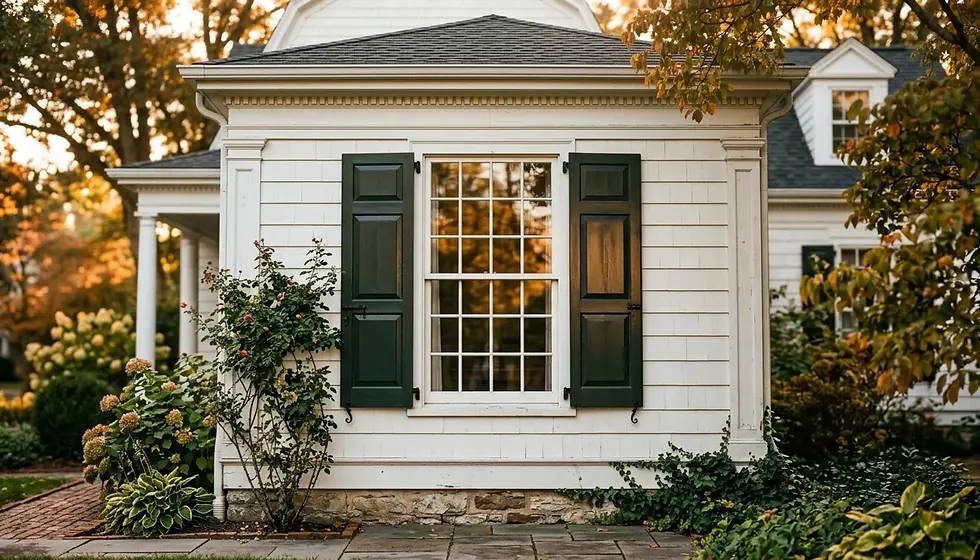
If you're ready to move from research to a specific recommendation for your Delmarva Peninsula home, the team at Home Blinds and Floors offers free in-home consultations across Rehoboth Beach, Lewes, Bethany Beach, Ocean City, Annapolis, Easton, and the broader Eastern Shore. We'll evaluate your home's architecture, climate exposure, and window proportions to recommend the exterior shutter style and material that will actually perform and look right for your specific situation. Schedule your consultation here.


Comments