.avif)
.avif)
.avif)
Do Blinds Help Insulate Windows? What Delmarva Homes Need

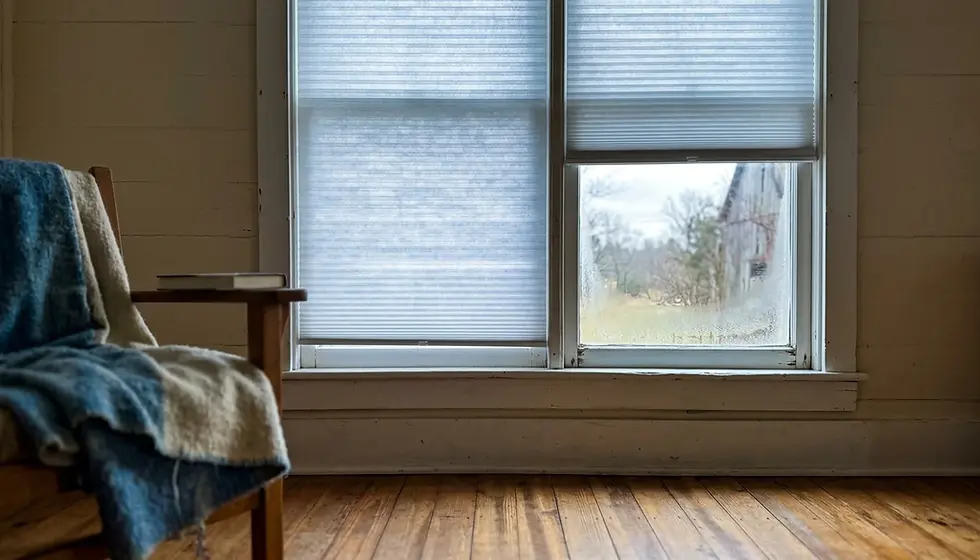
Yes, blinds help insulate windows, but the amount of benefit depends heavily on the style you choose. Cellular shades can retain up to 40% of the heat that would otherwise escape through a window, according to U.S. Department of Energy-sponsored research from Lawrence Berkeley National Laboratory, while standard aluminum or vinyl blinds offer only modest resistance to heat transfer. If you're weighing window coverings against a Delmarva winter or a Rehoboth Beach summer, the material and mounting style matter more than the fact that something is simply hanging in the window.
Cellular (honeycomb) shades are the insulation leader: their trapped air pockets can cut heat loss through a window by up to 40%, per Department of Energy-cited research.
Standard vinyl and aluminum blinds provide minimal insulation: they block light and add privacy but do little to stop heat transfer through the glass.
Multi-layered or double-cell shades perform best of all: DOE-cited studies show they can reduce heat gain by up to 77% and heat loss by up to 27%.
Vinyl and metal blinds still make up about 60% of U.S. window coverings, according to U.S. Department of Energy data, meaning most homes are using the least insulating option available.
Installation and fit determine real-world performance: a poorly sized or loosely mounted shade leaks air around the edges no matter how good the fabric is.
An in-home consultation from Home Blinds and Floors identifies which product actually solves your specific heat-loss or heat-gain problem, rather than guessing from a catalog photo.
Homeowners across the Delmarva Peninsula ask us this question constantly, and for good reason. A house in Bethany Beach with south-facing sliders deals with a completely different thermal challenge than a farmhouse outside Centreville with older, single-pane double-hungs. Home Blinds and Floors has spent years measuring and installing window treatments in both settings, and the honest answer is that blinds do help, some more than others, and the difference between a builder-grade aluminum blind and a properly fitted cellular shade can show up directly on your energy bill.
This guide breaks down exactly which blind and shade styles insulate best, what the Department of Energy's research actually says about seasonal savings, and how coastal humidity on the Eastern Shore changes the calculation. We'll also cover what you can layer over existing windows if you're not ready for a full replacement, and why some higher-income homeowners skip window coverings altogether, even though it costs them on the energy bill.
What Blinds Are Best for Insulating Windows?
The best blinds for insulating windows are cellular shades, also called honeycomb shades, because their accordion-style pockets trap a layer of still air against the glass. That trapped air acts as a buffer between the cold or hot exterior surface and the interior of the room, which is the same principle behind double-pane glass and insulated jackets.
Cellular shades come in single-cell and double-cell configurations. Single-cell versions offer one row of honeycomb pockets and a moderate insulation boost. Double-cell shades stack two rows of pockets, and that extra air layer is what pushes their performance into the range Lawrence Berkeley National Laboratory has documented, up to 40% retained heat versus an uncovered window. If you're comparing the two for a specific room, our guide to single versus double cell shades breaks down which one makes sense for bedrooms, living rooms, and sunrooms.
Plantation shutters rank second for insulation, mostly because of their thicker louvers and tighter frame fit, though they don't trap air the way a cellular shade does. Roman shades with an insulating lining fall in a similar range. Standard aluminum mini blinds and thin faux wood blinds provide the least insulation of any common window covering, since their flat slats leave gaps for air to move around the edges even when fully closed.
For Delmarva homes specifically, we consistently recommend double-cell shades in north- and west-facing rooms that lose the most heat in winter, and a combination of cellular shades with solar screening on east- and south-facing rooms that overheat in summer. That distinction matters more on the coast than almost anywhere else, since a bay-facing window in Lewes behaves very differently from an ocean-facing window in Bethany Beach.

Do Window Blinds Help Keep Cold Out?
Window blinds help keep cold out when they're made from insulating materials like cellular fabric and installed with a tight, gap-free fit, but ordinary slat blinds do relatively little against a genuine winter draft. The mechanism is simple: any material creates a barrier, but only materials that trap air significantly slow heat transfer.
According to the Department of Energy, interior cellular shades can reduce a home's heating energy use by up to 20%, and cut total heating and cooling energy consumption by up to 15%, when compared to leaving windows uncovered. That's a meaningful number for a Milton or Salisbury homeowner running a furnace through a Delmarva winter, when overnight lows regularly dip into the 20s and 30s.
Standard vinyl or aluminum blinds do offer some resistance, mostly by adding a still-air gap between the glass and the room, but that gap is thin and full of leaks around the slats and side rails. As a result, they typically shave only a small percentage off heat loss, nowhere near what a properly fitted cellular shade delivers.
The other factor Delmarva homeowners overlook is fit. A shade that's a quarter-inch too narrow lets cold air spill around both edges every time the furnace kicks on. This is exactly why professional measurement matters. At Home Blinds and Floors, our free in-home consultation includes precise window measurements specifically so the finished product closes the air gaps that generic, off-the-shelf blinds always leave behind.
What Can I Put Over My Windows to Keep the Cold Air Out?
The most effective options to keep cold air out are double-cell cellular shades, insulated cellular shades paired with heavier drapery, or plantation shutters mounted flush against the window frame, each of which reduces the draft that comes off a cold pane of glass on a winter night. Layering two treatments together outperforms any single product alone.
Specifically, a double-cell shade mounted inside the window frame, with a floor-length curtain panel hung outside the frame on a rod, creates two separate air barriers. This is the layering approach we recommend most often for older homes on the Eastern Shore, particularly farmhouses outside Easton and Centreville that still have their original single-pane or early double-pane windows.
Plantation shutters are another strong option, especially in a beach cottage where you want a coastal look with real thermal performance. Composite and vinyl shutter materials resist warping better than solid wood in humid environments, and a properly fitted shutter panel closes tighter than most blind styles. If your current shutters are already showing stress cracks or gaps at the rail joints, that's a sign the fit has failed and cold air is getting through.
For sliding glass doors, which lose an enormous amount of heat because of their large glass surface and metal frames, vertical cellular shades or insulated panel track systems work better than standard vertical blinds. Our guide to vertical shades for sliding glass doors covers the specific products that hold up against Delmarva's coastal humidity while still cutting drafts.
A Practical Layering Checklist
Start with a double-cell cellular shade, inside-mounted for the tightest fit against the frame.
Add a heavier drapery panel on an external rod for a second air barrier, especially in north-facing rooms.
Check weatherstripping around the window frame itself; even the best shade can't fix a leaky sash.
For sliding doors, choose vertical cellular shades or panel track systems over standard vertical blinds.
Have a professional confirm the exact window dimensions before ordering, since a gap of even a quarter inch undercuts performance.
Why Do Rich People Leave Their Windows Uncovered?
Homeowners with unobstructed windows are usually prioritizing an unbroken view, natural light, and architectural design over insulation performance, often because their homes already have high-performance glass or supplemental HVAC capacity that reduces the practical cost of leaving windows bare. It's a design choice, not proof that window coverings don't matter.
Many higher-end coastal homes on the Delmarva Peninsula, particularly newer construction in Bethany Beach and Ocean City, are built with triple-pane or low-E coated glass that already blocks a significant share of heat transfer on its own. In those homes, the marginal insulation benefit of adding blinds is smaller, so owners lean toward glass walls and open sightlines to the bay or ocean instead.
That said, even a well-glazed window benefits from some covering during a stretch of single-digit January nights or a run of 95-degree August afternoons. Leaving glass completely bare in an older or standard-glazed home, the kind still common in Salisbury, Millsboro, and inland Kent County communities, means giving up a real and measurable energy savings for the sake of an unobstructed view. That's a fair trade for some homeowners and a costly one for others.
If you like the minimalist, uncovered look but still want some seasonal flexibility, motorized cellular shades that retract completely out of sight are worth considering. You get the open view most of the day and a thermal barrier when you actually need it, which is a common request from our tech-forward clients in Annapolis and Kent Island working with existing smart home systems.
How Much Energy Can Insulating Window Treatments Actually Save?
Insulating window treatments like cellular shades can lower a home's heating energy use by up to 20% and reduce combined heating and cooling costs by up to 15%, based on Department of Energy-sponsored research from Lawrence Berkeley National Laboratory. Higher-performance multi-layer or double-cell products push those numbers even further in some documented studies.
Specifically, quality multi-layered cellular shades have been shown to cut heat gain by up to 77% during peak summer sun and reduce heat loss by up to 27% during cold months, according to Department of Energy-cited research summarized by MarketResearchFuture. That's a wide performance range, and it explains why not every "insulating shade" on the market delivers the same result.
As a category, the global blinds and shades market was valued at roughly USD 14.82 billion in 2026 and is projected to grow to about USD 24.63 billion by 2030, a 9.1% compound annual growth rate driven largely by consumers prioritizing insulation and smart shading, according to Grand View Research market data. That growth reflects a real shift in how homeowners think about window coverings, from a purely decorative purchase to a functional part of a home's energy performance.
In commercial settings, the trend is even more pronounced. Industry-statistics overviews report that 72% of office facility managers now favor blinds with thermal-control properties specifically, a signal that businesses across the Delmarva Peninsula, from Salisbury to Annapolis, increasingly view window coverings as an operating cost lever rather than a decorative afterthought.

Cellular Shades vs. Standard Blinds vs. Shutters: Which Insulates Best?
Cellular shades outperform both standard blinds and plantation shutters for pure thermal insulation, primarily because their honeycomb structure traps still air rather than simply blocking a sightline. Shutters come in second thanks to their thicker, tighter-fitting panels, while standard aluminum and vinyl blinds trail both because their flat slats leave consistent air gaps.
Window Treatment | Insulation Performance | Best Use Case | Approximate Cost Range (Installed) |
Double-cell cellular shades | Highest: up to 40% heat retention, per DOE-cited research | North and west-facing rooms, bedrooms, whole-home retrofits | $180 to $450 per window |
Single-cell cellular shades | Strong, moderate step down from double-cell | Budget-conscious insulation upgrades | $120 to $300 per window |
Composite or vinyl plantation shutters | Moderate, driven by tight frame fit | Coastal homes needing durability plus some insulation | $250 to $550 per window |
Solar or roller shades | Moderate for heat gain control, limited for heat loss | Sun-drenched rooms, glare and UV control | $150 to $400 per window |
Faux wood or aluminum blinds | Low, minimal air-gap benefit | Bathrooms, budget rooms, secondary spaces | $80 to $220 per window |
Real wood blinds | Low to moderate, similar to faux wood | Formal rooms where wood grain matters more than climate performance | $150 to $400 per window |
The pricing above reflects general ranges we see across Delmarva installations and will vary based on window size, fabric selection, and whether you choose manual or motorized operation. A free in-home consultation from Home Blinds and Floors is the only way to get an accurate number for your specific windows, but this table gives you a realistic starting point before you commit to a style.
If you're weighing shutters against shades more broadly for your climate and aesthetic, our comparison of faux wood versus real wood blinds covers the durability side of that decision in more depth, including how each material handles coastal humidity over several seasons.
How Does Delmarva's Coastal Climate Change the Insulation Equation?
Delmarva's coastal climate adds humidity and salt air exposure to the standard insulation calculation, which means the best-performing material on paper isn't always the best long-term choice for a home in Rehoboth Beach, Lewes, or Ocean City. A shade that insulates beautifully but degrades in two seasons isn't actually saving you money.
Real wood blinds and traditional wood plantation shutters are especially vulnerable near the water. Humidity cycles cause the wood to expand and contract, which eventually cracks paint finishes and warps individual slats or louvers, opening the exact air gaps you installed the treatment to prevent. We see this constantly in beachfront properties from Bethany Beach down through Ocean City.
Composite and vinyl shutters, along with faux wood blinds, resist this degradation far better. They don't absorb moisture the way real wood does, so they hold their fit and their insulating seal season after season. For cellular shades, look for fabrics rated for humidity resistance, since even a fabric-based product can sag or discolor in a consistently damp bathroom or sunroom near the coast.
Homes along the Delaware Bayshore, particularly around Lewes and Milton, deal with a softer, more diffused afternoon light compared to direct ocean-facing exposure in Bethany Beach. Bay-facing rooms often do well with light-filtering cellular shades that balance insulation and daylight, while ocean-facing rooms facing harsh, direct morning sun benefit more from a tighter-weave solar shade layered with an insulating cellular shade behind it.
Why Choose Home Blinds and Floors for Insulating Window Treatments on the Delmarva Peninsula?
Home Blinds and Floors is a locally-owned window treatment company that has installed insulating blinds, shades, and shutters in homes across the Delmarva Peninsula, from Annapolis and Kent Island down to Rehoboth Beach and Ocean City, giving the team direct, repeated exposure to how these products actually perform in a coastal climate rather than a lab.
What sets the process apart starts with the free in-home consultation. Instead of guessing which cellular shade or shutter material will hold up in your specific room, our team brings fabric and material samples directly to your home, evaluates how sunlight moves through your windows at different times of day, and recommends a product matched to your actual light and heat conditions. This matters enormously for insulation performance, since a shade that's undersized by even a quarter inch loses much of the air-sealing benefit that makes cellular shades effective in the first place.
Home Blinds and Floors carries multiple trusted brand lines, including Hunter Douglas, Norman, and Graber, which gives homeowners a genuine range from affordable single-cell shades to premium motorized double-cell systems with smart home integration. Professional installation is included with every project, which eliminates the crooked mounts and gapped edges that undercut a DIY cellular shade's insulating performance. For technical specifications on how these systems are engineered, Hunter Douglas publishes detailed resources including a Fabric Selection Guide that outlines how different fabric weights affect both light control and thermal performance.
Compared to ordering blinds online or picking up a pre-cut set at a big-box store, working with a locally-owned company means someone measures your actual windows, someone stands behind the installation, and someone is available afterward if a mechanism needs adjustment. Other window treatment companies operate across the region as well, but few combine coastal-specific material expertise with the breadth of premium brands and the hands-on consultation process that Home Blinds and Floors offers throughout Delaware and Maryland's Eastern Shore.
If you're ready to see samples in your own light rather than guessing from a photo, request a free in-home consultation from Home Blinds and Floors and get a specific, honest recommendation for your windows.

What Mistakes Should You Avoid When Choosing Insulating Blinds?
The most common mistake homeowners make when choosing insulating blinds is assuming any window covering provides meaningful thermal benefit, when in reality only specific materials and fit configurations produce measurable energy savings. Getting the details wrong wastes both money and the opportunity to actually cut your heating and cooling bill.
Buying off-the-shelf sizes instead of custom measurements. A gap of even a quarter inch around a cellular shade lets air bypass the insulating barrier entirely.
Choosing single-cell shades for high-exposure rooms. If a room takes the brunt of winter wind or summer sun, the extra cost of double-cell fabric usually pays for itself.
Installing real wood shutters near the water. Humidity cycles crack paint and warp louvers within a few seasons, opening the same gaps you were trying to close.
Ignoring the mounting style. Inside-mounted shades generally seal better against drafts than outside-mounted styles, though outside mounts sometimes make sense for oddly shaped or historic windows.
Skipping professional installation to save money. A crooked or loose mount undercuts even the best-performing fabric, and it can void a manufacturer's warranty.
Forgetting sliding glass doors. Large glass surfaces lose heat fast, and standard vertical blinds do far less than a vertical cellular shade or panel track system.
For a deeper look at how to think through material choices room by room, our broader cellular shades resource hub covers additional configurations, including top-down-bottom-up options that are popular for bathrooms and street-facing living rooms.
Frequently Asked Questions
Do blinds actually help insulate windows, or is that a myth?
Blinds do help insulate windows, but performance varies enormously by type. Cellular shades can retain up to 40% of heat that would otherwise be lost through the glass, according to Department of Energy-cited research, while standard aluminum or vinyl blinds offer only minor resistance. The material and fit matter more than the fact that something is covering the window.
What is the difference between light filtering and blackout shades for insulation purposes?
Light filtering shades allow soft daylight through while still providing some insulating benefit, making them suitable for living rooms and kitchens. Blackout shades use a denser, often multi-layer fabric that blocks light completely and typically provides slightly stronger thermal performance, which makes them a common choice for bedrooms where both darkness and temperature control matter.
Do cellular shades work well in humid coastal climates like Delmarva's?
Cellular shades generally perform well in coastal humidity as long as you choose a fabric rated for moisture resistance, particularly in bathrooms or sunrooms near the water. Unlike real wood shutters, which can warp or crack from humidity cycles in Bethany Beach or Ocean City homes, fabric cellular shades hold their shape and seal more consistently over multiple seasons.
How much does it cost to install insulating cellular shades on the Delmarva Peninsula?
Cellular shades typically run between $120 and $450 per window installed, depending on whether you choose single-cell or double-cell fabric, the size of the window, and whether the shade is manual or motorized. A free in-home consultation from Home Blinds and Floors will give you an exact quote based on your specific windows and material choice.
Are motorized insulating shades compatible with smart home systems?
Yes, many motorized cellular shade systems, including Hunter Douglas PowerView, are compatible with Alexa, Google Home, and Apple HomeKit, and can also integrate with whole-home systems like Lutron or Control4. This lets you schedule shades to close automatically during peak heat or cold hours, which adds a practical energy-saving layer on top of the insulating fabric itself.
Do plantation shutters insulate as well as cellular shades?
Plantation shutters generally insulate less effectively than double-cell cellular shades, since shutters rely on a tight frame fit rather than trapped air pockets. Composite or vinyl shutters hold their seal better over time than real wood, especially in coastal environments, but if insulation is the top priority, cellular shades are the stronger performer.
What should I put over sliding glass doors to reduce heat loss?
Vertical cellular shades or insulated panel track systems perform better against heat loss on sliding glass doors than standard vertical blinds, since large glass surfaces lose heat quickly and traditional vertical slats leave significant air gaps. These systems also hold up well against the wider swing in light exposure that sliding doors typically get throughout the day.
Is it worth replacing old blinds just for the energy savings?
Replacing old, worn, or poorly fitted blinds is often worth it if you're seeing visible gaps, warping, or drafts near the window, since a properly fitted cellular shade can cut a home's heating energy use by up to 20%. If your current blinds are still tightly fitted and in good condition, the payoff may be smaller, and a professional consultation can help you decide if an upgrade makes financial sense for your specific windows.
Conclusion: Do Blinds Help Insulate Windows?
Blinds absolutely help insulate windows, and the data backs it up: cellular shades can retain up to 40% of the heat a bare window would lose, and Department of Energy-cited research shows they can trim heating energy use by up to 20% in a typical home. The catch is that not all window coverings deliver that result. Standard vinyl and aluminum blinds, still used in roughly 60% of American homes according to Department of Energy figures, do comparatively little against a real Delmarva winter or a stretch of August humidity.
If you're deciding what to put over your windows this year, the honest recommendation is double-cell cellular shades for the rooms losing the most heat, composite or vinyl shutters where coastal durability matters as much as insulation, and a layered approach with drapery for older homes with original single-pane glass. As of 2026, more Delmarva homeowners are treating window coverings as a functional energy decision rather than a purely decorative one, and that shift shows up in both national market data and the questions we field every week during in-home consultations.
Home Blinds and Floors has spent years helping homeowners across Annapolis, Easton, Salisbury, Rehoboth Beach, and the rest of the Delmarva Peninsula find the right material for their specific windows, light exposure, and coastal conditions. If your current blinds are drafty, warped, or simply not doing their job, a free in-home consultation is the fastest way to find out what will.

If drafty or outdated blinds are costing you comfort and energy dollars, a custom-fit cellular shade can close those gaps for good. Get started with Home Blinds and Floors and schedule your free in-home consultation to find the insulating window treatment that actually fits your home.
Content powered by inkSTR.co
Comments