.avif)
.avif)
.avif)
Swappable vs Fixed Fabric Shades: Real Benefit or Hype?

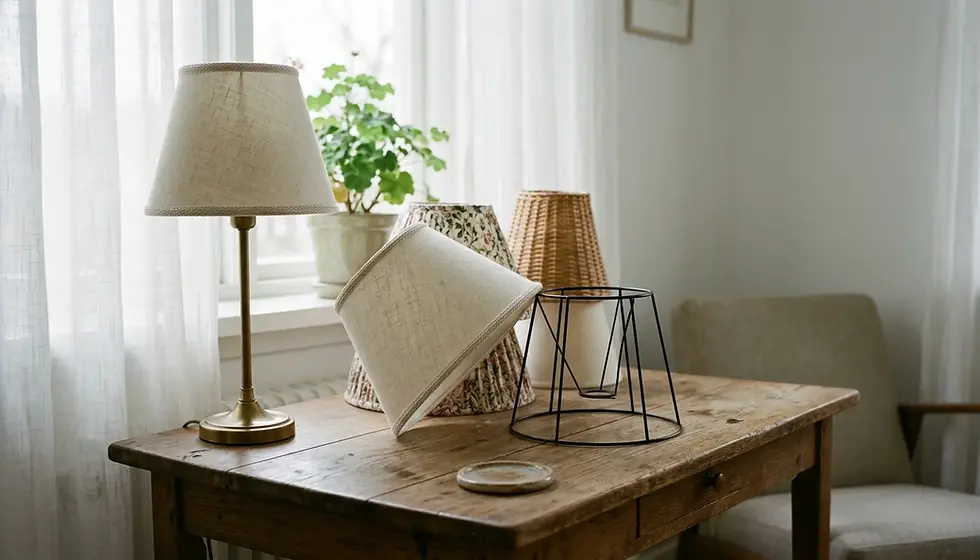
Swappable fabric shades use a roller or frame system that lets you replace the fabric insert without removing the hardware from your window, while fixed fabric shades have the fabric permanently attached to the mechanism, so the whole unit gets replaced when you want a new look. The real advantage is fabric flexibility over time, not lower upfront cost. It is a legitimate benefit for the right household, but it is not the universal upgrade some retailers make it sound like.
Swappable systems cost more upfront because you are paying for a reusable hardware frame, but they can reduce long-term replacement costs if you change fabric styles every few years.
Fixed fabric shades are simpler, generally more affordable per window, and remain the standard choice for homeowners who pick a fabric and expect to live with it for a decade or more.
Fabric holds 33.5% of the global window shade market by material in 2026, according to Coherent Market Insights, and roller shades alone account for 51.9% of global window shade sales, per Market Intelo research.
Coastal humidity and salt air on the Delmarva Peninsula shorten fabric lifespan faster than inland climates, which is exactly the scenario where swappable systems earn their keep.
Vacation rental owners and frequently redecorated commercial spaces benefit most from swappable inserts; most primary residences do fine with a well-chosen fixed shade.
Neither option is inherently better. The right pick depends on how often your fabric preferences, room use, or window exposure change.
If you have shopped for window shades in 2026, you have probably run into marketing copy pushing "swappable" or "interchangeable" fabric systems as the smarter, more modern choice. At Home Blinds and Floors, we get this question constantly during in-home consultations across Rehoboth Beach, Lewes, and the broader Delaware and Maryland coast, and the honest answer is more nuanced than a sales pitch.
This guide breaks down what swappable fabric shades actually are, how they compare to fixed fabric shades on cost, durability, and design flexibility, and which households genuinely benefit from paying the premium. We will also cover where the marketing oversells the concept, because it does in certain cases.
What Are the Benefits of Fabric Shades in General?
Fabric shades are window coverings made from woven or non-woven textile material, valued for their ability to filter, block, or diffuse sunlight while adding color and texture to a room. Fabric now represents roughly 33.5% of the global window shade market by material as of 2026, according to Coherent Market Insights, ahead of vinyl and most rigid alternatives.
Specifically, fabric shades give you a wider range of opacity levels than almost any other window covering category. You can choose sheer fabrics that filter light softly, light-filtering weaves that soften glare without blocking a view entirely, or blackout linings for bedrooms and media rooms. Polyester dominates fabric shade manufacturing with about 42.1% market share, prized for its durability and colorfastness, while cotton and cotton blends hold roughly 23.5% and vinyl accounts for about 18.3%.
For coastal Delmarva homes, fabric shades also handle temperature swings well. As a well-reviewed shade retailer notes in its coverage of the benefits of fabric shades, drawing shades open in winter maximizes solar gain, while closing them during intense summer afternoons blocks heat before it enters the room. That flexibility is the baseline benefit of fabric as a material, whether it is mounted on a swappable frame or a fixed roller.
Are Pleated Shades Out of Style in 2026?
Pleated shades are not out of style, but they have been overtaken in popularity by roller shades and cellular shades, which now dominate new installations across most of the Delmarva Peninsula. Roller shades alone capture 51.9% of the global window shade market in 2026, according to Market Intelo's roller shade research, largely because their clean, flat profile suits both modern and traditional interiors.
Pleated and honeycomb-style shades still perform well for insulation, and cellular versions in particular remain popular in bedrooms and home offices where energy efficiency matters. But as a design statement, pleated fabric has lost ground to the layered look of roller shades paired with drapery, a combination we install constantly in Lewes and Bethany Beach homes with bay-facing windows.
For homeowners deciding between the two, the decision usually comes down to window shape rather than trend. Pleated shades still make sense for arched or unusually proportioned windows where a roller mechanism cannot mount cleanly. If your windows are standard rectangles, a roller shade with a fresh fabric selection will look more current in 2026 than a traditional pleated shade, swappable or otherwise.

What Are the Benefits of Swappable Fabric Shades Versus Fixed Fabric Shades?
The core benefit of swappable fabric shades is that you replace only the fabric insert, not the entire roller mechanism, brackets, or motor when you want a design change. Fixed fabric shades bond the fabric to the roller tube permanently, so any style refresh means replacing the whole unit, hardware included.
Specifically, swappable systems from brands offering interchangeable roller cassettes let you switch from a light-filtering weave to a blackout fabric, or from a neutral tone to a bold pattern, without a new installation visit for the hardware itself. This matters most for two groups: vacation rental owners who redecorate between seasons and homeowners who genuinely change their design preferences every few years.
For everyone else, the benefit is theoretical. If you pick a durable, well-suited fabric the first time (something our team walks every client through during a free in-home consultation), you may never need to swap it at all. As a result, the premium you pay for swappable hardware often outlasts its usefulness for a household that redecorates once a decade.
Fixed fabric shades, by contrast, are simpler mechanically. Fewer moving parts means fewer potential failure points, which lines up with the same logic that makes fixed outdoor shade structures more weather-resistant and lower maintenance than retractable systems, according to outdoor shading comparisons from Journeyman HQ. The same principle applies indoors: less complexity, less to go wrong.
Is There a Real Cost Difference Between Swappable and Fixed Fabric Shades?
Yes, swappable fabric shade systems typically cost more upfront than fixed fabric shades of comparable quality, because you are paying for a reusable frame or cassette mechanism designed to accept multiple fabric inserts over its lifespan. Fixed shades concentrate the entire cost into a single, simpler unit.
The math only favors swappable systems if you actually replace the fabric more than once. If a swappable roller costs meaningfully more than a fixed roller of the same fabric grade, you need at least one fabric swap down the road just to break even, and two or more swaps to see genuine savings versus buying new fixed shades each time.
For budget-conscious homeowners across Salisbury, Millsboro, and Middletown, this is where we steer clients firmly toward fixed fabric shades. Custom does not have to mean expensive, but paying a swap-ready premium on hardware you will never actually swap is money better spent on a higher grade fabric or motorization instead.
Commercial clients see the equation differently. A medical office or retail space that rebrands every few years, or a restaurant that seasonally updates its dining room aesthetic, can offset the swappable premium through fewer full installation visits. If your business changes its look often, ask about swappable cassette systems specifically during your consultation.
Cost and Feature Comparison Table
Factor | Swappable Fabric Shades | Fixed Fabric Shades |
Upfront cost | Higher, due to reusable frame/cassette | Lower per window, simpler construction |
Long-term cost if fabric changes 2+ times | Lower over time | Higher, full replacement each time |
Mechanical complexity | More moving parts | Fewer parts, simpler operation |
Best for | Rentals, commercial spaces, frequent redecorators | Primary residences, stable design preferences |
Maintenance | Slightly more, cassette mechanism upkeep | Minimal, standard fabric care only |
Installation timeline | Similar for initial install; faster for later fabric swaps | Full reinstall required for any fabric change |
What Are the Most Efficient Shades for Energy Savings?
The most energy-efficient shades in 2026 are cellular (honeycomb) shades and solar roller shades with tightly woven fabric, both of which reduce heat transfer through the window more effectively than standard light-filtering fabric. Fabric solar shading systems can cut HVAC costs by roughly 20 to 25% annually in residential settings, according to Congruence Market Insights, depending on your home's climate and window orientation.
Motorized versions add another layer of efficiency because they can be programmed to close automatically during peak sun hours. Motorized roller shades deliver energy savings in the range of 12 to 25% on heating and cooling costs, according to industry data from Market Intelo, based on window size, solar exposure, and how well the automation schedule is set up.
For a south-facing great room in a newer Kent Island construction with floor-to-ceiling windows, this efficiency gap is not trivial. Solar roller shades now make up about 18.6% of the global roller shade market, growing at a projected 6.8% CAGR, which tells you homeowners are actively choosing performance fabric over decorative-only options.
Whether the fabric sits on a swappable or fixed system does not change its insulating performance. Efficiency comes from the weave density, cell construction, and mount type, not the mechanism underneath. Do not let a retailer tell you swappable hardware improves energy performance; it does not.
Are Dual Shades Worth It Compared to Swappable Single Shades?
Dual shade systems, sometimes called day-and-night or duo shades, mount two different fabrics on a single headrail so you can layer a sheer or light-filtering panel with a blackout or room-darkening panel. They are worth the investment for bedrooms, media rooms, and any space where light needs shift dramatically between day and evening use.
Compared to a swappable single-fabric shade, dual shades solve a different problem. Swappable shades let you change your fabric style over time; dual shades let you change your light level within the same day without swapping anything. As one shade specialist demonstrates in coverage of roller shade layering techniques, dual roller setups let you run a semi-sheer layer up front and a blackout layer behind it, controlling exactly how much light and privacy you get at any hour.
For most Delmarva bedrooms, we recommend dual shades over swappable single shades when the goal is daily light control. Reserve swappable single-fabric systems for spaces where your aesthetic preferences change, not your daily light needs. The two features are not mutually exclusive. Some premium cassette systems on the market now offer both dual fabric layering and swappable inserts in a single headrail, though that combination sits at the top of the price range.
How Does Coastal Delmarva Weather Affect This Decision?
Coastal humidity and salt air degrade fabric shades faster than inland climates, which shifts the swappable-versus-fixed calculation for homeowners near the water. A fabric that looks great in a Centreville farmhouse may show fading or fiber breakdown within a few seasons in a beachfront Bethany Beach or Ocean City condo exposed to salt-laden air and intense UV.
In this specific scenario, swappable systems earn their premium more easily. If you already expect to replace fabric every three to five years due to environmental wear, paying for reusable hardware upfront reduces your total cost across multiple fabric generations. This is one of the few cases where the swappable pitch is not hype. It is a legitimate response to a real durability problem.
Homes further inland, including Easton, Annapolis, and Grasonville, do not face the same accelerated wear cycle. Fixed fabric shades installed in these markets routinely last a decade or more without fading enough to warrant a swap. If you are not fighting salt air daily, you are likely paying for a feature you will not use.
Our installers see this pattern constantly. A homeowner on the Atlantic side often needs a completely different fabric strategy than one facing the calmer Delaware Bayshore in Milton or Lewes, where light is softer and UV exposure is less punishing. Bay-facing windows tend to suit light-filtering sheers well; direct ocean-facing windows call for tighter-weave solar fabric regardless of whether the mechanism is swappable or fixed.
Does Swapping Fabric Actually Improve Design Flexibility?
Swappable fabric systems do improve design flexibility, but only if you use that flexibility. The benefit is real: you can update a room's color palette or opacity level without a full reinstall, which appeals to design-focused homeowners who treat window treatments the way they treat throw pillows or paint color, as a seasonal or trend-driven update.
For example, custom Roman shade providers note that custom fabric options allow for premium textures, fold styles, and blackout linings that elevate both form and function, as outlined in 3 Day Blinds' comparison of custom versus ready-made shades. That same expansive fabric selection applies whether your system is swappable or fixed; the swap capability just lets you access a second (or third) fabric choice later without new hardware.
The honest limitation: most homeowners who install custom shades keep them until the fabric visibly wears out, not because they crave a style refresh. If you are the kind of homeowner who has repainted a room three times in five years, swappable shades will genuinely get used. If you picked your kitchen backsplash once and have not thought about it since, you are the fixed-shade type, and there is nothing wrong with that.

What Should You Prioritize When Choosing Between the Two?
Choosing between swappable and fixed fabric shades comes down to four practical questions, and answering them honestly will save you from an unnecessary hardware upgrade or a costly under-buy. Here is the order we walk clients through during a consultation:
How close is your home to salt air or intense UV exposure? If you are within a mile or two of the Atlantic coastline in Rehoboth Beach, Bethany Beach, or Ocean City, expect faster fabric wear and consider swappable hardware.
Do you actually redecorate, or do you think you will? Be honest. Most people do not swap fabric as often as they imagine when standing in a showroom.
Is this a primary residence, rental property, or commercial space? Rentals and commercial spaces see far more benefit from swappable systems due to higher turnover in aesthetic needs and heavier wear.
What is your total budget across the expected lifespan of the shade? Calculate cost over ten years, not just the installation invoice, factoring in how many fabric changes you would realistically make.
Common mistakes we see: homeowners paying for swappable hardware in a low-traffic guest room that will never see a fabric change, and rental property owners installing fixed shades that then need full replacement every time a guest damages the fabric. Match the mechanism to the actual usage pattern, not the marketing pitch.
If you manage a vacation rental, cordless and durable options matter more than swap capability in most cases, since guest-proofing is the bigger operational headache. For design-forward primary homeowners across Easton, Kent Island, and Annapolis working through a renovation, our guide to modern window treatments for Delmarva kitchens covers fabric and mount choices in more detail for high-use rooms.
How Do Swappable and Fixed Shades Compare on Durability and Maintenance?
Fixed fabric shades generally require less maintenance because they have fewer mechanical components, following the same principle that makes simpler systems more reliable across the window covering category as a whole. Swappable systems add a cassette or track mechanism that occasionally needs cleaning or minor adjustment to keep fabric swaps smooth over years of use.
Neither system inherently outlasts the other in terms of the fabric itself. Fabric lifespan depends far more on material quality, UV exposure, and humidity than on whether it is mounted on swappable or fixed hardware. Polyester-based fabrics, which dominate roughly 42.1% of the fabric shade market per Coherent Market Insights, resist fading and moisture damage better than cotton blends in coastal environments.
As a result, the durability conversation is really two separate decisions: which fabric material holds up in your specific environment, and which mechanism fits your redecorating habits. We recommend settling the fabric question first, since it affects performance regardless of mechanism, then deciding whether swap capability is worth the added hardware cost. For more on fabric performance near sliding glass doors and high-glare rooms, see our best window treatments for sliding glass doors in Delmarva guide.
Frequently Asked Questions
Are swappable fabric shades worth the extra cost for a typical homeowner?
For most primary residences, no. Swappable fabric shades only pay off if you replace the fabric two or more times over the shade's lifespan. If you tend to keep window treatments until they wear out naturally, a fixed fabric shade delivers the same look and performance for less money.
Do swappable fabric shades work with motorized systems?
Many swappable cassette systems are compatible with motorized roller mechanisms, including platforms that integrate with smart home ecosystems. Around 67% of new motorized roller shades launched in 2026 and 2026 include IoT connectivity, so ask specifically whether a swappable frame supports motorization before you buy.
How often should fabric shades be replaced in a coastal Delmarva home?
Fabric shades in homes directly exposed to salt air, such as beachfront properties in Bethany Beach or Ocean City, often show visible fading or fiber wear within three to five years. Homes further inland, including Easton or Centreville, can typically get a decade or more from the same fabric grade.
Can you install swappable fabric shades yourself, or do you need a professional?
Swapping the fabric insert itself is often designed to be simple, but the initial hardware installation should be done professionally, especially for oversized or oddly shaped windows. Improper mounting can cause the cassette mechanism to bind or the fabric to hang unevenly, which undercuts the entire benefit of the swap system.
What is the difference between light filtering and blackout fabric shades?
Light filtering fabric shades soften and diffuse sunlight while still allowing some visibility and brightness into the room. Blackout fabric shades use a tighter weave or backing layer to block nearly all outside light, making them the better choice for bedrooms, nurseries, and media rooms.
Do vacation rental properties benefit more from swappable or fixed fabric shades?
Vacation rental owners generally benefit more from durable, cordless fixed shades than from swappable systems, since guest wear and tear tends to damage fabric and hardware together rather than just the fabric. Swappable systems make more sense for rentals that undergo seasonal design refreshes rather than frequent guest turnover damage.
Does fabric material matter more than the swappable versus fixed mechanism?
Yes. Fabric material, whether polyester, cotton blend, or vinyl, determines how well a shade resists fading, moisture, and UV damage far more than whether the mechanism is swappable or fixed. Choose the right fabric for your climate first, then decide on the mechanism based on how often you expect to change your look.
The Bottom Line on Swappable Versus Fixed Fabric Shades
Swappable fabric shades offer a real, specific advantage: the ability to change your fabric without replacing hardware, which pays off for coastal homes fighting fast fabric degradation, vacation rentals with seasonal design refreshes, and commercial spaces that rebrand often. For everyone else, particularly budget-conscious homeowners and primary residences with stable design preferences, fixed fabric shades deliver the same daily performance for a lower total cost.
As of 2026, the window shade market continues shifting toward smarter, more customizable products, with the global window shade sector alone projected to grow from roughly $5.01 billion to $8.48 billion by 2033. That growth includes both swappable innovations and continued strong demand for straightforward fixed fabric shades, because both solve real problems for different households.
The right call depends on your specific window exposure, how often you actually redecorate, and whether this is a primary home, a rental, or a commercial space. A free in-home consultation is the fastest way to get a straight answer instead of guessing from a showroom catalog.

If you are weighing swappable versus fixed fabric shades for a Delmarva home, get started with Home Blinds and Floors for a free in-home consultation. We bring fabric samples to your actual windows, evaluate your light and humidity exposure on site, and recommend the mechanism and material that fits how you really live, not how a catalog says you should.
Content powered by inkSTR.co
Comments