.avif)
.avif)
.avif)
Bamboo Blinds Window Treatments: Worth It on Delmarva?


A bamboo blinds window treatment is a woven wood shade made from bamboo reeds, grasses, or slim wood strips woven into a flexible panel that rolls or folds up, rather than tilting like a slat blind. On the Delmarva Peninsula, bamboo blinds look great in a dry sunroom but tend to struggle in bathrooms, beach cottages, and anywhere salt air and humidity are part of daily life.
Key Takeaways
Bamboo blinds are woven wood shades, not true slat blinds, and roll or fold instead of tilting for light control.
Industry research shows demand for bamboo and natural woven shades has grown roughly 12% year over year as more homeowners look for sustainable materials (WifiTalents 2026).
Bamboo blinds appeal to about 18% of eco-conscious shoppers specifically, according to ZipDo 2026 data, but they are a poor match for high-humidity Delmarva rooms like bathrooms and enclosed porches.
Unlined bamboo shades let silhouettes show through at night; blackout-lined versions solve that but cost more and lose some of the natural texture.
Custom widths on most bamboo products run from about 15 inches to 84 inches, which leaves oversized coastal picture windows and sliding doors underserved.
Home Blinds and Floors recommends bamboo-look faux wood or woven vinyl alternatives for coastal Delmarva homes, reserving true bamboo for dry, inland rooms.
Homeowners across Rehoboth Beach, Lewes, and the wider Eastern Shore ask about bamboo blinds more often now than they did even two or three years ago. The natural, textured look photographs well and fits the coastal-casual aesthetic that shows up in beach cottages from Bethany Beach to Ocean City. Home Blinds and Floors fields this question in nearly every consultation where a homeowner wants a natural material look but hasn't yet weighed how bamboo actually performs against salt air and humidity swings.
This guide breaks bamboo blinds down the way Home Blinds and Floors would walk a customer through the material during an in-home visit: what the product actually is, where bamboo earns its keep on the Delmarva Peninsula, and where a coastal-grade alternative will hold up far longer. This guide also covers installation basics, the maintenance reality, and the honest cost picture, because most articles online skip straight to a sales pitch without addressing how bamboo performs in a bathroom, sunroom, or rental unit near the water.
As of 2026, the global bamboo blinds market is on track to reach roughly $380 million, growing at about a 5.1% annual rate according to ZipDo research, so bamboo blinds are not a passing trend. However, growth in a national market doesn't mean bamboo is the right call for every window on your street in Milton or Millsboro. Material science matters more here than almost anywhere else in the country.
What Are Bamboo Blinds, Exactly?
Bamboo blinds are woven wood shades constructed from thin strips of bamboo, reed, or grass fibers woven together into a single flexible panel that raises and lowers, or folds in horizontal pleats, instead of tilting open and closed like a traditional slat blind. The term "woven wood shades" is used interchangeably with "bamboo blinds" across most manufacturers and retailers.
Specifically, the weave determines how much light passes through a given panel. A tight, dense weave filters more light and offers more privacy. In contrast, a looser, more open weave lets in more natural light but also lets more of the outside in, including views into the room after dark once interior lights are on. Most bamboo blinds ship unlined, meaning the panels diffuse sunlight into a warm, textured glow rather than blocking sunlight outright.
As a result, bamboo blinds are best understood as a light-filtering product first and a privacy product second. For full opacity, manufacturers offer blackout-lined bamboo roman shades, which add a solid fabric backing behind the woven face. That lining changes the look from behind (viewers see a plain fabric backdrop rather than the woven texture) but delivers true blackout performance for a bedroom or media room.

Are Bamboo Window Blinds Good for Delmarva Homes?
Bamboo window blinds work well in dry, low-humidity rooms with moderate sun exposure, but bamboo is a questionable fit for most coastal Delmarva homes because bamboo fiber absorbs moisture, which leads to swelling, warping, and mildew in salt-air environments. A sunroom in Centreville, for example, performs very differently than a bathroom in Bethany Beach.
Specifically, natural bamboo reed is porous. Bamboo reed takes on ambient moisture the way untreated wood does, and once a fiber panel swells slightly, the weave stays loose and never quite tightens back up. In a home a mile or two from the Atlantic in Rehoboth Beach or Ocean City, that humidity exposure is constant, not occasional.
For a dry interior room in a farmhouse outside Easton or Salisbury, with limited direct moisture exposure, bamboo blinds can perform for years with basic care. In a beach house bathroom, a screened porch, or any room near a sliding glass door that gets salt-laden air, however, Home Blinds and Floors routinely sees the fibers discolor and the panel start to sag within one or two seasons.
Compared to faux wood blinds or PVC-based woven shades that mimic the bamboo look, natural bamboo simply was not engineered for coastal exposure. If the aesthetic is the draw rather than the material itself, a faux wood or vinyl alternative delivers a similar warm, textured appearance with far better durability. The faux wood vs. wood blinds guide for Delmarva homes covers that material tradeoff in more detail.
What Are the Disadvantages of Bamboo Blinds?
The main disadvantages of bamboo blinds are moisture sensitivity, limited size availability, inconsistent light blocking without a lining, and a shorter lifespan in humid or salt-air climates compared to synthetic alternatives. These tradeoffs matter more on the Delmarva Peninsula than almost anywhere inland.
First, moisture is the biggest issue. Bamboo fiber swells when the fiber absorbs humidity, and repeated wet-dry cycles, common near the Delaware Bay in Lewes and Milton, cause permanent warping over one or two seasons. Second, most manufacturers cap custom widths around 84 inches, which leaves the oversized picture windows and sliding glass doors common in newer Kent Island and Ocean City High-Rise District construction without a clean single-panel option.
Third, unlined bamboo blinds let silhouettes show through the weave at night once interior lights are on, so privacy is only partial unless a homeowner adds a blackout lining, which increases cost and changes the interior appearance. Fourth, bamboo fiber is more prone to fading and brittleness under intense, direct UV exposure than PVC or faux wood alternatives, and Delmarva's ocean-facing windows get some of the harshest direct summer sun in the mid-Atlantic.
Finally, cleaning bamboo blinds is more delicate. Bamboo can't be wiped down with the same moisture-tolerant approach used on vinyl or faux wood, a distinction covered further in the maintenance section below.
Are Bamboo Blinds in Style in 2026?
Bamboo blinds remain in style in 2026, driven largely by sustainability trends and the continued popularity of coastal, organic-modern, and Japandi interior aesthetics. Industry data from WifiTalents shows demand for bamboo and natural woven shades has grown about 12% year over year as eco-conscious buying accelerates.
Specifically, roughly 18% of eco-conscious consumers name bamboo blinds as their preferred window treatment material, according to ZipDo's 2026 analysis, placing bamboo firmly within the broader sustainability-driven segment of the shade market. Eco-friendly options made from bamboo, jute, and recycled polyester now account for somewhere between 14% and 35% of blinds sold globally, depending on how the category is measured, per Global Growth Insights and Industry Research Biz.
As a result, the aesthetic isn't fading. Designers are still pairing bamboo and woven wood texture with linen drapery panels and rattan furniture in beach house living rooms up and down the coast, from Lewes to Ocean Pines. What's changing is the substrate: more homeowners in 2026 are choosing PVC or faux wood products engineered to mimic the bamboo look while skipping the moisture problems, especially in coastal markets. The style survives; the coastal-grade materials underneath the style are evolving.
Are Bamboo Blinds Still in Style, or Are They Fading Out?
Bamboo blinds are still in style and are not fading out, but the way homeowners specify bamboo is shifting toward moisture-resistant substrates that replicate the woven wood look rather than genuine natural fiber, particularly in humid or coastal markets. The visual trend has outlasted the material's practical limitations.
This distinction matters for anyone shopping in 2026. Searching "bamboo blinds" today turns up both true natural-fiber woven wood shades and PVC or vinyl "bamboo-style" shades marketed under similar names. The look is nearly identical from six feet away. The performance difference only shows up after a full humid season.
In consultations across Annapolis, Grasonville, and the beach towns further south, Home Blinds and Floors is seeing more requests for "that bamboo look" specifically paired with a question about durability, which signals that homeowners have caught on to the tradeoff. Interior designers continue to specify woven wood texture in mood boards for 2026 remodels, but designers are increasingly pairing that spec with a note to verify material performance before ordering, especially for waterfront properties.
Bamboo Blinds vs. Other Natural and Coastal-Ready Window Treatments
Bamboo blinds are one of several natural-look window treatment options, and choosing between bamboo and the alternatives comes down to how much moisture and direct sun the room actually gets, not just the aesthetic a homeowner wants. The table below compares bamboo against the alternatives Home Blinds and Floors most often installs across Delmarva.
Treatment Type | Best For | Coastal Durability | Light Control | Typical Price Range |
Natural bamboo/woven wood shades | Dry inland rooms, sunrooms, dens | Poor in high humidity or salt air | Filters light; blackout lining available at extra cost | $45-$150 per shade for standard sizes; custom widths run higher |
Faux wood blinds | Bathrooms, kitchens, coastal living rooms | Strong; resists warping and moisture | Full tilt control, adjustable privacy | $45-$150 per blind, standard sizing |
PVC/vinyl woven-look shades | Coastal homes wanting the bamboo aesthetic | Strong; engineered for humidity | Filters light similar to bamboo | Comparable to faux wood pricing |
Cellular (honeycomb) shades | Bedrooms, energy efficiency priority | Good; synthetic fabric resists moisture | Excellent, including blackout options | Varies by fabric tier and motorization |
Custom wood blinds (real wood) | Formal interior rooms away from moisture | Poor to moderate near coastal humidity | Full tilt control | $200-$800 per blind, custom |
Notably, faux wood and PVC woven-look shades land in a similar price bracket to natural bamboo while outperforming bamboo in every coastal durability category. That's the tradeoff Home Blinds and Floors walks homeowners through during a free in-home consultation: get the look you want without inheriting a material that fights the climate.
How Do Bamboo Blinds Handle Moisture and Sun in Bathrooms and Sunrooms?
Bamboo blinds handle moisture poorly in bathrooms because the fiber absorbs humidity from showers and swells over repeated exposure cycles, while direct sun in a sunroom accelerates fading and brittleness faster than in a shaded interior room. These two rooms represent the worst-case and near-worst-case scenarios for the material.
In a bathroom, steam from daily showers creates a humidity cycle that natural bamboo simply isn't built to withstand. Home Blinds and Floors has measured this pattern across dozens of coastal Delmarva homes: a bamboo shade installed in a primary bathroom starts showing visible warping at the bottom rail within one to two seasons, even with a fan running during showers. In contrast, faux wood or a moisture-rated vinyl blind handles the exact same environment for years without issue.
In a sunroom, especially one facing south or west, the concern shifts from moisture to UV. Bamboo fiber lacks the UV inhibitors built into most synthetic window treatment materials, so unlined bamboo shades in a bright Delaware sunroom will fade unevenly within a few years, particularly along the fold lines. A solar shade or a UV-treated faux wood product resists that fading far better. For sunrooms with intense afternoon light, the solar shades guide for Delmarva sunrooms covers material options built specifically for that exposure.
How Does Bamboo Compare to Linen, Rattan, and Woven Wood Shutters?
Bamboo blinds compare to linen sheers, rattan panels, and woven wood shutters as a distinct middle option: bamboo offers more texture than linen, less structural rigidity than woven wood shutters, and a rougher, more casual look than rattan. Each of these four natural materials solves a slightly different design and performance problem, and none fully resists Delmarva's coastal humidity on its own.
Linen sheers filter light softly and add a formal, airy quality that suits a dining room or a bay window in a colonial-style Annapolis home, but linen offers almost no privacy after dark and holds up poorly against direct sun and salt air. Rattan window panels, more common in accent applications than full window coverage, bring a similar organic texture to bamboo but at a higher price point and with even more limited moisture tolerance.
Woven wood shutters, distinct from traditional plantation shutters, use a similar reed-and-grass weave as bamboo blinds but mount in a rigid shutter frame rather than a soft rolling panel. That rigidity gives woven wood shutters slightly better shape retention over time, but the same core fiber still absorbs moisture the way bamboo blinds do. As a result, only synthetic or composite substitutes reliably solve the coastal humidity problem, which is why custom shutters built from composite or vinyl material have become the standard recommendation for Delmarva waterfront homes.
When Should You Choose Bamboo Blinds Over Curtains or Sheers?
Bamboo blinds make more sense than curtains or sheers when a room needs structured light filtering with a fixed, tidy appearance, such as a home office, a casual den, or a coastal-style living room where floor-length drapery would feel too formal. Curtains and sheers remain the better choice when a room calls for softness, drape, or easy seasonal swapping, since fabric panels can be changed out far more easily than a mounted shade.
Specifically, bamboo blinds mount inside or outside the window frame and stay put, which suits a beach cottage aesthetic where clean lines and minimal fabric bulk fit the room's casual character. Curtains, by contrast, add movement and softness that works well in a bedroom or formal living room but can feel heavy or dated in a small coastal cottage window.
For interior-design-conscious homeowners layering multiple treatments, a common approach Home Blinds and Floors recommends is pairing a bamboo or woven wood shade with a simple linen curtain panel on either side purely for framing, without functional use of the curtain itself. That combination delivers the textured, natural look while keeping actual light and privacy control in the hands of the shade. This layering technique shows up often in the design examples in the curved window solutions and general treatment category pages.
What Should You Know About Installing Bamboo Blinds?
Installing bamboo blinds involves choosing between an inside mount, which fits the shade within the window frame for a clean built-in look, and an outside mount, which covers the entire window and frame for better light blockage and a more forgiving fit on uneven frames. As of 2026, most manufacturers still design bamboo products around standard mounting hardware similar to roller and cellular shades.
Inside mount installation requires very precise measurements, typically taken to the nearest eighth of an inch, since the shade needs to fit snugly within the frame depth without rubbing the sides during operation. Outside mount installation is more forgiving on measurement tolerance and works well when a window frame is uneven, warped, or too shallow to accommodate an inside mount bracket, which is a common issue in older Eastern Shore farmhouses around Centreville and Easton.
Tools typically needed include a metal measuring tape, a pencil, a power drill, and wall anchors for mounting into drywall or masonry. Installers pre-drill bracket holes, often with a small bit sized to the screws provided, then secure the headrail using the pre-drilled holes before checking that the panel raises and lowers evenly. Cord-operated versions need a cord cleat mounted to the wall or frame at a safe height, and continuous-loop or bead-chain systems need a tension device positioned so the chain stays taut without straining the mechanism.
This kind of detail work is exactly where a DIY install goes sideways: a slightly off measurement on an inside mount leaves visible gaps, and improperly anchored brackets in older plaster or masonry walls fail within a season. Professional installation eliminates that guesswork.

What Do Bamboo Blinds Cost Compared to Custom Alternatives?
Bamboo blinds and shades typically cost in a similar range to standard faux wood blinds, with per-shade pricing generally running from roughly $45 to $150 for standard sizes, though custom widths, blackout linings, and motorization push costs higher. That price overlap is exactly why the material choice, not the budget, should drive the decision.
Custom real wood blinds, by comparison, generally run from $200 to $800 per blind depending on wood species and finish, according to industry cost data compiled by ZipDo. Because bamboo and faux wood land in a comparable price bracket, the deciding factor for most Delmarva homeowners isn't cost, it's climate performance. Paying roughly the same price for a material that won't hold up near the water doesn't make financial sense once a homeowner factors in the likely cost of replacement within a couple of seasons.
For homeowners across Salisbury, Millsboro, and Middletown working with a defined budget, the custom blinds cost guide for the Delmarva Peninsula breaks down pricing by material tier in more detail, including how motorization and brand tier affect the final number. A free in-home consultation from Home Blinds and Floors will always give a homeowner a more accurate number than any generic price range, since window count, mount type, and fabric selection all move the total.
Beyond Cords: What Other Safety Considerations Matter With Bamboo Blinds?
Cord safety gets most of the attention in window treatment guides, but bamboo blinds carry two additional considerations worth understanding: fire behavior of natural fiber materials and childproofing differences between owned homes and rental properties. Both considerations matter more than most buying guides mention.
Cord cleats should always be mounted at a height that accounts for nearby furniture a child could climb, with excess cord wrapped around the cleat after every use, a standard also emphasized by manufacturer installation guides across the industry. Continuous-loop systems need a tension device fixed to the wall or frame so the loop can't be pulled loose and create a hazard.
Beyond cords, natural bamboo fiber is more combustible than treated synthetic fabrics used in most cellular and roller shades, which matters near a fireplace, wood stove, or in a kitchen with an open flame range. For rental properties specifically, cordless or motorized options reduce liability significantly since tenants and short-term guests can't be relied on to manage cord cleats consistently between stays. Property owners managing units in Rehoboth Beach or Bethany Beach should treat cordless as the default, not an upgrade, for exactly this reason.
What Makes Home Blinds and Floors the Right Choice for Coastal Window Treatments?
Home Blinds and Floors is a locally-owned window treatment company serving homeowners and businesses across the Delmarva Peninsula, offering custom blinds, shades, and shutters from trusted brands with free in-home consultations and professional installation from Annapolis and Kent Island down through Rehoboth Beach and Ocean City. That local footprint is exactly what separates a coastal material recommendation from a generic catalog answer.
Specifically, the Home Blinds and Floors process starts with an in-home consultation where the team brings physical samples into a homeowner's actual space, evaluates the room's real light and moisture conditions, and recommends a material based on that specific window, not a generalized product description. For a window that faces the Atlantic in Ocean City or sits above a humid Lewes marsh, the team will walk homeowners through PVC and faux wood alternatives that replicate the woven wood texture without the swelling and fading risk.
Home Blinds and Floors carries a wide range of materials suited to coastal conditions, including faux wood and composite shutters, cellular shades for energy efficiency, and motorized options compatible with Alexa, Google Home, and Apple HomeKit for homeowners with existing smart home systems. Every installation includes precise in-home measurement, so there's no guesswork on inside-mount fit or outside-mount frame coverage, the exact detail that trips up DIY bamboo blind installations. Other options exist across the region, but few combine coastal-specific material expertise with the breadth of brand selection and hands-on installation service that Home Blinds and Floors provides.
If your current window treatments are warping, fading, or simply not holding up to salt air and humidity, request a free in-home consultation and Home Blinds and Floors will help you find a material that actually performs in your specific room.
How Should You Choose the Right Natural-Look Window Treatment for Your Home?
Choosing the right natural-look window treatment means starting with an honest assessment of a room's moisture exposure and sun intensity, not just the aesthetic shown in a showroom photo. This decision follows a few practical steps that steer a homeowner toward a material that actually lasts, from checking humidity exposure to comparing bamboo against synthetic alternatives before ordering.
Identify how close the room sits to salt air or standing humidity, such as a bathroom, screened porch, or any window within a mile or two of the Atlantic or the Chesapeake.
Note the direction the window faces; south- and west-facing windows get the most intense, sustained UV exposure and accelerate fading in any natural fiber.
Decide whether you need full blackout, partial light filtering, or purely decorative texture, since that determines whether you need a lining and how much it will add to cost.
Compare natural bamboo against faux wood or PVC woven-look alternatives in the same price bracket before committing, especially for any coastal-facing window.
Schedule a free in-home consultation so a professional can evaluate your room's actual light and humidity conditions rather than guessing from a photo or a big-box store display.
Ask about motorization if the window is hard to reach or if you already run a smart home system, since retrofitting later costs more than specifying it up front.
Common mistakes Home Blinds and Floors sees include ordering a natural bamboo shade for a bathroom or enclosed porch based purely on the look in a catalog, skipping precise measurement and settling for an ill-fitting outside mount, and assuming custom pricing is automatically far more expensive than big-box alternatives when the reality, as shown in the pricing table above, is often much closer than homeowners expect.
Frequently Asked Questions
How much do custom window treatments cost in Delaware or Maryland?
Custom window treatments on the Delmarva Peninsula typically range from around $45 to $150 per blind or shade for standard faux wood and bamboo-style products, up to $200-$800 for premium real wood blinds, with motorization and fabric tier adding to the total. A free in-home consultation from Home Blinds and Floors gives homeowners an exact number based on their specific windows.
What is included in a free in-home window treatment consultation?
A free in-home window treatment consultation from Home Blinds and Floors includes three core elements: precise measurement of your windows, physical material and fabric samples evaluated in your actual room lighting, and a personalized recommendation based on your home's specific moisture, sun exposure, and design goals. In addition, you'll receive a clear cost estimate before committing to an order, so there are no surprises once installation begins.
How do you clean vertical window blinds?
Vertical blinds are best cleaned with a microfiber cloth or a vacuum attachment run gently along each vane to remove dust, followed by a damp cloth with mild soap for spot cleaning if the material tolerates moisture. Always check the manufacturer's care instructions first, since natural fiber materials like bamboo require dry cleaning methods only, while vinyl and faux wood vanes tolerate light dampness.
How do you clean the blinds on a window?
Most window blinds can be dusted weekly with a microfiber duster or a vacuum's brush attachment, working slat by slat or panel by panel. For faux wood or vinyl blinds, a damp cloth with mild soap handles deeper grime, but natural bamboo shades should stay dry and be spot-cleaned only, since moisture is exactly what damages the fiber over time.
How does bamboo compare to premium blind brands for durability, warranty, and installation quality?
Natural bamboo generally falls short of premium synthetic and faux wood blind lines on coastal durability, since bamboo fiber absorbs humidity and warps, while faux wood and composite materials are engineered to resist moisture. Installation quality and warranty coverage depend more on the installer than the brand name, which is why professional installation from a company like Home Blinds and Floors matters as much as the material choice itself.
How much are premium window blinds?
Premium custom wood blinds typically run from $200 to $800 per blind depending on wood species, finish, and window size, according to industry cost data. Faux wood and bamboo-style products are considerably more affordable, generally $45 to $150 per shade for standard sizing, making faux wood the more budget-friendly natural-look option for most Delmarva homes.
Are motorized blinds compatible with Alexa, Google Home, or Apple HomeKit?
Many motorized shade and blind systems installed by Home Blinds and Floors are compatible with Alexa, Google Home, and Apple HomeKit, allowing voice control and app-based scheduling. Compatibility depends on the specific motorization platform, so it's worth confirming compatibility during your in-home consultation if you already run an existing smart home ecosystem.
Do cordless blinds work well in rental properties, and are they more durable than corded options?
Cordless blinds are generally the better choice for rental properties since cordless designs eliminate the cord breakage that guests and tenants frequently cause, and cordless systems reduce liability tied to cord safety hazards. Cordless blinds also tend to hold up better under the higher turnover and less careful handling typical of short-term rental use compared to corded mechanisms.
Conclusion: Is a Bamboo Blinds Window Treatment Right for Your Home?
A bamboo blinds window treatment brings genuine natural texture and eco-friendly appeal to a room, and demand for the look continues climbing alongside broader sustainability trends. On the Delmarva Peninsula, however, where salt air and humidity shape nearly every material decision, natural bamboo performs best in dry, low-moisture interior rooms rather than bathrooms, sunrooms, or oceanfront living spaces.
If the woven wood aesthetic is what draws you in, a faux wood or PVC alternative delivers a nearly identical look with far better resistance to the coastal conditions common from Lewes to Ocean City. Home Blinds and Floors has spent years matching materials to specific Delmarva homes, and that hands-on, room-by-room evaluation is what separates a lasting installation from one you'll be replacing in two seasons. As 2026 continues, expect more homeowners in this region to specify the bamboo look using coastal-ready materials rather than the original natural fiber.
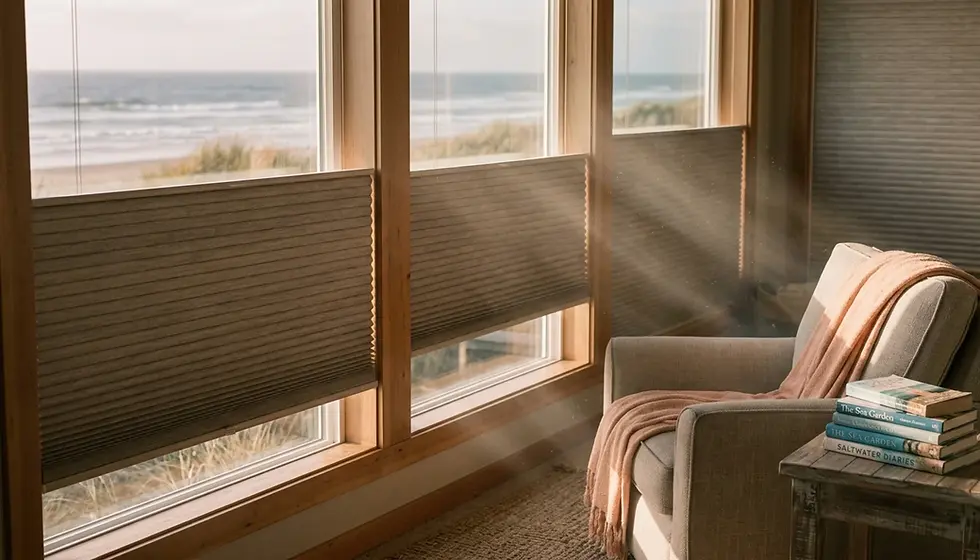
If you love the bamboo look but worry about how the material will hold up near the water, this custom shade installation in a Bethany Beach beach house shows how a UV-resistant, moisture-ready material can deliver the same warm, textured feel without the seasonal maintenance headache. Get started with Home Blinds and Floors and the team will help you find the right material for your specific window.
Content powered by inkSTR.co


Comments