


How to Wrap Windows for Winter: A Delmarva Seasonal Guide


To wrap windows for winter, seal air leaks first with caulk on fixed gaps and weatherstripping on moving sashes, then add an insulating layer over the glass. Shrink film and bubble wrap work as seasonal fixes, while cellular shades and custom interior shutters give you a lasting layer that also handles glare and privacy.
Key Takeaways
Drafts enter through gaps, glass, and frames, so match the fix to the source: caulk for fixed cracks narrower than 1/4 inch, weatherstripping for sashes you open, and film or shades for large areas of cold glass.
Shrink film goes on with double-sided tape and a hair dryer held about 6 inches from the plastic. It is a one-season fix that you remove in spring.
Window film reduces heat loss through windows, and the U.S. Department of Energy lists window treatments among its recommended ways to cut winter heat loss.
Bubble wrap costs little and can be reused, but it blurs the view. Shrink film stays clear, and cellular shades let you control light on demand.
Cellular shades trap air in honeycomb cells and are the usual permanent upgrade. A local installer measures each window so the fit is tight at the edges, where heat escapes.
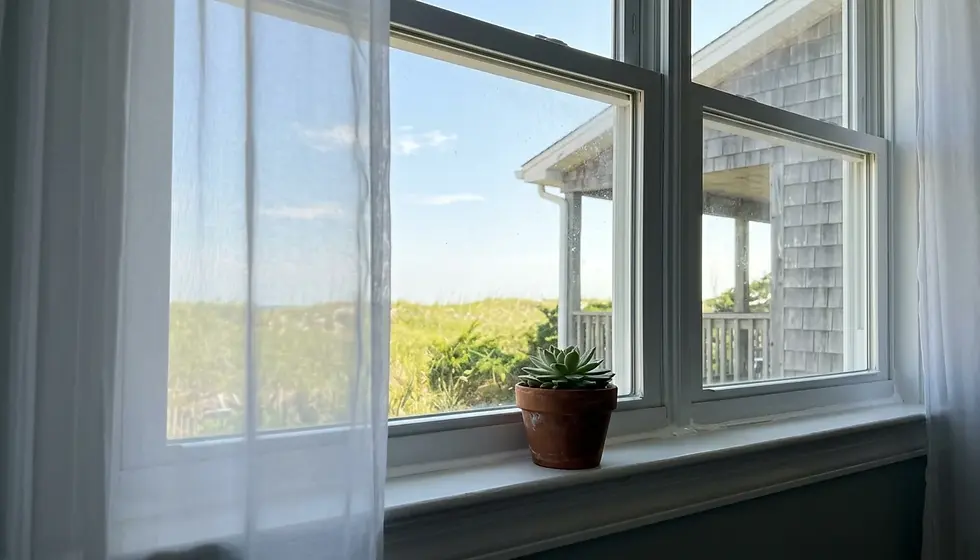
A low December sun crosses a Rehoboth Beach, Delaware sunroom by mid-afternoon, and the glass is still cold enough to chill your hand. Damp air off the Atlantic and the Chesapeake makes Delmarva winters feel colder than the thermometer says, and aging or single-pane windows give that cold an easy way in.
At Home Blinds and Floors, we've measured and installed window treatments across the Delmarva Peninsula, from Ocean City condos to historic homes in Easton, Maryland, and the same winter mistakes come up again and again. Film goes over a leaky frame. A heavy drape hangs in front of a gap that needed caulk. Cheap blinds get blamed for a problem they were never built to solve.
This 2026 seasonal guide shows you how to find where the cold enters, how to apply and troubleshoot shrink film, how film compares with bubble wrap, and when cellular shades or shutters are the smarter long-term answer. You will also find quick fixes for winter glare and temporary privacy.
What Causes Drafts and Heat Loss Around Winter Windows?
Window heat loss is the movement of warm indoor air out and cold outdoor air in through glass, frames, and the gaps around moving parts. In most Delmarva homes it happens by three routes: air leaking past the sash, heat conducting through thin or aging glass, and radiant loss at night when the glass surface turns cold.
Air leaks at the sash, trim, and frame
Air leaks are the easiest problem to find and the cheapest to fix. On a windy day, hold a strip of tissue near the sash edges, the trim corners, and the joint where the frame meets the wall. If the tissue flutters, you have a leak. A cold spot you can feel with the back of your hand tells the same story.
Cold glass and failed seals
Glass conducts heat, and single-pane windows are the biggest offenders. Double-pane units resist much better until the factory seal fails, which shows up as fog or haze between the panes. Film and shades improve a window that still works as designed. In contrast, neither product repairs a broken seal.
Window types you will find on the Delmarva Peninsula
Victorian-era houses in Lewes and Easton often have tall, narrow double-hung windows with loose sashes, so gaps are the main culprit. Newer coastal builds near Bethany Beach and Ocean City lean toward large picture windows and sliding glass doors, where the cold comes through sheer glass area. For wide door glass, our guide to window treatments for sliding glass doors covers the options.
How Do You Wrap Windows for Winter Without Replacing Them?
To wrap windows for winter means layering fixes in a set order: seal the gaps, cover the glass, then add an insulating treatment inside the room. Skipping the first step wastes the other two, because wind keeps pushing cold air around any cover you install. The table below matches each problem to its first fix.
Where the cold comes from | Best first fix | Notes |
Hairline crack where trim meets the wall or around a fixed frame, narrower than 1/4 inch | Caulk | Works on parts that do not move. Wider gaps need a different filler, so ask a professional. |
Gap where an operable sash meets the frame | Weatherstripping or removable rope-style caulk | A removable bead peels off in spring so the window opens again. |
Large pane of cold glass, such as a sunroom or picture window | Shrink film now, cellular shade or shutters later | Adds an insulating air layer without replacing glass. |
Fog or moisture between the panes | Seal repair or glass replacement assessment | No wrap fixes a failed seal. |
Window you open every day | Weatherstripping plus a shade | Film seals the window shut for the season. |
Caulk, weatherstripping, and film are not interchangeable. Caulk fills a fixed gap permanently. Weatherstripping compresses where parts slide against each other. Film adds a layer across the glass but does nothing for a wind-driven leak at the frame edge. Pick the one that matches the source, and apply it before the first hard freeze.
Timing matters because tape and caulk bond best on a clean, dry frame that is cool but not freezing. Product packaging lists minimum application temperatures, and on Delmarva most homeowners treat late October through November as the practical window. If you wait for January, you will be working with cold frames and stiff adhesive.

How Do You Plastic Wrap Windows Step by Step?
Plastic wrapping a window means stretching clear shrink film across the interior frame with double-sided tape, then tightening it with a hair dryer to form a sealed air pocket that works like a temporary extra pane. Most kits take 15 to 30 minutes per window once you have the frame prepped.
Test the tape on an inconspicuous spot of trim first, especially on freshly painted wood, vinyl, or delicate finishes.
Clean the frame with household cleaner or rubbing alcohol to remove dust, grease, and residue, then let it dry completely.
Measure the window and cut the film so it overlaps the frame by roughly 2 to 5 inches on each side.
Apply the double-sided tape around the outside of the frame in one continuous strip, with no gaps at the corners.
Press the film onto the tape, starting at the top and working down, pulling it taut but not stretched.
Trim the loose excess, leaving enough film to hold the edges flat.
Hold a hair dryer on a high-heat setting about 6 inches from the film and sweep it back and forth across the whole surface. Keep it moving so the plastic does not melt or puncture.
Trim any remaining overhang once the film is tight and clear.
Some energy-agency guidance for shrink-wrap kits also asks for a minimum of about 5 mm of space between the inside surface of the frame and the glass, with a clean, dry, leak-free frame and paint in good condition. Check your kit instructions before you start.

Troubleshooting: what to do when film fails
Tape that lifts is usually a surface problem. Oils, dust, or a cold frame stop the adhesive from gripping. To fix the problem, peel back the lifted section, clean again, warm the frame briefly with the dryer, and press fresh tape in place.
Wrinkles that persist usually mean uneven tension or heat held in one spot. In that case, re-stick the loose edge and make another low, moving pass.
Condensation behind the film signals moisture and an air path, not a film defect. Wipe the glass, check the edge seal for gaps, and run exhaust fans or a dehumidifier in damp rooms. Patch a small puncture with clear tape. Replace the sheet if a tear runs longer than a few inches.
Protecting paint and trim, then removing film in spring
To protect paint and trim when removing shrink film in spring, warm the double-sided tape with the hair dryer before you peel, and pull slowly at a low angle so paint does not lift with the tape. Then remove leftover adhesive with a mild cleaner and a soft cloth rather than a metal scraper.
Importantly, fresh paint needs time to cure before any tape touches it. As a result, skip shrink film on newly painted trim until the finish has hardened.
Is There a Window Film That Keeps Cold Out?
Insulating window film is a thin, clear plastic layer that adds a sealed air pocket or a reflective surface to a window, which slows heat loss through the glass. Yes, such films exist. The two types homeowners meet most often are seasonal shrink film kits and permanently applied films sold for sun control, privacy, or security.
The evidence favors film on cold glass. The U.S. Department of Energy recommends adding a layer over windows, such as film or insulating coverings, to reduce winter heat loss. The gain is largest on single-pane glass and smallest on newer double-pane units.
Seasonal shrink film versus permanent film
Shrink film goes up on the interior frame each fall and comes off each spring, so you can reverse the job without a trace if the tape was tested. Permanent films bond to the glass year-round. Before you apply a permanent film to older or double-pane glass, ask a professional, because manufacturers set conditions on which glass their films suit.
What film cannot do
Film is temporary, and it does not repair broken glass, failed seals, or major frame leaks. Film also seals the window shut for the season, which makes it a poor fit for a bedroom window you need as a fire exit or a kitchen window you open daily. If you are re-wrapping the same windows every year, the film is telling you to invest in a lasting treatment.
Does Bubble Wrap on Windows Really Work?
Bubble wrap window insulation is a low-cost method in which large-bubble packing plastic is pressed against misted glass with the bubbles facing the pane, so the trapped air pockets slow heat loss. It works modestly. It also blocks your view, which makes it best for basements, bathrooms, and vacant rental rooms.
To apply bubble wrap, mist the glass with water, cut the wrap to fit, and press it on. Surface tension holds the wrap in place, with no tape or adhesive on your frame. You may need to re-mist it after a few weeks, and you can roll it up and reuse it next winter if you store it flat.
Compared with shrink film, bubble wrap is easier to install and gentler on trim, but it obscures the view and does little for leaks around the frame. In contrast, shrink film stays clear and seals the perimeter, but it is a one-season product. Neither replaces a treatment you can raise and lower.
Method | View | Window operation | Reusable | Best for | Cost tier |
Shrink film | Clear, with slight distortion | Window stays sealed shut | One season | Single-pane windows and large picture windows | Low |
Bubble wrap | Blurred | Removed to open the window | Often reusable if stored flat | Basements, bathrooms, vacant rentals | Low |
Cellular shades | You control it daily | Windows open normally | Years of use | Bedrooms, living rooms, offices | Moderate to higher |
Interior shutters | Adjustable louvers | Windows open normally | Permanent | Privacy rooms, historic and coastal homes | Higher |
What Type of Insulation Is Best for Windows?
The best window insulation is a layered setup: a sealed frame, working glass, and an interior treatment that traps air against the window. No single product wins everywhere. For a lived-in home on the Delmarva Peninsula, cellular shades are the strongest everyday layer, and interior shutters are the strongest permanent one.

Cellular shades
Cellular shades hold air in hollow pockets between layers of fabric, which slows the flow of heat across the glass. Cellular shades are the best match for bedrooms and living rooms because you can open them for winter sun and close them at night. Browse light-filtering and insulating shade options to compare fabrics.
Interior shutters
Interior shutters are window coverings with a solid frame and adjustable louvers, so they add mass, privacy, and a tight fit around the opening. Interior shutters usually cost more up front than shades. In addition, near the coast the material matters, since humidity can warp the wrong choice. See custom interior shutter installation for how we match material to the room.
Blinds and drapes as add-on layers
Blinds and drapes work as add-on layers, not primary insulation. Horizontal blinds add little insulation on their own, but faux wood and aluminum blinds handle humid kitchens and baths well. Our faux wood and aluminum blinds suit those rooms. In addition, a lined drape over any treatment adds another barrier. Use drapes as a supplement, not a substitute for sealing the frame.
What Are Cellular Shades and How Do They Insulate Windows?
Cellular shades, also called honeycomb shades, are fabric shades whose pleats form hollow cells that trap a layer of air against the glass. That air layer slows heat transfer in winter and also helps in summer. Double-cell designs add a second row of pockets for more insulation than single-cell designs, at a higher price.

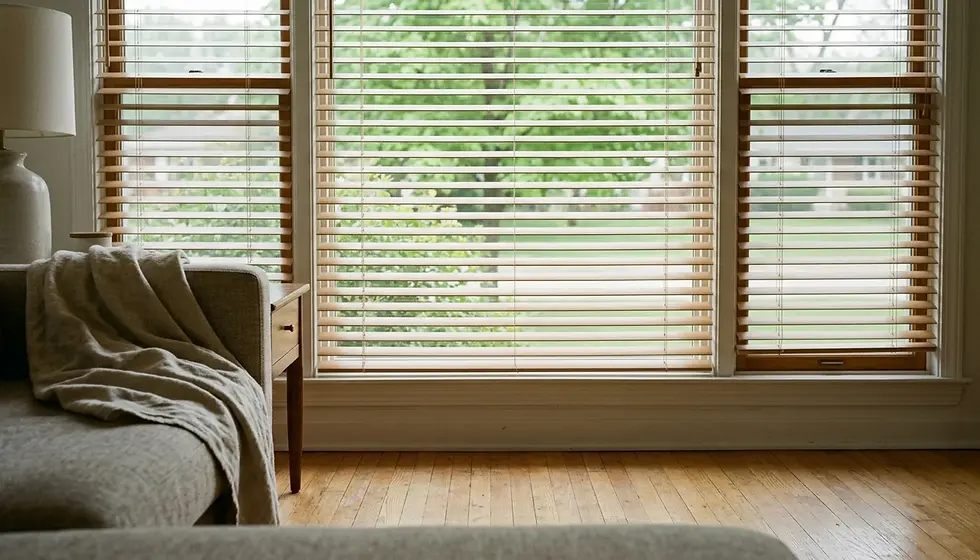
The detail that separates a good installation from a drafty one is fit. An inside-mount shade sized to the exact opening leaves very little gap at the edges, and the edges are where air moves. Ask about side channels or tracks, which can reduce light and air at the sides on some product lines, since availability varies. For a deeper comparison, read single-cell versus double-cell shades, or browse our cellular shade guides.
Which custom shades work best for winter insulation?
Pick by room. Double-cell light-filtering shades suit bedrooms and north-facing rooms that stay cold, and blackout versions help in nurseries and shift workers' rooms. Sunrooms do better with light-filtering fabrics, because blackout material can feel heavy in a bright room where you want winter sun. Skip cellular shades in a steamy bathroom and choose faux wood instead.
Safety and reach: cordless and motorized
Cordless operation removes the loose cord hazard, and the U.S. Consumer Product Safety Commission advises cordless or inaccessible-cord products where young children are present. Motorized shades solve the two-story foyer window nobody can reach and cost more than manual ones. If you are weighing price, see what custom blinds cost on the Delmarva Peninsula for the factors that move it.
How Do You Cover Windows Temporarily for Privacy and Glare?
Temporary window coverings are removable products that need no drilling and leave your frame intact, such as static-cling privacy film, tension-rod curtains, and peel-and-stick paper shades. They suit rentals, new homes awaiting custom treatments, and the weeks before an order arrives.
How to temporarily cover windows for privacy
Static-cling frosted film gives daytime privacy and sticks with water alone, so the film peels off cleanly. Tension rods hold a curtain inside the window frame without screws. At night, windows lit from inside become mirrors for passersby, so a fabric layer matters more after dark than at noon.
How to reduce glare and stop sun glare through windows
Winter sun sits lower in the sky, so the sun reaches deep into rooms and hits screens and televisions. Delmarva homes see the glare from the east in the morning and from the southwest in the afternoon. Light-filtering roller shades tone the glare down without making the room dark. Top-down, bottom-up shades let you block the low sun and keep the upper pane clear for daylight.
Any temporary fix should respect safety. Keep cords out of reach of children and pets, and avoid dangling loops on stick-on or rod-mounted products.
When Does a Temporary Window Wrap Stop Being Enough?
A temporary window wrap reaches its limit when the problem is the window itself rather than the gap or the glass. Film and bubble wrap improve a window that works. They cannot fix damage, and covering damage can hide a growing problem.
Call a professional if you see fog or moisture between the panes, soft or rotting wood at the sill, daylight around the frame, or tape that will not stick no matter how well you clean. Rental owners in Ocean City and Bethany Beach face the same decision: if you re-wrap the same units every fall, a durable cordless shade costs less over time than annual kits and labor.
Where Can You Get Insulating Shades Measured and Installed in Easton?
Home Blinds and Floors is a locally-owned window treatment company serving Easton, Maryland and the Delmarva Peninsula with custom blinds, shades, and shutters, backed by professional installation and a free in-home consultation. We bring samples to your home, measure every window, and recommend the product that fits the room, the exposure, and your budget.
Here is how we handle winter projects. First, we check the windows for the draft source, because a shade on a leaky frame disappoints. Second, we specify the fabric and cell size for each room. Finally, we install the shade level and snug, which is where DIY orders often fall short. You can see reviews from Delmarva homeowners to judge the work for yourself.
Each of our services helps in winter. Window shades installation covers cellular shades for insulation and motorized shades for tall windows. Window shutters installation gives a precise fit on older frames, including historic homes in Lewes and Easton.
Window blinds installation handles moisture-prone rooms with faux wood. We also work with commercial offices and rental homes that need durable, cordless products.
We serve Easton, Annapolis, Kent Island, Grasonville, Centreville, Cambridge, Salisbury, Middletown, Lewes, Milton, Millsboro, Rehoboth Beach, Bethany Beach, Ocean City, and Ocean Pines. Custom shades cost more than a film kit, and we say so up front. Exact pricing and lead times are confirmed at the consultation, so start before the coldest weeks. You can talk with our installation team to schedule a visit.
So, What Is the Best Way to Wrap Windows for Winter in 2026?
The best way to wrap windows for winter is to seal first, cover second, and treat third. Caulk and weatherstripping stop the leaks. Shrink film or bubble wrap carries you through this season on a budget. Cellular shades or shutters keep the glass warmer every winter after that.
At Home Blinds and Floors, we see the same pattern across Delmarva homes: temporary wrap buys time, and a properly measured shade or shutter ends the yearly project. Winters ahead will bring the same low sun and damp cold, so a layered setup now pays off in comfort for years.

If you'd like help applying this to your own windows, request a free in-home consultation with Home Blinds and Floors. We'll visit your home, bring samples, and measure every window at no charge.
Frequently Asked Questions
How do you reduce glare from windows in winter?
Install light-filtering roller shades or cellular shades that soften the low winter sun without darkening the room. Top-down, bottom-up shades let you block the glare while keeping the upper pane open for daylight. A professional consultation helps you pick the fabric opacity that suits each exposure.
How do you cover windows temporarily?
Use static-cling film, a tension rod with a curtain, or peel-and-stick paper shades. All three install without drilling and come off without damaging the frame. For winter warmth, shrink film or bubble wrap adds insulation as well as coverage.
How do you temporarily cover windows for privacy?
Frosted static-cling film gives daytime privacy and removes cleanly. At night, a curtain on a tension rod blocks views into lit rooms. Keep any cords away from children and pets.
How do you stop sun glare through windows?
Winter sun enters at a low angle, so the shade needs to cover the glass where the beam lands. Light-filtering roller shades and top-down shades both work. Solar shades reduce glare while keeping the view, though they hold less heat in than cellular shades.
Who installs insulating shades in Easton, MD?
Home Blinds and Floors measures and installs custom shades, blinds, and shutters in Easton, Maryland and across the Delmarva Peninsula. A free in-home consultation covers measuring, samples, and product choice. Compare any installer on in-person measuring, product range, and local accountability.
Does shrink film work on windows you open?
Shrink film works on windows you open, but the film seals the window shut for the season. For a window you open daily, use weatherstripping and a cellular shade instead. In contrast, shrink film suits fixed picture windows and rarely used rooms.
How much do cellular shades cost?
Cost varies with size, cell type, fabric, and whether the shade is manual or motorized. Double-cell and motorized models cost more than basic manual ones. Home Blinds and Floors confirms exact pricing during the in-home consultation after measuring.
Are cellular shades safe for children and pets?
Cordless cellular shades remove the loose cord hazard, which is why we recommend them for bedrooms and nurseries. Motorized versions also have no cords. Ask your installer for cordless operation on any shade in a room used by young children.
Content powered by inkSTR.co

Comments