.avif)
.avif)
.avif)
How to Weather Proof Windows for Ocean City Homes

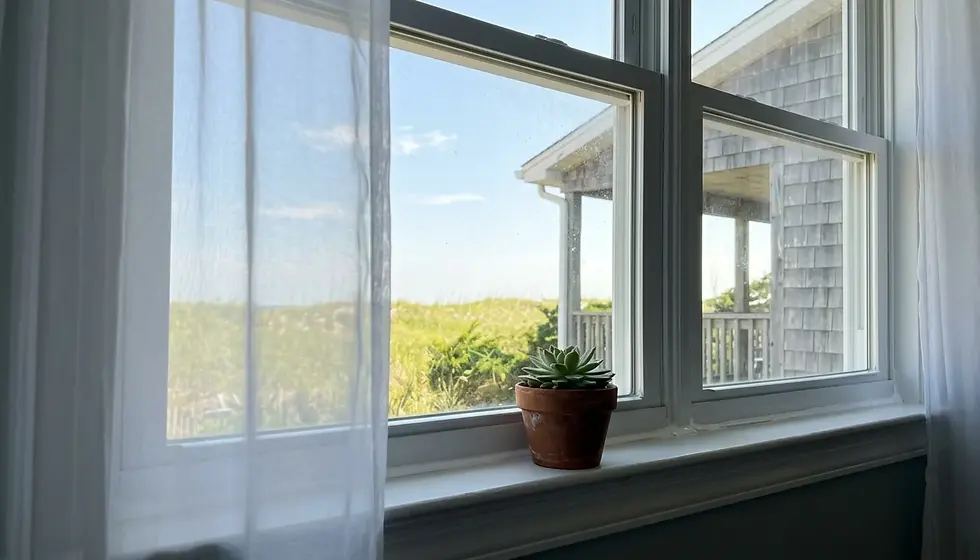
To weather proof windows, you seal gaps with fresh caulk and weatherstripping, repair flashing and drainage paths, choose frame and glass materials that resist salt air and wind, and add the right shade, shutter, or storm layer for sun and glare. For coastal Ocean City, MD homes, the ratings and installation details matter most.
Key Takeaways
Weatherproofing an existing window means sealing air leaks, checking drainage and flashing, and repairing hardware; if frames are soft or glass seals are failed, replacement is the better call.
Ocean City's deemed-approved residential window criteria for structures under four stories include a DP rating of 45 or higher and a window U-factor of 0.32 or lower; confirm your exact opening with the Town of Ocean City Building Division.
Impact-rated windows protect against wind-borne debris during storms; low-E storm windows reduce energy loss but do not replace impact protection.
Vinyl, fiberglass, composite, and powder-coated aluminum hold up to salt spray better than untreated wood.
Interior treatments such as composite shutters and light-filtering shades cut glare and UV fading but do not stop water or wind; they complement a weather-tight window.
Ocean City contractors doing residential window work need a Maryland Home Improvement Commission license and an Ocean City business license.
Introduction
Afternoon sun on a west-facing Ocean City condo bakes the glass, while a nor'easter in February pushes rain sideways at every seam. Both conditions test the same window in very different ways. That is why weatherproofing here is a layered job, not a single product.
At Home Blinds and Floors, we measure and install blinds, shades, and shutters across the Delmarva Peninsula, from Ocean City and Ocean Pines to Rehoboth Beach and Lewes. In our experience, the windows homeowners call about most are not failing because of the glass. They fail at the caulk line or the sill, and on the interior side, where sun and moisture shred cheap coverings.
This guide walks through the full process in 2026: inspecting, sealing, choosing ratings, verifying local code, and protecting the interior. Follow the steps in order and you will know whether your windows need a weekend of repairs or a replacement estimate.

What Makes a Window Weatherproof for Coastal Homes?
A weatherproof window is one whose frame, glass, seals, and installation work together to block air, water, and wind-driven debris. On the coast, salt spray, humidity, UV, and storm winds all load the window at once, so no single feature carries the job.
Four layers matter. First, the frame material must resist corrosion and swelling. Second, the glazing (double-pane, low-E, or laminated impact glass) must stay sealed. Third, the perimeter seals (sealant, weatherstripping, gaskets) must stay flexible. Fourth, the installation (flashing, fasteners, and opening size) must move wind loads into the wall and drain water out.
Installation is the layer homeowners overlook. Guidance from a South Carolina state insurance department notes the rough opening is generally no more than 1/4 to 3/8 inch larger than the window, and that correct fasteners, sealants, and flashing are what transfer wind loads and control water. A premium window in a sloppy opening still leaks.
How Do You Weather Proof Windows Step by Step?
To weather proof existing windows, work from outside to inside: inspect, clear drainage, reseal the exterior, replace worn weatherstripping, repair hardware, and then add an interior layer. Most homeowners can complete the sealing steps in a weekend, though ladder work on second-story windows calls for a professional.
Step 1: Inspect every window. Look for cracked or gapped caulk, stained or soft wood, fogging between panes, rust at fasteners, and daylight around the sash. Hold a lit incense stick near the frame on a windy day; wavering smoke marks an air leak.
Step 2: Clear the weep holes and tracks. Integrated weep holes at the sill let water out. Sand and debris plug them quickly near the beach. Clean them with a small brush and flush the track with a hose.
Step 3: Remove failed sealant. Cut out old, cracked caulk with a utility knife or scraper, then clean the joint with a damp cloth and let it dry fully.
Step 4: Re-seal the exterior joints. Apply a high-quality exterior-grade silicone or polyurethane sealant at the frame-to-siding joint. Do not seal weep holes shut.
Step 5: Replace worn weatherstripping. Compressed, brittle, or missing strips around the sash are the most common source of drafts. Match the profile of the original strip.
Step 6: Test locks and hardware. A sash that does not pull tight against the frame defeats the seals. Tighten, lubricate, or replace latches and balances.
Step 7: Add the interior layer. Light-filtering shades, composite shutters, or blinds control glare and UV, and a tight cellular shade adds a modest insulating air pocket.
Step 8: Re-inspect each season. Check again after winter and before hurricane season.
Pro tip: Work on a dry day when temperatures are above the sealant maker's minimum, which is printed on the tube. Sealant applied to damp salt-film surfaces fails within a season or two.
Common mistake: Caulking over old caulk. It hides the gap for a few months and then peels. Strip it first.
When Should You Repair Windows and When Should You Replace Them?
Repair is the right choice when the frame is sound and only sealants, weatherstripping, or hardware have worn out. Replacement is warranted when frames are rotted, glass seals have failed, or windows cannot meet current wind and energy requirements for your property.
Symptom | Likely Cause | Typical Action |
Drafts at sash edges | Worn weatherstripping | Replace strips |
Cracked caulk at siding | UV and temperature cycling | Remove and reseal |
Fog between panes | Failed insulated glass seal | Replace glass unit or window |
Soft or crumbling wood | Moisture intrusion | Repair if localized; replace if widespread |
Stained drywall below window | Flashing or drainage failure | Investigate wall; likely replace |
Window will not latch | Racked frame or worn hardware | Repair hardware; replace if frame is out of square |
Water stains below a window deserve special attention. Staining usually means water has been getting past the flashing for a while, and a surface caulk job will not fix it. Have a licensed contractor open the wall and check before you invest in interior finishes.
Which Window Frame Materials Resist Salt Air Best?
Vinyl, fiberglass, composite, and powder-coated or anodized aluminum resist salt air better than untreated wood. Each carries trade-offs in strength, expansion, and finish durability, so the best choice depends on exposure, window size, and budget.
Material | Salt and Moisture Resistance | Main Trade-Off |
Vinyl | Does not rust or rot | Can expand in extreme heat; limited color options |
Fiberglass | Stable in temperature swings; resists corrosion | Usually higher up-front cost |
Composite | Resists moisture and swelling | Cost varies widely by product |
Aluminum (powder-coated) | Strong for large openings; finish matters | Conducts heat; coating must stay intact |
Wood (untreated) | Needs regular finish upkeep | Prone to rot and swelling near the ocean |
Our recommendation for oceanfront and bayfront homes: skip untreated wood unless you are committed to refinishing it every year or two. Fiberglass and composite are the strongest all-rounders, while vinyl suits budget-conscious projects on lots set back from the water.

What Are Impact-Resistant Windows Designed to Withstand?
Impact-resistant windows are designed to survive wind-borne debris and sustained wind pressure during storms without letting the building envelope open up. They use laminated glass that stays in the frame when broken, plus reinforced frames and anchoring tested to recognized standards.
The Building America Solution Center, run by Pacific Northwest National Laboratory, states that impact-resistant products must be rated and labeled to ASTM E1996 and ASTM E1886 or AAMA 506. Impact glass is a laminated sheet between two glass panels, so a broken pane cracks in a spiderweb pattern rather than shattering into the room.
Testing is severe. One technical source describes the Miami-Dade protocol as firing a 9-pound 2x4 at 50 feet per second, followed by thousands of positive and negative pressure cycles. Not every home needs that level, but the same laminated glass also helps with sound and break-in resistance.
Impact Windows vs. Low-E Storm Windows
These are different products for different jobs. Low-E storm windows added over single-pane glass cut heat loss and gain, which lowers heating and cooling bills. That is an energy benefit, not hurricane protection. Do not count on an energy storm window to stop flying debris.
How Do You Read Window Ratings Like DP, PG, and U-Factor?
Window ratings are standardized numbers that describe how a window performs under pressure, water, air, and heat. Design pressure (DP) measures structural strength, performance grade (PG) adds water and air tests, and U-factor and SHGC measure energy performance.
Rating | What It Measures | Matters Most For |
DP (design pressure) | Structural wind load the window can handle | Storm-exposed and tall buildings |
PG (performance grade) | DP plus water and air infiltration tests | Wind-driven rain |
ASTM E1996 / E1886 | Impact resistance to debris | Hurricane-prone zones |
U-factor | Heat loss through the window | Heating and cooling bills |
SHGC | Solar heat let in through glass | Hot, sunny exposures |
As a practical example, one technical source explains that a performance grade of 15 requires passing a water-pressure test simulating rainfall of 8 inches per hour with 34-mph wind. That is a baseline. Coastal homes typically need a much higher DP than that, which is why local thresholds matter.
What Does Ocean City Require for Residential Windows?
Ocean City, MD publishes deemed-approved window and glazing criteria for residential structures under four stories: a DP rating of 45 or higher, SHGC of 0.40 or lower, skylight U-factor of 0.55 or lower, and window U-factor of 0.32 or lower. Other configurations may require engineering review.
To verify your own opening, take these steps:
Check the building height and number of stories, since the thresholds above apply to structures under four stories.
Compare the window label or product data sheet against the DP, U-factor, and SHGC numbers.
Ask the manufacturer whether the product is approved for your wind exposure and opening size, since larger openings can need higher ratings.
Confirm permit requirements with the Town of Ocean City Building Division before ordering.
Contractor licensing matters as well. Ocean City requires contractors doing residential alterations, repairs, or replacement work to hold a Maryland Home Improvement Commission license and an Ocean City business license. Ask to see both before signing. Codes and thresholds change, so treat the figures here as a starting point and confirm current numbers with the town.
What Type of Windows Are Best for High Wind Areas?
Casement and awning windows tend to perform best in high wind because their sashes press into the frame and compress seals on all four sides. Fixed picture windows have no moving parts and are the most airtight, but they cannot ventilate.
Sliding and double-hung windows rely on sliding seals, so they are more likely to let air and water through at the meeting rail and track as they age. They can still perform well when tested and rated for your exposure, but expect more maintenance. Multi-point locks and reinforced frames improve performance, and so do wind-load-tested profiles.
Heat is a different challenge. People searching for the best windows for hot, sunny climates often focus on low-E coatings and a low SHGC, which Ocean City's criteria also cap at 0.40. On the Delmarva Peninsula, west-facing glass takes the harshest afternoon sun, so those exposures benefit most from low-E glazing paired with interior shading.
How Much Do Hurricane-Proof Windows Cost?
Hurricane-rated windows cost more than standard replacement windows because of laminated glass, heavier frames, and stricter installation. Exact pricing depends on window size, frame material, glazing, and labor, so the only reliable number comes from a written estimate for your specific openings.
Several factors move the price: the number and size of openings, whether you choose fiberglass, vinyl, or aluminum, whether the project includes new flashing or structural repair, and permit requirements. Because Ocean City contractors must hold specific licenses, comparing licensed bids is more useful than comparing online price guesses.
For a custom replacement estimate in Ocean City, ask each contractor to itemize product, labor, permit, and disposal costs. Ask also whether the quoted product's DP rating and impact certification meet the local criteria described above.
How Do Shades, Shutters, and Blinds Complete the Weatherproofing Job?
Interior window treatments do not replace weather-tight windows, but they protect the room from the sun, glare, and heat that windows alone let through. They also extend the life of floors and furniture and add privacy.
Home Blinds and Floors handles three services that matter here: window shutters installation, window shades installation, and window blinds installation. Here is how we match each to the problem.
Composite Shutters for Humid, Salty Rooms
Composite plantation shutters resist the warping that can affect real wood in humid coastal rooms, and their louvers tilt to cut glare while keeping airflow. They cost more up front than blinds, which is worth stating plainly, but they hold their fit on out-of-square frames when custom-measured. See our custom shutter options for styles.

Cellular and Light-Filtering Shades for Heat and Glare
Cellular shades trap a pocket of air against the glass, which helps with comfort on hot or cold exposures, and cordless versions remove the loose-cord hazard in bedrooms and nurseries. For homeowners comparing styles, our guide to single vs. double cell shades covers the differences. Browse light-filtering and cellular shade styles too.
Faux Wood Blinds for Kitchens and Bathrooms
Faux wood blinds handle moisture better than real wood and cost less than shutters. Our comparison of faux wood vs. wood blinds explains which rooms suit which material. Explore the full range of custom blind styles as well.
How Do You Reduce Glare and Cover Windows Temporarily?
To reduce window glare, add a light-filtering roller or cellular shade, tilt composite shutter louvers, or apply a removable solar film. For a temporary covering, use a tension-rod curtain, removable frosted privacy film, or a paper or fabric panel hung inside the frame.
Temporary options work while you wait for custom products, which commonly take time to order and install. Static-cling film gives privacy during the day without blocking all light. Tension-rod panels work in deep window frames. Avoid anything adhesive on historic or painted wood trim.
For lasting glare control, match the fix to the exposure. East-facing bedrooms benefit from blackout or room-darkening shades. West-facing sunrooms need a solar-style shade. Our guide to the best solar shades for sunrooms goes deeper, and sliding glass doors, which face the same sun, are covered in our post on window treatments for sliding glass doors.
How Does Home Blinds and Floors Help Ocean City Homeowners?
Home Blinds and Floors is a locally-owned window treatment company serving the Delmarva Peninsula, including Ocean City and Ocean Pines, with free in-home consultations, on-site measuring, and professional installation of blinds, shades, and shutters from brands such as Hunter Douglas, Norman, and Graber.
From our experience installing across the coast, the pattern is consistent: owners fix the window envelope first, then call us to handle the interior side. We recommend composite shutters or cordless cellular shades for rooms facing the ocean or bay, and faux wood blinds for kitchens and baths. For tall or hard-to-reach glass, we suggest motorized shades. Rental owners in Ocean City and Bethany Beach often choose cordless products to cut down on guest damage.
We visit your home, measure every window, and bring samples so you can see the product in your own light. Exact pricing and timelines are confirmed during the consultation. Read what neighbors say on our customer reviews page, or learn more about custom blind costs on the Delmarva Peninsula.
Other companies in the market sell windows and coverings. We focus on local measurement and climate-based material advice, with one team handling installation.
Frequently Asked Questions
How do you weather proof windows?
Inspect for gaps, clear weep holes, remove failed caulk, reseal the exterior joints, replace worn weatherstripping, and repair hardware. Then add an interior layer such as shutters or shades for sun and glare. If frames are rotted or glass seals have failed, replacement is the better option.
How can I reduce glare from windows?
Light-filtering roller or cellular shades and tilting composite shutters cut glare while keeping some daylight, and so does solar window film. West-facing windows usually need the strongest control. Home Blinds and Floors can recommend a fabric and opening level during a free in-home consultation.
How do you cover windows temporarily?
Tension-rod curtains, static-cling privacy film, and fabric or paper panels inside the frame work well for short periods. They install without tools and remove cleanly. Avoid strong adhesives on painted or historic trim.
How do you temporarily cover windows for privacy?
Frosted static-cling film is the quickest choice because it blocks the view in while letting light through. Cafe-style tension-rod curtains cover the lower half of a window. For a longer-term answer, cordless cellular shades or shutters give lasting privacy.
How do you stop sun glare through windows?
Match the treatment to the exposure: solar shades for sunrooms, room-darkening shades for east-facing bedrooms, and adjustable shutters for living areas. Low-E glass also reduces solar heat gain, though interior shading handles glare directly.
What are the best windows for Ocean City beach homes?
Impact-rated fiberglass, composite, or vinyl windows with laminated glass and a DP rating that meets Ocean City's criteria fit most beach homes. Untreated wood needs frequent upkeep near salt air. Confirm requirements with the Town of Ocean City Building Division before buying.
How can I get a custom window replacement estimate in Ocean City?
Request written estimates from contractors holding both a Maryland Home Improvement Commission license and an Ocean City business license. Ask each to itemize product, DP rating, labor, and permits. For blinds, shades, or shutters to finish the job, Home Blinds and Floors offers free in-home consultations.
Which areas does Home Blinds and Floors serve?
Home Blinds and Floors serves the Delmarva Peninsula, including Ocean City, Ocean Pines, Rehoboth Beach, Lewes, Bethany Beach, Milton, Millsboro, Middletown, Easton, Annapolis, Kent Island, Salisbury, and Cambridge, MD.
What Should You Do Next to Weather Proof Windows in 2026?
Start with an honest inspection, repair what is repairable, and verify ratings against Ocean City's current criteria before replacing anything. Quick reference: inspect, clear drainage, strip and reseal, replace weatherstripping, test hardware, confirm DP and U-factor, add an interior layer, and recheck each season.
Weather proof windows work best as a system: a sound frame, a correct installation, the right glass, and an interior treatment suited to your sun exposure. As coastal storms and summer heat continue to test Delmarva homes in 2026 and beyond, that layered approach holds up better than any single upgrade.

If you'd like help applying this to your own windows, request a free in-home consultation with Home Blinds and Floors. We will measure, recommend shutters, shades, or blinds suited to your light and climate, and handle the installation.
Content powered by inkSTR.co

Comments