.avif)
.avif)
.avif)
What Size Cellular Shades Should I Get? A Sizing Guide


The right cellular shade size depends on two things: your window's exact measurements and the cell diameter you choose. For most standard windows under 36 inches wide, a 3/8" or 1/2" cell works well. For windows wider than 36" or taller than 60", a 3/4" cell is the better fit for coverage, insulation, and appearance.
Key Takeaways
Small windows (under 24" wide), like bathrooms and hallways, typically use 3/8" cells for a lighter, more proportional look.
Medium windows (24" to 36" wide), like bedrooms and kitchens, generally call for 9/16" or 1/2" cells, the most economical and widely stocked option.
Large windows and sliding doors (wider than 36" or taller than 60") usually need 3/4" cells, which some manufacturers extend up to 1" or 1 1/4" for oversized openings.
Inside-mount shades should be measured at the top, middle, and bottom, using the narrowest width and longest height, rounded to the nearest 1/8".
Outside-mount shades typically need 1.5" to 3" of total extra width and about 3" of extra height to fully cover the window opening.
Global demand for cellular shades continues climbing, with the cellular blinds segment alone generating an estimated $6.74 billion in 2023 revenue, according to GMI Insights, a sign more homeowners are prioritizing insulating window treatments.
If you've stood in front of a window with a tape measure wondering whether you need a 3/8" cell or a 3/4" cell, you're asking the right question before you order anything. Cellular shade sizing mistakes are some of the most common (and most expensive) errors homeowners make, and they're almost always avoidable with the right measurements up front.
At Home Blinds and Floors, we measure windows across the Delmarva Peninsula every week, from narrow bathroom windows in a Lewes cottage to oversized sliding glass doors in a Kent Island waterfront great room. The sizing question comes up in nearly every consultation, and the answer changes based on window size, room function, and how much light control you actually want.
This guide walks through cell size categories, how to measure for both inside and outside mount, and the specific situations, like arched windows or matching cell sizes across a whole house, that most sizing guides skip entirely. By the end, you'll know exactly what size cellular shades to order for your specific windows in 2026.
What Is the Most Popular Cellular Shade Size?
The most popular cellular shade cell size is 3/4", which industry sources describe as the most widely used size for general residential windows. It strikes a balance between insulation performance, light control, and a clean visual profile that works in nearly any room.
Specifically, 3/4" cells are the default recommendation for standard living room, dining room, and bedroom windows in the 30" to 48" width range. As a result, most manufacturers stock this size in the widest range of colors and opacities, which usually means shorter lead times compared to less common cell sizes.
For example, a typical 36" wide by 60" tall double-hung window, common in Eastern Shore farmhouses outside Centreville and colonial-style homes in Annapolis, is a textbook fit for a 3/4" cell. It provides enough cell depth for solid insulating performance without looking bulky against standard trim.
Additionally, one vendor guideline notes that any window wider than 36" or taller than 60" benefits from 3/4" cells rather than the smaller 9/16" or 1/2" options. If your window falls in that range, 3/4" is your starting point, not a maybe. Smaller cells simply don't provide the same structural rigidity across a wide span, which can lead to sagging over time.
Is 9/16" or 3/4" Better for Cellular Shades?
A 9/16" cell is better for small to medium windows where a lighter, more compact profile matters, while a 3/4" cell is better for larger windows where insulation and coverage take priority. Neither size is universally superior; the right choice depends entirely on your window's dimensions and how the room is used.
Specifically, 9/16" cells (along with the closely related 1/2" size) are often described as the most economical option and the default choice for medium-sized windows like a standard kitchen window or a secondary bedroom. They sit closer to the glass, which some homeowners prefer for a streamlined, low-profile look.
In contrast, 3/4" cells offer a deeper honeycomb structure, which generally translates to better insulating performance and a more substantial presence on larger openings. For a two-story great room window or a sliding glass door, that added depth also helps the shade maintain its shape without excessive bowing.
Here's a comparison to make the decision easier:
Cell Size | Best Window Width | Typical Use Case | Key Advantage |
3/8" | Under 24" | Bathrooms, hallways, narrow sidelights | Lightest, most proportional on small frames |
1/2" or 9/16" | 24" to 36" | Bedrooms, kitchens, standard windows | Most economical, widely stocked |
3/4" | 36" to 72" | Living rooms, large bedrooms, dining rooms | Best balance of insulation and appearance |
1" to 1 1/4" | Over 72" or sliding doors | Great rooms, patio doors, oversized glass | Structural rigidity across a wide span |
Our team at Home Blinds and Floors regularly advises clients on this exact tradeoff. If you're on the fence, we'd rather you err toward the larger cell for anything approaching 36" wide; a slightly deeper cell rarely looks wrong, but an undersized one on a wide window tends to sag within a season or two.

Should Cellular Shades Be Lighter or Darker Than Walls?
Cellular shades generally look best when they're close in tone to the wall color or slightly lighter, creating a cohesive, unobtrusive backdrop rather than a competing focal point. This is a design decision, not a sizing rule, but it directly affects how the finished window reads in the room.
For example, a soft white or light gray cellular shade against a similarly neutral wall lets the window opening feel larger and the room feel airier, a common preference in coastal-style interiors along the Delaware beaches. Darker shades, by contrast, can make a window feel smaller and more defined, which sometimes works well as an intentional accent in a study or a media room.
In a beach cottage with a lot of natural light, we typically steer clients toward light-filtering fabrics in warm neutrals rather than true white, since bright white can look stark against the honeyed wood tones common in Rehoboth Beach and Bethany Beach interiors. In a more formal Annapolis colonial, a slightly deeper tone that echoes the trim color often reads as more intentional.
One important note: darker cellular shades in a room with intense afternoon sun exposure, such as west-facing windows in an Ocean City high-rise condo, can show more visible fading over time than lighter fabrics. If UV exposure is heavy, a light-filtering fabric with a factory-applied UV coating tends to hold its color longer, regardless of whether you go lighter or darker than the wall.
How Wide Should Cellular Shades Be?
Cellular shade width should be measured precisely at the window opening, using either an inside-mount or outside-mount method, with the final ordered width always determined by the narrowest of three measurements taken across the opening. Getting this step wrong is the single most common reason a new shade doesn't fit correctly.
For inside-mount installations, where the shade sits inside the window frame, measure the width at the top, middle, and bottom of the opening. Then use the smallest of the three numbers, rounded to the nearest 1/8". Window frames are rarely perfectly square, especially in older homes across Delaware's Eastern Shore, so this step accounts for any slight variation in the frame itself.
Manufacturers typically apply a small factory deduction, usually around 1/4" to 3/8", to your submitted inside-mount width so the finished shade clears the frame without binding. You do not need to subtract this yourself in most cases; check your specific manufacturer's instructions before ordering, since some cutters do not apply an automatic deduction.
For outside-mount installations, where the shade mounts on the wall or trim surrounding the window, add extra width beyond the opening itself. Industry guidance suggests 1.5" to 3" of total additional width, split between both sides, to ensure the shade fully blocks light gaps at the edges. Some installers recommend as much as 1" to 1.5" per side depending on how much light control you want.
If you're weighing whether to mount inside or outside the frame in the first place, our guide to single vs. double cell shades for Delmarva homeowners covers how mount type interacts with insulation performance, which is worth reading before you finalize your measurements.
How Do You Measure Cellular Shades for Height?
Cellular shade height is measured by checking the window opening at the left, center, and right sides, then using the longest of those three measurements as your final order height. This is the opposite rule from width, where you use the shortest measurement, so it's worth double-checking before you submit an order.
For inside-mount shades, measure from the top of the opening down to the sill (or wherever you want the shade to stop) at all three points. Using the longest measurement ensures the shade fully covers the opening even if the window is slightly out of square, which is common in older homes throughout Salisbury, Easton, and other established Eastern Shore communities.
For outside-mount height, add roughly 3" of total extra length beyond the window opening, generally split as 1.5" above the top of the frame and 1.5" below the sill. Some installers instead recommend adding 3" at the top and 1" at the bottom, depending on how much of the surrounding wall or trim you want the shade to cover.
Never reverse your width and length measurements when submitting an order. This sounds obvious, but it's one of the most frequently repeated warnings across professional measuring guides, and it's an easy mistake to make when you're measuring several windows in one afternoon. Always record width first, then height, and label each measurement by room before moving to the next window.
How Do You Size Cellular Shades for Odd-Shaped or Arched Windows?
Sizing cellular shades for arched, angled, or irregularly shaped windows requires a different approach than standard rectangular measurement, since these openings need either a specialty-shaped shade or a fixed decorative panel paired with a functional shade below. Most sizing guides skip this topic entirely, which leaves homeowners with historic or architecturally distinct windows guessing.
Specifically, for a true arched or eyebrow window, manufacturers typically require a template or precise multi-point measurement of the curve, since standard width-and-height rules don't apply to a non-rectangular opening. This is one case where we strongly recommend an in-home consultation rather than a DIY measurement, because an error on a custom-shaped shade usually cannot be corrected after fabrication.
For a common combination window, such as a rectangular lower section topped by a fixed arch, the more practical and budget-friendly approach is often to leave the arch uncovered or fitted with a stationary decorative treatment, while ordering a standard cellular shade sized to the rectangular portion below using the same narrowest-width, longest-height rules already covered.
We see this frequently in Eastern Shore farmhouses near Centreville and in newer construction with Palladian-style windows on Kent Island. If you're planning treatments for a full room that includes both standard and shaped windows, our arched window treatment guide walks through the shade and shutter combinations that work best for mixed window types.
How Do You Match Cell Size Across Multiple Rooms in One House?
Matching cellular shade cell size across a whole house means choosing one or two cell sizes as your standard, then applying them consistently based on window size categories rather than picking a different size for every individual room. This creates visual consistency when you look at the exterior of your home or move between adjacent rooms with sightlines to each other.
A practical approach many Delmarva homeowners use: standardize on 1/2" or 9/16" cells for all windows under 36" wide, such as bedrooms and secondary living spaces, and standardize on 3/4" cells for anything larger, including great rooms and sliding doors. This two-tier system covers nearly every window in a typical single-family home without requiring five different cell sizes on one order.
For homes with a strong visual sightline between rooms, such as an open-concept kitchen and living area common in newer Grasonville and Millsboro construction, matching both cell size and fabric color across the connected windows makes the transition feel intentional rather than accidental. Mismatched cell sizes in adjoining rooms are a subtle detail, but they're one of the first things a design-conscious homeowner notices after installation.
Commercial spaces benefit from this same logic. A medical office or retail storefront with a dozen windows should standardize cell size across the entire space for a cohesive, professional appearance, which is a detail that we prioritize when handling multi-window commercial projects across the Delmarva Peninsula.

What Do You Do When Your Manufacturer Doesn't Apply an Automatic Deduction?
Some cellular shade fabricators cut shades to the exact measurement you submit, without applying the small factory deduction that most major manufacturers build in automatically. In this situation, you must manually subtract roughly 1/4" to 3/8" from your inside-mount width measurement before submitting your order, or the finished shade will bind against the window frame.
This distinction matters more than most sizing guides acknowledge. If you assume a deduction is automatically applied when it isn't, your shade arrives too wide to fit inside the frame at all. Conversely, if you subtract a deduction that the manufacturer already applies on their end, your shade arrives with visible gaps on both sides that let light leak through and undermine the insulating performance you bought cellular shades for in the first place.
Before placing any order, specifically confirm with your fabricator or installer whether width deductions are applied automatically or whether you're responsible for calculating them yourself. This single question resolves more sizing complaints than any other step in the ordering process, and it's exactly the kind of detail that gets confirmed during a proper in-home measurement rather than a self-measured online order.
How Much Does Cell Size Affect Insulation and Energy Efficiency?
Cell size directly affects insulation performance because a deeper honeycomb structure traps more air, and trapped air is what slows heat transfer through a window. Larger cells, like 3/4" and 1", generally outperform smaller 3/8" cells for insulation, though double-cell (two rows of honeycombs stacked front to back) construction outperforms any single-cell size regardless of diameter.
Energy efficiency has become a leading purchase driver for cellular shades industry-wide. According to Deep Market Insights, the North America window shade market was valued at $3.9 billion in 2026 and is forecast to reach $6.84 billion by 2034, a trend the firm attributes in part to rising demand for insulating window treatments in energy-conscious households.
For coastal Delmarva homes, insulation performance carries extra weight. Salt air and humidity already stress HVAC systems and window seals, so a well-insulated cellular shade helps offset some of the added strain, particularly on ocean-facing rooms with direct afternoon sun in Bethany Beach and Ocean City. Additionally, motorized cellular shades are gaining ground for exactly this reason; the segment is projected to grow at roughly a 9% CAGR from 2026 to 2033, since scheduled automatic closing during peak heat hours adds a real efficiency benefit beyond the cell itself.
If insulation is your primary concern rather than aesthetics alone, prioritize cell depth and double-cell construction over cell diameter. A 3/8" double-cell shade can, in some cases, outperform a 3/4" single-cell shade for pure insulating value, even though the single-cell option looks more substantial. Our single-cell vs. double-cell comparison guide breaks down this exact tradeoff in more depth.
What Common Sizing Mistakes Should You Avoid?
The most common cellular shade sizing mistakes involve measuring only one point on the window, reversing width and length, and choosing a cell size based on aesthetics alone without accounting for window dimensions. Each of these errors is easy to avoid with a structured measuring process, but they account for the overwhelming majority of ill-fitting shade complaints.
Measuring only once, at one point. Window openings are rarely perfectly square, especially in homes built before the 1990s. Always measure at three points for both width and height.
Reversing the narrowest-width, longest-height rule. Using the widest width measurement or shortest height measurement will result in a shade that doesn't fit or leaves gaps.
Choosing a cell size for looks alone. A 3/8" cell might match your design vision, but on a 48" wide window, it will likely sag and underperform for insulation.
Skipping the deduction question. Not confirming whether your fabricator applies an automatic width deduction leads directly to shades that either bind or gap.
Ignoring mount type when calculating measurements. Inside-mount and outside-mount use completely different addition and rounding rules; mixing them up is a frequent DIY error.
Not accounting for oversized or arched windows separately. Standard rectangular measuring rules don't apply to curved or angled openings, and forcing them often leads to a poor fit.
DIY measurement and ordering can work for a straightforward, single rectangular window in a spare bedroom. But for anything oversized, oddly shaped, or part of a whole-house matching plan, a professional in-home measurement removes the guesswork entirely. This is exactly the service we built our consultation process around at Home Blinds and Floors, and it's worth comparing against our custom blinds cost guide for the Delmarva Peninsula if budget is part of your decision.
Frequently Asked Questions
What size cellular shades should I get for a standard bedroom window?
For a standard bedroom window in the 24" to 36" width range, a 1/2" or 9/16" cell is typically the right size. It offers a clean, economical option that provides good light filtering without the bulk of a larger cell, which most bedrooms don't require unless the window itself is oversized.
Do I need a bigger cell size for sliding glass doors?
Yes. Sliding glass doors are almost always wider than 60" and often exceed 72", which puts them squarely in the range where 3/4" or even 1" to 1 1/4" cells perform best. Larger cells provide the structural rigidity needed to prevent sagging across a wide span and improve insulation on a large glass surface.
Should inside mount or outside mount affect my size choice?
Mount type changes your measuring math more than your cell size choice. Inside mount uses your narrowest width measurement with a small factory deduction, while outside mount requires adding 1.5" to 3" of extra width and roughly 3" of extra height to fully cover the opening. Cell size selection is based primarily on window dimensions, not mount type.
Can I mix cell sizes in the same room?
You can, but we generally recommend against it unless the windows differ significantly in size, such as a large picture window paired with narrow flanking sidelights. For windows of similar size within the same room or sightline, matching cell size and fabric creates a more cohesive, professional appearance.
Is a 3/4 inch cell too big for a small window?
A 3/4" cell can look disproportionate and bulky on a window under 24" wide, such as a bathroom or hallway window. In that situation, a 3/8" cell is the better choice, since it maintains proper visual proportion and is easier to operate on a smaller frame.
How do I know if my window is out of square?
If your three width measurements (top, middle, bottom) or three height measurements (left, center, right) differ by more than about 1/4", your window is likely out of square, which is common in homes built before the 1990s across the Delmarva Peninsula. This is exactly why professional guides recommend using the narrowest width and longest height rather than a single measurement.
Does cell size affect how much cellular shades cost?
Yes, generally. Larger cell sizes and double-cell construction typically cost more than standard single-cell 3/8" or 1/2" shades, since they use more material and offer higher insulating performance. Motorization, fabric opacity, and window count also affect final pricing more than cell size alone.
What's the best way to get an accurate measurement if I'm not confident doing it myself?
A free in-home consultation is the most reliable option, since a trained installer measures every window using professional tools and accounts for mount type, deductions, and any irregular window shapes on-site. This removes the guesswork of DIY measuring, particularly for oversized, arched, or whole-house projects.
Getting the Size Right the First Time
Choosing the right cellular shade size comes down to matching cell diameter to window width, using the correct measuring method for your mount type, and applying the narrowest-width, longest-height rule consistently across every window in your home. Get those three fundamentals right, and the rest of the process, fabric selection, opacity, and motorization, becomes a much easier decision.
As cellular shades continue gaining market share in 2026, driven largely by demand for better insulation and energy performance, more homeowners across Delaware and Maryland's Eastern Shore are moving away from guesswork and toward professionally measured, custom-fit installations. Whether you're outfitting a single bathroom window or coordinating cell sizes across an entire waterfront home, precision at the measuring stage is what determines whether your shades look and perform the way you expect for years to come.
If you'd rather skip the tape measure altogether, Home Blinds and Floors offers free in-home consultations across the Delmarva Peninsula, from Annapolis and Kent Island down to Rehoboth Beach and Ocean City. We bring samples, measure every window professionally, and walk you through cell size, fabric, and mount options before you commit to anything.
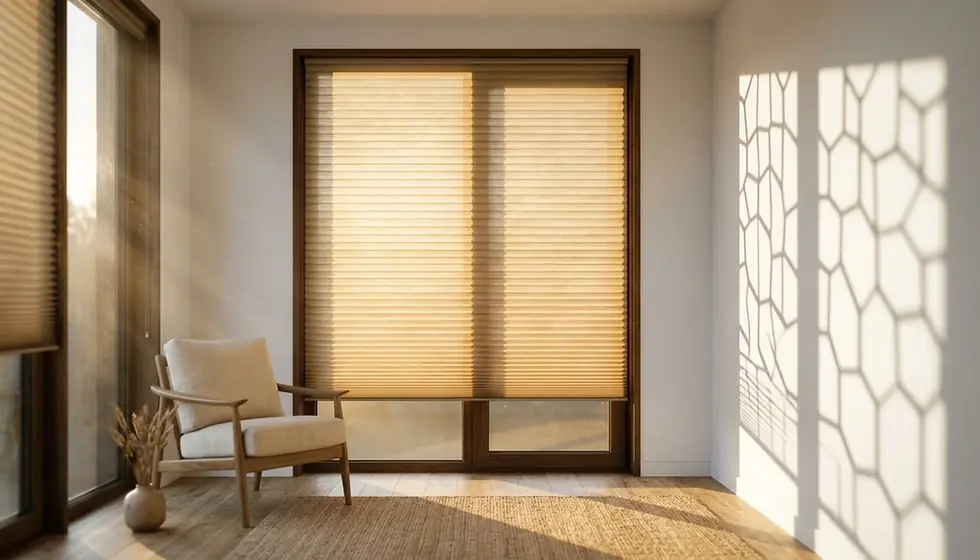
If you're still weighing cell sizes or wondering how a specific window in your home will look with a 1/2" versus a 3/4" shade, get started with Home Blinds and Floors and request a free in-home consultation. We'll measure, show you fabric samples in your own light, and make a clear recommendation, no guesswork required.
Content powered by inkSTR.co


Comments