.avif)
.avif)
.avif)
Single Cell vs. Double Cell Shades: A Delmarva Homeowner's Guide

TL;DR: Single Cell vs. Double Cell Shades
Single Cell Shades: A budget-friendly choice with good insulation, a slimmer profile, and clean pleats. Ideal for moderate climates, smaller windows, and rooms where maximum energy efficiency isn't the top priority.
Double Cell Shades: Offer superior insulation (higher R-value) and sound absorption due to a second layer of air-trapping cells. Perfect for extreme hot/cold climates like Delmarva's, bedrooms, and homes near busy roads. They provide the best energy savings but come at a higher initial cost.
Trying to decide between single and double cell shades for your Delmarva home? At Home Blinds & Floors, we help homeowners across the Eastern Shore find the perfect balance of style, energy efficiency, and privacy with custom window treatments tailored to your space. The right choice boils down to your specific priorities: are you focused on maximum energy savings, or is a sleeker look and a lower up-front cost more important?
Ultimately, single cell shades are a fantastic, budget-friendly option with solid insulation. On the other hand, double cell shades deliver superior insulation and sound absorption for a slightly higher investment. Both are great, but knowing the key differences will help you make a choice you’ll be happy with for years to come.
Cellular shades have exploded in popularity for a reason. The global market hit USD 12.8 billion in 2023, driven by homeowners who are serious about energy efficiency. It's telling that double cell shades make up roughly 50% of that market. Here on Delmarva, where we experience everything from sweltering summer days in Rehoboth to chilly winters in Easton, that extra layer of insulation can make a real difference.
This chart gives you a quick visual breakdown of how the two styles compare on insulation and cost, two of the most critical factors for most homeowners.
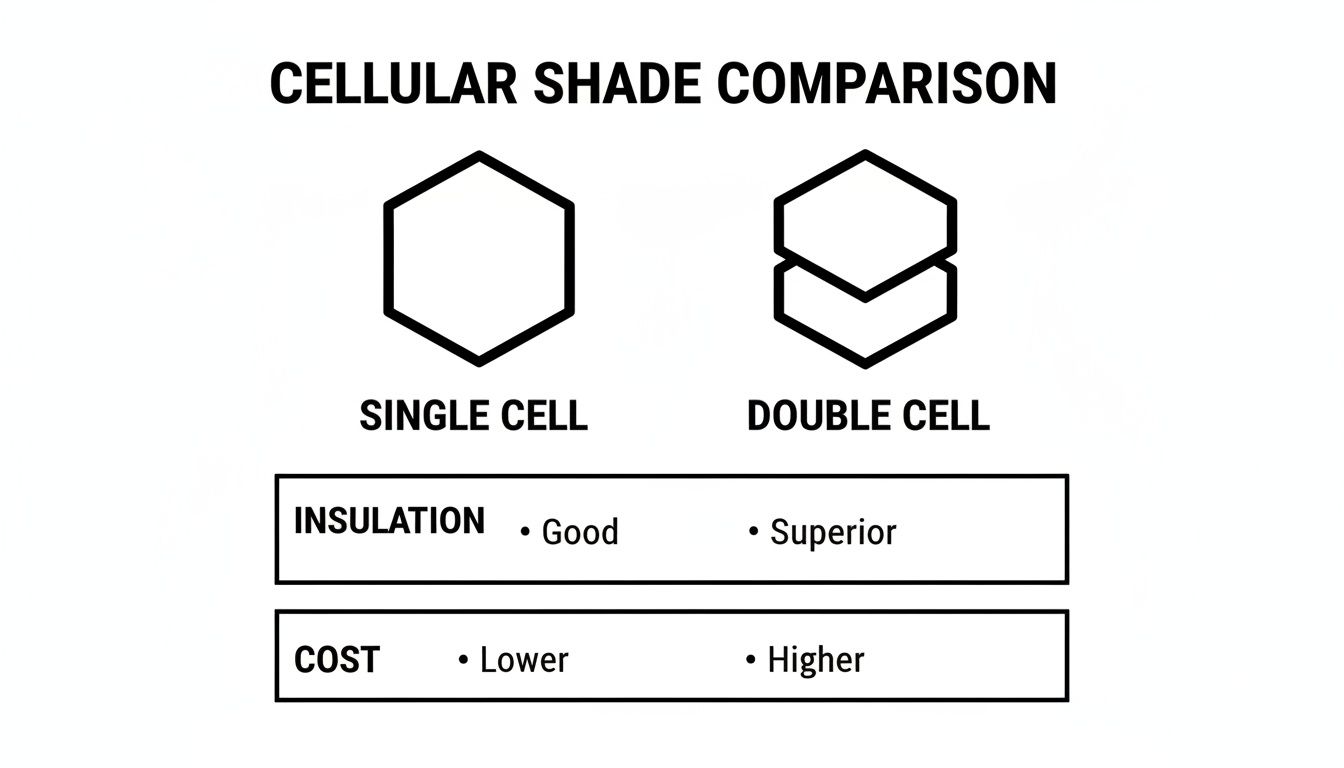
As you can see, you get a significant boost in insulating power by opting for the double cell design, though single cell shades still offer a great value.
At-a-Glance Comparison Single Cell vs Double Cell Shades
To make things even clearer, here’s a simple side-by-side look at how single and double cell shades perform across the board.
This table is a great starting point, covering the key considerations for any homeowner looking to upgrade their window treatments.
Feature | Single Cell Shades | Double Cell Shades |
|---|---|---|
Insulation (R-Value) | Good (Typically R-2.0 to R-4.0) | Excellent (Typically R-4.0 to R-7.0) |
Cost | More affordable upfront | Higher initial investment |
Appearance | Slimmer, crisper pleats | Slightly thicker, softer appearance |
Sound Absorption | Moderate noise reduction | Superior sound dampening |
Best For | Moderate climates, budget-conscious projects, smaller windows | Extreme hot/cold climates, bedrooms, homes near busy roads |
After reviewing the basics, many homeowners feel ready to move forward. If you're planning a DIY project, we also have a comprehensive guide that offers tips on how to install cellular shades specifically for our local homes.
The Key Differences in Cellular Shade Construction
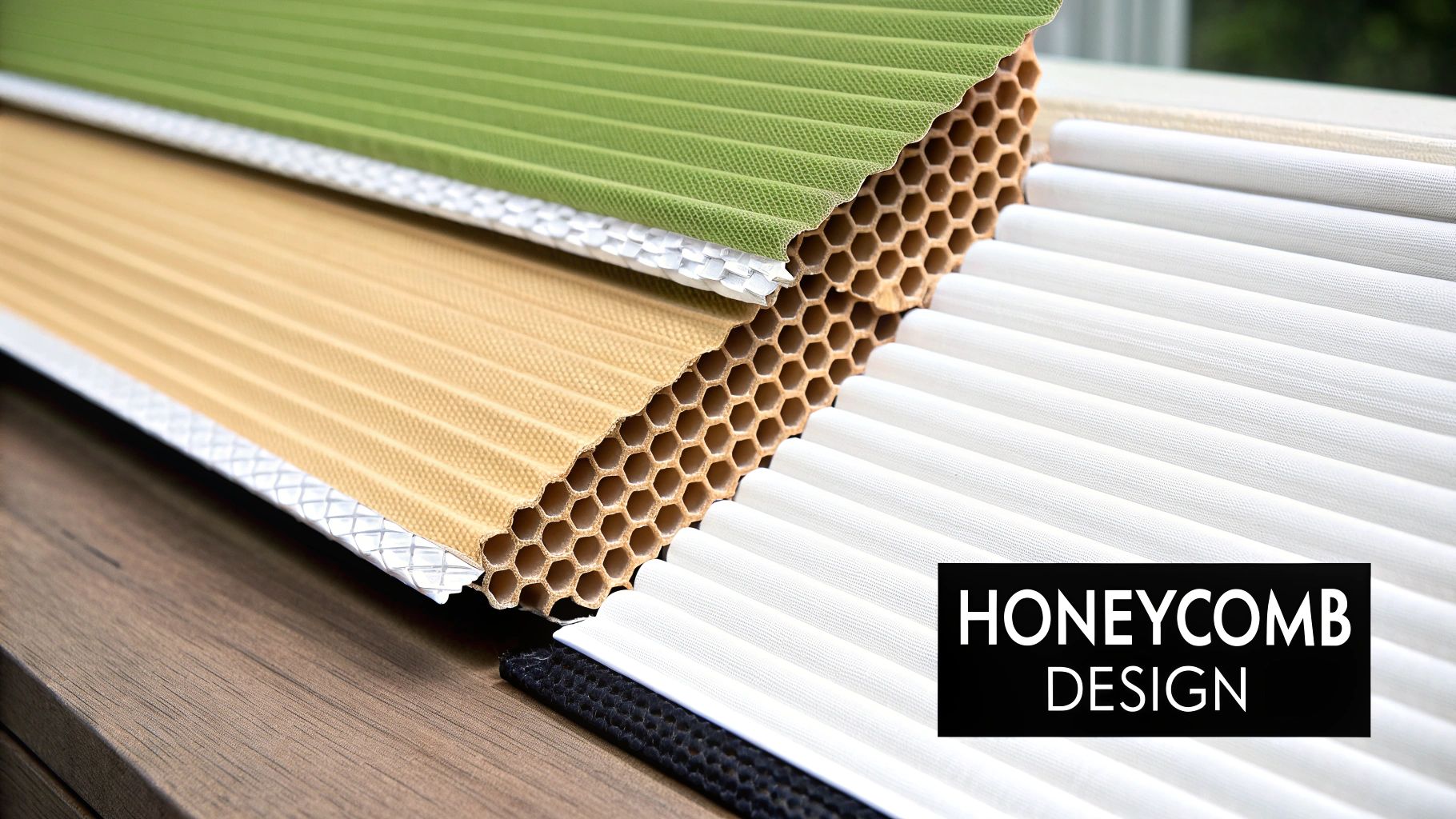
The secret to a cellular shade’s power lies in its brilliant, yet surprisingly simple, design. Inspired by a beehive’s honeycomb, these shades are built with distinct pockets—or "cells"—that trap air, creating a potent insulating barrier right at your window.
If you look at a cellular shade from the side, you’ll see this unique pleated structure. Those hexagonal shapes aren't just for looks; they trap air and dramatically slow the transfer of heat between your room and the outdoors. This is what stops your conditioned air from escaping in the summer and keeps the cold out during those Delmarva winters.
The specific fabrics used are also a big part of the equation. A deep dive into various sun shade material options reveals just how much science goes into blocking UV rays and ensuring durability, which is fundamental to how well these shades perform.
The Single Cell Design
Single-cell shades are the classic. They feature one layer of these honeycomb-shaped cells, which creates a single, effective air pocket. This simple design provides a substantial improvement in insulation compared to standard blinds or bare windows.
They also have a slimmer, more crisp profile. This makes them a fantastic, versatile choice for homes with shallower window casings where every inch matters. The pleats are clean and uniform, giving you a modern look that complements the room without overpowering it.
The Double Cell Enhancement
Double-cell shades are all about taking that insulating power to the next level. As the name implies, they stack two layers of honeycomb cells together, creating a second set of air pockets. This essentially doubles down on the insulating properties of the shade.
That reinforced construction creates a much more formidable barrier against temperature swings and even helps muffle outside noise. With two layers working together to trap more air, double-cell shades are the clear winner if your top priorities are maximizing energy savings and creating a quieter, more peaceful home. As a local, family-run business, Home Blinds & Floors provides personal service, competitive pricing, and professional installation throughout Sussex, Wicomico, Kent, and beyond.
Comparing Insulation and Energy Efficiency in Delmarva
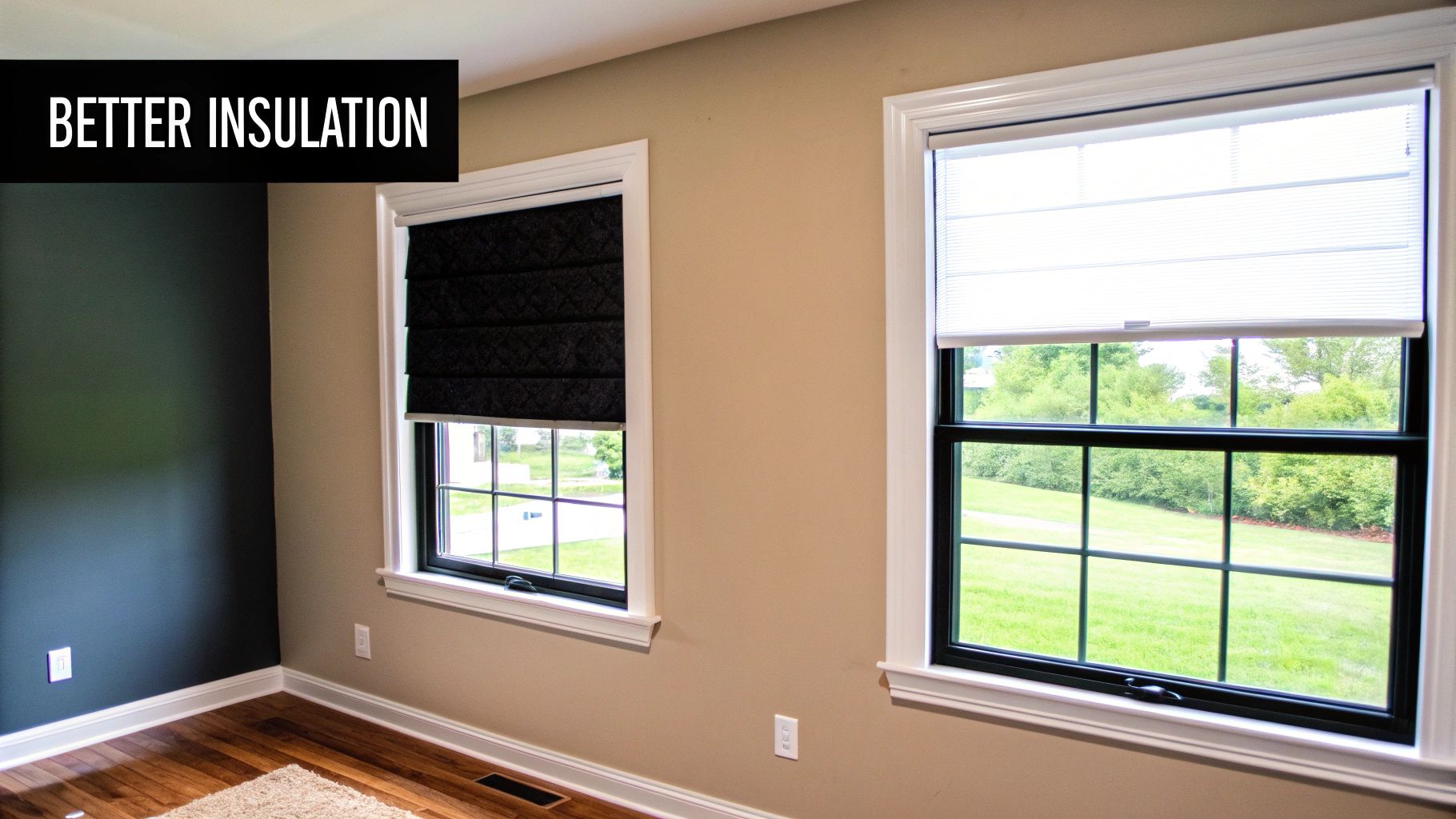
Here on the Delmarva Peninsula, from the summer sun in Rehoboth Beach to the chilly winters in Kent County, keeping energy costs in check is always on our minds. When you're weighing single-cell vs. double-cell shades, the biggest difference really boils down to their insulating power. That directly translates to what you see on your utility bills.
This insulating ability is measured by what's called an R-value. Think of it as a simple score for how well the shade resists heat trying to pass through it. The higher the R-value, the better the insulation, which means a warmer home in the winter and a cooler one in the summer.
The R-Value Difference
Single-cell shades are already a huge step up from basic blinds, typically offering an R-value somewhere between 2.0 and 4.0. That single layer of honeycomb-shaped cells does a great job of trapping air and creating a buffer against the outdoor temperatures.
But if you’re serious about insulation, double-cell shades are the clear winner. By stacking a second row of those air-trapping pockets, they can boost the R-value into the 4.0 to 7.0 range. It’s that extra layer of trapped air that really stops heat transfer in its tracks. To see how this fits into a bigger strategy, take a look at our guide to the best insulating window shades for Delmarva homes to save energy.
Make no mistake, energy efficiency is the main event here, and the double-cell design delivers performance you can actually measure. Some studies have shown that certain cellular shades can slash solar heat gain by up to 46%—a huge benefit during our hot, humid summers. It’s no surprise that manufacturers like Hunter Douglas have even earned official energy-saving ratings from the Attachments Energy Rating Council (AERC) for their products.
Turning R-Values into Real Savings
So, what does all this talk about R-values actually mean for your bank account? It’s simple: a better-insulated home means your HVAC system doesn’t have to work nearly as hard.
In the summer, double-cell shades are powerhouse heat blockers, keeping your air conditioning from kicking on every five minutes.
In the winter, they act as a much stronger thermal blanket over your windows, keeping the expensive heat you've paid for right where it belongs—inside.
From free in-home consultations to flawless installation, Home Blinds & Floors takes the stress out of selecting window treatments. We know the Eastern Shore's climate inside and out. During a consultation, we can look at your specific windows and help you understand the real-world energy savings you can expect, making sure you get the perfect custom fit for your home.
Remember, your shades and windows are a team. For the biggest impact, it's worth exploring the broader benefits of energy-efficient windows, because a great shade on a leaky window can only do so much. Combining both is the best path to a truly comfortable and cost-efficient home.
Choosing the Best Cellular Shades for Your Space
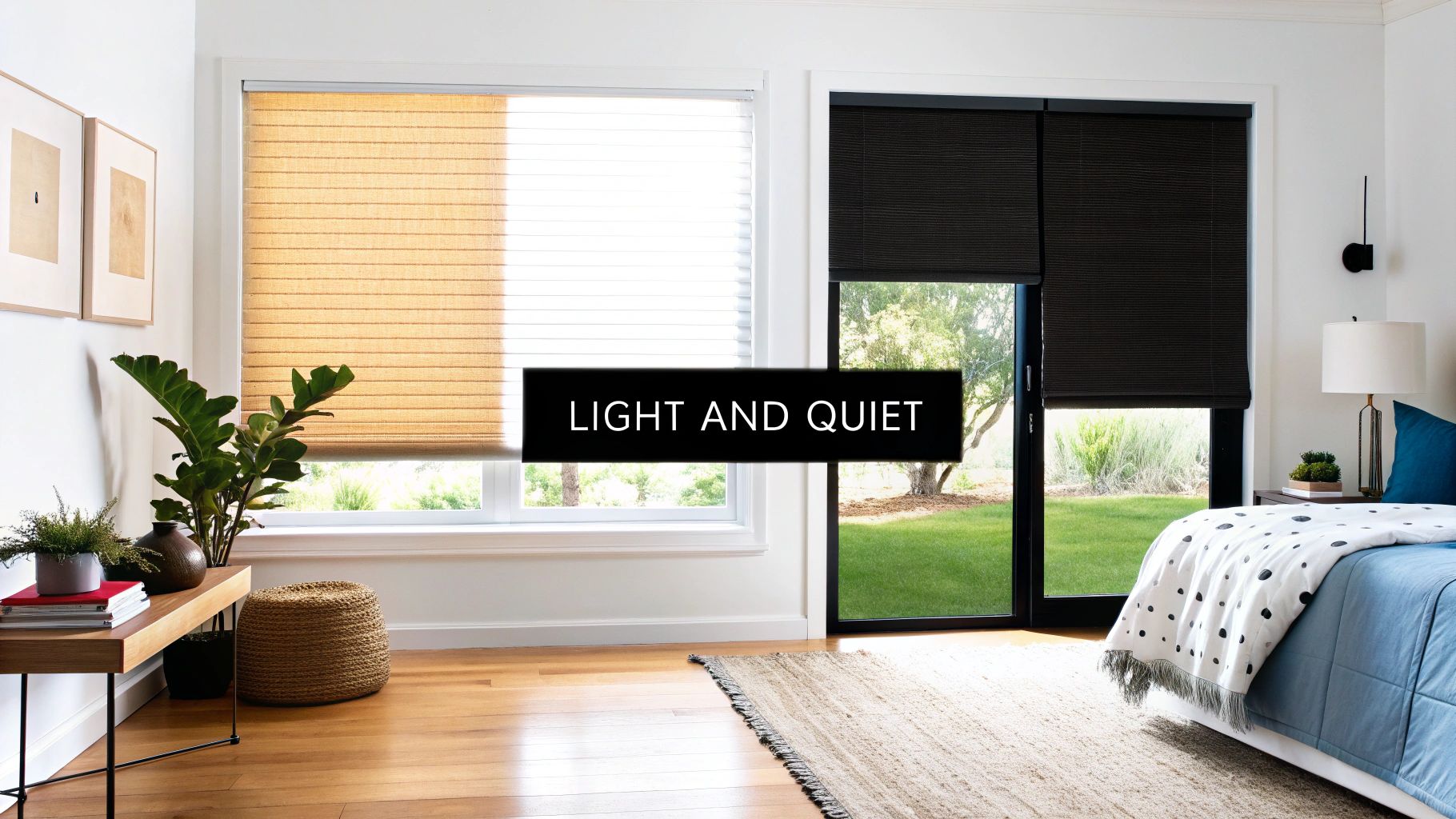
Sure, insulation is a huge selling point, but how these shades actually manage the light and sound in your home is what really transforms a room. The way they interact with sunlight and muffle outside noise can completely change the feel of a space, so it's a detail you don't want to overlook.
The first thing you’ll probably notice is the difference in their profile. Single-cell shades are slimmer, which gives their pleats a sharper, more defined look. It’s a clean, modern appearance that’s perfect for minimalist designs or on smaller windows where a thicker shade might look out of place.
Double-cell shades, on the other hand, are naturally thicker because of that second layer of cells. This gives them a softer, fuller appearance that adds a touch of substance and luxury, a look many homeowners here in Salisbury and Easton really love.
Dialing in the Perfect Amount of Light
When you get right down to it, controlling sunlight is less about the number of cells and more about the fabric you choose. Both single and double-cell shades come in a whole range of opacities, so you can get exactly what you need.
Light-Filtering: These fabrics are great for diffusing harsh sunlight into a soft, ambient glow. They’re an obvious choice for living rooms, kitchens, or any space where you want bright, natural light without the uncomfortable glare.
Blackout: For bedrooms, nurseries, or a dedicated media room, blackout fabrics are a must. While you can get them in either style, the beefier structure of a double-cell shade can sometimes do a slightly better job of blocking those tiny slivers of light that sneak in around the edges.
Your fabric choice is everything. A light-filtering single-cell shade might be perfect for a sunroom in Rehoboth Beach, while a double-cell blackout shade is the undisputed winner for a bedroom that needs to be pitch-dark and quiet for a good night's sleep. To get a better feel for how different fabrics can change your space, you should read our guide comparing light-filtering vs. blackout shades.
Quieting Things Down
This is where double-cell shades really shine. That extra layer of honeycomb pockets doesn’t just trap more air for better insulation; it’s also fantastic at absorbing sound. It acts as a buffer, dampening the ambient noise from outside.
If your home is on a busy street, in a bustling Eastern Shore neighborhood, or if you're just a light sleeper, this is a game-changer. The difference in noise reduction is something you can actually feel.
Want to dive deeper into how window treatments can make your home more peaceful? Take a look at our complete guide to noise-reducing shades. Home Blinds & Floors offers a wide selection of custom blinds and shades in Delmarva, with expert installers who bring the showroom to your living room.
FAQs: Single vs. Double Cellular Shades
When you're trying to decide between single and double cell shades, a few specific questions almost always come up. As the go-to team for custom window treatments here on the Delmarva Peninsula, we've heard just about everything. Let's get you some clear, straightforward answers so you can feel totally confident in your choice.
Are Double Cell Shades Worth The Extra Cost in Delaware and Maryland?
For our climate? Absolutely. The Delmarva Peninsula gives us four distinct seasons—hot, muggy summers and winters that can get downright cold. The superior insulation you get from double cell shades offers real long-term value here. That enhanced R-value helps keep your home cooler when the summer sun is beating down and warmer when the winter winds are blowing. You'll actually see the difference in your energy bills, which helps offset the higher initial investment over time.
Do Double Cell Shades Look Bulky On Windows?
It's a valid concern, but you'd be surprised. While double cell shades are a bit thicker than their single cell counterparts, modern designs are incredibly sleek. When you raise them, they stack up very tightly at the top of the window, so they don't block your view or look clunky. During your free in-home consultation, our team at Home Blinds & Floors brings physical samples right to your home so you can see and feel them for yourself.
Can I Get Motorized Single and Double Cell Shades?
Of course. Motorization is a popular feature for both single and double cell shades. It’s not just about convenience; it’s a huge boost for child safety because it eliminates dangling cords. Plus, they can be integrated into most smart home systems for effortless control. Home Blinds & Floors specializes in custom motorized solutions for homes in Salisbury, Rehoboth Beach, and anywhere in between.
How Much Do Custom Cellular Shades Cost?
The cost depends on several factors: single vs. double cell, window size, fabric choice (light-filtering vs. blackout), and options like motorization. Single cell shades are more budget-friendly upfront. While double cell shades have a higher initial cost, they provide greater long-term energy savings, especially in a four-season climate like ours. We provide a detailed quote during our free in-home consultation.
What cities in Delmarva do you serve?
We proudly cover the entire Delmarva Peninsula. Our service areas include all of Sussex and Kent Counties in Delaware, from Rehoboth Beach and Lewes down to Dover. On the Maryland side, we cover Wicomico, Worcester, Talbot, and Queen Anne's Counties, serving communities like Salisbury, Ocean City, Easton, and Kent Island. We bring our mobile showroom right to your door for a convenient, personalized experience. And while proper installation is key, we know things can happen down the road. For tips on upkeep, check out our guide on repairing cellular shades.
Find the Perfect Cellular Shades for Your Eastern Shore Home
In summary, Home Blinds & Floors provides custom window treatments, expert advice, and in-home service to homes across the Delmarva Peninsula. The choice between single cell shades and double cell shades depends on your specific needs for insulation, sound control, and budget. Double cell shades are an excellent investment for maximizing energy savings in our local climate, while single cell shades offer a stylish and cost-effective solution for many rooms. From Rehoboth Beach to Easton, our team is here to help you choose the best shades, shutters, or blinds for your space. Schedule your free consultation today.

Comments