.avif)
.avif)
.avif)
Roman Shades and Curtains: What Nobody Tells You


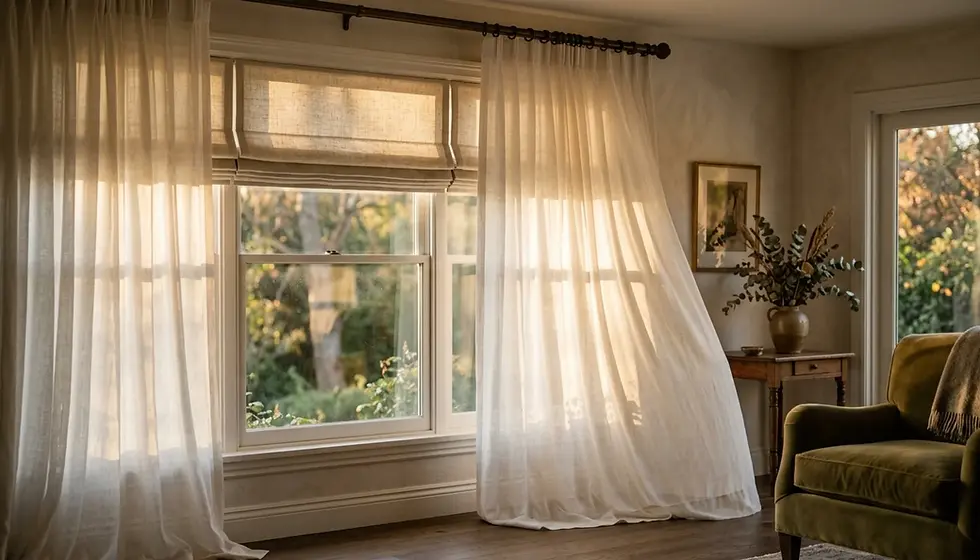
Roman shades and curtains can absolutely be used together, and pairing them is one of the most effective window treatment combinations available to homeowners in 2026. Roman shades handle precise light control and privacy at the glass, while curtains add softness, insulation, and a finished, layered look that neither treatment achieves alone. The combination works in virtually every room when proportions and fabrics are chosen correctly.
Roman shades and curtains are a practical layered pairing: shades filter light precisely while curtains frame the window and add warmth.
The main downside of Roman shades alone is limited insulation and a more minimal aesthetic; curtains solve both problems.
Styling success depends on proportions: mount curtain rods 4 to 6 inches above the shade bracket and extend panels 6 to 12 inches beyond the window frame on each side.
Fabric choice matters more than most homeowners expect; sheer or linen curtains with a light-filtering Roman shade create a layered look without blocking all natural light.
Coastal homes on the Delmarva Peninsula benefit specifically from moisture-resistant shade fabrics paired with washable curtain panels to handle salt air and humidity.
Home Blinds and Floors serves homeowners across Rehoboth Beach, Lewes, Ocean City, and the broader Eastern Shore with custom shades and curtain consultations tailored to coastal conditions.
Can You Do Roman Shades and Curtains Together?
Layering Roman shades with curtains is a well-established interior design technique that combines functional light control with decorative softness. Roman shades sit close to the glass and stack into clean horizontal folds when raised, making them ideal for precise privacy and light management. Curtain panels hang from a rod mounted higher and wider than the shade, framing the entire window with fabric that adds texture, color, and insulation. Together, the two treatments accomplish what neither can do independently.
The practical case for combining them is strong. Roman shades alone can look minimal to the point of feeling unfinished, particularly on large windows or in rooms with high ceilings. Curtains alone often stack in front of the glass during the day, reducing your view and natural light. When you layer both, you get the Roman shade's clean, flat face for daytime control and the curtain panel's sweep for evening privacy and a polished room.
In coastal homes along the Eastern Shore, specifically in communities from Kent Island to Bethany Beach, the layered approach also solves an environmental problem. A moisture-resistant shade fabric handles the humidity and salt air closest to the window, while an interior curtain panel adds the softness and warmth the room needs without direct salt air exposure.

The Proportions That Make Layering Work
Proportion is where most DIY layering attempts fall apart. Mount your curtain rod 4 to 6 inches above the Roman shade bracket, and ideally 2 to 4 inches below the ceiling or crown molding to maximize the sense of height. Extend the rod 6 to 12 inches beyond the window frame on each side so the curtain panels clear the glass completely when open. This ensures the panels never block daylight when pulled back and creates the clean, architectural look that makes layered treatments so appealing.
Curtain length matters just as much. Floor-length panels that just graze the floor or break by an inch or two look intentional and finished. Panels that hover 3 to 4 inches above the floor look like a measuring mistake. If your ceilings are below 9 feet, floor-length panels still work, they just require precise hemming, which is one reason professional installation saves headaches on layered setups.
Should You Have Curtains With Roman Blinds?
Whether curtains belong with Roman shades depends on three factors: the room's light requirements, the window's architectural scale, and your privacy needs after dark. For most living rooms, primary bedrooms, and dining rooms, adding curtains to Roman shades produces a noticeably more finished and functional result. Skipping curtains is a reasonable choice only in smaller rooms where fabric would feel heavy, or in minimalist interiors where the shade's clean geometry is the deliberate design statement.
From a light control standpoint, the combination wins every time. A light-filtering Roman shade softens daytime glare without darkening the room. At night, closing a blackout-lined curtain panel adds a second privacy layer that a standard shade fabric alone rarely achieves, particularly in street-facing rooms. For bedrooms in Rehoboth Beach vacation homes, where summer nights stay bright and street activity runs late, this layered approach is genuinely practical rather than decorative.
Energy performance is another reason to add curtains in Eastern Shore homes. Curtain panels, especially those with thermal or blackout linings, reduce heat gain through glass in summer and slow heat loss in winter. Maryland and Delaware experience genuine seasonal temperature swings, and layering adds meaningful insulation without requiring structural changes to the window.
When to Skip the Curtains
There are situations where curtains add visual clutter rather than value. Bathroom windows, kitchen windows above counters, and small casement windows rarely benefit from floor-length panels. In those spaces, a well-chosen Roman shade on its own, perhaps in a textured linen or a patterned fabric, does everything the window needs. For guidance on custom shades for trickier window types, the range of options is wider than most homeowners expect.
What Is the Downside of Roman Blinds?
Roman shades are one of the most popular window treatment choices in 2026, but they come with real trade-offs that retailers rarely lead with. Understanding the downsides helps you decide whether a Roman shade alone is enough, or whether layering with curtains (or choosing a different treatment entirely) makes more sense for your specific situation.
The most common complaint is light leakage at the sides and top. Roman shades, like most inside-mount shades, leave a gap between the fabric and the window frame. In a bedroom where darkness matters, these gaps are noticeable. The fix is either an outside-mount installation that covers the frame entirely or pairing the shade with a blackout curtain panel that covers the perimeter gaps.
Stacking bulk is a second issue. When a Roman shade is fully raised, the stacked fabric sits at the top of the window and can cover 8 to 12 inches of glass depending on the shade's length and fabric weight. On a short window, this significantly reduces the view and light when the shade is open. Roller shades and cellular shades have a much thinner stack, which is why they often get recommended for smaller windows.

Durability and Maintenance Realities
Roman shades are fabric treatments, which means they absorb dust, cooking odors, and in coastal environments, salt residue. Most Roman shades cannot be machine washed; they require professional cleaning or careful spot treatment. For vacation rental properties in Ocean City or Ocean Pines, where turnover is frequent and guest handling is unpredictable, a Roman shade in a high-traffic room can look worn within a couple of seasons without proper care.
The operating mechanism is another durability factor. Traditional Roman shades use a cord system that requires precise tension to stack evenly. Over time, cords stretch unevenly and the horizontal folds lose their crisp alignment. Motorized Roman shades solve this problem entirely; a quiet motor lifts and lowers the shade uniformly every time. For the custom window shades Home Blinds and Floors installs, motorized Roman options are available and particularly popular in homes with high or hard-to-reach windows along the coast.
Cost Versus Other Shade Types
Custom Roman shades typically cost more per window than roller shades or faux wood blinds at comparable sizes. Fabric choice, lining, and operating system all affect the final price. A basic unlined Roman shade in a standard size runs considerably less than a fully lined, motorized version in a specialty fabric. Getting a specific quote for your windows is essential because width, height, and lining choices shift the price significantly. For a broader picture of what custom treatments cost in this region, the custom blinds cost guide for the Delmarva Peninsula covers the major price drivers in plain language.
How to Style Roman Shades With Curtains?
Styling Roman shades with curtains successfully comes down to four decisions: fabric relationship, color coordination, hardware alignment, and panel style. Get all four right and the layered look appears intentional and sophisticated. Miss any one of them and the combination looks accidental.
Start with the fabric relationship. The Roman shade and the curtain panel should contrast in texture without competing in pattern. A flat-weave linen Roman shade pairs well with a slightly heavier cotton or velvet curtain panel. A patterned Roman shade, say a geometric or botanical print, needs a solid or tone-on-tone curtain to avoid visual chaos. Conversely, a solid Roman shade in a neutral tone handles a subtly patterned curtain panel without the room feeling busy.

Color Strategy for Layered Window Treatments
Color coordination does not mean matching. Matching the Roman shade fabric exactly to the curtain fabric removes the visual interest that makes layering worth doing in the first place. A more effective approach is to pull one color from the room's rug or upholstery for the shade, then echo a secondary room color in the curtain panel. For example, a navy Roman shade with cream curtain panels reads as intentional and anchored. A taupe Roman shade with warm white curtain panels creates softness without a strong directional statement, which works well in open-plan coastal interiors.
In 2026, the trend among Eastern Shore homeowners we work with leans toward natural, organic textures: woven cotton, linen blends, and subtle horizontal weaves for Roman shades, paired with lightweight linen or cotton voile curtain panels. This combination works particularly well in beach homes where the goal is to bring the outdoors in rather than shut it out.
Hardware: Rods, Rings, and Brackets
Hardware is a detail that significantly affects the finished look. Brass and matte black curtain rods are the most popular finishes in coastal interiors right now, and both work with wood-toned or white Roman shade hardware. The key rule is consistency within a room: use the same metal finish on the curtain rod, the shade's front bar, and any visible brackets. Mixing brushed nickel with antique brass in the same window treatment creates a DIY impression that undermines an otherwise well-chosen fabric combination.
For ring-top curtain panels layered over Roman shades, pinch-pleat and goblet-pleat styles add the most formal presence. Grommet panels work well in casual spaces but their chunky metal rings can visually compete with the shade's fabric face. Ripple-fold panels on a track system have become increasingly popular for wide windows in open-plan rooms because they stack tightly and move smoothly without requiring rings.
Roman Shades and Curtains: A Comparison Framework
Understanding how Roman shades and curtains function differently helps clarify why combining them adds genuine value rather than just complexity. The table below covers the key dimensions where the two treatments work differently and what each contributes to a layered installation.
Feature | Roman Shade Alone | Curtains Alone | Roman Shade + Curtains |
Light Control | Good; precise at the glass | Variable; panels shift during day | Excellent; precise plus perimeter cover |
Privacy at Night | Moderate; side gaps common | Good when closed fully | Best; no gaps when both are closed |
Insulation Value | Low to moderate | Moderate to high with lining | High; two fabric layers at the window |
Visual Softness | Minimal; flat and structured | High; flowing and warm | Balanced; structure plus softness |
Stack When Open | 8-12 inches at top of window | Panels pull to the sides | Combined; shade stacks at top, panels at sides |
Coastal Durability | Depends on fabric selection | Interior panels avoid direct salt air | Shade handles salt air; panels stay protected |
Installation Complexity | Low to moderate | Low | Moderate; two systems must align correctly |
What Do Coastal Homeowners Need to Know Before Combining These Treatments?
Coastal homeowners on the Delmarva Peninsula face specific conditions that affect every window treatment decision, and layering Roman shades with curtains is no exception. Salt air accelerates fabric degradation, high humidity warps wooden shade components, and intense summer sun fades fabrics faster than in inland homes. Choosing the right materials for each layer matters more here than in a suburban home in Centreville or Easton.
For the Roman shade layer, which sits closest to the glass and absorbs the most environmental stress, prioritize polyester or polyester-blend fabrics over natural fibers. Polyester resists moisture, holds its color under UV exposure, and does not mildew. Many homeowners assume linen or cotton shades are higher quality, and they can be in the right environment, but in a Rehoboth Beach home that stays closed for weeks at a time, natural fiber shades trap humidity and develop mildew on the folds.
For the curtain layer, which hangs further from the glass and faces more moderate conditions, you have more flexibility. Linen-blend panels work well in most coastal interiors because they breathe, drape attractively, and launder more easily than specialty fabrics. If the room faces west and takes afternoon sun, a lining on the curtain panel extends the fabric's lifespan and reduces heat gain through the glass.
Working With Home Blinds and Floors on Layered Treatments
Home Blinds and Floors has worked with homeowners and property managers across the Eastern Shore long enough to know which fabric and hardware combinations hold up and which ones need replacing after two seasons. That kind of specific, regional experience is what separates a local consultation from buying treatments off a website without professional input.
For homeowners in Lewes, Milton, Millsboro, and Bethany Beach, the free in-home consultation covers both the Roman shade and curtain layer together. The team evaluates window measurements, light direction, room function, and the client's preferred operating system (manual cord, continuous loop, or motorized) before recommending specific fabrics and hardware. You can explore the full shades installation service online or browse the custom window treatments resource library for style ideas before your consultation.
For sliding glass doors and wide openings in coastal properties, the layered approach sometimes requires a different configuration. A Roman shade is rarely practical on a door panel itself, but a wide Roman shade on a fixed sidelight combined with flowing curtain panels on a track above the door creates a cohesive look. The sliding door treatments guide covers these configurations in detail.
How Do You Choose Fabrics and Linings for a Layered Look?
Fabric and lining selection for layered Roman shades and curtains involves balancing four variables: light transmission, privacy, insulation, and durability. Each variable affects the other, and the right combination depends on the specific room's function and orientation rather than a universal recommendation.
Roman shades come in three main opacity levels. Sheer fabrics allow light to pass through and offer daytime privacy from direct outside sightlines but not from close-range viewing. Light-filtering fabrics diffuse light and provide good daytime privacy. Blackout fabrics block virtually all light and provide complete privacy at any time of day. For a bedroom where the Roman shade is the primary privacy tool, blackout fabric makes sense. For a living room where the curtain panels handle nighttime privacy, a light-filtering Roman shade gives you more flexibility during the day.
Lining Options for Roman Shades
Lining a Roman shade affects how it stacks, how it looks from outside, and how well it insulates. An unlined Roman shade is the least expensive option and works in low-sun rooms, but it shows the fold structure clearly from the exterior and provides minimal insulation. A blackout lining adds privacy and insulation but increases the fabric weight, which affects how cleanly the shade folds. An interlining, a layer of soft batting between the face fabric and the lining, gives the shade a fuller, more luxurious appearance and noticeably improves thermal performance.
Cellular shades serve a similar insulation function to lined Roman shades and are worth considering if energy efficiency is the primary driver. For a direct comparison of cellular shade structures, the single versus double cell shades guide for Delmarva homeowners explains the thermal differences clearly.
Curtain Panel Fabric Guide
Curtain panels in a layered treatment do not need to be heavy to be effective. A semi-sheer linen or cotton voile panel over a light-filtering Roman shade creates a luminous, layered look that works in living rooms and sunrooms where natural light is a priority. A fully opaque cotton or velvet panel over a blackout Roman shade is probably redundant in most rooms; one of those two blackout layers is usually sufficient. The better combination in a bedroom is a light-filtering Roman shade paired with a blackout curtain panel, which gives you full flexibility: raise the shade and open the curtains for morning light, lower the shade and close the curtains for complete darkness.
Frequently Asked Questions About Roman Shades and Curtains
Can you hang curtains over Roman shades without them looking cluttered?
Yes, provided the hardware is correctly proportioned. Mount the curtain rod 4 to 6 inches above the Roman shade bracket, and extend it 6 to 12 inches beyond the window frame on each side. When the curtain panels clear the glass entirely when pulled back, the layered look reads as intentional rather than cluttered. Choosing curtain panels in a fabric that contrasts the Roman shade in texture but coordinates in color also prevents the visual competition that makes some layered treatments feel busy.
What type of Roman shade works best under curtains?
A flat Roman shade, also called a flat fold or relaxed Roman, works best under curtains because it stacks into the thinnest profile when raised and presents the cleanest face when lowered. Hobbled or looped Roman shades, which retain horizontal folds when closed, create more visual texture but also more bulk at the top when raised, which can crowd the space below the curtain rod. For most layered installations, the flat style produces the most professional result.
Do Roman shades provide enough privacy on their own?
Roman shades provide good daytime privacy when made from light-filtering or blackout fabrics, but standard inside-mount installations leave small gaps at the sides and top of the frame where light and sightlines pass through. For rooms where complete privacy matters, an outside-mount Roman shade that overlaps the frame on all sides solves the gap problem. Adding curtain panels provides an additional privacy layer, particularly after dark when interior lighting makes interiors visible from outside.
How do Roman shades hold up in coastal climates?
Roman shades in coastal homes on the Delmarva Peninsula perform best when made from polyester or polyester-blend fabrics rather than natural fibers. Polyester resists salt air, holds color under prolonged UV exposure, and does not develop mildew in high-humidity environments. Wooden dowels used in the shade's fold structure should be sealed or replaced with fiberglass rods in properties close to the water. A professional consultation with a local installer familiar with coastal conditions, specifically along Maryland and Delaware's Eastern Shore, helps you choose materials that last rather than those that look good in a showroom but deteriorate within seasons.
What is the typical cost range for custom Roman shades in the Delmarva area?
Custom Roman shade pricing varies significantly based on window size, fabric choice, lining, and whether the operating system is manual or motorized. A basic unlined Roman shade in a standard residential width typically starts in the lower hundreds of dollars installed, while a fully lined, motorized Roman shade in a specialty fabric can reach several hundred dollars per window. The most accurate way to understand your specific cost is through an in-home consultation where exact measurements and fabric selections are assessed together. Home Blinds and Floors offers free consultations across the Eastern Shore service area.
Can Roman shades be motorized, and do they integrate with smart home systems?
Motorized Roman shades are widely available and represent one of the fastest-growing segments of the window treatment market in 2026. Most motorized shade systems use a rechargeable battery motor or hardwired installation and integrate with popular smart home platforms. For hard-to-reach windows in beach houses and vacation homes, motorized Roman shades are often the most practical long-term solution because they eliminate the cord tension and wear issues that affect manually operated shades over time.
How do you clean Roman shades when they are layered with curtains?
Curtain panels in a layered installation are typically easier to clean than the Roman shade because most curtain fabrics can be machine washed on a delicate cycle. Roman shades require more care: most should be spot cleaned or professionally cleaned rather than machine washed, because the folding structure and any interlining or stiffener can be distorted by immersion cleaning. Regular light vacuuming with a brush attachment every few weeks prevents dust buildup that requires more intensive cleaning later. In coastal homes, more frequent cleaning is practical due to salt residue carried by sea breezes through open windows.
What are the best curtain colors to pair with neutral Roman shades?
Neutral Roman shades in white, cream, greige, or linen tones pair well with curtain panels in nearly any color because the neutral shade does not fight with the curtain's palette. The most cohesive results come from pulling a color already present in the room's upholstery or rug. In Eastern Shore beach homes, navy, soft sage, and warm terracotta all work with neutral Roman shades and complement coastal interiors without feeling predictable. Avoid pairing a neutral Roman shade with stark white curtain panels unless the room has a deliberately minimal, all-white palette; the contrast between a slightly warm neutral shade and a cool white curtain can look mismatched rather than layered.
Making the Right Choice for Your Home
Roman shades and curtains together represent one of the most versatile and enduring window treatment combinations available, but the combination only reaches its potential when fabric, proportion, and hardware are chosen with the specific room in mind. The Roman shade handles precision: light level, privacy, and clean geometry at the glass. The curtain handles atmosphere: warmth, insulation, and the soft framing that makes a room feel finished.
For Delmarva Peninsula homeowners, the layered approach also offers a practical coastal solution. The shade absorbs the environmental load closest to the window, while the curtain panel stays protected from direct salt air and humidity. Getting those material choices right requires knowing the specific conditions in your home, which is exactly what a professional in-home consultation addresses.
The most common mistake is treating the two layers as independent purchases. Choosing the Roman shade first, then adding curtains as an afterthought, usually produces a pairing that looks assembled rather than designed. The better approach is to plan both layers together from the start, considering how their fabrics, colors, and hardware will read as a single unified treatment.

If you are ready to plan a layered window treatment for your home on the Eastern Shore, contact Home Blinds and Floors for a free in-home consultation. The team serves Rehoboth Beach, Lewes, Ocean City, Salisbury, Kent Island, and communities throughout Maryland and Delaware's Eastern Shore, bringing specific knowledge of coastal conditions and custom installation to every project.

Comments