.avif)
.avif)
.avif)
How to Pick Curtains: A Delmarva Homeowner's Guide

Updated: Dec 4, 2025
TL;DR: To pick the perfect curtains, start with function (light control, privacy, insulation) before style. Choose fabrics like linen for a coastal look or velvet for drama. Measure to hang your rod 4-6 inches above the window frame and extend it 3-6 inches on each side to make the room feel larger. For a perfect fit and expert advice in Delmarva, consider custom solutions from a local expert like Home Blinds & Floors.
Trying to decide on the perfect curtains for your Delmarva home? At Home Blinds & Floors, we help homeowners across the Eastern Shore find the perfect balance of style, light control, and privacy with custom window treatments tailored to your space. Picking the right curtains really comes down to a smart blend of function and style. The secret isn't just finding a fabric you love; it's about first figuring out what you need them to do. Are you trying to block out the morning sun in your Salisbury bedroom, or just add a soft, decorative touch to a living room in Rehoboth Beach? Once you know the job, then you can dive into choosing fabrics, colors, and hardware that truly complete the room.
Your Quick Guide to Picking Perfect Curtains in Delmarva
Choosing window treatments can feel like a huge task, but a little strategy goes a long way. It’s so much more than picking a pretty pattern. You’re actually creating a cohesive look that solves real-world problems, like killing the glare on your TV screen or getting some much-needed privacy in a ground-floor bedroom.
Here on the Delmarva Peninsula, from Salisbury to Easton, we have to think about things like coastal humidity and that intense summer sun, which adds another layer to the decision. At Home Blinds & Floors, we've always said the perfect curtains should make your life better. I like to think of it as a simple, three-part recipe:
Function First: What is the primary job for these curtains? Are we blocking light, insulating a drafty window, or just ensuring privacy with options like custom blinds or blackout curtains?
Aesthetic Appeal: What’s the vibe you're going for? Maybe it's airy and coastal with sheer fabrics, or dramatic and formal with heavy drapes. Or perhaps you just want something cozy and casual.
Proper Proportions: This is key. How you measure and hang curtains can completely change a room, making it feel larger and much more polished.
Nailing these three elements is the absolute foundation for any successful window treatment project. It guarantees your investment not only looks fantastic but also works hard for your home day in and day out.
This guide will walk you through the details, but if you're looking for even more ideas, check out our guide on how to choose window treatments for tips tailored to every room. From free in-home consultations to flawless installation, Home Blinds & Floors takes the stress out of selecting window treatments.
Choosing the Right Curtains for Privacy and Light Control
Before you get lost in a sea of beautiful patterns and luxurious fabrics, let's talk about what your curtains actually need to do. I’ve seen it time and again: someone picks a gorgeous curtain that’s completely wrong for the room. Function should always steer your initial choices.
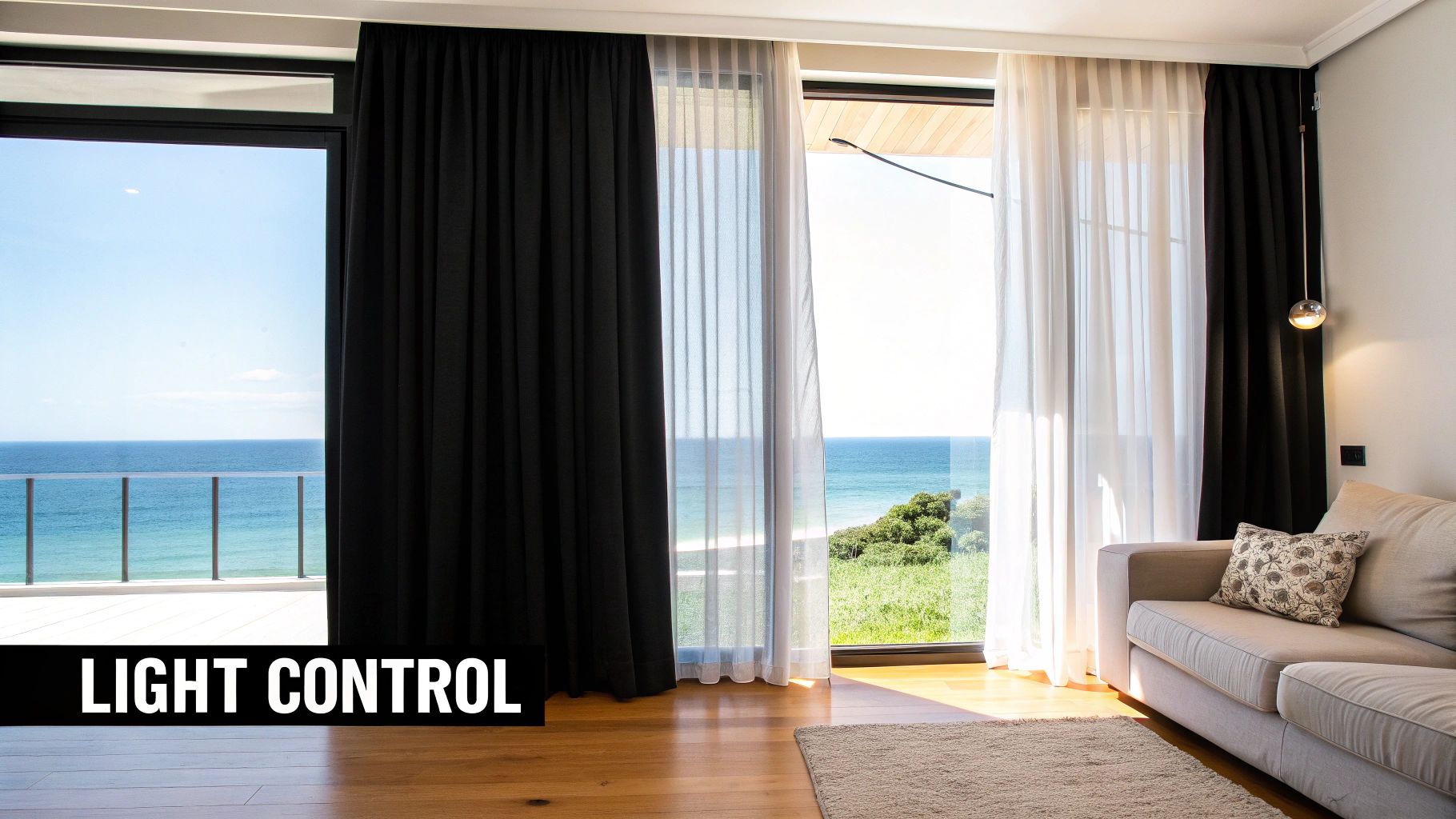
Think about the room itself. In your Salisbury bedroom, are you trying to create a pitch-black cave for sleeping in, or do you just want to soften that intense morning sun? What about that living room in your Rehoboth Beach home that gets baked by the afternoon glare? The goal there might be to watch TV without squinting, all while keeping that lovely view. Getting this practical foundation right from the start is the secret to choosing window treatments that are as hardworking as they are stylish.
Decoding Light Control Options
The jargon around light control can be a bit much, but each term really does mean something different. Nailing down the right one for your space is crucial.
Light-Filtering Curtains: These are your sheers and semi-sheers—think airy linen, delicate cotton voile, or light polyesters. They’re perfect when you want to keep the room bright and open but just need a soft layer of privacy. They act as a gentle buffer, ideal for living rooms, kitchens, or any space you don't want to feel closed off.
Room-Darkening Curtains: This is a big step up. These curtains use thicker, more opaque fabrics or have a special lining built in to block a huge amount of light—typically around 95-99%. They're a fantastic choice for a media room to kill screen glare or for bedrooms where you’re sensitive to light but don’t need total darkness.
Blackout Curtains: When you need the room to be dark, this is the only way to go. Blackout curtains are the gold standard, made with a multi-layered or coated fabric designed to block 100% of incoming light. They are an absolute game-changer for shift workers, nurseries, or anyone in Delmarva whose bedroom faces that brilliant morning sun.
If you're also considering shades, our guide on light-filtering vs. blackout shades for Delmarva homeowners dives even deeper into these options.
Curtain Functionality at a Glance
Here’s a quick comparison to help you choose the right curtain type for any room in your Delmarva home.
Curtain Type | Primary Function | Best For Rooms Like... | Typical Material |
|---|---|---|---|
Light-Filtering | Softens light, adds daytime privacy | Living Rooms, Kitchens, Sunrooms | Sheer linen, Cotton voile, Polyester |
Room-Darkening | Significantly reduces light, adds privacy | Bedrooms, Media Rooms, Home Offices | Thicker cotton, Lined polyester, Woven blends |
Blackout | Blocks 100% of light, maximum privacy | Nurseries, Bedrooms, Home Theaters | Coated fabrics, Multi-layered materials |
This table should give you a solid starting point for matching the curtain's job to the right room.
Assessing Your Privacy Needs
Right alongside light control, privacy is a huge factor. The level of seclusion you're after will directly influence the fabric you choose. For example, sheer curtains offer very little privacy. They blur the view from outside during the day, but at night when your lights are on, they don't hide much. That might be perfectly fine for a second-story office but is probably not the best fit for a ground-floor bathroom.
On the other hand, opaque fabrics like velvet, heavy-duty cotton, or any lined material will give you complete privacy. This makes them the go-to for bedrooms and bathrooms. A clever, and very popular, solution is to layer your treatments. Think about pairing elegant sheers with a set of heavier drapes on a double rod. This setup gives you the best of both worlds—soft, filtered light during the day and total seclusion when you want it at night.
Expert Tip: Layering isn't just about function; it's a powerful design move. A sheer curtain paired with a room-darkening drape gives you the ultimate control over both light and privacy, letting you set the mood for any time of day.
As a local, family-run business, Home Blinds & Floors provides personal service, competitive pricing, and professional installation throughout Sussex, Wicomico, Kent, and beyond.
Choosing the Right Fabric and Color for Your Curtains
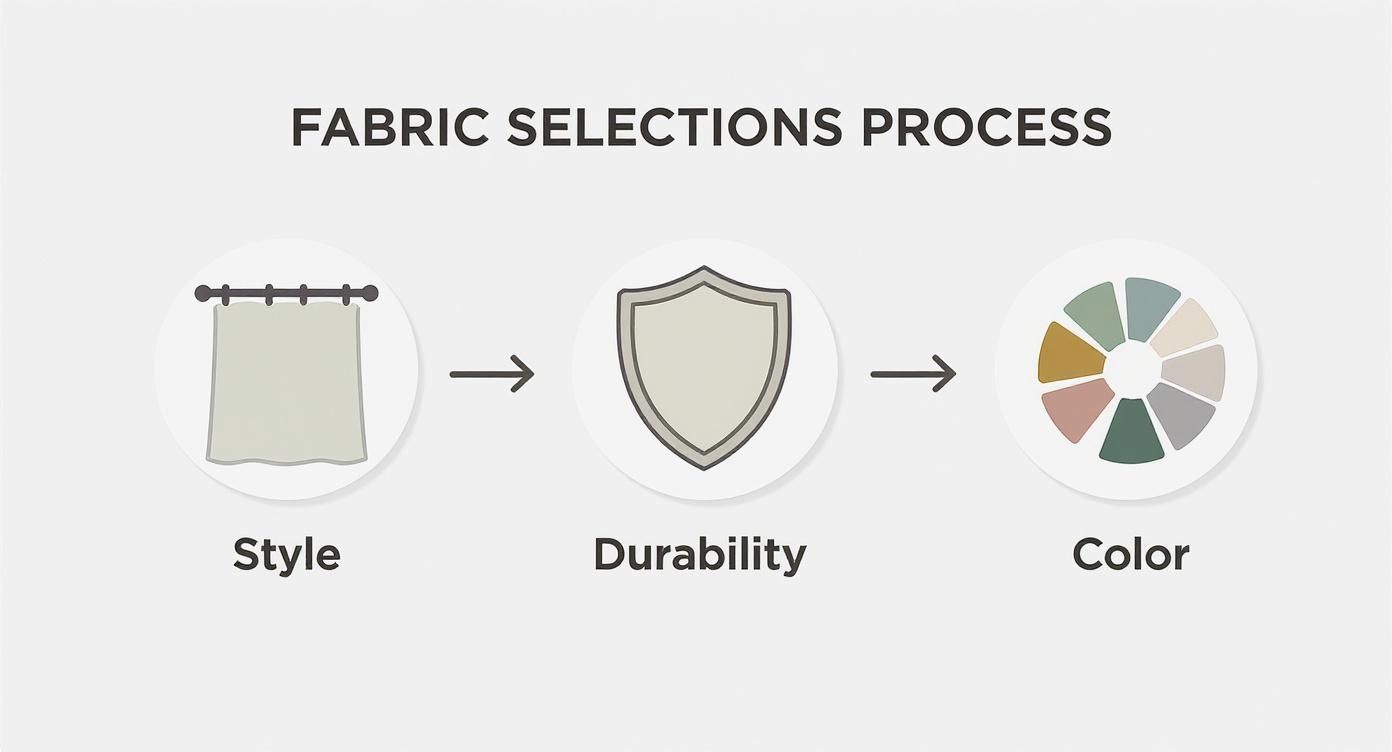
Once you’ve sorted out the practical side of things—like how much light control and privacy you need—you get to the best part: picking the fabric and color. This is where you can really let your personal style shine. The material you choose does more than just look good; it completely changes how your curtains hang, feel to the touch, and hold up to everyday life, especially here on Delmarva.
Whether you're aiming for that light, airy feel in your Easton beach house or something more formal and dramatic for a historic home in Salisbury, the fabric truly sets the stage. Let's walk through how to pick a material you'll be happy with for years to come.
Let's Talk Curtain Materials
Every fabric has its own personality and perks. Linen and cotton, for example, are go-to choices for creating that relaxed, coastal vibe we love. They're lightweight and let the light filter through beautifully. The downside? They can be prone to wrinkling and might fade over time if they get a lot of direct sun.
If you’re after something more substantial, velvet is a heavyweight champion. It’s thick, feels incredibly luxurious, and is a fantastic insulator. This makes it a perfect fit for bedrooms or formal living rooms where you want a cozy, dramatic feel and a little extra help with energy efficiency. Just keep in mind that it can attract dust and pet hair, so it might need a bit more upkeep.
For a real workhorse fabric, you can't go wrong with polyester. It's actually the most dominant material in the window treatment world, generating USD 6.5 billion in revenue. There's a good reason for its popularity: it's incredibly durable, resists fading, and is budget-friendly, making it a solid choice for just about any room.
Finding Your Perfect Color Palette
The color of your curtains has a huge impact on the overall mood of a room. For a deeper dive into this, check out this fantastic guide on Mastering Home Design Color in Your Space. The right shade can either melt seamlessly into your decor or stand out as a stunning focal point.
Most people take one of three approaches when picking a curtain color:
Matching the Walls: Choosing curtains that are a similar shade to your wall paint creates a calm, monochromatic look. It’s a great trick for making a room feel bigger and more cohesive. This is a sophisticated way to get a clean, polished aesthetic.
Creating a Bold Contrast: Want your windows to make a statement? Go for a bold, contrasting color. Think deep navy curtains against soft gray walls, or a vibrant pattern in a room that's otherwise neutral. This is your chance to have some fun and inject a dose of personality into your space.
Sticking with a Timeless Neutral: When you’re not sure which way to go, a classic neutral like ivory, beige, or a soft gray is always a smart and elegant choice. Neutral curtains work with almost any style and won't look dated as trends come and go.
Expert Tip: A simple trick to make everything look professionally designed is to pull a secondary color from something else in the room—like a piece of art, a throw pillow, or your area rug—and use that for your curtains. It creates a subtle connection that really ties the whole look together.
How to Handle Patterns
Mixing patterns can feel a little tricky, but when you get it right, it adds incredible depth to a room. The real secret is to play with the scale of the prints. For instance, if your rug has a large, bold pattern, look for curtains with a smaller, more delicate design.
Take a look at what you already have. If your sofa and chairs are all solid colors, a patterned curtain is the perfect opportunity to bring in some visual excitement. On the other hand, if your couch already has a bold print, solid-colored curtains will provide a nice visual breather and keep the room from feeling too chaotic.
For more local inspiration, take a look at our post on the top window design ideas for your Delmarva home.
How to Measure for a Professional Look
Getting your curtain measurements right is the secret to achieving that polished, high-end look. It’s what separates curtains that feel custom-fit from those that just look… off. Honestly, bad measurements are the most common mistake I see, but you can nail it with a few professional tricks. The real goal here is to create an illusion of height and space. By being smart about where you place your hardware and how long you go with the fabric, you can make your windows feel bigger and your ceilings taller. It’s a small detail that elevates the whole room.
Getting the Width Right
First things first: forget measuring just the window frame. So many people buy a curtain rod that’s the exact width of their window, but that’s a rookie mistake. It means your curtains will always be covering part of the glass, even when they’re open, shrinking your view and blocking natural light. The trick is to extend your curtain rod well beyond the window frame on both sides.
The Standard Rule: Aim for 3 to 6 inches of rod extending past the frame on each side.
For a Bolder Statement: If you have the wall space, pushing that to 10 inches on each side creates a truly dramatic effect, making the window look much grander.
This allows the curtains to "stack back" against the wall when they're open, framing the window beautifully instead of smothering it. It’s a simple change that makes a huge difference in how much light fills your Delmarva home. Home Blinds & Floors offers a wide selection of custom blinds and shades in Delmarva, with expert installers who bring the showroom to your living room.
Choosing the Ideal Curtain Length
The length of your curtains really sets the mood. It can make a room feel crisp and casual or sweepingly dramatic. The right choice depends entirely on the vibe you're going for. And remember, always measure from where you plan to install the rod, not from the top of the window.
Here’s a breakdown of the three most popular length styles I recommend:
Apron Length: The hem hangs about four inches below the windowsill. This is a super practical, clean look for tricky spots where floor-length curtains just won’t work—think windows over a radiator, a kitchen sink, or a built-in bench.
The Floor Kiss: This is my personal favorite and the most timeless option. The curtain hem just barely grazes the floor. It requires dead-on measurements, but the result is a perfectly tailored, sophisticated look that works anywhere.
The Puddled Look: For a dose of old-world romance and luxury, we add extra length—anywhere from 2 to 8 inches—that pools on the floor. This style is stunning with heavy, rich fabrics like velvet and works best in more formal spaces, like a primary bedroom or a dining room in a classic Easton home.
Pro Tip: Always use a metal tape measure for accuracy; the cloth ones can stretch and throw you off. And decide where you’re mounting the hardware before you measure anything—that’s your non-negotiable starting point.
Getting measurements perfect can feel a bit daunting. For a more detailed guide, check out our expert guide to a perfect window measuring template for Delmarva homes.
Finalizing the Look: Hardware and Header Styles
You've found the perfect fabric, the color is just right... now what? It's time for the details that truly make or break your window treatments: the hardware and header style. Think of the rod, finials, and the way the curtain hangs as the jewelry for your windows. Getting these elements right is what pulls the whole look together, turning a simple curtain into a polished, intentional design feature.
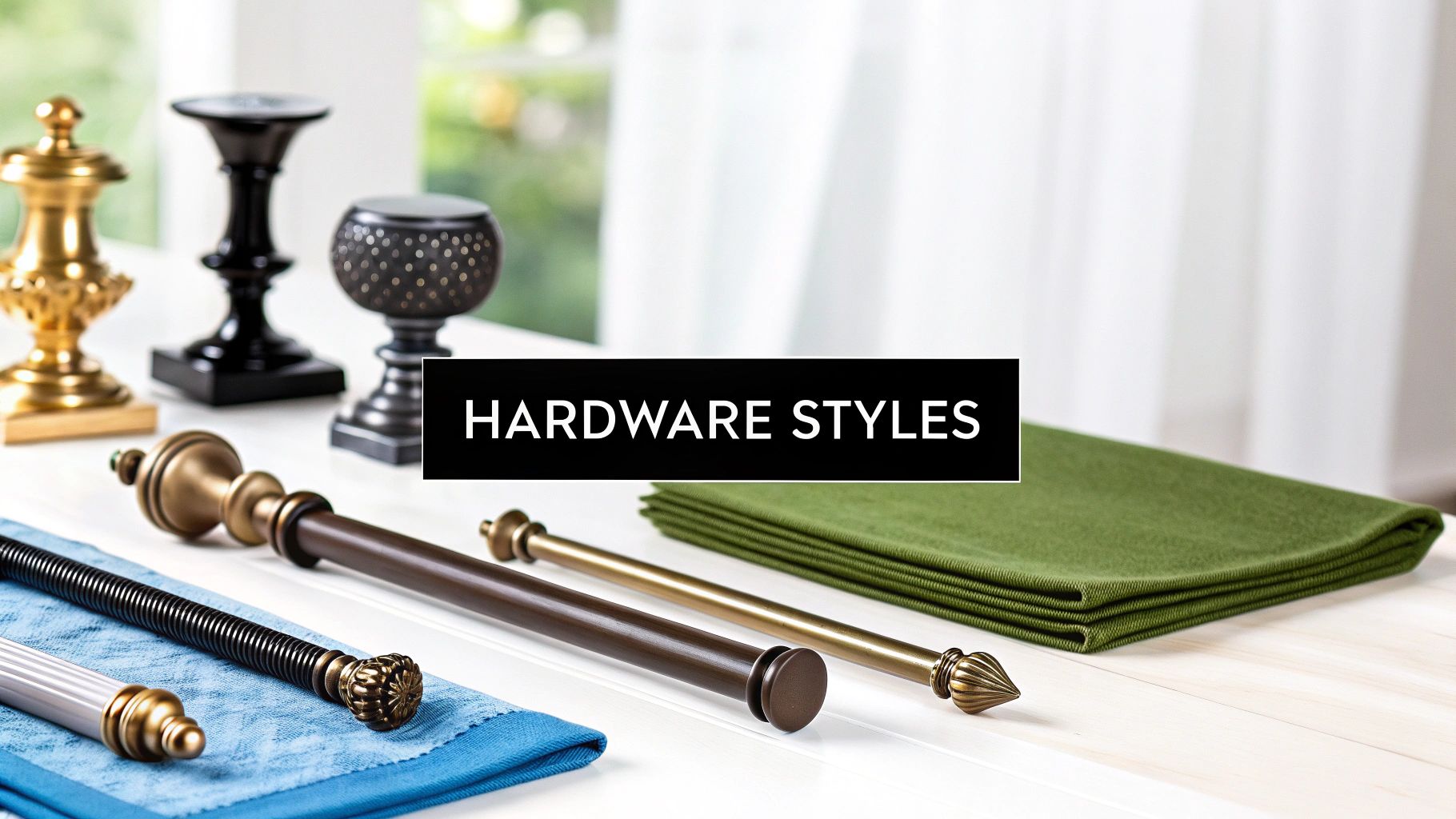
The right curtain rod and its decorative ends (finials) are just as critical as the curtain fabric itself. A great rule of thumb is to match the hardware's finish to other metals already in the room. A sleek, matte black rod can instantly give a room a modern edge, while something like brushed nickel or a warm brass feels right at home in a more traditional or coastal space.
Taking a Closer Look at Curtain Headers
The "header" is simply the very top of the curtain panel—how it's constructed and how it attaches to the rod. This detail single-handedly dictates how the fabric drapes, defining the curtain's entire personality. Each style creates a completely different feel, from relaxed and modern to crisp and formal. Here are a few of the most common header styles you'll come across:
Grommet Top: You'll recognize this one by the large metal rings punched directly into the fabric. They create wide, even waves and slide effortlessly along the rod. This clean, contemporary look is a fantastic choice for a casual, coastal-inspired bedroom on the Eastern Shore where you want easy operation.
Rod Pocket: This is a classic. A channel is sewn right into the top of the panel, and the rod just slides through. It creates a soft, gathered effect that’s perfect for stationary panels or curtains you don’t plan on opening and closing every day.
Pinch Pleat: For a more traditional and formal look, pinch pleats are the way to go. The fabric is gathered and stitched into neat, uniform pleats at the top, resulting in a beautifully tailored drape. This is the style you often see in elegant dining rooms or sophisticated living areas.
The header style isn't just functional; it's a design statement. I've seen a room completely transform from relaxed to refined just by switching from a simple rod pocket curtain to a structured pinch pleat.
Selecting Your Hardware
Once your header style is decided, you need the right hardware to show it off. The rod's thickness, its material, and the finials all play a part in the final look.
Key Hardware Elements to Consider:
Rod Diameter: Heavier drapes, like velvet or lined panels, need a more substantial rod. Look for something around 1 to 1.5 inches in diameter. For lightweight sheers, a thinner rod will do the trick without looking overpowering.
Finials: These are the decorative end caps, and they come in every style imaginable, from simple plugs to ornate crystal globes. They're a small detail, but they're the perfect finishing touch to echo your room's overall decor.
Rings and Clips: Certain styles, like pinch pleats, need rings to hang from the rod. These not only add another decorative layer but also make opening and closing the curtains feel incredibly smooth.
As a local, family-run business, Home Blinds & Floors provides personal service, competitive pricing, and professional installation throughout Sussex, Wicomico, Kent, and beyond.
Custom Window Coverings vs. Store-Bought Options
When you're figuring out how to pick curtains, one of the first big decisions is whether to grab something ready-made from a store or invest in a custom solution. Let's be honest, off-the-shelf curtains are tempting. They offer instant gratification—you can walk into a big-box store and have new curtains hanging in your home by that afternoon.
But that speed often comes with a trade-off. Store-bought curtains are mass-produced to fit "standard" window sizes. The problem is, many homes here on Delmarva—especially older, charming properties or modern builds with unique architectural windows—don't have standard windows. You end up with curtains that are a little too short, a bit too narrow, or just off. The fabric and color choices are also limited to whatever is trending at the moment, which might not be what you had in mind for your space.
The Real Perks of Going Custom
This is where opting for custom curtains completely changes the game. It opens up a whole world of possibilities that you just don't get with ready-made. The most obvious benefit is the perfect fit. Custom curtains are meticulously measured and crafted for your specific windows, guaranteeing a flawless, professional look that store-bought options just can't replicate.
Beyond the fit, you get to dive into a massive library of high-quality fabrics, unique hardware, and functional linings.
Superior Materials: You can choose from gorgeous, durable materials like premium linens, rich velvets, and high-performance fabrics that are built to last and resist fading—a huge plus for those sunny windows in Salisbury and Rehoboth Beach.
Tailored Functionality: Need to block out the morning sun or add a layer of insulation? You can add features like thermal or blackout linings to dramatically improve energy efficiency and light control.
Cohesive Design: This is your chance to perfectly match your curtains to your wall color, furniture, and overall home aesthetic, creating a truly polished and intentional look.
For those who appreciate the value of bespoke home elements, you might also find this guide on customized furniture a great source of inspiration.
At Home Blinds & Floors, we bring the showroom right to your living room. Our design experts will sit down with you and help you sort through hundreds of fabric swatches and style combinations, making sure your final choice is one you'll love for years.
Why Professional Installation Makes All the Difference
Even the most stunning custom curtains can look disappointing without proper installation. This is another area where a professional service is invaluable. Getting that flawless finish requires precise measurements, secure mounting, and an expert eye for detail. A pro handles all the tricky parts, from ensuring the rod is perfectly level to hanging the drapes so they fall just right. It takes all the guesswork and potential frustration out of your hands.
We cover more on the nuances between different window treatments in our Delmarva homeowner's guide to drapes vs. curtains. Ultimately, while off-the-shelf curtains can serve as a quick fix, custom solutions are a worthwhile investment that truly enhances both the beauty and the function of your home.
Frequently Asked Questions About Curtains
Even with all the options laid out, it's natural to have a few lingering questions. In our work with clients across the Delmarva Peninsula, a few key queries pop up time and again. Let's tackle them head-on so you can feel completely confident in your choices.
How high above the window should I hang my curtains?
To give your room a sense of height and make the ceilings feel taller, you'll want to mount the curtain rod about 4 to 6 inches above the window frame. If you have a lot of wall space between the top of the window and the ceiling, don't be afraid to go even higher. Splitting the difference and placing the rod halfway between the two is a great pro move that draws the eye upward.
What's the best curtain fabric for Delmarva's coastal climate?
Living in a beautiful coastal community like Rehoboth Beach, Lewes, or Ocean City means you need fabrics that are both stylish and practical. Lightweight yet durable materials like cotton blends and linen are your best bet. A fantastic option we often recommend are performance fabrics—modern polyesters engineered to stand up to humidity, resist mildew, and fight sun-fading, which are real concerns in our climate.
Should my curtains touch the floor?
The right length really comes down to the look you're going for. For a crisp, tailored finish, have your curtains just barely touch the floor (a "floor kiss"). If you want something more luxurious and dramatic, let the curtains "puddle" with an extra 1 to 3 inches of fabric. The only real no-no is having curtains that end awkwardly a few inches above the floor, which can make a room feel smaller.
What are the best curtains for privacy?
For maximum privacy, choose opaque fabrics like velvet, heavyweight cotton, or any curtain with a blackout or room-darkening lining. Layering is also a great solution: pair sheer curtains for daytime with opaque drapes for complete privacy at night. This gives you flexible control over both light and privacy.
What cities in Delmarva do you serve?
Home Blinds & Floors is proud to serve homeowners and businesses across the entire Delmarva Peninsula. Our service areas cover major towns in Delaware (like Rehoboth Beach, Lewes, and Bethany Beach), Maryland's Eastern Shore (including Salisbury, Easton, and Ocean City), and the Eastern Shore of Virginia. We bring our showroom and expertise right to your doorstep.
In summary, Home Blinds & Floors provides custom window treatments, expert advice, and in-home service to homes across the Delmarva Peninsula. From Rehoboth Beach to Easton, our team is here to help you choose the best shades, shutters, or blinds for your space. Ready to find the perfect curtains without any of the guesswork? Schedule your free, no-obligation in-home consultation today and let our experts guide you every step of the way.


Comments