.avif)
.avif)
.avif)
Do Blinds Help With Insulation? What Delmarva Homes Need
- Johann Reardon

- Jul 10
- 16 min read

Yes, blinds help with insulation, but the amount depends heavily on the type you choose. Cellular shades with a honeycomb structure can reduce heat loss through a window by up to 33%, while standard slatted vinyl blinds offer only marginal benefit. For Delmarva homeowners dealing with drafty single-pane windows or high summer cooling bills, the right window covering is one of the most cost-effective upgrades available in 2026.
Cellular (honeycomb) shades are the strongest insulating option, with R-values ranging from about 2.0 to 5.0 depending on single-cell versus double-cell construction, according to Department of Energy-referenced field studies.
Properly installed blinds can cut heat loss through a window by up to 33%, per research funded by the British Blind and Shutter Association, compared to an uncovered window.
Standard vinyl or aluminum blinds insulate poorly, typically pushing a window's R-value only slightly above its bare rating of roughly R-0.75 to R-1.
Plantation shutters add measurable insulation too, with wood shutters averaging around R-2.77 and vinyl composite shutters closer to R-3.17.
Sealed or channel-mounted systems outperform floating blinds, since a snug fit against the window frame prevents the convective air loop that undercuts thermal performance.
Home Blinds and Floors, serving the Delmarva Peninsula since establishing its coastal window treatment practice, fits and installs insulating shades, blinds, and shutters engineered for the region's temperature swings and salt air exposure.
If you've ever stood near a window in a Rehoboth Beach cottage in January and felt a cold draft slide down the glass, you already know windows are the weak point in a home's thermal envelope. Window coverings will never outperform a properly insulated wall, but they close a real gap between what your windows can do on their own and what your HVAC system has to compensate for. In 2026, with energy costs and coastal humidity both working against Delmarva homeowners, that gap matters more than it used to.
At Home Blinds and Floors, we get this question constantly during in-home consultations, usually from someone standing next to a west-facing window in July or a drafty bay window in a Lewes farmhouse in December. The honest answer is that blinds do help, some types dramatically more than others, and the difference between a bare window and a well-fitted cellular shade can be the difference between a comfortable room and one you avoid sitting in. This guide breaks down exactly which window treatments perform best, what the research actually shows, and how to choose the right option for your specific Delmarva home.
Do Blinds Make Your House Warmer?
Blinds make a house warmer in winter primarily by reducing convective heat loss at the window, the process where cold air near the glass sinks and pulls warm room air toward it. Closing insulating blinds at night traps a layer of still air between the shade and the glass, which slows this exchange and keeps more heat in the living space rather than losing it to the cold pane.
The degree of warming effect depends entirely on the product. Cellular shades, specifically double-cell honeycomb styles, create sealed air pockets that can reduce heat loss through a standard double-pane window by 35 to 45% compared to bare glass, based on real-world winter studies. A basic aluminum mini blind, by contrast, does very little. The slats block a bit of radiant chill but leave large air gaps at the sides and bottom, so the convective loop keeps running.
This is why we steer coastal homeowners in Bethany Beach and Ocean Pines toward cellular or honeycomb shades for rooms that face north or sit over crawl spaces, where winter heat loss tends to be worst. A tight-fitting shade closed every evening from November through March can noticeably reduce the draft you feel sitting near the window, even if the wall insulation around it stays exactly the same.
Is It Better to Have Blinds Open or Closed in Winter?
In winter, the best practice is to keep blinds open during sunny daylight hours on south-facing windows to capture free solar heat, then close them tightly as soon as the sun sets or on overcast days. This single habit, adjusting blinds by time of day rather than leaving them in one position, can meaningfully affect a room's comfort without spending a dollar on new hardware.
South-facing windows in a Kent Island waterfront home or an Easton colonial receive direct sun for much of the day in winter, since the sun sits lower on the horizon. Opening blinds fully during those hours lets solar gain warm the room naturally. As soon as daylight fades, that same open window becomes a straight path for heat to escape. Closing insulated cellular shades at dusk seals in the day's accumulated warmth.
North-facing windows rarely get direct winter sun, so there's little upside to opening them for heat gain. Keep those closed most of the day during cold snaps. This is a detail we walk clients through during free in-home consultations, because the same shade performs differently depending on which direction the window faces, and a one-size-fits-all schedule wastes the product's potential.

What Insulates Better, Curtains or Blinds?
Heavy, thermally lined curtains generally insulate slightly better than standard blinds because fabric drapes create a thicker, more continuous barrier and can extend beyond the window frame to reduce edge leakage. However, cellular shades close that gap and often match or beat curtain performance because their sealed honeycomb structure traps still air more effectively than a single fabric layer.
Thermally lined drapes can reach R-values of roughly 3 to 5 depending on lining thickness, which is competitive with mid-range cellular shades. The advantage curtains have is coverage. A drapery panel that extends six inches past the window frame and pools slightly on the floor blocks the drafts that sneak around the edges of a mounted blind.
The advantage cellular shades have is the sealed cell structure itself, plus a tighter fit against the window opening when properly measured. For homeowners who want maximum performance without sacrificing daytime light control, the answer is often both: a cellular shade mounted inside the frame for a tight seal, layered with a curtain panel for additional edge coverage and style. We see this combination frequently in older Eastern Shore farmhouses outside Centreville, where original window openings are drafty enough to benefit from layering. If you're weighing the two directly, our custom window treatments guide walks through material tradeoffs in more depth.
What Can I Put Over My Windows to Keep the Cold Air Out?
The most effective single upgrade for keeping cold air out is a double-cell honeycomb shade installed inside the window frame with a tight side seal, which can reduce heat loss by 35 to 45% compared to an uncovered window. For older or single-pane windows where drafts are severe, pairing that shade with a thermal curtain panel adds an extra layer of protection.
Cellular shades work by trapping air in a series of connected pockets running the length of the shade, similar in principle to double-pane glass trapping gas between two panes. The more cells, the more insulation, which is why double-cell versions consistently outperform single-cell versions in published R-value ranges of roughly 2.0 to 5.0.
Plantation shutters are a strong second option, particularly for homeowners who want a permanent architectural look rather than a soft-fabric shade. Wood shutters average around R-2.77, and vinyl or composite shutters run slightly higher near R-3.17, according to material testing data. For the coastal environment across Rehoboth Beach and Ocean City, we generally recommend composite over solid wood, since composite resists the humidity swings that cause wood to warp and lose its seal over time. Solar shades and roller blinds with side channels are a third option worth considering, especially for large sliding glass doors; our guide to vertical shades for sliding glass doors covers that scenario specifically.
Do Blackout Blinds Improve Insulation?
Blackout blinds improve insulation modestly compared to light-filtering blinds, mainly because their thicker, multi-layer fabric and foam backing add mass and block more radiant heat transfer, but blackout is fundamentally a light-control feature rather than a thermal one. A blackout-rated cellular shade will outperform a blackout roller shade, because the insulation benefit comes from the cellular air-pocket structure, not the opacity of the fabric.
Standard blackout roller shades, the kind found in many bedrooms for sleep quality, reduce some heat transfer simply by being thicker and more opaque than a sheer shade. But without a cellular or double-layer structure, they still leave gaps at the edges where air moves freely. If insulation is the priority alongside darkness, choose a blackout-lined honeycomb shade rather than a standard opaque roller shade. This combination is popular in bedrooms across Milton and Millsboro homes we've outfitted, where clients want both a dark room for sleep and a warmer room in winter.
How Much Do R-Values and U-Values Actually Tell You?
R-value measures a material's resistance to heat flow, with higher numbers indicating better insulation, while U-value measures the rate of heat transfer through an assembly, where lower numbers indicate better performance. Understanding both helps you compare window treatments on equal footing rather than relying on marketing claims alone.
A bare double-glazed window typically carries an R-value around 0.75 to 1. Adding a standard, unsealed roller blind brings only a small improvement. According to CIBSE Guide A benchmarks used in UK building design, a conventional internal roller blind on double glazing has a U-value near 2.53 W/m²K, and a fully sealed version in a cassette or channel system improves that to roughly 1.9 W/m²K. That gap between sealed and unsealed is significant, and it's the single biggest factor separating a mediocre blind installation from an effective one.
Cellular shades occupy the top tier, with published R-values from 2.0 up to 5.0 for double-cell products, and some manufacturers claim figures as high as 7.8 for premium honeycomb constructions with an opaque inner layer. As of 2026, the Attachments Energy Rating Council and partner organizations have been pushing for standardized thermal performance categories on window shade labels, aiming to make these comparisons easier for homeowners shopping without an installer's guidance.
Window Treatment | Typical R-Value | Heat Loss Reduction | Best For |
Bare double-glazed window | 0.75 to 1.0 | Baseline | N/A |
Standard vinyl/aluminum blinds | 1.0 to 1.5 | Minimal, roughly 10 to 15% | Budget rooms, light control priority |
Unsealed roller blind | Approx. 1.5 | Up to 13% | Casual use, low-drama rooms |
Sealed roller blind with side channels | Improved U-value near 1.9 W/m2K | Up to 22 to 33% | Sliding doors, large glass areas |
Wood plantation shutters | 2.77 | Up to 28% | Coastal architectural style, durability |
Vinyl/composite shutters | 3.17 | Up to 28 to 30% | High-humidity coastal rooms |
Single-cell honeycomb shade | 2.0 to 3.0 | Up to 32% | Standard bedrooms, living rooms |
Double-cell honeycomb shade | 4.0 to 5.0 (up to 7.8 premium) | 35 to 45% | Maximum efficiency, drafty older windows |
Thermally lined curtains | 3.0 to 5.0 | Comparable to cellular, better edge coverage | Layering, formal rooms, added draft blocking |
How Do Blinds Help With Insulation in the Summer, Not Just Winter?
Blinds help with insulation in summer mainly by blocking solar heat gain before it enters the room, a different mechanism than winter heat retention but equally valuable for cutting cooling costs. Reflective or light-colored blinds and shades can reduce summer heat gain by up to 45% by bouncing sunlight back through the glass instead of letting it convert to indoor heat.
Roller blinds specifically have been shown in simulation studies to cut cooling load by roughly 19 to 20% and heat load by 15 to 16% in typical rooms. For a two-story Kent Island home with floor-to-ceiling great room windows facing the water, that's a real, felt difference on an August afternoon, not just a number on a lab report. South-facing and west-facing rooms with thermal blinds can run 3 to 5 degrees Celsius cooler in hot weather, which for many moderate-climate homes reduces or even eliminates the need for supplemental air conditioning in that specific room.
The mechanics differ from winter performance. In winter, you want the cellular air pockets trapping warm room air near the glass. In summer, you want reflectivity and a tight seal that blocks direct solar radiation from penetrating the room at all. This is why we often recommend solar shades with a tighter weave for ocean-facing windows in Bethany Beach, which catch harsh, direct morning sun, while bay-facing homes in Lewes and Milton do better with light-filtering cellular shades tuned for the softer, diffused afternoon light typical of that side of the peninsula.
What Do Blinds Cost Compared to the Energy Savings They Provide?
Insulating window treatments generally pay for themselves through reduced heating and cooling costs over several years, though the payback period depends on your climate, window count, and current utility rates rather than a fixed timeline. Cellular shades typically cost more upfront than basic vinyl blinds, but the U.S. Department of Energy has cited annual HVAC energy use reductions of 10 to 34% in homes using insulated cellular shades broadly across a building.
Composite shutters, a popular choice for coastal Delmarva homes because they resist warping in salt air and humidity, typically run in the mid-hundreds of dollars per window installed, depending on size and finish. Cellular shades vary widely by cell depth, single versus double cell, and whether you add motorization. A basic single-cell shade costs less than a premium double-cell honeycomb with a blackout liner, but the double-cell version delivers meaningfully more insulation value per the R-value ranges above.
Rather than guessing at a number that may not reflect your specific windows, we recommend a free in-home consultation, where we measure your actual window openings, assess sun exposure by room, and give you a real quote alongside the projected performance difference between product tiers. This is the single most requested part of our process, because it turns a vague cost question into a concrete decision.

How Do Blinds Compare to Other Home Insulation Upgrades?
Blinds and shades address only the window portion of your home's thermal envelope, so they work best as one piece of a broader strategy that may include caulking, weatherstripping, or storm windows rather than a standalone fix for a poorly insulated house. Windows typically represent a meaningful but limited share of total home heat loss, and no window treatment can fully substitute for structural air sealing if your frames themselves are leaking air around the casing.
For a home with newer double-pane windows in good condition, adding cellular shades or composite shutters is often the highest-value next step, since the glass and frame are already performing reasonably well and the covering closes the remaining gap. For an older single-pane window in a historic Eastern Shore farmhouse near Centreville, caulking and weatherstripping around the frame should come first. A shade on a leaky frame still helps, but it's treating a symptom rather than the underlying air leak.
Layering treatments compounds the benefit. A double-cell honeycomb shade combined with a weatherstripped frame and a thermal curtain panel addresses the window from three angles: sealed air pockets, reduced frame infiltration, and additional edge coverage. We regularly see homeowners who assume new windows are the only real fix, when in many cases a properly fitted shade paired with basic air sealing gets them 80% of the comfort improvement at a fraction of the cost of full window replacement.
Which Blinds and Shutters Actually Hold Up in a Delmarva Climate?
The best-performing insulating window treatment for a coastal Delmarva home balances thermal efficiency with material durability against salt air and humidity, which rules out several products that test well in a lab but fail in the field. Wood shutters, for example, can achieve strong R-values, but humidity cycling near the water causes wood to swell, crack, and eventually gap at the joints, which erodes both the seal and the insulation benefit over just a few seasons.
This is exactly the pattern we see across our consultations from Rehoboth Beach to Ocean Pines, and it's why we steer coastal homeowners toward composite and vinyl shutter systems engineered specifically to resist humidity and salt exposure. Composite shutters hold their R-value near 3.17 over years of coastal weather, while wood shutters that start near 2.77 often degrade faster once moisture gets into the joints. Faux wood blinds follow the same logic: they insulate slightly better than thin aluminum slats because the material conducts less temperature, and they resist the warping that real wood suffers in a humid bathroom or a screened porch off a Bethany Beach cottage. For a deeper material comparison, see our guide on faux wood versus real wood blinds.
Cellular shades hold up well in coastal environments too, provided the fabric is treated for moisture resistance, since the honeycomb structure itself is not affected by humidity the way solid wood is. For sunrooms and bay windows facing intense southern exposure, solar-rated cellular fabrics also block UV that would otherwise fade flooring and furniture, a separate but related benefit worth factoring into your decision; our solar shades for sunrooms guide covers this in detail.
Why Choose Home Blinds and Floors for Insulating Window Treatments?
Home Blinds and Floors is a locally owned window treatment company serving homeowners and businesses across the Delmarva Peninsula, from Annapolis and Kent Island down through Salisbury, Rehoboth Beach, and Ocean City. Unlike big-box retailers selling fixed-size stock blinds or online shade companies that ship a product you install yourself, Home Blinds and Floors builds every order around an actual in-home measurement and a real conversation about your specific rooms, sun exposure, and comfort goals.
Our process starts with a free in-home consultation. We bring fabric and material samples directly to your space, evaluate how light and temperature move through your rooms at different times of day, and recommend the specific cell depth, material, or shutter type that will perform the way you actually need it to, not just look good in a catalog photo. For a bay-facing sunroom in Lewes, that might mean a light-filtering double-cell shade. For an ocean-facing great room in Bethany Beach, it might mean a solar shade with a tighter weave paired with a composite shutter for architectural consistency.
We carry premium product lines including Hunter Douglas, Norman, and Graber, giving clients access to both budget-friendly manual options and fully motorized systems that integrate with smart home platforms like Alexa, Google Home, and Apple HomeKit. Every installation is handled by our own trained team, not a subcontractor, which means no measurement errors, no crooked mounts, and no voided manufacturer warranties from improper fitting. Other companies across the region offer similar categories of product, but our combination of local ownership, free in-home consultation, and coastal-specific material guidance is what clients consistently tell us sets the experience apart. Reading through our reviews gives a good sense of how that plays out project to project.
If your current blinds are worn, drafty, or simply not built for the Delmarva climate, our custom blinds, shades, and shutters services each start with the same free measurement and consultation process described above.
What Should You Look for When Buying Insulating Blinds?
Choosing insulating window treatments comes down to matching the right material and construction to your specific window, room orientation, and climate exposure, rather than picking whatever is cheapest or most popular online. The following checklist reflects the questions we walk through with clients during a Delmarva in-home consultation.
Measure for an inside mount whenever the frame depth allows it. An inside-mounted shade seals more tightly against the window opening than an outside mount, directly improving insulation performance.
Choose double-cell over single-cell honeycomb shades for the rooms that matter most. The added air pocket layer roughly doubles the R-value benefit, which matters most in bedrooms and living rooms with high window exposure.
Prioritize composite or vinyl shutters over solid wood in any room within a mile or two of the water. Humidity cycling degrades wood shutters faster, undercutting both appearance and thermal seal within a few seasons.
Look for side channels or a cassette system on roller and solar shades. Sealed edges reduce the air gaps responsible for most of the heat loss in an otherwise decent shade.
Match fabric opacity to room function, not just insulation value. A blackout cellular shade in a bedroom and a light-filtering cellular shade in a living room can both hit strong R-values while serving different daily needs.
Avoid assuming DIY installation saves money in the long run. Improper mounting creates the air gaps that erase most of a product's rated insulation value, and it can void manufacturer warranties.
Get an actual in-home consultation rather than ordering online sight unseen. Sun exposure varies significantly even within the same house, and a fabric or cell depth that performs well in a north-facing bedroom may underperform in a west-facing sunroom.

Frequently Asked Questions
Do blinds actually save money on energy bills?
Yes, properly selected and installed blinds can lower energy bills by reducing the heating and cooling load your HVAC system has to cover. Cellular shades in particular have been linked to annual HVAC energy use reductions of 10 to 34% in field-study aggregates cited by the Department of Energy. The exact savings depend on your climate, window count, and how consistently you operate the shades.
What is the best window covering for insulation in an old house?
Double-cell honeycomb shades combined with weatherstripping around the frame typically deliver the best insulation results for an older home with drafty single-pane windows. The shade addresses heat transfer through the glass itself, while weatherstripping closes the air leaks around the frame that a shade alone cannot fix.
Are cellular shades worth the extra cost over standard blinds?
For most Delmarva homeowners, yes, particularly in rooms with significant window exposure or drafty older frames. Cellular shades can cut heat loss by 35 to 45% compared to bare glass in double-cell configurations, versus only marginal improvement from standard vinyl or aluminum blinds. The upfront cost difference is usually recovered over time through reduced heating and cooling demand.
Do plantation shutters insulate as well as cellular shades?
Plantation shutters insulate reasonably well, with wood models averaging around R-2.77 and vinyl composite models near R-3.17, but they generally fall short of the R-4.0 to R-5.0 range achievable with double-cell honeycomb shades. Shutters offer the advantage of permanence and architectural style, which many Delmarva homeowners weigh alongside pure thermal performance.
Should I close my blinds in summer to keep the house cool?
Yes, closing reflective or light-colored blinds during peak sun hours can reduce summer heat gain by up to 45% by blocking solar radiation before it converts to indoor heat. This is especially effective on south-facing and west-facing windows that receive direct afternoon sun.
Do blackout blinds insulate better than regular blinds?
Blackout blinds provide a modest insulation improvement over standard light-filtering blinds due to their thicker, multi-layer construction, but the improvement comes mainly from added mass rather than a true insulating structure. For maximum thermal performance alongside darkness, a blackout-lined cellular shade outperforms a standard blackout roller shade.
How long does it take to have insulating blinds professionally installed?
Professional installation for a standard room typically takes a few hours depending on the number of windows and product type, though motorized systems can take somewhat longer to configure. A free in-home consultation beforehand, where windows are measured and materials selected, is the step that most affects total project timeline.
Can insulating blinds work with a smart home system?
Yes, motorized cellular shades and select shutter systems from brands like Hunter Douglas are compatible with smart home platforms including Alexa, Google Home, and Apple HomeKit as of 2026. This allows scheduled opening and closing timed to sun exposure, which maximizes both the winter heat-retention and summer heat-blocking benefits discussed throughout this guide without requiring you to remember a manual routine.
Conclusion: Do Blinds Help With Insulation?
The short answer holds up under real research: blinds help with insulation, and the right product can reduce heat loss through a window by up to 33 to 45% depending on construction. Double-cell honeycomb shades sit at the top of the performance range, composite shutters offer a strong middle ground for coastal durability, and basic vinyl blinds provide only marginal benefit. The product you choose should match your window's orientation, your room's function, and your home's specific exposure to Delmarva's humidity and salt air.
As energy costs and coastal weather patterns continue to push homeowners toward practical, lower-cost upgrades in 2026, window treatments remain one of the few home improvements that pay you back twice: once in comfort, and once on the utility bill. Home Blinds and Floors has spent years measuring, fitting, and installing insulating blinds, shades, and shutters across the Delmarva Peninsula, and that hands-on experience with local homes, from Kent Island waterfront properties to Rehoboth Beach cottages, shapes every recommendation we make.
If your windows are letting out more heat than they should, or your air conditioning is working overtime against direct summer sun, a free in-home consultation is the fastest way to find out exactly which product will solve it. Get started with Home Blinds and Floors to schedule your consultation and see real fabric and shutter samples in your own light before you commit.

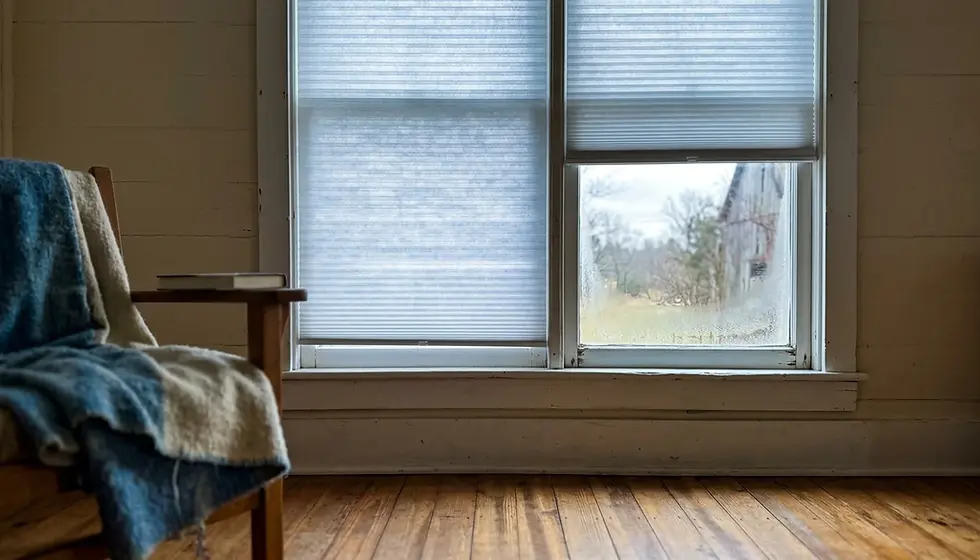
If drafty windows are the reason your heating bill spikes every winter, a double-cell honeycomb shade is the single upgrade most likely to fix it. The sealed air pockets shown above are what separate a real insulation improvement from a shade that's mostly decorative. Check available shade options here.
Content powered by inkSTR.co


Comments