.avif)
.avif)
.avif)
Best Unbreakable Blinds for 2026: A Delmarva Buying Guide


The best unbreakable blinds 2026 has to offer for Delmarva homes are not a single product, they are a category of durable materials matched correctly to your specific problem: pets, kids, salt air, or storm exposure. For most coastal households on Delaware's Eastern Shore, that means composite or PVC faux wood blinds, cordless cellular shades, or, for full storm protection, code-rated exterior shutters, not the flimsy "unbreakable" claims stamped on big-box packaging. Home Blinds and Floors has spent years fitting window treatments in homes from Rehoboth Beach to Kent Island, and the pattern is consistent: the treatments that survive five Delmarva summers are chosen for their material science, not their marketing copy.
Key Takeaways
No blind is truly indestructible; "unbreakable" in 2026 means engineered to resist a specific stress, whether that is a dog's paws, a toddler's grip, salt-laden humidity, or hurricane-force wind debris.
Composite and PVC faux wood blinds resist warping in humidity far better than real wood, making them the practical choice for bathrooms, kitchens, and coastal-facing rooms across Delmarva.
Cordless and motorized lift systems are now the standard safety recommendation for homes with children under 10, per Consumer Product Safety Commission (CPSC) guidance and the federal cord rule that took effect December 28, 2022.
Storm-rated exterior shutters are a different product category from interior blinds entirely, tested against standards like Miami-Dade's TAS 201-203 or ASTM E1886/E1996, not against everyday household wear.
The global blinds and shades market was estimated at $7.51 billion in 2026, and cellular shades are one of the fastest-growing segments at an estimated 6% CAGR through 2030, according to Fortune Business Insights and Grand View Research data.
Home Blinds and Floors offers free in-home consultations across the Delmarva Peninsula to test actual light, humidity, and traffic conditions in your home before recommending a material.
If you searched for durable window coverings in 2026, you have probably already tried the wrong product once. Maybe it was a set of wood blinds that bowed after one humid Bethany Beach summer. Maybe it was a cheap vinyl shade a dog chewed through in a week. This guide separates the marketing language from the material reality, and covers coastal durability, pet and child resistance, and hurricane-grade protection as three distinct problems with three distinct solutions.
You will also find a comparison table breaking down material trade-offs, a section on the safety standards that actually matter (CPSC cord rules, ANSI/WCMA A100.1, and impact-testing codes like TAS 201-203), and a practical buying checklist. Home Blinds and Floors serves homeowners and businesses in Annapolis, Easton, Centreville, Salisbury, Ocean City, Rehoboth Beach, and the surrounding Delmarva communities, and this guide reflects what actually holds up in those specific conditions, not generic national advice.
What Are the Best Blinds That Won't Break?
The best blinds that won't break are composite or PVC faux wood blinds for interior rooms, and hurricane-rated accordion or roll-down shutters for storm exposure. Composite blinds resist cracking, warping, and fading better than real wood because their polymer core does not absorb moisture the way natural wood fibers do. For high-traffic hallways, kids' rooms, or a Kent Island sunroom that catches direct afternoon light, faux wood outperforms wood on every practical measure except the exact grain texture some homeowners want in a formal dining room.
For pet households, the material matters less than the slat width and lift mechanism. Wider 2-inch or 2.5-inch faux wood slats resist bending under a cat's paw better than thin aluminum mini-blinds, which dent permanently on first contact. Aluminum can work in low-traffic commercial settings, but for a home with dogs or cats jumping onto windowsills, it is the wrong first choice. Cordless cellular shades, meanwhile, remove the cord entirely, eliminating the most common breakage point vacation rental owners and pet owners report: a pull cord or lift string that snaps within a season of daily use.
What Type of Blinds Are Popular in 2026?
The most popular blind types in 2026 are motorized cellular shades, layered roller-and-drapery combinations, and exterior solar shades, according to industry trend data compiled by Grand View Research and Fortune Business Insights. Smart and motorized shades lead the trend list because they solve two problems simultaneously: convenience and cord-related child safety. As a result, more Delmarva homeowners are asking about motorization not as a luxury upgrade, but as a durability decision.
Specifically, cellular shades are one of the faster-growing product categories, with an estimated 6% compound annual growth rate through 2030. That growth tracks with what Home Blinds and Floors sees on Delmarva installs: homeowners in Lewes and Milton increasingly request cellular shades for bay-facing rooms because the honeycomb structure insulates against both summer heat gain and winter drafts. Exterior solar shades are also gaining ground; they can block up to 99% of ultraviolet rays and reduce overall energy consumption by roughly 10% to 25%, based on recent window-treatment trend research. For a full breakdown of style options, our custom blinds resource page covers material and slat choices in more depth.

Which Blinds Are Most Durable for Coastal Homes?
The most durable blinds for coastal homes are PVC or composite faux wood blinds and vinyl-based roller shades, because both resist moisture absorption that causes warping, mildew, and paint failure in salt-air environments. A home in Bethany Beach or Ocean City faces near-constant humidity cycling: damp mornings, salty afternoon breeze, and rapid temperature swings between air-conditioned interiors and hot exteriors. Real wood shutters and wood blinds expand and contract with that cycling, which is why stress cracks and bowed louvers show up within one or two seasons on oceanfront properties.
Faux wood and composite materials do not absorb moisture the same way, so they hold their shape through repeated humidity swings. Aluminum blinds also resist moisture but dent easily and can develop pitting near salt spray over time, making them a weaker long-term choice directly on the Atlantic side compared to bay-facing homes in Grasonville or Cambridge, MD. Home Blinds and Floors specifically guides coastal clients toward composite shutter systems and PVC blind lines for this reason. If your current shutters show visible cracking at the rail joints, that is usually the first sign the material has reached its limit in a coastal climate, not a one-off manufacturing defect.
Interior Durable Blinds vs. Pet-Resistant, Child-Safe, and Storm-Rated Options: What's the Difference?
Interior durable blinds, pet-resistant blinds, child-safe blinds, and storm-rated shutters solve four different problems, and treating them as one category is where most buying guides go wrong. Interior durability refers to resistance against everyday wear: fading, warping, and mechanical fatigue. Pet resistance refers to a slat or fabric's ability to survive scratching, chewing, or a paw strike without denting or tearing. Child safety refers specifically to cord and strangulation hazards regulated under federal rules. Storm rating refers to a completely separate exterior product tested against wind-driven debris, an entirely different engineering category from anything installed inside your home.
For example, a cordless cellular shade addresses child safety but does nothing for hurricane wind resistance. A TAS 201-rated accordion shutter protects your glass during a storm but is not designed as a daily-use light-control product. Confusing these categories leads homeowners to overpay for the wrong feature set. The table below breaks out each category by material, primary safety mechanism, relevant testing standard, and typical use case, so you can match the product to the actual problem you are solving rather than a generic "unbreakable" label.
Category | Typical Material | Primary Safety Mechanism | Relevant Standard | Best Use Case |
Interior durable blinds | Composite/PVC faux wood | Moisture and warp resistance | Manufacturer warranty terms | Bathrooms, kitchens, coastal-facing rooms |
Pet-resistant blinds | Wide-slat faux wood, roller fabric | Dent and scratch resistance | None formalized; varies by manufacturer | Homes with dogs, cats, or window-perching pets |
Child-safe blinds | Cordless cellular, motorized roller | Cordless or short-cord lift design | ANSI/WCMA A100.1-2018, CPSC cord rule | Nurseries, playrooms, homes with children under 10 |
Storm/security shutters | Aluminum, polycarbonate, composite panel | Impact and wind-load resistance | TAS 201-203, ASTM E1886/E1996 | Hurricane-zone exterior openings, sliding doors |
What Are the Best Blinds for 2026 If You Have Kids or Pets?
The best blinds for 2026 in homes with young children or pets are cordless cellular shades and motorized roller shades, because both remove the operating cord that creates the most common hazard and the most common breakage point. The federal window-covering cord rule, effective December 28, 2022, required stock window coverings to have operating cords that are absent, inaccessible, or 8 inches or shorter, a threshold set under the ANSI/WCMA A100.1-2018 standard. Custom window coverings, which is what Home Blinds and Floors installs, followed with a comparable safety rule addressing children age 8 and younger.
Practically, this means if your current corded blinds are in a nursery, playroom, or any room a young child regularly uses, the CPSC recommends replacing them with cordless or motorized alternatives rather than retrofitting. When retrofitting is not immediately possible, the CPSC also recommends shortening dangling cords, installing cord stops correctly, anchoring continuous-loop cords to the wall or floor, and moving cribs and furniture away from window cords entirely. For pet owners, cordless designs solve a second problem: a cat that repeatedly bats at a hanging cord will eventually snap the lift mechanism, which is one of the top service calls Home Blinds and Floors receives on vacation rental properties across Rehoboth Beach and Bethany Beach.
Our guide to single vs. double cell shades breaks down which cellular construction insulates best for Eastern Shore homes, an especially relevant comparison if you are choosing a cordless option for energy performance as well as safety.

How Do You Verify an "Unbreakable" Claim Before You Buy?
Verifying an unbreakable or durability claim means checking the product against a named, third-party testing standard rather than trusting marketing language alone. Manufacturers rarely publish independent breakage data for interior blinds, since no formal industry-wide durability standard exists for pet or everyday wear resistance the way one exists for child safety or storm protection. Specifically, look for three types of documentation before purchasing.
First, for child safety, confirm compliance with ANSI/WCMA A100.1-2018 and the CPSC's operating-cord length rule. Second, for storm and impact protection, ask whether the product has been tested to TAS 201, TAS 202, or TAS 203 for Miami-Dade-style large and small missile impact, or to ASTM E1886 and ASTM E1996 for wind-borne debris regions outside South Florida. Third, for material longevity, ask for the manufacturer's written warranty term and what specifically it covers: warping, fading, or mechanical failure. A warranty that covers only manufacturing defects, not environmental warping, tells you the company does not stand behind the product in humid or coastal conditions. Home Blinds and Floors reviews these documents with clients directly during in-home consultations rather than relying on catalog claims.
Storm and Security Shutters: What Actually Protects Against Wind and Impact?
Storm-rated exterior shutters are the only window covering category engineered to protect against wind-driven debris, and they are tested under a completely different set of standards than interior blinds. In Florida's Miami-Dade County, product approval requires testing to TAS 201 for large- and small-missile impact, TAS 202 for uniform structural load, and TAS 203 for cyclic pressure, according to the state's Hurricane Retrofit Guide. Outside Miami-Dade in other wind-borne debris regions, ASTM E1886 and ASTM E1996 apply instead.
Delmarva does not carry the same building-code intensity as South Florida, but coastal properties in Ocean City and Bethany Beach still face nor'easter wind loads and occasional tropical storm remnants strong enough to justify accordion or roll-down shutters on ground-floor sliding doors. This is a fundamentally different product from the interior faux wood or cellular shades discussed earlier in this guide, and it should be budgeted, sourced, and installed separately. If your priority is glare and privacy control rather than storm protection, interior shades remain the right starting point; storm shutters address a structural, not aesthetic, need.
Home Blinds and Floors: The Delmarva Source for Durable Window Treatments
Home Blinds and Floors is a locally owned window treatment company serving homeowners and businesses across Annapolis, Kent Island, Easton, Centreville, Salisbury, Middletown, Lewes, Millsboro, Milton, Bethany Beach, Rehoboth Beach, Ocean City, and Ocean Pines. The company carries composite, PVC, and premium cellular shade lines specifically selected for coastal durability, and every project begins with a free in-home consultation rather than a catalog order placed sight unseen.
That consultation matters more for durability decisions than it does for style. Our installers measure actual sun exposure, check for existing warping or paint failure on current treatments, and bring physical material samples so you can feel the difference between a composite slat and a real wood one before committing. For a rental property in Rehoboth Beach cycling through dozens of guests a season, that means recommending cordless lift systems and scratch-resistant fabric roller shades that survive repeated handling. For a waterfront home in Easton, it might mean composite plantation shutters engineered to resist the same bay humidity that cracked the previous set within two years.
Unlike big-box retailers selling fixed-size stock blinds, or online sellers that ship a product you install yourself, Home Blinds and Floors handles measurement, material selection, and professional installation as one coordinated process. Other regional installers exist across the Delmarva Peninsula, but few combine true custom fabrication with the kind of coastal-specific material guidance that comes from years of service calls on warped shutters and snapped cords in exactly these communities. If you are outfitting a full renovation, our custom blind cost guide for the Delmarva Peninsula walks through realistic pricing by material tier.
How Much Do Durable Blinds and Shutters Cost in 2026?
Durable window treatment pricing in 2026 varies primarily by material tier and lift mechanism, not by marketing labels like "unbreakable." Composite faux wood blinds typically run in the low-to-mid range per window, PVC roller shades tend to price slightly lower, and cellular shades with cordless or motorized lift sit at the upper end of the interior category because of the added mechanism. Storm-rated exterior shutters are priced entirely separately, often per opening rather than per window, since installation involves structural mounting hardware.
As a general guide, composite shutters typically run $250 to $550 installed per window, depending on size and finish, while basic cordless cellular shades often fall in a comparable or slightly lower range for standard window sizes. Motorization adds a per-window premium for the lift motor and, if desired, smart-home hub integration. These figures shift based on window count, unusual sizing, and brand tier, which is exactly why Home Blinds and Floors provides a specific written quote after measuring your actual windows rather than a generic online estimate. The global blinds and shades market's projected growth to $9.85 billion by 2034 reflects rising demand for these higher-durability categories, according to Fortune Business Insights data, which also tends to push material innovation and slightly higher price tiers for the most durable product lines.
How Should You Choose the Right Durable Blinds for Your Home?
Choosing the right durable window treatment starts with identifying your primary stress factor, not browsing a catalog by style. Follow this sequence before making a purchase decision.
Identify your primary risk: humidity and salt exposure, pet activity, young children in the home, or storm and wind exposure. Most homes have one dominant factor, occasionally two.
Match the material to that risk. Choose composite or PVC for humidity, wide-slat faux wood or roller fabric for pets, cordless cellular or motorized for child safety, and dedicated storm shutters for wind and debris protection.
Check for the relevant standard. Confirm ANSI/WCMA A100.1-2018 compliance for child safety products, or TAS/ASTM impact ratings for storm products.
Get an in-home measurement rather than ordering stock sizes online. Oversized or oddly shaped windows, common in older Eastern Shore farmhouses, rarely fit standard catalog dimensions correctly.
Ask about the warranty's actual coverage, specifically whether it includes environmental warping and fading, not just manufacturing defects.
Budget separately for interior treatments and any exterior storm protection; do not expect one product to serve both functions.
A common mistake homeowners make is assuming a higher price automatically means better durability. In practice, matching the material correctly to your specific climate and household risk matters more than the brand tier. A premium wood blind installed in a bayfront bathroom will underperform a mid-tier composite blind every time, regardless of price.

Data Snapshot: The Durable Window Treatment Market in 2026
The durable and smart window covering market has grown steadily heading into 2026, driven largely by demand for energy efficiency and automated safety features rather than novelty. According to Mordor Intelligence, the global blinds market reached an estimated $7.37 billion in 2026 and is projected to climb to $9.47 billion by 2031. Grand View Research separately projects the broader blinds and shades market growing from $14.82 billion in 2026 to $24.63 billion by 2030, a 9.1% compound annual growth rate.
Notably, the U.S. manufacturing side of the industry tells a different story: IBISWorld data shows the domestic blind and shade manufacturing sector is expected to generate $2.2 billion in 2026, with revenue actually declining an estimated 0.9% that year after a 4.6% annual revenue decline from 2021 through 2026. That gap between global growth and domestic manufacturing contraction reflects increased import competition and offshore production, a trend worth knowing if you are comparing an imported stock product against a domestically fabricated custom order. Roller blinds account for roughly 30% of global market volume, while cellular shades post one of the strongest growth rates in the category at an estimated 6% CAGR through 2030.
Practical Guidance: Mistakes to Avoid When Buying Durable Blinds
The most common mistake is buying based on the word "unbreakable" alone without asking which specific stress it resists. A blind marketed as unbreakable for pet scratches offers no protection against cord-related child safety hazards, and vice versa. Always ask the specific failure mode a product is engineered against.
A second mistake is retrofitting corded blinds in a nursery instead of replacing them outright. CPSC guidance is direct on this point: cord shortening and stop installation are stopgap measures, not permanent solutions, for rooms where young children are regularly present. A third mistake, common among coastal homeowners, is replacing warped wood shutters with more wood shutters, repeating the same failure cycle within another season or two instead of switching material families entirely.
Finally, many homeowners skip professional measurement to save money, then discover their oddly sized or angled windows, common in older Rehoboth Beach cottages and Eastern Shore farmhouses, do not fit stock sizing. A gap of even half an inch defeats both the light-control and the safety benefits of the product. Our custom window treatments resources cover measurement standards in more depth if you want to understand the process before scheduling a consultation.
Frequently Asked Questions
How does 3 Day Blinds compare to Hunter Douglas and Budget Blinds for whole-house shutters on durability, warranty, and installation quality?
Rather than comparing specific national retail brands, focus on the underlying material and installer relationship. Composite and PVC shutter lines generally outperform mixed-wood composite lines on humidity resistance regardless of brand, and installation quality depends more on whether the installer performs an in-home measurement than on which national brand name is on the box. Ask any provider for their specific written warranty terms covering environmental warping, not just manufacturing defects, before comparing price.
How do you clean blinds properly?
Dust faux wood, composite, and vinyl blinds weekly with a microfiber duster or the brush attachment on a vacuum, working from top to bottom with slats closed. For deeper cleaning, wipe individual slats with a damp cloth and mild soap solution, then dry immediately to prevent water spotting. Avoid soaking wood blinds, since moisture exposure is exactly what causes the warping this guide addresses.
How do you clean vertical blinds?
Vertical blinds, common on sliding glass doors, should be dusted individually with a microfiber cloth or duster while fully extended so you can reach both sides of each vane. Fabric vertical vanes can often be spot-cleaned with a damp cloth and mild detergent, while vinyl vanes tolerate a slightly wetter cloth. Check manufacturer instructions before machine washing removable fabric vanes.
How do you remove Hunter Douglas blinds?
Most Hunter Douglas cellular and roller shades release by locating the spring-tension tab or clip on the front of the headrail bracket, pressing it, and tilting the headrail down and out of the bracket. Specific release mechanisms vary by product line, so check the model-specific instructions before forcing the headrail, which can damage the mounting bracket.
How much are Hunter Douglas blinds?
Hunter Douglas pricing varies significantly by product line, fabric selection, size, and whether motorization is added, so no single number applies across their full catalog. Home Blinds and Floors provides specific written quotes after an in-home measurement, since window count and size affect the total more than any single per-unit price estimate would suggest.
Are cordless blinds actually more durable, or just safer?
Cordless blinds are both safer and more durable in most households, since the operating cord is the single most common mechanical failure point on corded blinds. Removing it eliminates snapped strings, tangled loops, and the repeated stress that causes lift mechanisms to fail early, particularly in vacation rental properties with high guest turnover.
Can unbreakable blinds be ordered for oversized or oddly shaped windows?
Yes, custom fabrication allows durable materials like composite faux wood and cellular shades to be built for oversized, angled, or non-standard windows that stock retail sizing cannot accommodate. This is particularly relevant in older Eastern Shore farmhouses and custom coastal builds around Kent Island and Easton, where window openings frequently fall outside standard manufacturer dimensions.
Conclusion: Choosing the Best Unbreakable Blinds for 2026
The best unbreakable blinds 2026 has to offer are not a single miracle product; they are the right material matched to your specific risk, whether that is coastal humidity, pet activity, young children, or storm exposure. Composite and PVC faux wood blinds remain the strongest all-around choice for Delmarva's humidity, cordless cellular shades solve both child safety and mechanical durability, and true storm protection requires dedicated exterior shutters tested to codes like TAS 201-203, not interior blinds relabeled as "unbreakable."
As the global blinds and shades market continues expanding toward a projected $9.85 billion by 2034, material options and smart-home integration will keep improving, but the fundamentals covered in this guide, matching material to risk and verifying real testing standards, will still apply. Home Blinds and Floors continues to guide homeowners across the Delmarva Peninsula through exactly this decision every week, one in-home consultation at a time.
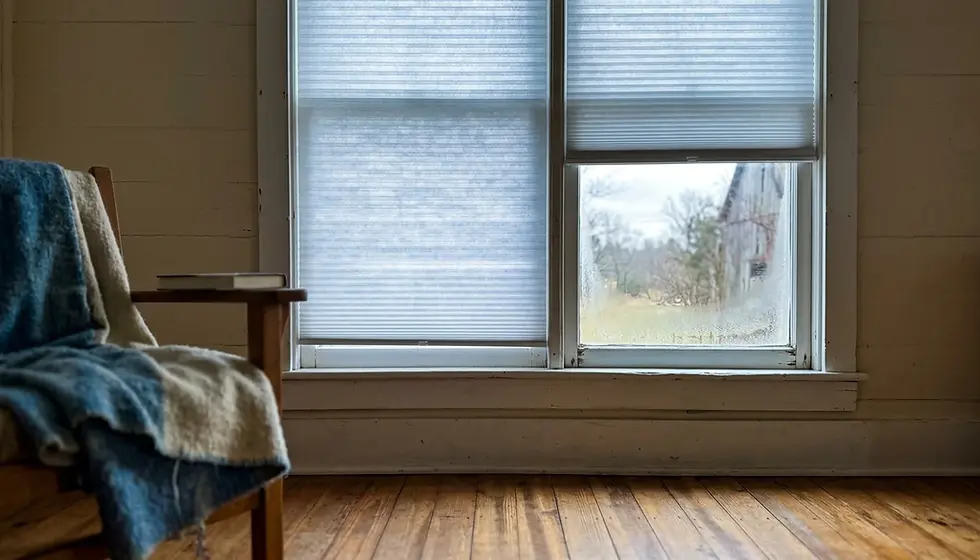
If your current blinds are already warping, snapping, or letting in more UV than they should, it is worth seeing what a properly matched material feels like in your own home's light. Get started with Home Blinds and Floors for a free in-home consultation across the Delmarva Peninsula, where our team measures your windows, brings real material samples, and recommends a durable option built for your specific coastal or high-traffic conditions.
Content powered by inkSTR.co


Comments