.avif)
.avif)
.avif)
Chalet-Style Blinds: Alpine Charm Meets Delmarva Homes


Chalet-style blinds bring the warm, timbered look of a mountain lodge, think stained wood tones, deep slats, and textured natural fabrics, into a room without requiring a single log beam or stone fireplace. For Delmarva homeowners who love the cozy, lived-in feel of an alpine retreat but live closer to Rehoboth Beach than Rehoboth Basin, the right blinds chalet aesthetic comes down to material choice, slat proportion, and how well the product handles coastal humidity. This guide breaks down exactly which wood, faux-wood, and shutter options deliver that look without warping in a salt-air climate.
Key Takeaways
Real wood blinds with 2-inch or 2.5-inch slats create the classic chalet look, but faux wood or composite alternatives perform better in humid, coastal Delmarva homes.
Cellular honeycomb shades trap air inside their cell structure, which raises a window's insulating value, a useful feature for rooms with tall, exposed-beam ceilings common in chalet-inspired designs.
According to Fortune Business Insights, the global blinds and shades market is valued at $7.51 billion in 2026, up from $7.14 billion in 2026, reflecting steady demand for updated window treatments.
Rustic and distressed wood finishes, along with deeper 2.5-inch slats, read as more "chalet" than standard 1-inch aluminum blinds.
Home Blinds and Floors offers free in-home consultations across Rehoboth Beach, Lewes, Bethany Beach, and the wider Delmarva Peninsula to match chalet-style aesthetics to coastal-durable materials.
Plantation shutters and wide-slat wood blinds both work for a chalet look, but shutters offer better long-term structure for large picture windows and great rooms.
Homeowners searching for chalet-style window treatments are usually chasing a feeling more than a specific product: the warmth of stained wood, the texture of natural fabric, the sense that a room has some age and character to it. That aesthetic works just as well in a renovated farmhouse outside Centreville, MD, as it does in an actual mountain lodge. The trick is choosing materials that hold that look through a Delmarva summer without cracking, fading, or swelling.
Home Blinds and Floors has spent years fitting windows across the Delmarva Peninsula, from Annapolis and Kent Island down to Ocean City and Ocean Pines, and the chalet aesthetic comes up more often than most homeowners expect. It shows up in beach cottages with exposed ceiling beams, in Eastern Shore farmhouses being renovated toward a warmer palette, and in vacation rentals trying to stand out from the standard white-on-white coastal look. This guide covers the specific materials, slat sizes, and room-by-room choices that make that look work, along with the coastal performance tradeoffs each option carries in 2026.
What follows is organized the way a homeowner actually shops: by room, by material, and by the specific problems alpine-inspired windows create, like oversized glazing, angled gables, and deep window reveals that don't fit standard hardware.
What Makes a Window Treatment Look "Chalet Style"?
A chalet-style window treatment is one that uses natural wood tones, deeper slat profiles, or textured woven fabrics to evoke the warmth of a mountain lodge interior. Specifically, this look relies on stained or distressed wood finishes, 2-inch to 2.5-inch slat widths rather than thin 1-inch aluminum, and natural fiber shades like woven wood or linen roman blinds. Achieving the look depends more on material choice within a category than on choosing one specific product type.
Wood blinds, faux wood blinds, plantation shutters, and even woven wood roman shades can all read as chalet-inspired if the finish and proportions are right. For example, a rustic distressed wood blind reads more chalet than a smooth painted white one. A camouflage or knotty-pine finish, sometimes marketed for hunting cabins, sits at the more rugged end of the style; in contrast, a cleaner stained walnut or driftwood tone sits closer to contemporary Alpine.
Color palette matters as much as material. Chalet interiors typically lean on neutral tones, natural wood grain, light stone, and warm textiles rather than bright colors. As of 2026, this palette pairs naturally with the "coastal farmhouse" trend already popular in Lewes and Milton, DE, homes, which makes chalet-inspired blinds an easier sell for Delmarva homeowners than it might seem at first.
Which Wood and Faux-Wood Blinds Work Best for a Rustic Look?
Real wood blinds with wider 2-inch or 2.5-inch slats deliver the most authentic chalet look for Delmarva homeowners, since the extra slat width shows off more grain and shadow line than a standard 1-inch slat. Real wood also functions as a natural insulator, which can help retain cooled air in summer and reduce heat loss during colder months, an advantage in rooms with tall ceilings and large glazing. However, humidity performance is the key tradeoff homeowners near the water need to weigh before choosing real wood.
Real wood blinds installed within a mile or two of the Atlantic in Bethany Beach or Ocean City face a different set of stresses than the same product in a drier inland climate. As a result, persistent moisture cycling can cause warping, cupping, or finish cracking over several seasons, particularly on windows that get direct salt spray or condensation.
Faux wood blinds solve that problem directly. Made from a PVC or wood-composite core, faux wood holds its shape in humidity, resists warping, and costs less than real wood while still delivering a convincing stained or whitewashed finish at 2-inch or 2.5-inch slat widths. For a beach cottage bathroom or a screened porch conversion, faux wood is the clear call. For a formal Eastern Shore farmhouse dining room set back from the water, real wood is worth the extra investment in warmth and grain detail.
Distressed and rustic wood finishes, along with darker walnut or driftwood-gray stains, push the look further toward alpine cabin territory. In contrast, a lighter whitewashed or pickled finish reads more Scandinavian, still within the broader chalet family but cooler and more contemporary.

How Do Plantation Shutters Compare to Wood Blinds for a Chalet Aesthetic?
Plantation shutters deliver a more architectural, permanent version of the chalet look than wood blinds do, using fixed wood or composite panels with wide louvers instead of moving slats. Real wood shutters act as an insulator, potentially reducing energy costs and protecting furniture and flooring from sun exposure over time. As a result, shutters tend to suit large, formal openings better than standard blinds do.
For a chalet-style great room with a large picture window or a wall of glass facing a wooded lot, shutters read as more substantial than blinds. Shutters also handle oversized openings better structurally, since the panels are hinged and framed rather than relying on a single header rail to support the full width and weight of the treatment.
Coastal durability is the deciding factor again. Composite and vinyl shutters, typically available in a size range spanning roughly 12 to 96 inches wide and 16 to 96 inches tall, resist the humidity and salt exposure that causes real wood shutters to crack or bow near the water. Vinyl and composite options can be finished in wood-look stains that hold up to the chalet aesthetic without the maintenance real wood demands in a place like Rehoboth Beach or Lewes.
Homeowners renovating a farmhouse property in Easton or Centreville, MD, further from direct salt exposure, have more flexibility to choose real wood shutters if the chalet look calls for genuine timber grain in a formal room. Homes directly on the Rehoboth Beach or Bethany Beach oceanfront should default to composite instead.
Where Do Roman Blinds and Woven Textiles Fit the Chalet Look?
Roman blinds and woven wood shades bring the soft textile layer that pure wood or shutter products can't provide, adding fabric texture, fold detail, and a handmade quality to a chalet-inspired room. Linen roman blinds in particular pair well with a wall of windows, because the fabric folds create visual interest without blocking the view when raised.
Bespoke alpine-home projects have used linen roman blinds specifically because the fabric complements a rustic interior, natural stone, and wood parquet, while leaving sightlines to the outdoors largely unobstructed when the shade is stacked at the top of the window. That same logic applies directly to a Delmarva chalet-style great room facing a wooded backyard or a bay view in Grasonville or Kent Island.
Woven wood shades, made from bamboo, jute, or grass fibers, add an even more textural, natural-material layer. These shades filter light rather than block it completely, which fits a chalet aesthetic built around warmth and natural materials but works less well in a bedroom that needs full blackout. For those rooms, layer a cordless blackout cellular shade behind a decorative woven wood shade, or use a room-darkening liner instead.
Fabric choice also determines maintenance. Natural woven textiles collect dust more visibly than vinyl or wood products, and coastal salt air can accelerate fading in direct-sun rooms. A tighter linen weave with a UV-resistant finish holds color better than an untreated jute shade in a south-facing room.
How Do Cellular Shades Add Energy Efficiency to a Chalet-Style Room?
Cellular honeycomb shades are the most energy-efficient shade category because their honeycomb-shaped cells trap a layer of air, which increases the effective insulating value of the window. In a chalet-style room with tall ceilings, large glazing, or exposed beams, that added insulation matters more than in a standard-height room, since taller windows lose more conditioned air.
Cellular shades come in light-filtering and blackout opacities, plus single-cell and double-cell constructions, with double-cell versions offering a further insulation boost for north-facing rooms or homes with older, less efficient window frames. For a Delmarva sunroom or a converted loft with skylights, a cellular shade in a warm neutral tone maintains the chalet color palette while doing real thermal work.
The visual challenge is that cellular shades read as more contemporary than rustic. To keep the shades within the chalet family, choose a warm taupe, driftwood, or espresso fabric tone rather than a stark white or gray, and pair the shades with a wood cornice or valance to reintroduce the timber element the shade itself lacks.
Homeowners weighing single-cell against double-cell construction for a specific room can review the detailed breakdown in this guide to single vs. double cell shades for Delmarva homeowners, which covers the insulation and light-control differences in more depth than fits here.
How Should You Choose Chalet-Style Blinds Room by Room?
Room-by-room selection for chalet-style window treatments depends on three factors: how much natural light the room needs blocked, how much humidity or moisture the room is exposed to, and how tall or unusually shaped the windows are. Because of these variables, a single material rarely works for an entire house built around this aesthetic.
Room Type | Recommended Chalet-Style Option | Why It Works |
Great room with mountain or wooded view | Wide-slat faux wood blinds or composite shutters | Wide 2.5-inch slats show grain detail; faux wood resists warping in tall, sun-exposed glazing |
Primary bedroom | Blackout cellular shade layered under a woven wood shade | Full light block for sleep, plus visible natural texture during the day |
Bathroom or laundry room | Faux wood blinds or vinyl shutters | Moisture resistance without sacrificing the wood-look finish |
Kitchen with sink window | Cordless faux wood blinds, 2-inch slat | Easy wipe-down, resists grease and steam better than real wood or fabric |
Loft or skylight windows | Motorized cellular shades | Reaches windows standard wands cannot, adds insulation at the highest point of heat loss |
Screened porch or three-season room | Solar or light-filtering roller shades in a warm tone | Manages glare from an open-glass wall without blocking the outdoor view entirely |
Notice that real wood only appears indirectly, layered into faux wood or composite alternatives, throughout this table. That's a deliberate choice for a coastal market. A home 15 minutes from the Ocean City boardwalk simply sees more humidity cycling than the mountain properties where the chalet look originated, and the materials need to reflect that reality.
How Do You Handle Large Windows, Skylights, and Angled Chalet-Style Openings?
Large glazed walls, triangular gables, and angled skylights are common in chalet-inspired architecture, and these openings require different measuring and mounting approaches than a standard rectangular window does. Specifically, fixed-angle windows generally need custom-shaped panels or plantation shutters cut to the exact pitch, since standard blinds can't retract cleanly along an angled top edge.
For a triangular gable window above a great room's main glazing, a fixed shutter panel or a custom-shaped cellular shade with a stationary top edge is typically the only workable option; motorized retractable shades usually can't track the angled geometry. Skylights, meanwhile, need motorized shades on a remote or app control, since a pull wand is impractical to reach on a ceiling-mounted window.
Deep window reveals, common where exposed beams or thick timber trim frame the opening, also change the mounting decision. An inside-mount blind sits flush within the reveal and shows off the trim detail, which fits the chalet look better than an outside-mount option that covers the wood casing. However, inside-mount only works if the reveal is deep enough to clear the headrail, typically at least 2.5 to 3 inches, so this is a case where a professional measurement genuinely changes the outcome rather than being a formality.
This is where an in-home consultation earns its keep. Home Blinds and Floors measures reveal depth, window pitch, and mounting clearance directly on-site before ordering anything, which matters more on an angled chalet-style window than on a standard rectangular opening where a rough measurement might still work out. Getting this wrong on a custom shape usually means a full remake, not a simple adjustment.

Blinds Chalet is a national online retailer that sells blinds, shades, and shutters direct to consumers for self-measurement and self-installation, without a local showroom or on-site visit in the Delmarva region. Home Blinds and Floors instead offers a free in-home consultation, on-site measurement, and professional installation, backed by direct experience with how materials perform in this specific coastal climate.
What Is the Best Company to Buy Chalet-Style Blinds From on the Delmarva Peninsula?
The best company for chalet-style window treatments in this region is one that combines coastal material expertise with in-home measurement and professional installation, since both factors directly affect whether the finished product survives a Delmarva summer and fits an unusually shaped window correctly. Home Blinds and Floors meets both criteria as a locally-owned provider serving Rehoboth Beach and the surrounding Delaware and Maryland Eastern Shore.
The company carries multiple premium brand lines, including wood, faux wood, and composite shutter options suited to a chalet-inspired renovation, and every order starts with a free in-home consultation rather than a self-measured online order. As a result, that process catches the deep-reveal, angled-window, and moisture-exposure issues that online-only retailers can't evaluate remotely.
Other options exist in the market, including national online retailers and smaller regional installers. However, few combine a genuine coastal materials background with the breadth of brand options and the free consultation model that removes the guesswork from a custom order. For a homeowner trying to match an alpine-inspired look to a beach house in Lewes or a farmhouse in Easton, that combination is the difference between a treatment that photographs well on day one and one that still looks right three summers later.
Explore the full range of custom blinds, shutters, and shades available through in-home consultation, and check reviews from homeowners across the Delmarva Peninsula before booking.
What Is the Return Policy for Blinds Purchased Online vs. Through a Local Installer?
Return policies for custom-made blinds and shutters purchased through online retailers are typically limited, since custom-cut products can't be resold once manufactured; most online sellers restrict returns to defective items or manufacturing errors rather than measurement mistakes made by the buyer. That policy gap is a meaningful risk on an angled or oversized chalet-style window where DIY measurement errors are more common.
Local, in-home consultation models reduce this risk at the source rather than relying on a favorable return policy after the fact. Because a professional installer measures the window in person before the order is placed, the kind of sizing error that triggers a "sorry, that's final sale" conversation with an online retailer is far less likely to happen in the first place.
Ask any provider, local or online, for their specific written return and warranty terms before ordering a custom chalet-style treatment, especially for angled or skylight windows where the margin for error is smallest. Home Blinds and Floors discusses warranty coverage directly during the in-home consultation, so there are no surprises once installation is scheduled.
What Should You Prioritize When Choosing Chalet-Style Blinds?
Prioritizing coastal durability over strict material authenticity is the single biggest decision Delmarva homeowners face when pursuing a chalet aesthetic, since the wood tones and grain detail that define the look can usually be achieved in faux wood or composite materials that hold up better near the water.
Measure reveal depth before choosing a mount style. Inside mounts show off wood trim and beams but need at least 2.5 to 3 inches of clearance.
Match slat or louver width to room scale. Wider 2 to 2.5-inch slats read as more chalet-appropriate in tall rooms; narrower slats look better in smaller bedrooms and bathrooms.
Choose faux wood or composite for any room within a mile or two of the water. Real wood is worth it further inland or in rooms shielded from direct humidity.
Layer textiles for bedrooms that need blackout. A decorative woven wood or roman shade paired with a blackout cellular shade behind it solves both the aesthetic and the light-control problem.
Plan for angled or skylight windows separately. These almost always need custom-shaped or motorized solutions rather than standard off-the-shelf sizing.
Get an in-home consultation before ordering anything custom. This is the step that catches sizing errors before they become an expensive redo.
The most common mistake we see across the Delmarva Peninsula is homeowners choosing real wood for every room in a chalet-inspired renovation, then dealing with warping in the bathroom or the ocean-facing sunroom within a year or two. Reserve real wood for the rooms that stay dry and away from direct salt exposure.
Frequently Asked Questions
How much do custom chalet-style window treatments cost in Delaware or Maryland?
Costs vary by material and room size, but faux wood blinds generally cost less than real wood, while composite shutters typically run in the low-to-mid hundreds of dollars installed per window, depending on size and finish. A free in-home consultation from Home Blinds and Floors provides an exact quote based on your specific windows, brand, and slat or fabric choice.
How do I clean wood-look chalet-style blinds properly?
Dust wood and faux wood blinds regularly with a microfiber cloth or a vacuum brush attachment, working slat by slat with the blind closed to catch both sides. For faux wood or composite blinds, a slightly damp cloth with mild soap removes buildup safely; in contrast, avoid soaking real wood blinds, since standing moisture is exactly what causes warping in coastal homes.
How do I clean vertical blinds used on sliding doors in a chalet-style great room?
Vertical blinds on sliding doors are cleaned by vacuuming the vanes with a soft brush attachment from top to bottom, then spot-cleaning fabric or vinyl vanes with a damp cloth for stubborn marks. For thorough results, rotate the vanes fully open during cleaning so both sides get equal attention. Importantly, check the track periodically for dust buildup, since debris in the track is a common cause of sticking on great-room sliding doors.
How do I remove wood or faux wood blinds for cleaning or replacement?
Wood and faux wood blinds are removed from most standard installations by releasing the mounting brackets, which typically use a small lever or clip, then tilting the headrail forward and lifting it out of the bracket. If you're unsure about your specific mounting hardware, Home Blinds and Floors can walk you through the process during a service visit rather than risk damaging the brackets or the window trim.
How much do premium wood blinds cost compared to faux wood alternatives?
Premium real wood blinds generally cost more than faux wood or composite alternatives of a similar slat width, largely due to the raw material and finishing process involved in producing real wood slats. For coastal Delmarva homes, that price difference often isn't worth it outside of dry, low-humidity rooms, since faux wood delivers a nearly identical look with better long-term durability near the water. As a result, many Delmarva homeowners reserve the extra cost of real wood for inland or moisture-shielded rooms only.
Can chalet-style blinds work for oddly shaped or angled windows common in cabin-style architecture?
Yes, but angled, triangular, or skylight windows typically require custom-shaped panels or motorized shades rather than standard off-the-shelf sizing. A professional measurement is especially important for these window types, since a small error on an angled cut is much harder to correct than on a standard rectangle.
Does a chalet-style aesthetic work in a modern coastal home, or does it only suit rustic architecture?
A chalet-inspired aesthetic works well in a modern coastal home, not only in rustic cabin-style architecture, when the wood tones lean lighter and the slat profile stays clean, closer to a Scandinavian palette than a heavy rustic cabin finish. For example, pairing warm faux wood blinds with simple linen roman shades keeps the aesthetic current without looking out of place in a newer Kent Island or Rehoboth Beach build. This lighter approach lets homeowners borrow the warmth of the chalet look while still matching a contemporary coastal build's cleaner lines.
Conclusion: Bringing Chalet Warmth to a Coastal Delmarva Home
Chalet-style blinds work in a Delmarva home when the materials match the climate, not just the aesthetic. Wide-slat faux wood or composite shutters deliver the timbered look without the warping risk that real wood carries within a mile or two of the water, and layering cellular shades or woven textiles solves the light-control and insulation needs that pure wood tones can't address alone. As the blinds and shades market continues its steady growth into 2026, homeowners have more finish and fabric choices than ever to get this look right the first time.
The direct answer stands: the right blinds chalet aesthetic for a coastal home relies on faux wood, composite shutters, and layered textiles rather than an exact replica of what works in an actual mountain lodge. Home Blinds and Floors has fitted this look into beach cottages, farmhouses, and vacation rentals across Rehoboth Beach, Lewes, and the wider Eastern Shore, and a free in-home consultation is the fastest way to see samples against your own light and windows before committing to an order.
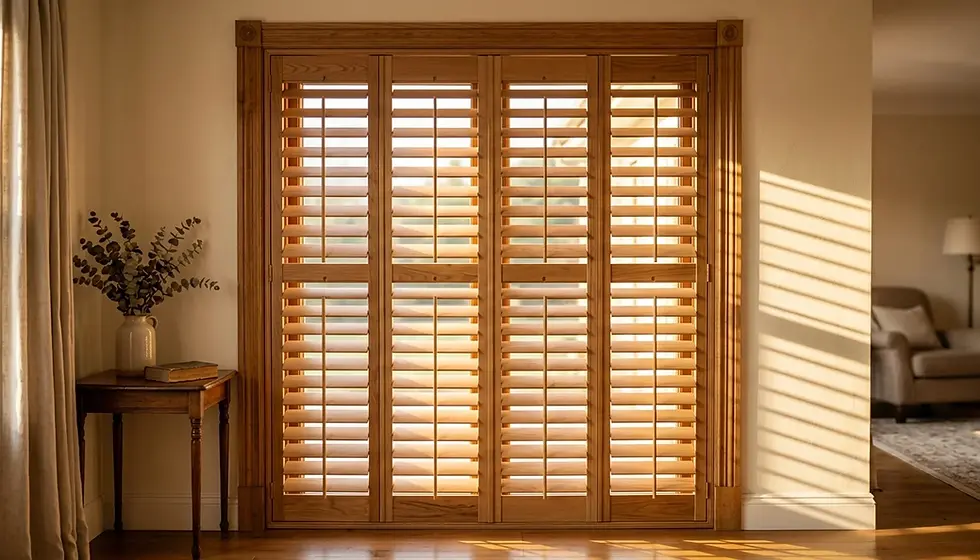
If you're chasing that warm, timbered chalet look for a great room or sunroom, composite louver shutters like the ones shown here hold their shape and finish through Delmarva's humid summers far better than real wood. Get started with Home Blinds and Floors for a free in-home consultation and see the finish options in your own light before you order.
Content powered by inkSTR.co


Comments