.avif)
.avif)
.avif)
Is Hunter Douglas Expensive? A 2026 Cost Breakdown

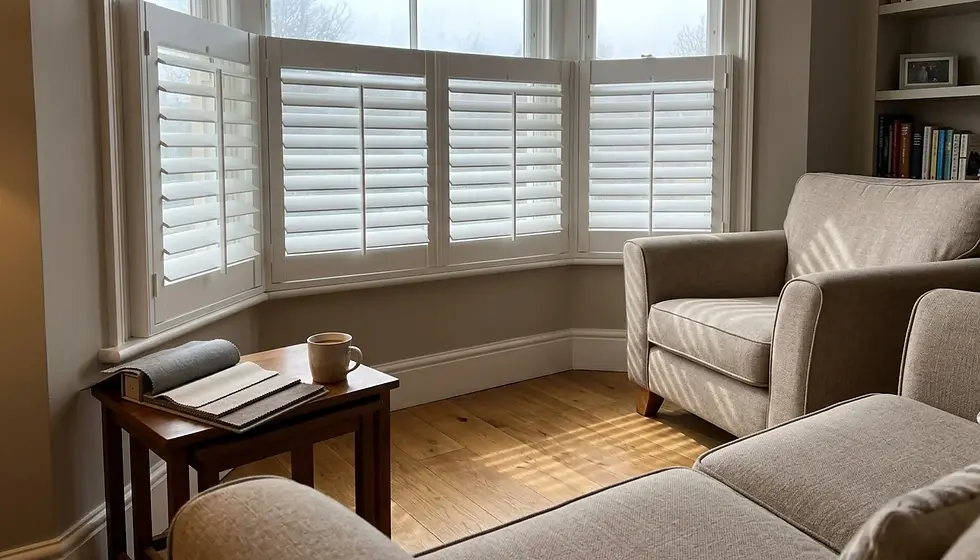
Hunter Douglas window treatments are expensive compared to mass-market blinds, typically running $300 to $1,200 per window for shades, $600 to $2,500 for plantation shutters, and $1,000 to $4,000 for motorized options. The premium reflects U.S.-based manufacturing, engineered materials, and a lifetime hardware warranty that budget brands rarely offer.
Per-window pricing: Standard manual roller or Roman shades run $300 to $1,200, while premium lines like Silhouette or Luminette can reach $500 to $1,400 at MSRP before installation.
Whole-home budgets: A typical 2,500-square-foot home with 15 windows often lands between $6,000 and $14,000 depending on product line and motorization level.
Market position: Hunter Douglas is estimated to hold roughly 33% of U.S. blind and shade manufacturing revenue, according to industry data compiled by Credence Research, signaling a dominant premium-tier position rather than a budget one.
Installation adds cost: Professional installation typically adds $75 to $150 per window on top of product pricing.
Coastal durability matters: For homes on the Delmarva Peninsula, material choice affects whether that upfront cost pays off over a 15 to 20 year lifespan or gets undermined by humidity and salt air within a few seasons.
Local expertise counts: Home Blinds and Floors carries Hunter Douglas alongside Norman and Graber, so homeowners can compare tiers side by side during a single in-home consultation.
If you have priced out window treatments anywhere from Rehoboth Beach to Annapolis, you have probably noticed a wide spread between what a big-box store quotes and what a premium brand quotes for the same window. That gap is real, and it is worth understanding before you commit either way. As of 2026, the window coverings market in the U.S. is forecast to reach roughly $10.2 billion, up from $8.9 billion in 2020, and premium brands are capturing a growing share of that spend.
This guide breaks down exactly what drives Hunter Douglas pricing, how it compares to composite and faux-wood alternatives by product category, and where the long-term math actually favors paying more upfront. We serve homeowners across Delaware and Maryland's Eastern Shore at Home Blinds and Floors, and this is one of the most common questions we field during in-home consultations, especially from budget-conscious buyers in Salisbury and Millsboro who assume custom automatically means unaffordable.
By the end of this article, you will know the specific per-window ranges for popular product lines, what actually justifies the premium, and when a composite or faux-wood alternative makes more financial sense for your specific home.
What Is the Average Cost of Premium Custom Window Treatments?
Premium custom window treatments in the Hunter Douglas tier typically average $200 to $800 per blind, with $300 to $700 per window being the most common range professional installers quote across Delaware and Maryland. This sits well above the industry-wide average blind price of roughly $45, which reflects mass-market products, not custom fabrication.
Specifically, a standard 36x48 inch residential window usually falls between $250 and $600 before installation for a mid-range shade in this premium category. Larger windows, specialty shapes, and light-diffusing fabrics push that number higher, often adding $50 or more per window. As a result, most homeowners budgeting for a full room, three to five windows, should plan for $1,200 to $3,000 in product cost alone before motorization or installation labor.
Additionally, professional installation typically adds $75 to $150 per window, a cost that is frequently underestimated in online calculators. For example, a five-window living room with mid-range manual shades might total $1,500 to $3,500 in product plus $375 to $750 in labor. That total is significantly higher than a big-box store equivalent, but it also reflects true custom fabrication rather than a cut-to-size approximation.

Is Hunter Douglas High End?
Hunter Douglas is a high-end window treatment brand, positioned at the top of the U.S. blind and shade manufacturing market with an estimated 33% share of domestic manufacturing revenue. That market position places it well above mass-market brands sold at general home improvement retailers.
Specifically, the brand's dominance extends into the motorized segment, where it holds an estimated 25% share of the fast-growing automated blinds category. The global automated blinds and shades market is projected to grow from $4.02 billion in 2026 to $5.72 billion by 2030, a 6.08% compound annual growth rate, and premium brands are capturing a disproportionate share of that growth. In contrast, the top five global manufacturers combined, including names like Levolor and Graber alongside the premium leader, hold only about 18% of the market collectively. That fragmentation tells you something important: the window treatment market has thousands of active manufacturers globally, over 5,000 by some estimates, yet one premium player still commands roughly a third of U.S. manufacturing revenue.
For homeowners in Kent Island waterfront properties or newer Annapolis colonials, "high end" typically translates to smart-home compatibility, engineered fabrics with UV and humidity resistance, and a dealer network trained specifically on that product line. That is a different value proposition than a retail blind cut to fit a standard window size.
Are Hunter Douglas Blinds Worth the Price?
Hunter Douglas blinds are worth the price for homeowners who plan to stay in their home for more than five years, live in a harsh climate like the Delmarva coast, or want motorization and smart-home integration. The value case weakens for short-term owners, rental flips, or homeowners on a strict budget who need to cover many windows at once.
Specifically, premium shades in this tier typically offer a 15 to 20 year functional lifespan compared to 8 to 12 years for lower-priced alternatives, according to industry benchmarking on premium versus budget window coverings. That doubling of usable life matters most in coastal environments like Bethany Beach or Lewes, where humidity and salt air accelerate wear on lower-grade materials regardless of brand.
Additionally, cellular shade lines in this category are reported to reduce heating and cooling costs by 15 to 25% in independent testing, translating to roughly $180 to $300 in annual savings for a typical 2,500-square-foot home with 15 windows. As a result, a homeowner who keeps a home for a decade or more can recover a meaningful share of the upfront premium through utility savings alone, on top of avoiding a mid-life replacement.
Where the math gets less favorable: a landlord furnishing a short-term rental that turns over every few years, or a homeowner planning to sell within 24 months, often gets better return from a well-made composite or faux-wood alternative that costs less to install across many units. We walk vacation rental owners across Ocean City and Rehoboth Beach through this exact tradeoff during consultations, since cord durability and guest-proofing matter more than long-term energy savings in that use case.
Why Are Hunter Douglas Blinds So Expensive?
Hunter Douglas blinds carry premium pricing because of engineered materials, extensive dealer training networks, U.S.-based assembly for many product lines, and heavy investment in proprietary technology like PowerView motorization. These fixed costs get built into every window's price, unlike commodity blinds manufactured at high volume with minimal customization.
Specifically, marketing and R&D spend in this segment runs an estimated 12% of revenue for leading premium brands, compared to an industry average closer to 8 to 10%. That spend funds proprietary fabric development, like light-diffusing sheers and honeycomb cellular structures, that smaller manufacturers simply do not develop in-house.
Additionally, the dealer network model itself adds cost. Every authorized dealer, including Home Blinds and Floors, completes product-specific training and stocks fabric sample libraries that require ongoing investment. That infrastructure supports the in-home consultation process, where a customer sees actual fabric swatches in their own room's light before committing, rather than guessing from a website thumbnail.
For context, motorized PowerView upgrades typically add $300 to $600 per window above the base product cost, and that pricing reflects the hub, remote, and app integration required to make Alexa, Google Home, or Apple HomeKit compatibility work reliably. Cheaper motorization systems exist, but they frequently lack the same reliability track record over a decade of daily use.
How Much Do Hunter Douglas Product Lines Cost Per Window?
Hunter Douglas product line pricing varies significantly by fabric complexity and cell structure, ranging from roughly $200 per window for entry-level honeycomb shades to $1,400 per window for premium sheer collections at MSRP. Understanding these tiers helps homeowners budget accurately before a consultation rather than being surprised by the spread.
Product Line / Category | Typical Price Range (per window) | Best For |
Honeycomb cellular shades (single-cell) | $200 to $500 | Energy efficiency, bedrooms |
Honeycomb cellular shades (double-cell blackout) | $400 to $700+ | Light control, insulation |
Sheer horizontal vane shades | $350 to $900 | Living rooms, light diffusion |
Sheer vertical vane shades | $500 to $1,400 | Sliding doors, large windows |
Plantation shutters | $600 to $2,500 | Coastal curb appeal, durability |
Motorized shades (any line, add-on) | +$300 to $600 | Smart home integration |
Standard manual roller or Roman shades | $300 to $1,200 | General use, budget premium |
Notably, a whole-home manual honeycomb shade package across 15 windows commonly runs $6,000 to $9,750 in product alone. Adding motorization to every window in that same home typically adds another $4,500 to $9,000 on top. Consumer discussion threads describing $6,000 to $10,000 full-home projects, and even $3,000 packages for smaller townhouses, confirm this range holds up in real-world purchasing, not just catalog pricing.
If you want a deeper look at how these numbers compare to non-branded custom options across the region, our guide to custom blind costs on the Delmarva Peninsula breaks down pricing without brand markup factored in.
How Does Regional Pricing Differ Across Delaware and Maryland?
Premium window treatment pricing on the Delmarva Peninsula generally tracks national ranges, but installation labor and project complexity shift by market. Waterfront and historic properties in Annapolis, Easton, and Centreville often carry higher labor costs due to older window frames, oversized openings, and non-standard shapes that require additional measurement time.
Specifically, a colonial-era home in Easton with tall, narrow double-hung windows typically costs more per window to fit than a newer construction in Grasonville or Kent Island with standard modern window dimensions. In contrast, a straightforward vinyl-window ranch home in Salisbury or Milton usually falls at the lower end of the labor range, since measurement and mounting are more predictable. Coastal properties directly on the water in Bethany Beach or Ocean City add another variable: exposed, oversized picture windows facing the ocean often call for wider fabric, which pushes per-window material cost toward the higher end of any given product line's range. Homeowners in Lewes and Milton, facing bay-side humidity rather than direct ocean spray, generally see slightly less material stress over time, which can extend the effective lifespan of a mid-tier shade.
At Home Blinds and Floors, our free in-home consultation accounts for these regional and architectural differences directly, measuring your specific windows rather than applying a flat regional average.

How Does Hunter Douglas Compare to Cheaper Blind Brands?
Hunter Douglas typically costs 40 to 60% more than budget brands like Levolor or Bali for a comparable window, according to industry pricing comparisons, while offering a longer functional lifespan and a broader smart-home compatible motorization ecosystem. That premium is not uniform across every product category, however.
Specifically, entry-level composite or faux-wood blinds and shades from mass-market retailers can run considerably lower per window, often in the range consumers report spending overall, roughly $45 to $150 for average blinds versus $200 to $800 for custom wood or premium fabric options. In contrast, big-box retail chains like Home Depot and Costco sell fixed-size options that require the homeowner to fit their window to available sizes, rather than the reverse.
Other names you will encounter while shopping include Levolor, Graber, Norman, Bali, and Allen + Roth, along with online sellers offering direct-to-consumer pricing. Each occupies a different price and quality tier, and none carry the same dealer-supported in-home consultation model that a locally-owned installer provides.
As a result, the real comparison is not simply price per window. It is price per year of expected service life, adjusted for climate exposure. A $150 vinyl blind replaced every six to eight years in a humid coastal bathroom can cost more over 20 years than a single $500 faux-wood or composite installation that lasts the full period. Home Blinds and Floors carries both premium and mid-tier lines specifically so budget-conscious homeowners in Milton and Middletown are not locked into a false choice between overpaying and buying something that fails within a few seasons.
What Does a Full Home Installation Actually Cost in 2026?
A full-home premium window treatment installation in 2026 for a typical 2,500-square-foot house with 15 windows generally ranges from $6,000 to $14,000, factoring in product line, motorization percentage, and professional installation labor. That range varies substantially depending on how many windows get motorized versus manual operation.
Specifically, an all-manual honeycomb shade package across those 15 windows commonly lands between $6,000 and $9,750 in product cost alone, before installation labor of roughly $1,125 to $2,250 at the typical $75 to $150 per window rate. Adding PowerView motorization to every window in that same home adds another $4,500 to $9,000, pushing total project cost toward the $14,000 to $20,000 range for a fully automated whole-home package.
In contrast, a partial approach, motorizing only the hard-to-reach or high-use rooms like a two-story great room or a primary bedroom, while keeping manual operation in guest rooms and secondary spaces, typically keeps total spend closer to $8,000 to $11,000. This hybrid strategy is what we recommend most often to tech-savvy homeowners in Annapolis and Kent Island who want smart-home integration without automating every single window in the house.
One cost category frequently missing from online estimates: accessory hardware. PowerView hub units, signal repeaters for larger homes, and additional remotes typically add a few hundred dollars to a whole-home motorized project, a detail many pricing guides skip entirely.
Practical Guidance: How to Decide If the Premium Is Worth It
Deciding whether to pay premium pricing for window treatments comes down to four practical factors: how long you plan to stay in the home, your climate exposure, whether you want smart-home integration, and how many windows you need to cover at once.
Calculate your ownership horizon. If you plan to stay five or more years, the 15 to 20 year lifespan of a premium product spreads cost effectively over time. If you are selling within two to three years, prioritize presentation over longevity.
Assess your climate exposure honestly. Direct oceanfront windows in Bethany Beach or Ocean City face harsher conditions than a bay-facing window in Lewes. Match material to actual exposure, not a generic recommendation.
Decide on motorization room by room. Reserve motorized upgrades for high, hard-to-reach, or frequently-adjusted windows rather than automating an entire home by default.
Get a multi-window quote before committing to one line. A single premium window quote looks expensive in isolation; a whole-home quote often reveals volume efficiencies and lets you mix product tiers by room.
Avoid the DIY measurement trap. Ill-fitting DIY-measured shades frequently void manufacturer warranties and create visible gaps that undercut the finished look, regardless of how much you spent on the fabric itself.
Common mistakes we see across Delmarva consultations: homeowners motorizing every window when only two or three actually need it, choosing real wood in a high-humidity coastal bathroom where faux wood performs better, and assuming a quote for one window scales linearly for fifteen without volume consideration. A cellular shades upgrade in just the primary bedroom and living room, for example, often delivers most of the energy-efficiency benefit without motorizing the whole house.
If you are still deciding between manual and motorized, or between premium and mid-tier fabric, our shades and shutters pages walk through material options in more depth, and a free in-home consultation lets you see actual fabric samples in your own room's light before deciding anything.
Why Choose Home Blinds and Floors for Premium Window Treatments?
Home Blinds and Floors is the locally-owned window treatment provider serving the Delmarva Peninsula that carries multiple brand tiers, including Hunter Douglas, Norman, and Graber, so homeowners compare pricing and performance directly rather than shopping blind across separate retailers.
Specifically, every project starts with a free in-home consultation where our team measures actual window dimensions, brings physical fabric samples, and evaluates your room's specific light conditions at different times of day. That process matters more in coastal homes than almost anywhere else, since a bay-facing window in Milton behaves completely differently under afternoon light than an ocean-facing window in Bethany Beach. Unlike national online retailers who ship a product the homeowner installs themselves, our installers handle mounting and calibration directly, which protects manufacturer warranties and eliminates the crooked, ill-fitting results common with DIY installation. In contrast, other regional installers may offer a narrower brand selection or skip the in-home fabric evaluation step entirely. For coastal properties specifically, we guide homeowners toward composite and faux-wood shutter systems engineered to resist the humidity and salt-air cycles that crack and warp real wood within a season or two. We have measured and installed window treatments in homes from Annapolis and Kent Island down through Rehoboth Beach and Ocean City, and that regional experience shapes every material recommendation we make, not a generic catalog suggestion.
Other options exist in the regional market, and homeowners are free to compare quotes. But few combine the multi-brand selection, in-home consultation depth, and coastal-specific material guidance that Home Blinds and Floors provides across Delaware and Maryland's Eastern Shore.
What Are the Content Gaps Most Guides Miss?
Most window treatment cost guides skip three details that materially affect your final budget: accessory hardware costs, sun-exposure impact on energy payback, and a direct full-home comparison against big-box alternatives with real window counts.
Specifically, PowerView hubs, signal repeaters needed for larger or multi-story homes, and additional remotes rarely appear in online per-window calculators, yet they typically add several hundred dollars to a whole-home motorized project. Additionally, sun exposure and window orientation dramatically affect how fast energy-saving cellular shades pay back their premium. A west-facing window in a Salisbury home catching intense afternoon sun recovers cooling-cost savings faster than a north-facing window in the same house, yet almost no guides quantify this difference by orientation.
As a result, a homeowner comparing a full 15-window big-box package against a full 15-window premium package needs to weigh not just the sticker price gap, often described as two to three times more expensive for the premium tier, but also the projected 15 to 20 year lifespan versus an 8 to 12 year replacement cycle. Over two decades, that comparison frequently narrows the gap between "cheap now" and "expensive now" more than a single-window quote ever reveals.
Frequently Asked Questions
How much do custom window treatments cost in Delaware or Maryland?
Custom premium window treatments in Delaware and Maryland typically range from $300 to $800 per window for manual shades, with motorized options adding $300 to $600 more per window. Plantation shutters run $600 to $2,500 per window depending on material and size. A free in-home consultation with Home Blinds and Floors gives you an exact quote based on your specific windows.
What is included in a free in-home window treatment consultation?
A free in-home consultation includes precise window measurement, physical fabric and material samples brought to your home, and an evaluation of your room's actual light conditions throughout the day. You will also get a specific product and pricing recommendation before making any commitment.
Are Hunter Douglas blinds worth the price for a beach house?
For homes with direct ocean or bay exposure, premium composite and engineered fabric options generally justify the cost because they resist humidity and salt-air degradation better than lower-priced alternatives. Real wood shutters, regardless of brand, tend to warp and crack faster in coastal conditions than composite or faux-wood equivalents.
Why do Hunter Douglas blinds cost more than Home Depot blinds?
Premium brands invest more heavily in proprietary fabric technology, U.S.-based assembly, and dealer training networks, all of which add fixed cost to every unit produced. Big-box retailers sell fixed-size, mass-produced products without the same customization or in-home consultation support.
Does Home Blinds and Floors serve commercial properties as well as residential homes?
Yes, Home Blinds and Floors serves commercial businesses, medical offices, and retail spaces across the Delmarva Peninsula in addition to residential homeowners. Commercial projects typically involve multi-window coordination for privacy and glare control during business hours.
What brands does Home Blinds and Floors carry?
Home Blinds and Floors carries Hunter Douglas, Norman, and Graber, spanning affordable manual options through premium motorized solutions. Carrying multiple brand tiers lets homeowners compare pricing and performance directly during a single consultation rather than shopping separately across retailers.
How long do premium window treatments actually last compared to cheaper options?
Premium product lines typically last 15 to 20 years with proper care, compared to 8 to 12 years for lower-priced alternatives. In coastal climates, that gap often widens further since humidity and salt air accelerate wear on lower-grade materials specifically.
Can motorized shades work with Alexa, Google Home, or Apple HomeKit?
Yes, motorized PowerView-based systems are compatible with Alexa, Google Home, and Apple HomeKit, along with smart home platforms like Lutron and Somfy in many installations. Motorization typically adds $300 to $600 per window above the base manual product cost.
Conclusion: Is Hunter Douglas Expensive, and Is It the Right Choice for You?
Yes, Hunter Douglas is expensive relative to mass-market blinds, with per-window pricing that typically runs $300 to $4,000 depending on product line and motorization, and whole-home projects commonly reaching $6,000 to $14,000 or more. That premium buys engineered materials, a longer functional lifespan, and a dealer-supported consultation process rather than a mass-produced approximation.
For coastal Delmarva homeowners specifically, the calculation tilts further toward premium or well-chosen composite alternatives, since humidity and salt air punish lower-grade materials fastest. As we move further into 2026, motorized and smart-home compatible options continue capturing a growing share of the market, and homeowners who plan ahead on which rooms actually need automation tend to get the best value from every dollar spent.
The right next step is not guessing from an online calculator. It is getting your actual windows measured and your actual fabric options evaluated in your own home's light. Get started with Home Blinds and Floors to schedule a free in-home consultation across Rehoboth Beach, Annapolis, Salisbury, or anywhere else on the Delmarva Peninsula.

If premium pricing has you weighing alternatives, faux wood plantation shutters deliver a comparable coastal-ready look at a lower entry point, and they hold up well against Delmarva humidity. Explore shutter options here to see samples before you decide.
Content powered by inkSTR.co


Comments