.avif)
.avif)
.avif)
Pleated Shades vs Cellular Shades: A Delmarva Homeowner's Guide

TL;DR: Cellular shades are the top choice for energy efficiency, trapping air in honeycomb pockets to lower energy bills and reduce noise. Pleated shades offer a crisp, minimalist look at a more budget-friendly price, making them ideal for spaces where insulation isn't the primary concern.
Trying to decide between pleated and cellular shades for your Delmarva home? At Home Blinds & Floors, we help homeowners across the Eastern Shore find the perfect balance of style, light control, and privacy with custom window treatments tailored to your space. While pleated and cellular shades might look alike from a distance, their internal structure is what really sets them apart in performance.
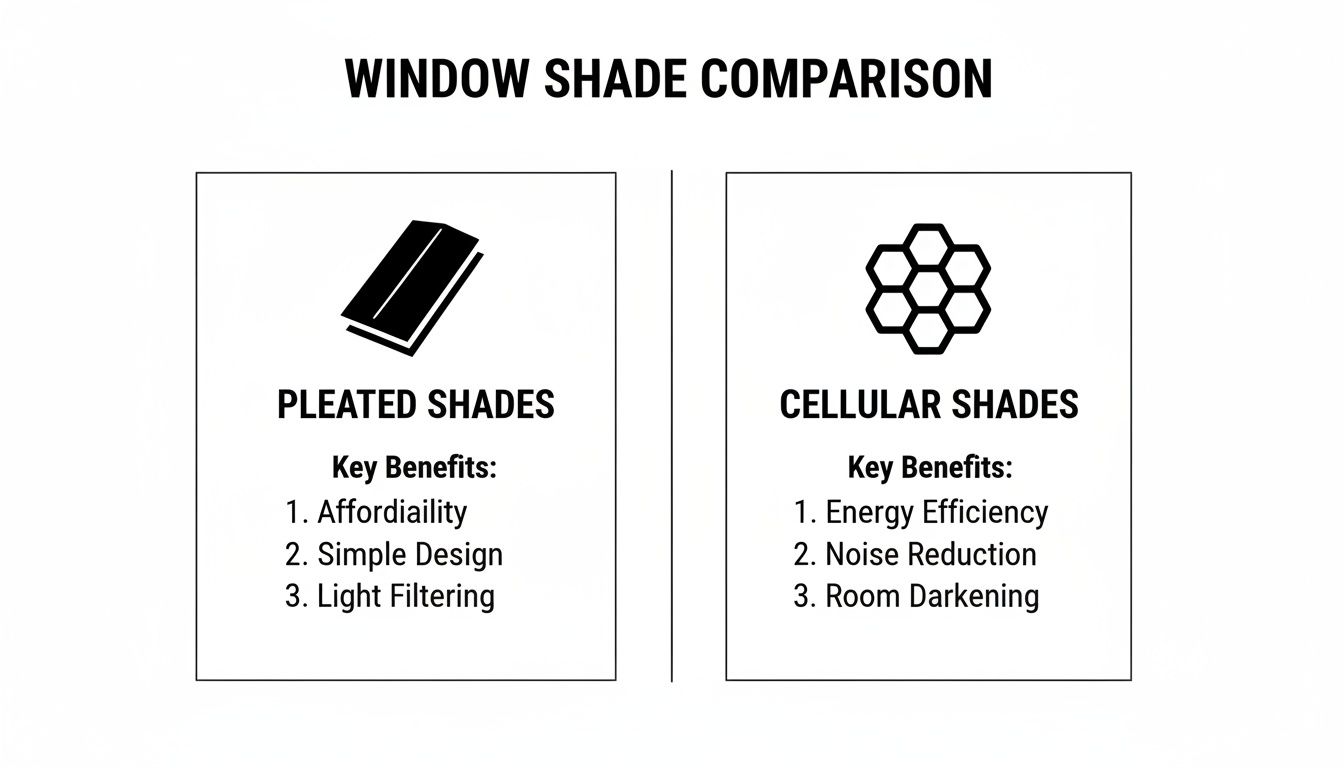
As you can see, the single, crisp fold of a pleated shade is quite different from the insulating honeycomb design of a cellular shade. This fundamental difference is the key to their performance.
It's this superior construction that has propelled the global cellular blinds and shades market to a staggering USD 12.8 billion in 2023. When properly installed, cellular shades can cut heat loss through windows by up to 40%, which could mean saving around 10% on your heating bills. That kind of efficiency is why they are such a dominant force in the window treatment world. You can learn more about these market findings to see the data for yourself.
To make things even clearer, I've put together a simple table that cuts right to the chase.
Quick Comparison: Pleated Vs. Cellular Shades
This side-by-side breakdown of key features is designed to help Delmarva homeowners quickly see which shade makes the most sense for their home and lifestyle.
Feature | Pleated Shades | Cellular (Honeycomb) Shades |
|---|---|---|
Structure | Single layer of folded fabric | Honeycomb cells that trap air |
Insulation | Minimal | Excellent |
Energy Efficiency | Low | High |
Sound Absorption | Low | Moderate to High |
Durability | Good | Excellent |
Cost | More budget-friendly | Higher initial investment |
Essentially, your choice comes down to prioritizing either budget and style with pleated shades or investing in long-term energy savings and superior insulation with cellular shades.
Comparing Cellular and Pleated Shade Structures
So, why do pleated and cellular shades act so differently? The secret is baked right into their construction. From a distance, they can look surprisingly similar with that folded, accordion-style appearance. But get a little closer, and you'll spot a fundamental design difference that changes everything—from how they handle sunlight to how well they insulate your room.
A pleated shade is all about elegant simplicity. It’s crafted from a single layer of fabric that’s been crisply creased into sharp, uniform folds. This no-fuss construction results in a clean, low-profile look that stacks up incredibly tight at the top of the window, leaving your view wide open.
The Anatomy Of A Pleated Shade
The real appeal of a pleated shade is its minimalist design. Since it's just one piece of material, it's exceptionally lightweight and fits beautifully in spaces where you want a crisp, uncluttered feel without any visual weight.
Single-Layer Fabric: This is what gives it that sleek, slender profile against the glass.
Accordion Folds: They create a sharp, architectural look that works just as well in modern homes as it does in traditional ones.
Visible Lift Cords: Keep in mind, the cords that raise and lower the shade pass through small, drilled holes in the fabric. This means you might see tiny pinpricks of light, which is a key difference from cellular shades.
This straightforward design makes pleated shades a fantastic, budget-friendly option, especially for rooms where top-tier insulation isn't the main priority.
The Innovative Honeycomb Design
Cellular shades, which most people know as honeycomb shades, are engineered quite differently. Instead of one layer of fabric, they use at least two, bonded together to create unique, geometric pockets. If you look at them from the side, you’ll see where the "honeycomb" name comes from.
Expert Insight from Home Blinds & Floors: "The easiest way to think about a cellular shade is like a double-pane window for your fabric window treatment. That pocket of air trapped inside the honeycomb cells acts as a powerful insulator, slowing down heat transfer and keeping your room more comfortable all year long."
This unique structure is precisely why they perform so well. The trapped air creates a substantial barrier against the Delmarva Peninsula’s humid summers and chilly winters.
Single-Cell Vs Double-Cell Construction
You can even dial in the level of insulation you need. Cellular shades come in single-cell and double-cell designs. As the name suggests, double-cell shades give you two layers of those air-trapping pockets, seriously boosting their insulating power. It’s a go-to choice for homeowners here in Salisbury and Easton who are focused on maximizing their energy savings. If you want to get into the nitty-gritty, we have a whole guide on single-cell vs. double-cell cellular shades.
From free in-home consultations to flawless installation, Home Blinds & Floors takes the stress out of selecting window treatments. Seeing these structural differences up close and feeling the fabrics in your own home is the best way to decide between pleated and cellular shades. Our experts bring the samples right to you, so you can see how each style will look and perform in your space.
Energy Efficiency in Delmarva: Cellular vs. Pleated Shades
If you live anywhere on the Delmarva Peninsula, you know the yearly dance with our weather—sweltering summers give way to surprisingly chilly winters. This is where the debate between pleated and cellular shades really heats up, and frankly, there's a clear winner when it comes to energy efficiency. Cellular shades were practically made for our climate.
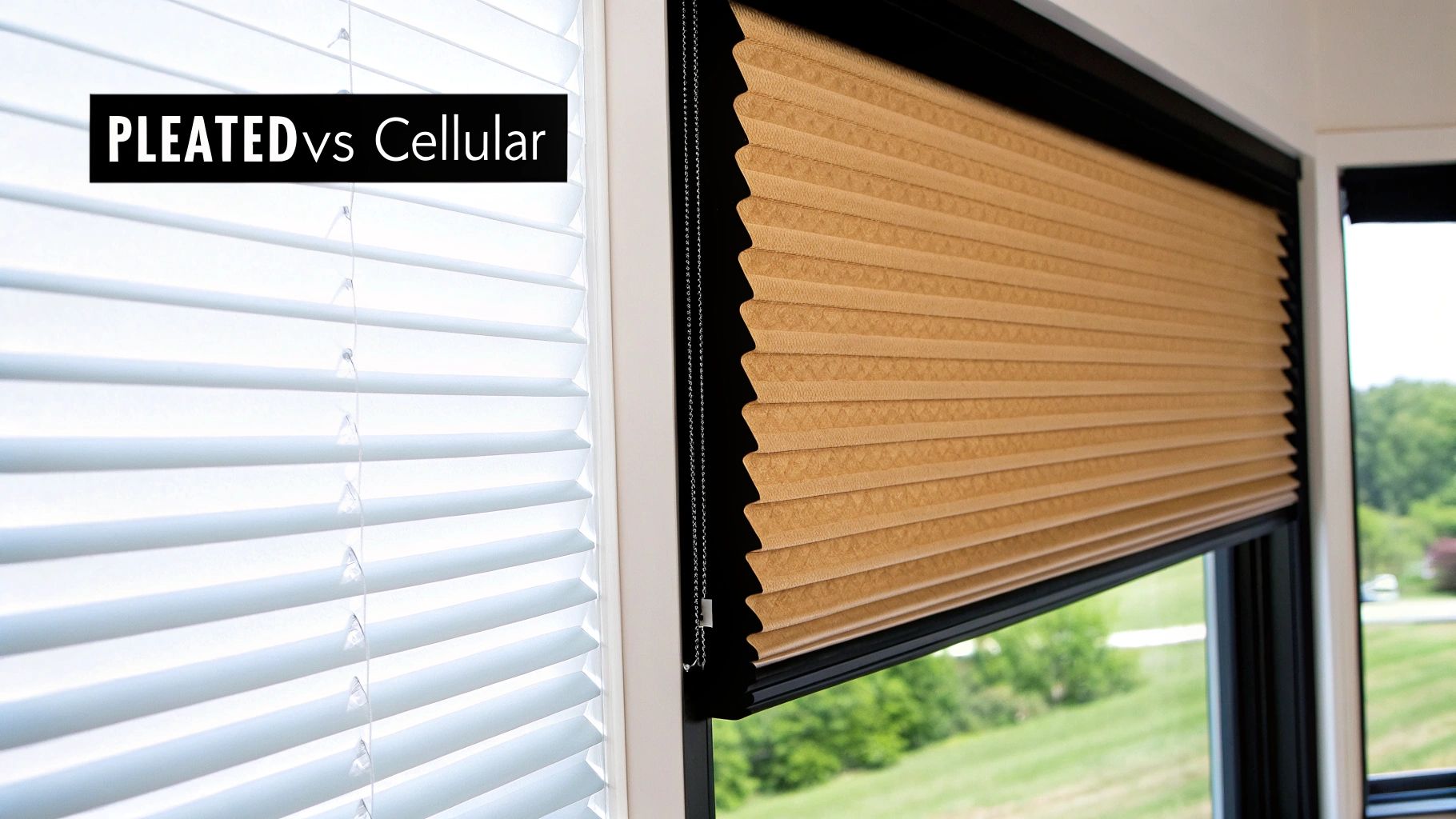
On the other hand, pleated shades, with their crisp, single layer of fabric, look sharp but offer very little in the way of insulation. They’re fantastic for managing light, but they don't put up much of a fight against the temperatures outside, which can lead to higher energy bills.
Understanding R-Value And Insulation
To really get to the bottom of this, we need to talk about R-value. Think of R-value as a simple score for thermal resistance—it tells you how well a material stops heat from moving through it. The higher the R-value, the better the insulation.
This is where cellular shades shine. Their honeycomb structure is specifically designed to trap air, creating a powerful buffer between your room and the windowpane. It's this pocket of still air that does all the insulating work.
Better yet, you can choose how much insulation you need:
Single-Cell: Your standard option, but it already provides a huge jump in thermal resistance compared to any single-layer shade.
Double-Cell: This design essentially doubles down on the insulation with two layers of air pockets, which significantly boosts the R-value.
Triple-Cell: For the ultimate in energy savings, triple-cell shades create the thickest barrier against outdoor heat and cold.
Having these options is a massive advantage for us here on Delmarva.
A common mistake is underestimating how much energy is lost through windows. Properly fitted cellular shades can reduce heat loss through windows by up to 40% or more, which directly translates into lower heating and cooling costs month after month.
As a local, family-run business, Home Blinds & Floors provides personal service, competitive pricing, and professional installation throughout Sussex, Wicomico, Kent, and beyond. We’ve seen firsthand how installing the right cellular shades can completely change how comfortable a room feels.
Real-World Scenarios On The Eastern Shore
Let's bring this home. Picture a beautiful waterfront house in Rehoboth Beach that gets baked by the afternoon sun. A simple pleated shade would be overwhelmed, but a double-cell cellular shade would effectively block that solar heat gain, giving your AC a much-needed break.
Now, think about a historic home in Easton with charming but drafty old windows. In the winter, pleated shades would do next to nothing to stop the cold from seeping in. High R-value cellular shades, however, create an insulating barrier that helps hold the warmth inside, making the whole house feel cozier.
If you want to dive deeper, check out our complete guide to energy-efficient window treatments for Delmarva homes. It's packed with more tips for keeping your home comfortable year-round.
Home Blinds & Floors offers a wide selection of custom blinds and shades in Delmarva, with expert installers who bring the showroom to your living room. A professional installation eliminates the tiny gaps left by off-the-shelf products, maximizing the performance and energy savings of your new window treatments.
Light Control, Privacy, and Sound Dampening: A Head-to-Head Comparison
Choosing the right shade goes way beyond energy savings; it's about shaping the comfort and feel of your home every single day. How a shade handles sunlight, protects your privacy, and even muffles outside noise are where you'll really notice the difference between pleated and cellular designs.
Both styles give you a fantastic range of fabrics to set the right mood.
Light-Filtering: If you have a living room or kitchen on the Eastern Shore, these are your best friend. They take that harsh afternoon sun and turn it into a soft, usable glow, cutting glare without making the room dark.
Room-Darkening: Perfect for a home office or media room where screen glare is the enemy. These block most of the light, giving you a more focused, controlled environment.
Blackout: A non-negotiable for bedrooms and nurseries. Blackout fabrics are engineered to block nearly 100% of light, which is a game-changer for getting quality sleep.
The Blackout Difference: It's All in the Details
Now, while you can get blackout fabric in both styles, cellular shades are the undisputed champion for achieving true, deep darkness. It all comes down to a small but critical construction detail.
Pleated shades have a single layer of fabric, and the lift cords have to run through small, drilled holes. Even with the darkest material, you're going to get tiny "pinholes" of light peeking through.
Cellular shades, on the other hand, have a clever design where the cords run inside the honeycomb cells. They're completely hidden. This means no pinholes, no light leaks—just a solid wall of darkness when you need it.
Expert Takeaway: For homeowners in Salisbury or Rehoboth Beach who are serious about sleep, a blackout cellular shade is the clear winner. That internal cord system makes a world of difference in creating a truly dark and restful room.
Top-Down/Bottom-Up: The Ultimate Privacy Hack
One of the best upgrades for any window is the top-down/bottom-up feature, available for both pleated and cellular shades. It’s a simple concept with a huge impact: you can lower the shade from the top, raise it from the bottom, or position it anywhere in between.
This is a lifesaver for street-facing windows in towns like Easton or Cambridge. You can let sunlight stream in from the top to brighten the room while keeping the bottom half closed for complete privacy from anyone walking by.
The Unsung Hero: Sound Absorption
Here’s a benefit most people don't even think about until they experience it: sound absorption. And in this category, cellular shades have a massive natural advantage.
Those same honeycomb pockets that trap air for insulation also do an amazing job of trapping and absorbing sound waves. They act as a buffer, muffling everything from road traffic to the neighbor's barking dog, making your home noticeably quieter.
A single-layer pleated shade, by comparison, offers very little in the way of sound dampening. If you want to learn more about how different window treatments can turn down the volume on the outside world, check out our complete guide on noise-reducing shades for quieter living. This acoustic perk is just one more reason cellular shades are such a great investment in your home's tranquility.
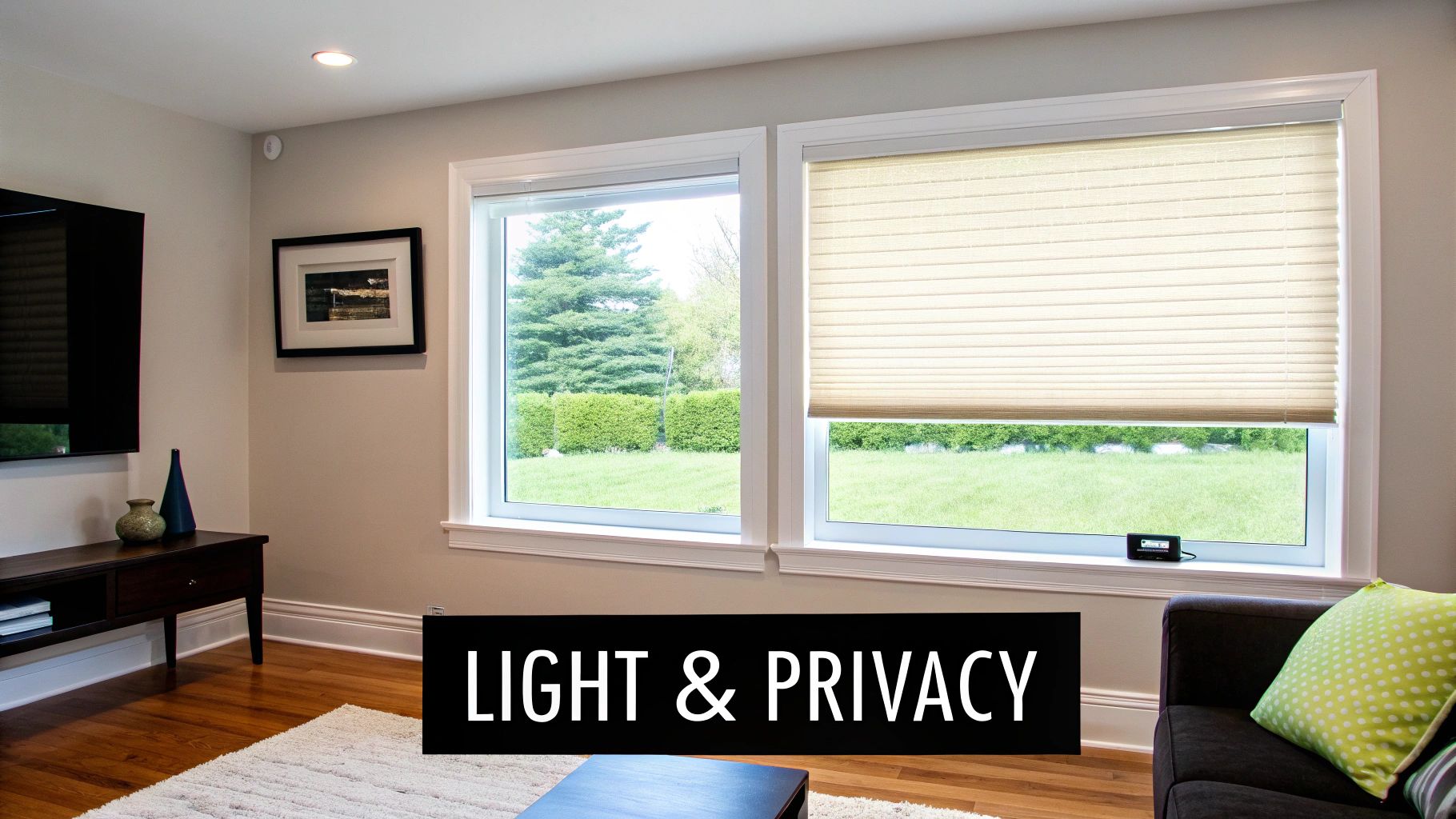
Matching The Shade To The Space
Now, picture a classic historic home over in Cambridge. The windows are smaller, and the goal is to add a functional window treatment that respects the home's character. In this case, crisp pleated shades are a perfect match. Their sharp, clean pleats and slim profile offer a touch of modern simplicity that complements traditional architecture without feeling out of place.
If you're trying to pin down your home's aesthetic, an ultimate interior design styles guide can be a great resource. It helps you find the right language for your style, ensuring your new shades feel like they were always meant to be there.
Bedrooms, Specialty Windows, And Budget-Friendly Areas
When it's time to talk bedrooms, the conversation gets much simpler. For creating a dark, restful space, blackout cellular shades are the undisputed champion. The way their cords run through the middle of the cells means there are no visible pinholes for light to sneak through. This makes a world of difference for light-sensitive sleepers, shift workers, and nurseries.
From free in-home consultations to flawless installation, Home Blinds & Floors takes the stress out of selecting window treatments. Our experts can show you these differences firsthand, right in the rooms you're decorating.
What about those tricky windows? Both shades have you covered, but one usually has an edge.
Sliding Glass Doors: For those huge panes of glass, a vertical cellular shade is a fantastic insulator, which is something you just don't get with a pleated shade.
Skylights: You can get insulated cellular shades designed specifically for skylights, helping you control that overhead sun and heat.
Home Offices & Laundry Rooms: In spaces where you need a great-looking shade but insulation isn't the top priority, pleated shades are a smart, budget-friendly pick.
Thinking about it room-by-room really helps clear up the pleated vs. cellular debate. When you focus on what each space needs, the right answer becomes much more obvious. For more tips on this, our guide on how to choose window treatments for every room is a great place to start. That practical advice, paired with a professional eye, is the key to finding the perfect fit for every window.
FAQ: Pleated vs. Cellular Shades
Are cellular shades worth the extra cost in Delmarva?
For most homeowners in our climate, yes. While cellular shades have a higher upfront cost, their superior insulation leads to real savings on heating and cooling bills. They are an investment that can pay for itself over time through lower energy costs, especially for sunny or drafty windows in homes from Rehoboth Beach to Salisbury.
Which shade is better for a true blackout effect?
Cellular shades are the clear winner for creating a truly dark room. Their internal cord system runs inside the honeycomb cells, eliminating the pinprick light holes common in pleated shades. For bedrooms, nurseries, or media rooms, blackout cellular shades provide the best light-blocking performance.
Which is more durable: pleated or cellular shades?
Cellular shades are generally more durable. Their bonded, multi-layer honeycomb structure provides excellent stability, making them resistant to sagging or stretching over time. While high-quality pleated shades hold up well, the robust engineering of a cellular shade gives it an edge in long-term structural integrity.
Are cordless and motorized options available for both?
Yes, absolutely. Both pleated and cellular shades can be upgraded with cordless lift systems for a cleaner look and enhanced child and pet safety. Motorization is also available, allowing you to operate your shades with a remote, smartphone app, or smart home integration.
What cities in Delmarva do you serve?
Home Blinds & Floors provides in-home consultations and professional installation across the entire Delmarva Peninsula. This includes communities in Delaware like Rehoboth Beach, Lewes, and Dover, as well as Maryland's Eastern Shore towns such as Salisbury, Ocean City, and Easton. We bring the showroom to your door.
In summary, Home Blinds & Floors provides custom window treatments, expert advice, and in-home service to homes across the Delmarva Peninsula. From Rehoboth Beach to Easton, our team is here to help you choose the best shades, shutters, or blinds for your space. Schedule your free consultation today and let us help you transform your space.


Comments