.avif)
.avif)
.avif)
Paneled Shutters vs Louvered: Which Style Fits Modern Homes Best

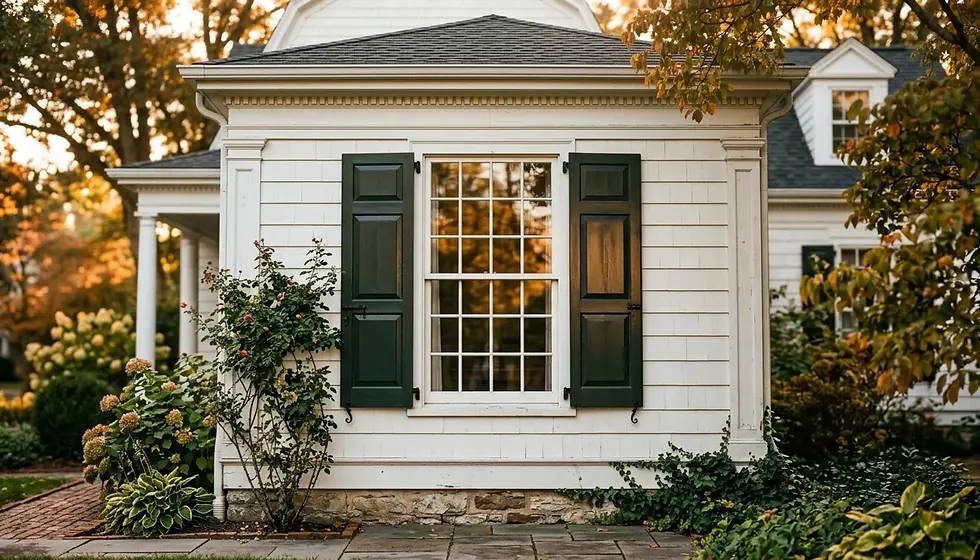
Paneled shutters are exterior or interior window coverings that feature one or more solid, raised, or recessed panels in place of angled louver slats. They are one of the oldest shutter styles in American architecture, and in 2026 they remain a top choice for homeowners who want clean sightlines, low maintenance, and a look that bridges traditional and contemporary design. The question most homeowners ask is not whether paneled shutters work, but whether they work for their specific home style, climate, and budget.
Paneled shutters use solid panel construction rather than angled slats, making them distinctly different from louvered styles in both appearance and function.
Vinyl raised panel shutters start around $45 per pair for standard sizes, with custom configurations reaching $94 to $157 per pair depending on mullion count and width.
The global window shutters market is projected to reach $4.02 billion in 2026, driven by rising investment in premium home improvement and smart home integration.
Panel shutters suit colonial, federal, and craftsman-style homes by design, but flat-panel and recessed-panel variants adapt well to modern farmhouse and contemporary architecture.
For coastal homeowners on the Delmarva Peninsula, PVC and composite panel shutters outperform wood in salt-air environments because they resist warping, mold, and corrosion.
Most panel shutters sold today are purely decorative, but fully operable versions exist and provide genuine light control when correctly sized to cover the window opening.
Choosing between shutter styles feels straightforward until you realize how many variables stack up: architectural compatibility, material longevity, color pairing, and whether you want the shutters to actually function or simply frame the window. This article breaks down every meaningful difference between paneled shutters and their main alternatives, gives you a side-by-side comparison table, and helps you match the right style to your home's specific needs.
At Home Blinds and Floors, we consult with homeowners across the Delmarva Peninsula every week on exactly this decision. Whether the home is a colonial in Easton, MD, a modern build in Lewes, DE, or a vacation property near Rehoboth Beach, the right shutter style depends on specifics that no product page covers. This article reflects what we actually tell clients in those conversations.

What Is a Shutter Panel?
A shutter panel is the individual operational unit of a window shutter, consisting of a frame surrounding one or more solid or raised sections of material. Each shutter panel is sized to cover half of a window opening when closed. In a standard pair of exterior shutters, two panels flank the window, one on each side. The panel itself can be flat, recessed, or raised, depending on the architectural style and manufacturing method.
Specifically, a raised panel features a central section that projects slightly outward from the surrounding frame, creating a three-dimensional profile with shadow lines that add visual depth to a facade. A flat panel sits flush with the frame and reads as a single plane, which suits contemporary and modern farmhouse architecture. A recessed panel is the inverse of raised: the center sits below the frame edge, giving a more subtle, inset appearance popular on craftsman homes.
In interior applications, a shutter panel refers to the same structural unit but mounted inside on a track or hinged directly to the window casing. Interior paneled shutters are less common than louvered plantation shutters for indoor use, but they do appear in traditional and period-correct interior designs where slat visibility would look out of place.
The number of panels per shutter unit also varies. A single-panel shutter covers the full height of the window opening. A double-panel shutter splits the height into two sections, which allows the top half to remain closed while the bottom opens, a configuration sometimes called a café or Dutch-door arrangement. Custom panel counts accommodate unusually tall or wide windows.
What Is the Difference Between Panel and Louvered Shutters?
The core difference between panel and louvered shutters is surface construction: paneled shutters use solid or raised sections of material, while louvered shutters use horizontal angled slats that allow air and diffused light to pass through. Both styles serve the same architectural purpose of framing a window, but they behave differently in terms of light control, ventilation, visual weight, and stylistic fit.
How Light and Airflow Compare
Louvered shutters allow passive airflow and filtered daylight even when nominally closed, which made them practical in pre-air-conditioning climates across the American South and coastal regions. Paneled shutters, when closed and operable, block light and airflow completely. For modern homes with climate control, this functional distinction matters less than it once did. Most exterior shutters sold today are decorative regardless of style.
For interior use, plantation shutters with wide louvers (typically 2.5 to 4.5 inches) remain far more popular than interior paneled shutters because the adjustable slats give precise light control. If you want to control how much sun enters a bedroom or living room, louvered plantation shutters are the more practical interior choice. Our shutter installation services cover both styles, and during in-home consultations we help clients weigh exactly this trade-off based on room orientation and sun exposure.
Visual Weight and Architectural Fit
Paneled shutters read as solid and substantial. The raised profile creates bold shadow lines that reinforce the geometry of traditional facades. Louvered shutters have a lighter, more textured appearance because the slats break up the surface visually. On a colonial or federal-style home, raised panel shutters reinforce the formal symmetry of the facade. On a coastal cottage or craftsman bungalow, louvered shutters feel more relaxed and vernacular.
Neither style is inherently superior. The right choice depends on the home's architectural language. Forcing louvered shutters onto a formal federal manor looks casual in a way that undermines the facade's intent. Putting heavy raised panels on a light, airy beach cottage can feel overwrought. Match the shutter's visual weight to the home's overall composition.
What Is the Most Popular Shutter Style?
Louvered shutters, specifically the wide-slat plantation shutter variant, hold the largest overall market share for interior window shutters in the United States as of 2026. For exterior decorative shutters, raised panel shutters and louvered shutters share roughly equal popularity, with regional preferences skewing toward paneled styles in the Northeast and Mid-Atlantic and louvered styles in Southern and coastal markets.
According to Research and Markets, wood material holds a 42.7% share of the global window shutters market, reflecting continued consumer preference for natural aesthetics even as PVC and composite options gain ground. The market itself reached $3.78 billion in 2026 and is projected to grow to $4.02 billion in 2026, with rising demand for premium customization driving much of that growth.
On the Delmarva Peninsula specifically, we see strong demand for both paneled and louvered exterior shutters depending on the home's age and style. Colonial revivals in areas like Centreville and Easton tend toward raised panel configurations. Newer construction near Rehoboth Beach and Bethany Beach more often uses a combination louvered-over-panel design, which blends both styles into a single shutter unit, a format popularized by manufacturers like Monument Co. as a way to satisfy both traditional and contemporary tastes simultaneously.
For interior shutters, plantation-style louvered shutters dominate new installations. But among homeowners renovating period properties, interior paneled shutters are gaining renewed attention as a historically accurate alternative that avoids the ubiquity of louvered plantation styles.

Why Are Shutters No Longer Used as Functional Fixtures?
Shutters lost their primary functional role in most American homes during the mid-20th century, largely because the widespread adoption of air conditioning eliminated the need for passive ventilation, and modern glazing technologies replaced single-pane windows that offered minimal insulation. When climate control moved indoors, the practical argument for operable exterior shutters largely disappeared.
The shift to decorative-only shutters accelerated further when home builders began installing shutters that were clearly the wrong size for the windows they flanked. A shutter that cannot physically cover the window opening when closed is, by definition, decorative. This is extremely common in tract housing built from the 1970s onward, where shutters are often 12 to 14 inches wide on windows 36 to 48 inches wide. The architectural logic of shutters, which is that each panel should equal half the window's width, was abandoned in favor of lower material costs.
But shutters are not gone. Demand is, in fact, growing. The Future Market Report projects the window shutters market to reach $5.21 billion by 2030, with growth driven by rising investment in home exterior aesthetics, energy-efficient building codes, and the expansion of storm-resilient housing markets in coastal and hurricane-prone regions. In coastal Delaware and Maryland, exterior shutters serve a dual purpose: curb appeal enhancement and storm preparation, with Bahama and accordion styles providing genuine weather protection during severe weather events.
For homeowners considering a return to fully operable paneled shutters, the key requirement is correct sizing. Each panel must match half the window's width and the full window height to function properly. Manufacturers like Monument Co. build fully operable PVC shutters that meet this standard, and they are a practical option for homes where storm protection or genuine light control is a priority.
How Do Panel Shutters Compare Across Materials and Styles?
Paneled shutters are available in four primary materials: wood, vinyl, PVC, and composite. Each material has a distinct performance profile, and the right choice depends on your climate, maintenance tolerance, and budget. For Delmarva homeowners dealing with salt air, high humidity, and intense summer sun, material selection is particularly consequential.
Feature | Raised Panel | Louvered | Board and Batten | Combination (Louvered/Panel) |
Visual Style | Formal, architectural | Relaxed, textured | Rustic, farmhouse | Transitional, versatile |
Best Home Styles | Colonial, federal, craftsman | Cottage, Southern, coastal | Farmhouse, barn-style, rustic | Traditional, coastal, transitional |
Light Control (operable) | Full block when closed | Filtered, adjustable | Full block when closed | Filtered top, full block bottom |
Coastal Durability | High (PVC/composite) | Medium (wood degrades faster) | Medium | High (PVC formulations) |
Starting Price (per pair) | From $45.28 | From ~$40 | From ~$35 | From ~$70 |
Maintenance Level | Low (PVC/vinyl) | Medium (slat cleaning) | Low to medium | Low (PVC) |
Modern Home Compatibility | Moderate (flat panel variants) | Moderate | High (modern farmhouse) | Moderate to high |
Wood Panel Shutters
Wood holds a 42.7% share of the global shutter market, according to Research and Markets, reflecting its enduring appeal. Real wood panels accept custom paint and stain finishes and can be milled to precise architectural profiles that PVC cannot fully replicate. The trade-off for coastal homeowners is significant: untreated wood absorbs moisture, warps in humidity, and deteriorates quickly in salt-air environments. Wood panel shutters on a beachfront property typically require repainting every three to five years and replacement within a decade without diligent maintenance.
Vinyl and PVC Panel Shutters
Vinyl raised panel shutters from suppliers like Exterior Solutions start at $45.28 per pair for standard 15-inch widths, making them the most accessible entry point in the market. Custom configurations with mullion details (center mullion, double mullion, triple mullion) range from $83.99 to $94.09 per pair. Double-wide versions with center mullions start at $156.99 per pair.
Extruded PVC, as used by Monument Co. in their solid-formulation shutters, goes a step further than standard vinyl. The solid extrusion resists buckling, cupping, and warping that can affect injection-molded plastic or hollow vinyl. Monument Co. claims a repaint cycle of 70 years even when painted in dark colors, and the material is termite-proof and mold-resistant. For coastal Delaware and Maryland properties, extruded PVC panel shutters are among the most durable exterior choices available.
Composite Wood Panel Shutters
Composite shutters blend wood fiber and polymer binders to achieve a wood-like appearance with better moisture resistance than solid lumber. They sit between wood and full PVC in both cost and performance. For homeowners who want the aesthetic warmth of wood grain without the full maintenance burden of real wood, composite panels are a reasonable middle ground. In humid coastal climates, however, full PVC or extruded PVC still outperforms composite for long-term dimensional stability.
Do Paneled Shutters Work on Modern and Contemporary Homes?
Paneled shutters can work on modern homes, but the panel profile and configuration need to align with the home's architectural vocabulary. Traditional raised panel shutters, with their projecting center sections and classical shadow lines, look at home on formal traditional facades. On a modern or contemporary home with flat surfaces, minimal ornamentation, and clean geometric lines, a flat-panel shutter in a bold color or dark finish integrates far more successfully than a raised panel profile.
The modern farmhouse trend that gained significant momentum through 2026 and 2026 has created strong demand for board-and-batten shutters and flat-panel shutters in dark stained or painted finishes. Homes with board-and-batten siding, black window frames, and metal roof accents benefit from flat-panel shutters in deep charcoal or forest green that echo the window frame color. This approach creates a cohesive exterior palette without the formality of a raised panel design.
For genuinely contemporary architecture, specifically homes with large expanses of glass, cantilevered sections, and asymmetrical facades, exterior shutters are often architecturally inappropriate regardless of style. Contemporary design tends to treat windows as part of the structural composition, not as openings to be framed by applied ornament. In those cases, interior window treatments such as motorized roller shades or custom interior shutters provide light control without disrupting the exterior's design intent.
Color Selection for Modern Exteriors
Color choice matters as much as profile when fitting paneled shutters to a modern home. Classic white shutters on a white or light gray house read as low-contrast and nearly invisible, which may be precisely the intent on a minimal contemporary facade. High-contrast pairings, such as black panel shutters on a white or cream exterior, deliver a graphic quality that suits modern farmhouse and transitional styles well.
For coastal homes on the Eastern Shore, navy blue and slate gray panel shutters have grown in popularity as alternatives to the traditional black-and-white pairing. These softer contrast options complement the muted, weathered tones common in Rehoboth Beach and Ocean City residential architecture. Painted custom color vinyl panel shutters from Exterior Solutions start at $142.99 per pair, making a custom color upgrade a relatively modest investment for the curb appeal return it delivers.

Are Paneled Shutters Functional or Just Decorative?
Most paneled shutters installed on American homes today are purely decorative. They are fixed to the wall beside the window and cannot close. This is the industry standard for new construction and most renovation projects because decorative-only mounting is simpler, less expensive, and sufficient for the primary goal of enhancing curb appeal.
Fully operable paneled shutters do exist and serve genuine functional purposes in specific situations. First, for storm protection in coastal and hurricane-prone markets, correctly sized operable panel shutters provide a physical barrier over window glass when closed. Second, for homeowners restoring historic properties in areas like Annapolis or Easton, period-accurate operable shutters are both architecturally appropriate and potentially required by historic district guidelines. Third, for energy-conscious homeowners, closing operable exterior shutters during peak summer heat can reduce solar heat gain through windows, contributing to lower cooling costs.
The critical requirement for functional panel shutters is correct sizing. Each shutter panel must be wide enough to cover exactly half the window opening. A 36-inch wide window requires two panels, each 18 inches wide. Most decorative shutters sold today are 14 to 16 inches wide regardless of window width, which makes them non-functional by design. If functional operation matters to you, specify panel width carefully when ordering, and work with a supplier or installer who understands the sizing logic.
Our team at Home Blinds and Floors regularly advises clients in Kent Island, Salisbury, and Ocean Pines on this exact point. A shutter that cannot close is an aesthetic choice, not a functional one. Both choices are valid, but knowing which you are making prevents regret after installation.
What Should You Consider Before Choosing Paneled Shutters?
Selecting the right paneled shutter configuration involves five practical decisions: profile type, material, sizing approach, color, and mounting method. Getting all five right ensures the shutters enhance your home rather than simply occupying wall space beside the windows.
Match the profile to your architecture. Raised panel profiles suit colonial, federal, and formal traditional homes. Flat panel profiles work on modern farmhouse and transitional styles. Recessed panels align with craftsman bungalows. Installing the wrong profile on a home is the single most common shutter mistake we see, and it is entirely avoidable with a brief architectural assessment before ordering.
Choose material based on climate exposure. For coastal Delmarva properties in Lewes, Bethany Beach, or Ocean City, extruded PVC or high-quality composite is the practical choice. Wood panel shutters require significantly more maintenance in salt-air environments and are best reserved for inland locations or homeowners committed to regular upkeep. Review our guide on faux wood vs. real wood for a deeper comparison of how material choices perform in this region's climate.
Size for function or choose decorative intentionally. If your goal is purely decorative, standard sizes in 14 to 16-inch widths work fine. If you want operable shutters for storm protection or historic accuracy, calculate the required panel width as half the rough opening width and order accordingly. Custom sizing from suppliers like Exterior Solutions adds $16 to $30 per pair over standard dimensions.
Select color with the full exterior palette in mind. Consider window frame color, trim color, siding color, and roof material before choosing a shutter color. High contrast reads as bold and graphic; low contrast reads as integrated and subtle. Neither is wrong, but the choice should be deliberate.
Plan the mounting method before installation. Decorative shutters mount with clips or fasteners directly to the siding. Operable shutters require hinges and, ideally, shutter dogs (holdbacks) to keep panels open in wind. The mounting hardware affects both the visual detail at the wall and the long-term performance of the installation.
For a broader look at how shutters fit within a complete window treatment plan, the custom window treatments section of our blog covers everything from interior plantation shutters to motorized exterior solutions in detail.
What About Sustainability and Eco-Friendly Panel Shutter Options?
Sustainability is an increasingly relevant factor in shutter selection in 2026, particularly among homeowners who are tracking the environmental footprint of their renovation choices. The window coverings sector has seen meaningful progress on this front. One documented innovation achieved a 50% reduction in carbon footprint compared to traditional blinds manufacturing through the use of recycled materials, according to Research and Markets industry data.
For paneled shutters specifically, the sustainability picture varies significantly by material. Wood shutters sourced from FSC-certified forests represent the most straightforward sustainability credential, though the maintenance cycle and shorter coastal lifespan partially offset the environmental benefit. PVC shutters have historically carried a higher manufacturing carbon footprint than wood, but long service life (extruded PVC formulations are rated for decades of performance) means fewer replacement cycles over the life of a home, which reduces cumulative material consumption.
Composite shutters made with recycled wood fiber and polymer binders represent a genuine middle ground: they divert waste material from landfills, outperform solid wood in humid environments, and carry a lower embodied carbon than virgin PVC. Growing consumer preference for eco-friendly materials, including bamboo and recycled composites, is identified by the Future Market Report as a key driver shaping the shutters market through 2030.
For homeowners seeking verified environmental credentials on interior window treatments, Hunter Douglas offers products with documented certifications. When pairing interior shutters or shades with exterior paneled shutters, choosing products with verified environmental standards ensures the full window treatment package aligns with sustainability goals. The combination of durable exterior paneled shutters and certified interior treatments represents the most defensible approach for environmentally conscious homeowners.
Frequently Asked Questions About Paneled Shutters
What is the difference between raised panel and flat panel shutters?
Raised panel shutters feature a center section that projects outward from the surrounding frame, creating a three-dimensional profile with pronounced shadow lines. Flat panel shutters have a center section that sits flush with the frame, producing a clean, minimal surface. Raised panels suit formal traditional architecture, while flat panels integrate better with modern farmhouse, transitional, and contemporary styles.
How much do paneled shutters cost per pair?
Standard vinyl raised panel shutters start at approximately $45.28 per pair for 15-inch wide units. Custom configurations with mullion details range from $83.99 to $94.09 per pair, while double-wide versions with center mullions start around $156.99 per pair. Custom painted color options begin at roughly $142.99 per pair. Pricing varies by material, with wood and extruded PVC units typically costing more than standard vinyl.
Are paneled shutters purely decorative, or can they be functional?
Most paneled shutters installed today are decorative and fixed to the wall. Fully operable versions are available and provide storm protection, privacy, and light control when correctly sized to cover the full window opening. The key requirement for functional operation is that each panel width equals half the window's width. Standard decorative shutters are typically 14 to 16 inches wide regardless of window size, which makes them non-functional.
Which shutter material works best for coastal homes in Delaware and Maryland?
Extruded PVC and composite panel shutters outperform wood and standard vinyl in the salt-air, high-humidity environment of the Delmarva Peninsula. Extruded PVC, such as the formulations used by Monument Co., resists warping, buckling, mold, and termite damage. Standard wood shutters in coastal conditions typically require repainting every three to five years and may need full replacement within a decade without consistent maintenance.
Do paneled shutters work on modern homes?
Flat-panel and recessed-panel shutters adapt well to modern farmhouse and transitional home styles. Traditional raised panel profiles are generally too formal for genuinely contemporary architecture. For modern homes with large glass expanses and minimal exterior ornamentation, interior window treatments such as motorized roller shades or plantation shutters are often a better fit than any exterior shutter style.
What is a combination louvered and panel shutter?
A combination shutter features a louvered section on the upper half and a solid panel on the lower half, merging two classic shutter styles into one unit. Manufacturers like Monument Co. offer this configuration in extruded PVC with claims of termite resistance and a 70-year repaint cycle. The hybrid design suits transitional and coastal architectural styles that benefit from the textured visual quality of louvers without losing the solid base of a panel shutter.
How do I choose the right shutter color for my home's exterior?
Start by identifying your siding color, window frame color, and trim color. High-contrast combinations, such as black or charcoal shutters on a white or cream exterior, create a graphic, modern quality. Low-contrast combinations, where shutter color is close to the siding color, produce a more integrated and subtle result. For coastal Eastern Shore homes, navy blue, slate gray, and deep forest green are increasingly popular alternatives to the classic black-and-white pairing.
Making the Right Call for Your Home
Paneled shutters remain one of the most versatile exterior shutter styles available in 2026, precisely because the category spans everything from formal raised panel colonial profiles to flat-panel modern farmhouse configurations. The core decisions, which come down to profile, material, sizing intent, and color, are straightforward once you understand what each choice delivers.
For most Delmarva homeowners, extruded PVC or quality composite panel shutters in a profile matched to the home's architecture represent the best combination of longevity, low maintenance, and curb appeal. Wood remains a beautiful choice for inland properties with lower humidity exposure and owners willing to commit to a regular maintenance schedule. For coastal properties in Rehoboth Beach, Bethany Beach, or Ocean City, the salt-air environment makes material durability the deciding factor, not aesthetics alone.
If you are weighing paneled shutters against louvered or combination styles, the comparison table above gives you the key differentiators side by side. And if you want guidance on interior window treatments to complement your exterior shutter choice, our full range of shutter installation services covers both interior and exterior options across the Delmarva region.
Choosing window treatments that truly fit your home's architecture, climate, and lifestyle is easier with a local expert who understands both the design and the conditions. Contact Home Blinds and Floors to schedule a complimentary in-home consultation, and we will assess your windows, discuss your options, and provide specific recommendations tailored to your property.

If you are ready to move from research to results, the team at Home Blinds and Floors brings hands-on experience with paneled shutters, louvered styles, and every interior treatment in between to homeowners across the Delmarva Peninsula. See what our clients across Easton, Kent Island, and Rehoboth Beach have to say in our customer reviews, and reach out when you are ready to get started.


98win com mình mới ghé thử vì thấy bạn bè nhắc, kiểu vào xem cho biết thôi chứ không kỳ vọng gì. Vừa mở ra thấy giao diện khá thoáng, chia nội dung theo từng khung nên nhìn một cái là biết chỗ nào là phần nào, không bị ngợp chữ. Mình thích nhất là cái menu đặt ngay chỗ dễ thấy, bấm qua lại mấy mục cũng nhanh, không phải load lâu hay tìm hoài. Có đoạn giới thiệu họ nói về bảo mật uy tín ngay từ đầu nên đọc lướt cũng thấy yên tâm hơn chút, dù mình không có thời gian xem sâu. Nói chung cảm giác dùng ổn, nhìn “gọn gàng” đúng kiểu mình thích,…
Rik vip dạo này thấy nhiều người nhắc nên mình cũng ghé thử cho biết, chủ yếu xem trang họ trình bày ra sao thôi. Vừa vào là thấy bố cục chia mục khá thoáng, lướt một cái là nhận ra phần giới thiệu với phần hỗ trợ nằm đâu, không bị rối mắt. Mình để ý họ có nhắc luôn vụ bảo mật kiểu mã hóa SSL 256-bit và xác thực OTP ngay trong đoạn giới thiệu, nên đọc nhanh cũng hiểu đại khái chứ không phải mò sâu. Với lại nút khung liên hệ CSKH 24 7 đặt khá lộ, kiểu cần hỏi gì thì thấy ngay. Nói chung giao diện nhìn gọn, các tiêu đề và khối…
GG88 mình cũng mới ghé thử vì thấy bạn bè nhắc hoài, chủ yếu vào xem giao diện chứ không ngồi chơi hay đọc kỹ. Cảm giác đầu tiên là trang chia khối nhìn thoáng, kéo xuống không bị rối mắt. Mình lướt qua vài tiêu đề bài viết, thấy có kiểu bài giải thích “bao lô là gì” nên nhìn phát hiểu ngay họ đang nói về gì, không phải đoán. Mấy phần nội dung đặt theo dạng danh sách nên mình bấm qua lại khá nhanh, không bị lạc. Nói chung tone màu và cách canh chữ ổn, đọc lướt cũng dễ chịu. Mình thích nhất là tiêu đề bài nổi bật và các khối nội dung tách…
https://gg88vn.net/ mình ghé thử vì thấy bạn bè nói qua, kiểu vào xem giao diện thế nào thôi. Trang load khá nhanh, nhìn tổng thể thoáng mắt chứ không bị rối. Mình thích cách họ chia nội dung thành từng khối rõ ràng, lướt xuống là biết đang có gì mà không phải đọc quá nhiều. Có đoạn giới thiệu nhắc tới bảo mật với giao diện 4k, nên phần chữ và các khung thông tin nhìn sắc nét, không bị mờ hay lem. Menu cũng đặt dễ thấy, bấm qua lại mấy mục không phải mò lâu. Nói chung cảm giác “dùng thử” vài phút là thấy ổn, nhất là cách họ trình bày tiêu đề và các box…