.avif)
.avif)
.avif)
How to Fix Jammed Blinds: A Step-by-Step Repair Guide

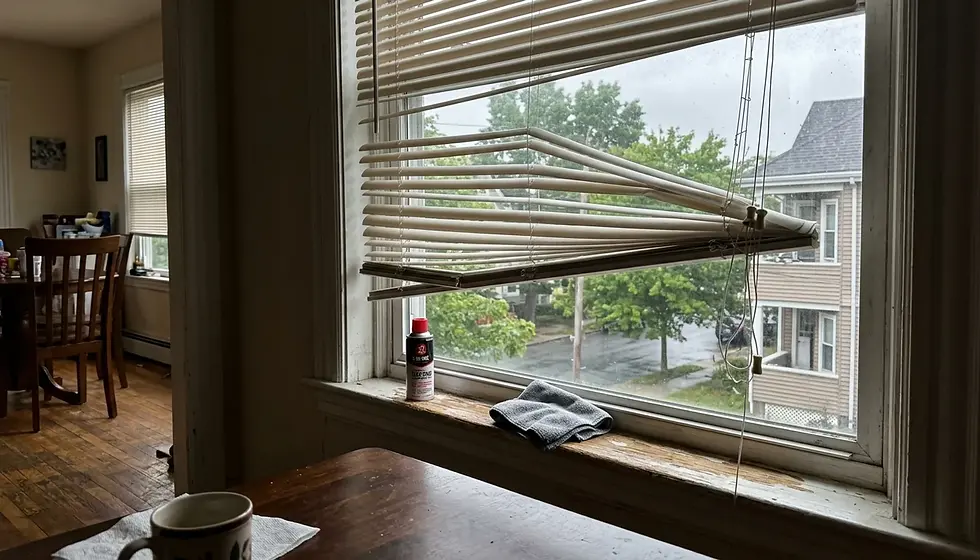
How to fix jammed blinds depends on the mechanism causing the jam: lower the blind fully to release tension, check the cord lock or pawl for misalignment, and apply a small amount of silicone spray to tracks or gears. Most jams clear in under 10 minutes without tools.
Key Takeaways
Most jammed blinds trace back to one of four causes: a stuck cord lock, a misaligned pawl, debris in the roller tube, or lost spring tension in a cordless lift system.
Lowering the blind fully before attempting any fix releases built-up tension and is the first step recommended across nearly every professional repair method.
Silicone spray works better than WD-40 on most blind tracks and gears because it will not attract dust or leave residue on fabric slats.
Cordless roller blinds that lose spring tension can often be fixed by removing the roller, re-rolling it by hand two or three times, and reinstalling.
If a blind jams repeatedly after multiple repair attempts, or the mechanism grinds and clicks, replacement is usually more cost-effective than continued repair.
Homeowners across Delmarva Peninsula communities like Rehoboth Beach, Ocean City, and Kent Island deal with jams more often because salt air and humidity accelerate wear on plastic components.
A jammed blind is one of the most common window treatment complaints homeowners across Delaware and Maryland's Eastern Shore bring up. At Home Blinds and Floors, we hear about it constantly during in-home consultations, usually right after someone mentions they have been fighting with the same set of blinds for months. The good news is that most jams are mechanical, not electrical or structural, and they respond well to a handful of proven fixes.
This guide walks through diagnosis first, then repair steps organized by blind type, because a roller shade jam and a vertical blind jam need different tools and different techniques. You will also find guidance on when a repair genuinely makes sense versus when replacement saves you money and frustration. Coastal homes in Lewes, Bethany Beach, and Ocean Pines face faster wear on cord locks and tilt mechanisms because of humidity cycling and salt exposure, so a fix that works for six months inland might need repeating twice a year near the water.
Whether you are dealing with a stuck cord lock in a bedroom, a roller shade that will not retract in a sunroom, or a set of vertical blinds jammed at a sliding glass door, the diagnostic process below applies. Work through it in order before assuming your blinds need full replacement.
How Do I Fix Blinds That Won't Push Up?
Blinds that will not push up are usually jammed at the cord lock or lift cord, not the slats themselves. The fix is to pull the lift cords straight down first to release built-up slack, then pull the cords at roughly a 45-degree angle toward the center or outer edge of the headrail until you feel a faint click.
That click means the pin inside the cord lock has disengaged. If nothing happens after two or three attempts, the blind likely needs to come down from its brackets. Inside the headrail, a small spring-like pawl sits near the outer edge of the locking mechanism. If the pawl has slipped out of its track, gently push it back into place with a flathead screwdriver or another blunt tool. Specifically, this pawl is what catches the cord and holds the blind at a set height. When the pawl shifts, the blind either will not hold position at all or refuses to move up past a certain point.
For horizontal blinds with a stuck cord lock, remove the headrail from its brackets, locate the pin in the cord-lock mechanism, and turn the pin 90 degrees with a flathead screwdriver before pushing it back in to disengage the cords fully. This reset restores the lock without cutting or replacing any cord. As a result, most homeowners can restore full push-up function in under 15 minutes using tools already in a kitchen drawer.
Why Won't My Blind Come Down?
A blind that will not come down is almost always caught on tension somewhere in the lift system, whether that tension comes from a jammed cord lock, a tangled lift cord, or slats that have shifted out of their vertical alignment. The first troubleshooting step is always the same regardless of blind type: lower the blind as far as it currently allows to release whatever tension is holding it in place.
For vertical blinds specifically, check that every slat sits properly in its individual clip. If even one slat has slipped and tucked behind its neighbor, the entire chain can bind and refuse to extend. Realigning that single slat by hand often resolves the whole jam.
Horizontal and Roman blinds with a stuck cord lock typically respond to the same pin-release method described above: pull cords together at the headrail, pull straight down, then angle toward the center or the edge until you hear the pin disengage. For Roman blinds specifically, locate the locking cleat where the cord wraps and unwind the cord from whatever angle it is caught at, since Roman shade cords tend to bind when wound at an uneven angle rather than straight down. If a ring has pulled free from the back of a Roman shade, the ring needs to be re-attached at the same spacing as the surrounding rings before the cord will run cleanly again.
How Do I Release a Push-Up Blind?
Releasing a jammed push-up blind means manually disengaging the pin inside the cord lock so the lift mechanism moves freely again. Grasp both lift cords together where the cords exit the headrail, pull the cords straight down first, then pull at a 45-degree angle toward either the center or the outside edge of the blind until you feel or hear a soft click.
That click confirms the pin has released. If the push-up mechanism still will not budge after this step, the tilt wand or tilt mechanism may be binding separately from the lift cords. Manually rotate the slats fully open, then fully closed, four or five times in a row. This repeated motion clears minor binds inside the tilt gear that are not related to the cord lock at all.
For blinds where the pin release does not work on the first or second try, remove the headrail from its mounting brackets entirely. With the headrail in hand, you have direct access to turn the cord-lock pin 90 degrees with a flathead screwdriver and push the pin back into its resting position. Reinstall the headrail once the mechanism moves freely by hand before rehanging the headrail in the window.

Why Are My Retractable Blinds Not Retracting?
Retractable blinds stop retracting for one of two reasons: the internal spring inside the roller tube has lost tension, or debris has physically jammed the tube. Roller shades rely on a coiled spring inside the tube to pull fabric back up, and that spring gradually loses strength over years of daily use, especially in high-humidity coastal settings like Ocean City and Bethany Beach.
Start by unrolling the shade fully to inspect the fabric edges, the roller tube ends, and the brackets for debris, insect nests, or small foreign objects. Even a small piece of grit lodged at the tube's edge can throw off the tension enough to stop retraction. Remove any debris with a duster, a vacuum attachment, or scissors if the obstruction is a small fabric snag.
If the fabric and tube are clear, the spring itself likely needs re-tensioning. Remove the roller from its brackets, roll the fabric tightly back onto the tube by hand, and reinstall the roller. Repeating this process two or three times gradually rebuilds tension in most cordless lift mechanisms. For a more precise fix, unroll the shade halfway, use pliers to turn the pin on the spring side of the roller until you feel resistance build, and confirm the pawl still engages the ratchet before rehanging the shade.
Motorized versions of the same problem usually come down to power, not mechanics. Check the batteries in the remote first, then confirm the motor unit is receiving power according to its manual, and try a manual reset if the motor has one. If your household already runs on a system that includes motorized shades from a smart home platform, our custom window shades installation team across the Delmarva Peninsula can walk you through compatible upgrade options during a free in-home consultation.
What Tools and Lubricants Actually Work for Jammed Blinds?
Silicone spray is the safest, most effective lubricant for jammed blind tracks, gears, and roller mechanisms, and silicone spray outperforms WD-40 in most cases because silicone does not attract dust or leave an oily residue on fabric. Applying a small amount directly into the headrail track, then opening and closing the blind repeatedly, distributes the lubricant evenly and often frees a jam within a few cycles.
Beeswax is the better choice for lift cords and Roman shade cords specifically, since beeswax reduces friction along the cord without transferring oil onto surrounding fabric panels. Rub a small amount along the length of the cord before rethreading the cord through rings or clips.
Here is how the three most common options compare across blind types found in Delmarva homes:
Lubricant or Tool | Best Used On | Avoid Using On | Why It Works |
Silicone spray | Metal tracks, headrail gears, roller tube ends | Fabric shades, cord fibers | Non-greasy, dust-repellent, safe on plastic and metal components |
WD-40 | Bent metal brackets, rusted pull chains | Cords, fabric, plastic clips | Loosens corrosion but attracts dust and can degrade plastic over time |
Beeswax | Lift cords, Roman shade cords, cleats | Metal tracks and gears | Reduces cord friction without leaving oily residue on nearby fabric |
Pliers | Bent tracks, spring-tension pins on rollers | Plastic cord locks (can crack under pressure) | Provides enough torque to straighten tracks and adjust spring pins |
Flathead screwdriver | Cord-lock pins, pawl repositioning | Motorized housing units | Fits standard pin-release mechanisms without damaging surrounding plastic |
For vertical blinds at sliding glass doors, a bent track is a frequent culprit behind uneven slat travel. Use pliers to gently straighten the bent section, working in small increments rather than one hard bend, since overcorrecting can crack an aging plastic track. If your vertical blinds are original to a home built before 2015, the track material itself may already be brittle enough that repeated bending attempts crack it, which is a strong sign it is time to consider our sliding door treatment options built for the specific dimensions of your slider.
How Do I Diagnose a Blind Type Before Fixing It?
Diagnosing a blind jam starts with identifying the blind type, since roller shades, vertical blinds, Roman shades, and motorized blinds each fail differently and require different fixes. A roller shade that will not retract has a spring or debris problem inside the tube. In contrast, a vertical blind that will not slide has a misaligned slat or bent track, and a Roman shade with a stuck cord has a locking cleat or ring problem. For example, a horizontal blind that raises unevenly, with one side higher than the other, almost always points to uneven cord tension rather than a broken slat.
Use this checklist before attempting any repair:
Note whether the blind is corded, cordless, or motorized, since each category has a distinct failure pattern.
Lower the blind as far as it currently allows to release built-up tension before inspecting further.
Check for visible debris, insect activity, or foreign objects at the roller tube ends or track corners.
Inspect whether all slats sit correctly in their clips, with none tucked behind a neighboring slat.
Listen for grinding or clicking sounds during operation, which usually indicate a mechanical part is worn rather than simply misaligned.
Test the tilt wand or tilt mechanism separately from the lift cords, since these two systems can fail independently.
For motorized units, rule out battery and power issues before assuming a mechanical fault.
Working through this checklist in order prevents the most common mistake we see during consultations: homeowners force a lift cord repeatedly when the real issue is a bent track, which only makes the cord fray faster.
How Do I Fix a Jammed Lift Cord Without Cutting the Whole System?
A jammed lift cord can usually be fixed without cutting anything by rethreading the cord through the rings or clips using a bodkin or a large sewing needle, working from the bottom of the blind up through each ring in the same vertical column. This method keeps the cord's original tension and length intact rather than forcing a full cord replacement.
If the cord is knotted at a junction point, or the fibers are visibly frayed near the headrail, cut the cord back past the damaged section only, then re-tie or splice the cord using new cord of the same diameter. Cutting the entire cord and starting over is rarely necessary and often creates more slack than the original system was designed for.
For Roman shades specifically, if a ring on the back panel has pulled loose from the ring tape, stitch or clip the ring back into position at the exact same spacing as the surrounding rings. Uneven spacing between rings is one of the most overlooked causes of a cord that binds partway through its travel, since the cord has to change angle slightly at each ring and any inconsistency compounds across the full length of the shade.
This is also where many DIY repairs go wrong on coastal properties. Salt air degrades cord fiber faster than inland environments, so a cord that looks intact can be more brittle than it appears. If you are rethreading a cord on a home in Rehoboth Beach or Milton and the cord snaps mid-repair, that snap is usually a sign the entire cord needs replacing rather than a repair failure on your part.
Should You Repair Jammed Blinds or Replace Them?
Repairing jammed blinds makes financial sense when the jam is isolated to one mechanism, such as a single cord lock or one misaligned slat, and the blind is less than five to seven years old. In contrast, replacement becomes the better option once a blind has jammed repeatedly after multiple repair attempts, or when the mechanism grinds, clicks excessively, or has visible cracks in the plastic housing. Coastal exposure shortens this timeline: homes within a mile or two of the water in Bethany Beach, Lewes, or Ocean City often see plastic cord locks and tilt gears degrade faster than the manufacturer's expected lifespan because UV exposure and salt humidity make plastic brittle years ahead of schedule.
As a general framework, ask three questions before deciding: has this exact blind jammed more than twice in the past year, is the repair addressing a symptom or the root mechanical cause, and would the material itself (wood, faux wood, aluminum, vinyl) hold up better in your specific window's light and humidity exposure than what you currently have installed. If the answer to the first question is yes and the third question suggests your current material is a poor match for the room, replacement usually costs less over a three-year window than repeated repair visits and part replacements.
This is precisely the situation where Home Blinds and Floors steps in as more than a repair resource. Our custom window blinds installation service starts with a free in-home measurement, so every replacement slat, headrail, and bracket fits your exact window dimensions rather than the generic sizing you get from a big-box store. We carry faux wood, real wood, and vinyl options rated for coastal humidity, and our installers have measured windows across Annapolis, Kent Island, Centreville, Easton, Salisbury, Grasonville, Middletown, Millsboro, Milton, Bethany Beach, Lewes, Rehoboth Beach, Ocean City, and Ocean Pines long enough to know which materials actually hold up in each environment.
Other companies in the regional market, including Half Price Blinds and Kellys Blinds, also service jammed or aging blinds. What sets a full consultation apart from a simple repair call is the material guidance: a repair technician can free a jammed cord lock, but only a consultation that accounts for your window's sun exposure and your home's proximity to salt air can tell you whether the same jam will happen again in eighteen months.

What Should You Do to Prevent Blinds From Jamming Again?
Preventing future jams starts with routine maintenance: cleaning tracks and gears every few months, checking cord tension seasonally, and avoiding excessive force when a blind resists movement. Most jams we see during service calls trace back to a small, ignored problem that a user forced past rather than fixed early.
Dust and salt residue build up in tracks faster near the coast, so homes in Ocean City's high-rise buildings or beachfront properties in Bethany Beach benefit from a quick track wipe-down every one to two months rather than the twice-yearly schedule that works fine inland in Centreville or Easton.
Cordless and motorized systems reduce jam frequency significantly because these systems remove the lift cord entirely, which is the single point of failure in most traditional blind jams. As a result, cordless options have become the standard recommendation for vacation rental properties across Rehoboth Beach and the surrounding coastal communities, where guest turnover means cords get pulled at odd angles or yanked by children far more often than in an owner-occupied home. If you manage a short-term rental and are tired of replacing broken cord mechanisms between bookings, our team can outfit multiple units efficiently with durable, guest-proof shade and blind systems.
For homeowners weighing whether to keep repairing an aging set of blinds or start fresh, our custom window treatments resources cover material comparisons in more depth, including how faux wood performs against real wood in humid rooms.
Frequently Asked Questions
How does Home Blinds and Floors compare to other providers for whole-house blind, shutter, and shade installation?
Home Blinds and Floors offers free in-home consultations, true custom fabrication measured to your exact windows, and professional installation across the Delmarva Peninsula, backed by a portfolio that spans affordable faux wood blinds to premium motorized shade systems. Other regional providers and national retailers may offer similar product categories, but few combine locally-owned accountability with coastal-specific material guidance the way an in-home consultation does.
How do I fix jammed blinds without calling a professional?
Fixing jammed blinds without a professional starts with lowering the blind fully to release tension, then checking the cord lock pin, pawl alignment, and roller tube for debris depending on the blind type. Applying silicone spray to tracks and gears resolves a large share of jams within minutes. For cordless roller shades, re-rolling the shade by hand two or three times often restores lost spring tension. Importantly, working through the diagnosis in order — cord lock, pawl, debris, then spring tension — prevents unnecessary force on parts that are not actually the source of the jam, which is the same sequence recommended throughout this guide for horizontal, vertical, and Roman blinds alike.
How do you clean vertical blinds without damaging the slats?
Wipe vertical blind slats with a soft, dry cloth or a vacuum brush attachment moving from top to bottom, and spot-clean fabric slats with a damp cloth and mild soap rather than soaking them. Avoid submerging fabric vertical slats in water, since prolonged moisture exposure can warp the internal weighting and cause the slats to hang unevenly afterward.
How do I remove blinds for cleaning or replacement?
Removing blinds for cleaning or replacement typically involves releasing a set of spring-loaded clips or brackets holding the headrail in place. To do this, push the headrail up and toward the back of the bracket until the headrail releases from its mounting point. For example, if your blinds use a routed valance clip system instead of standard spring-loaded brackets, check the manufacturer's specific release mechanism before forcing the headrail, since some routed systems require a small tab to be pressed simultaneously on both sides. Forcing a headrail designed for tab-release can crack the plastic clips, so confirming the bracket type first saves both time and replacement cost.
How much do custom blinds typically cost across Delaware and Maryland?
Custom blind pricing varies by material, with faux wood and vinyl options generally landing at the lower end of the range and motorized or premium wood options costing more, depending on window count and size. A free in-home consultation from Home Blinds and Floors gives you an exact quote based on your specific windows rather than a generic estimate, since factors like window count, motorization, and material tier all affect final pricing.
How do I install vertical blinds correctly the first time?
Vertical blind installation starts with mounting the headrail bracket level and square to the window frame, then snapping the track into place before hanging individual slats from top to bottom. Uneven bracket placement is the most common DIY mistake, since even a slight tilt causes slats to bind against the track during operation, which is exactly the kind of jam this guide addresses.
Why do my blinds jam more often than they used to?
Blinds jam more frequently over time because plastic components in cord locks, pawls, and tilt gears wear down or become brittle from repeated use and environmental exposure. As a result, homes near the coast in areas like Ocean City, Bethany Beach, and Rehoboth Beach see this wear accelerate due to salt air and humidity, often cutting the expected lifespan of standard plastic hardware by a noticeable margin compared to inland homes. In practice, this means a cord lock or tilt gear that would last years in a place like Centreville may need repair or replacement much sooner in a beachfront property, simply due to accelerated material fatigue rather than any difference in the original product quality.
Are motorized blinds less likely to jam than corded blinds?
Motorized blinds are generally less prone to jamming than corded blinds because motorized systems eliminate the lift cord entirely, which removes the most common point of failure in traditional corded systems. However, motorized blinds can still experience their own issues, including dead batteries, remote pairing failures, or a motor that needs a manual reset. For households already using smart home platforms like Alexa or Google Home, motorized shades installed by a professional team tend to require far less troubleshooting over time than cord-based systems, since power and pairing issues are typically quicker to diagnose than a worn mechanical cord lock.
Final Thoughts on Fixing Jammed Blinds in 2026
Most jammed blinds respond to the same core sequence: lower the blind fully, identify whether the problem is a cord lock, pawl, spring tension, or debris, then apply the specific fix for that mechanism. Silicone spray, careful cord rethreading, and a few rounds of manual re-rolling solve the majority of cases without a service call.
But repeated jams, cracked housings, or grinding mechanisms are a signal worth listening to, especially in coastal Delmarva homes where salt air and humidity shorten the working life of standard plastic hardware faster than most homeowners expect. As 2026 continues to bring more homeowners toward cordless and motorized options for exactly this reason, replacement is increasingly the more practical long-term choice over repeated DIY repair.
If your blinds have jammed more than once this year, or you are noticing warping and cracking that no amount of silicone spray will fix, Home Blinds and Floors offers free in-home consultations across the entire Delmarva Peninsula, from Annapolis and Kent Island down to Rehoboth Beach and Ocean City. Our team measures every window, walks you through material options built for your home's specific light and humidity exposure, and handles installation from start to finish.
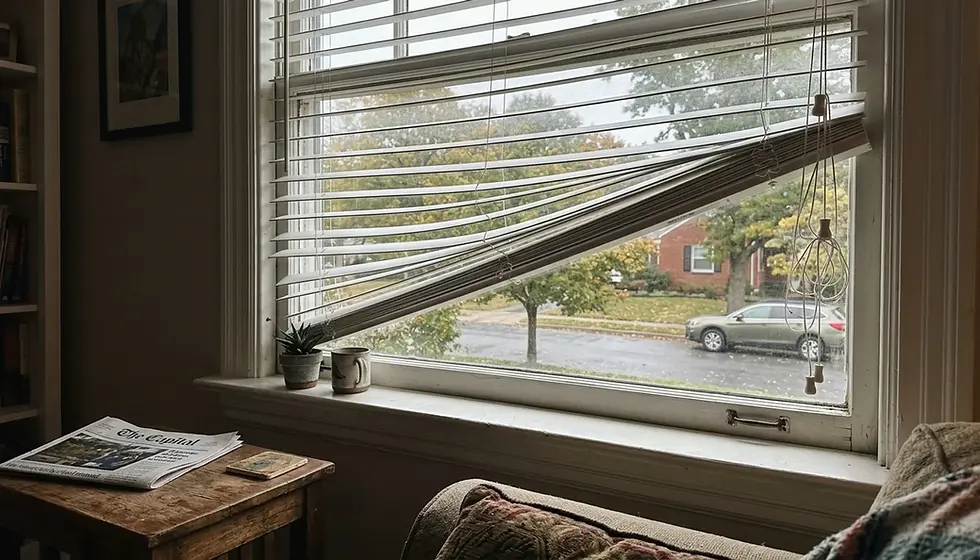
If you have already worked through the fixes in this guide and your blinds keep jamming anyway, it is probably time for a fresh set built for your window's actual conditions. Get started with Home Blinds and Floors and request your free in-home consultation today.
Content powered by inkSTR.co


Comments