.avif)
.avif)
.avif)
Best Way to Clean Wood Blinds for Your Delmarva Home

TL;DR: The best way to clean wood blinds is with regular dry dusting using a microfiber cloth or a vacuum's soft brush attachment. Avoid water and harsh chemicals, as moisture can warp the wood, especially in the humid Delmarva climate. For deep cleaning, use the vacuum method. For tough spots, use a barely damp cloth and dry the area immediately.
Your Weekly Routine for Dust-Free Wood Blinds
Wondering about the safest and best way to clean wood blinds without causing damage? It’s a common concern for homeowners across the Delmarva Peninsula. At Home Blinds & Floors, we know your custom blinds are a significant investment in your home’s beauty and comfort, and keeping them pristine is a top priority.
This guide lays out the easiest, most effective weekly cleaning routine you can do to protect the wood’s finish and natural charm. Sticking to a consistent schedule is the real trick to preventing that heavy dust buildup that turns cleaning into a massive project.
Choosing the Right Tools for the Job
Having the right equipment is half the battle. If you use something too abrasive, you’ll scratch the finish. If you use the wrong kind of cloth, you’ll just end up pushing dust around the room.
To get your weekly clean done right, you only need a couple of things.
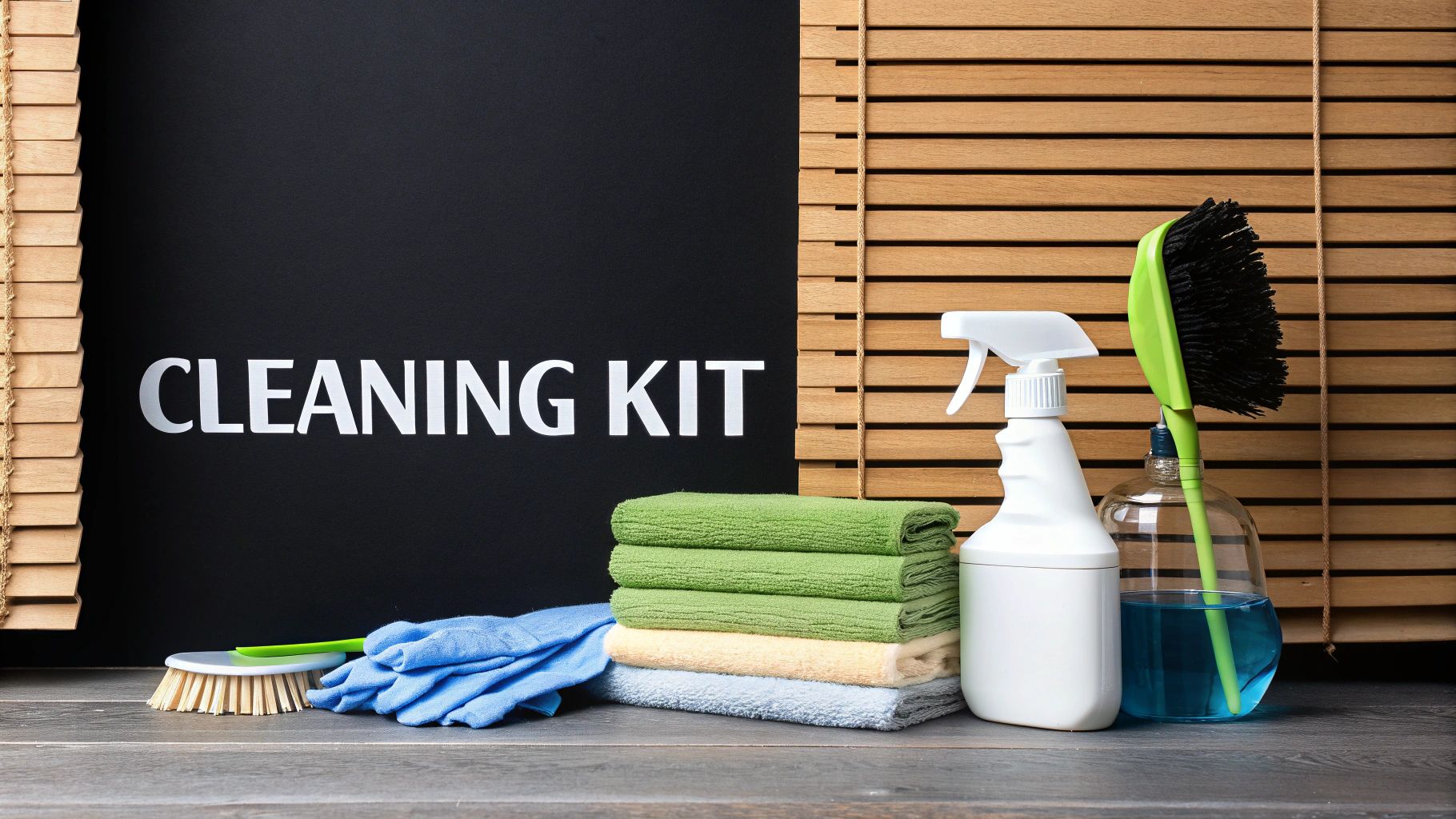
Before you start, it’s helpful to have your cleaning arsenal ready. Having the right tools on hand makes the process quick and ensures you won’t be tempted to grab something that could damage the wood.
Essential Tools for Cleaning Wood Blinds
A quick reference guide to the recommended tools for safely and effectively cleaning your wood blinds at home.
Tool | Best Use Case | Pro Tip |
|---|---|---|
Microfiber Cloth or Mitt | Your main tool for weekly dusting. Traps dust instead of just moving it. | A mitt-style cloth makes it easier to grip and wipe each slat individually. |
Lambswool Duster | Great for a quick, light dusting. The natural lanolin is fantastic at attracting dust. | Best for light, frequent touch-ups between deeper cleanings. |
Soft Brush Vacuum Attachment | For a more thorough weekly clean to lift stubborn dust from slats and strings. | Always use the lowest suction setting to avoid scratching the finish. |
With these simple tools, you’re all set to maintain your blinds without any risk.
We hear from cleaning pros all the time: stick with a dry microfiber cloth for your routine maintenance. It's the surest way to avoid the warping and damage that water-based cleaners can cause. Some people I know even swear by wiping the slats with a dryer sheet after dusting to help repel future dust. It actually works!
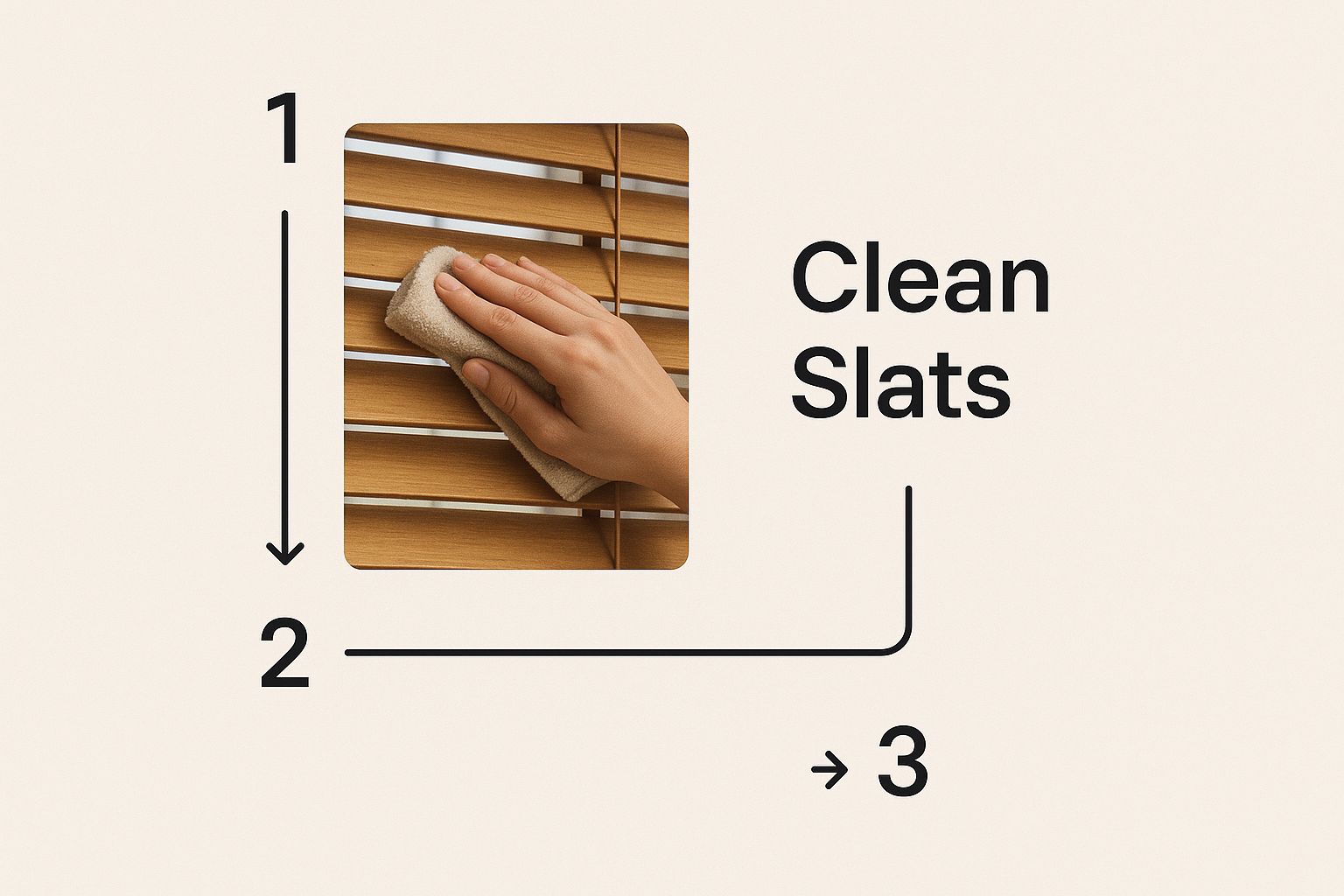
Pro Tip: Here’s a little trick to make dusting go faster. Close the slats so they face down, and wipe them from top to bottom. Then, flip the slats the other way and do it again. This way, you clean the entire surface of every single slat without missing a spot.
The Importance of a Dry-Clean Approach in Delmarva Homes
I can't say it enough: moisture and real wood blinds do not mix. Water gets into the grain and causes the wood to swell, discolor, and warp permanently. This is a huge issue on the Eastern Shore with our humid air. By committing to a dry-cleaning method for your weekly routine, you’re actively protecting the finish and the structure of your investment.
This gentle care has other benefits, too. Clean blinds contribute to better indoor air quality and help them do their job as insulators. If you're curious about how much window treatments can affect your home's temperature, take a look at our guide on energy-efficient window coverings.
As a local, family-run business, Home Blinds & Floors provides personal service, competitive pricing, and professional installation throughout Sussex, Wicomico, Kent, and beyond.
Deep Cleaning Your Wood Blinds Without Damage
Let’s face it, sometimes a weekly dusting just doesn't cut it. Life happens, and grime builds up. When your wood blinds need a more serious intervention, the trick is to deep clean them without harming that beautiful finish. The absolute best tool for the job when they're extra dusty? Your vacuum cleaner.
Using a vacuum with a soft brush attachment is, hands down, the safest and most efficient way to lift away all that stubborn dust. It gets into every little nook and cranny without scratching the surface—a common fear for homeowners I talk to from Salisbury all the way to Easton.
Mastering the Vacuum Technique for Blinds
First things first, grab that soft, round brush attachment for your vacuum. Whatever you do, never use a hard plastic attachment. It’s a surefire way to leave permanent scuffs and marks on the slats.
Next, turn your vacuum down to its lowest suction setting. You don't need the power of a jet engine here; high suction can actually damage the delicate cords and mechanisms inside your blinds. We're going for gentle but thorough.
Work Methodically: Always start at the very top of the blinds and clean your way down, slat by slat. It’s a simple pro tip that prevents you from knocking dust from above onto the slats you just cleaned.
Clean Both Sides: Close the blinds so the slats are facing down and gently vacuum across each one. Then, simply tilt the slats the other way to get the opposite side. This two-pass method makes all the difference.
All the major manufacturers agree on this approach. In fact, vacuuming wood blinds with a soft brush attachment is proven to capture over 90% of dust and allergens without introducing the risk of moisture damage. It's a much safer bet than other methods and perfect for a monthly deep clean. For more on this, you can see some safe cleaning practices from Hunter Douglas.
Nourishing the Wood in Sunny Delmarva Homes
If you live in one of our sun-drenched Delmarva spots like Rehoboth Beach or Ocean City, you know the sun can be relentless. All that direct sunlight can dry out the wood over time, leaving it looking a bit tired and dull. A quality wood conditioner or a little lemon oil can bring back that natural luster, but the application is key.
The goal is to nourish the wood, not saturate it. A common mistake is applying too much product, which creates a greasy film that becomes a magnet for new dust.
Here's how to do it right: apply a small amount of conditioner or oil to a clean, dry microfiber cloth—never spray it directly onto the blinds. Gently wipe each slat with the cloth to apply a thin, even coat. Immediately follow up with a separate clean, dry cloth to buff away any excess. This final buff is the secret to a beautiful, non-greasy shine. For more great tips on caring for wood, this guide on how to clean wood floors has some helpful insights.
Of course, choosing the right material from the start can make maintenance much easier. If you're curious about what works best in our coastal climate, check out our guide on wooden blinds vs. faux wood blinds for Delmarva homes.
Handling Tough Spots and Preventing Buildup
Even if you’re a champion duster, life happens. Sticky fingerprints, kitchen grease, and mysterious smudges are inevitable, especially in busy homes from Easton to Salisbury. The secret isn't just cleaning them off; it's knowing how to do it without accidentally causing permanent damage to your beautiful wood blinds.
When you see a grimy spot, your first instinct might be to reach for an all-purpose cleaner. This is the number one mistake to avoid. Those harsh chemicals can eat right through the protective finish on your wood blinds, leaving behind discolored patches and damage you just can't undo.
Instead, the best way to clean wood blinds with minor messes is to take a much more targeted and gentle approach.
The Art of Safe Spot Cleaning
For most spots, all you'll need is a fresh microfiber cloth and a tiny bit of water. Lightly dampen one corner of the cloth—and I mean lightly. It should feel barely damp, not wet. Gently dab at the spot, using as little pressure as possible.
Here's the most critical part: immediately follow up with a completely dry section of the cloth. Wipe the area until it is bone dry. Even a little bit of leftover moisture can cause the wood slat to swell or warp over time, so you want to be thorough.
And whatever you do, never spray any liquid directly onto the blinds. Overspray can easily seep between the slats and into the delicate internal mechanisms, causing rust and other hidden problems.
Home Blinds & Floors offers a wide selection of custom blinds and shades in Delmarva, with expert installers who bring the showroom to your living room.
Proactive Tips for Preventing Buildup
Honestly, the easiest way to deal with grime is to stop it from building up in the first place.
After you finish your weekly dusting, try this simple trick: wipe down each slat with a fresh dryer sheet. It sounds odd, but it creates an anti-static barrier that actually repels dust, helping your blinds stay cleaner for much longer.
This little hack is especially helpful in coastal spots like Rehoboth Beach, where the salty air can leave a tacky film on surfaces that attracts dust like a magnet. A few minutes with a dryer sheet can save you a whole lot of cleaning time down the road.
Expert Takeaway: Think of spot cleaning as a surgical strike, not a full-scale assault. Your goal is to use the least aggressive method possible to lift the spot while preserving the wood's integrity. Patience and a light touch are your best tools here.
When you run into a particularly stubborn spot, it can be tempting to try something stronger. Before you do, check this quick guide to see what's safe and what you should steer clear of.
Spot Cleaning Wood Blinds Do's and Don'ts
Here’s a quick comparison of safe and harmful methods for getting those stubborn spots off your wood blinds.
Method | Why It Works (Or Doesn't) | Risk Level |
|---|---|---|
DO: Barely Damp Cloth | Gently lifts grime without oversaturating the wood. | Low |
DON'T: All-Purpose Sprays | Chemicals can strip the finish and cause discoloration. | High |
DO: Immediate Drying | Prevents moisture from warping, swelling, or staining the wood. | Low |
DON'T: Furniture Polish | Can leave a sticky residue that attracts even more dust and dirt. | Medium |
Ultimately, treating your wood blinds with a gentle touch is the best way to ensure they last. Stick to these simple do's and don'ts, and they'll continue to be a beautiful feature in your home for a very long time.
A Simple Cleaning Schedule for Lasting Beauty
Keeping your wood blinds looking their best really comes down to one thing: consistency. It's not about marathon cleaning sessions; it's about a simple, regular routine that prevents heavy-duty cleaning from ever being necessary. Think of it as a simple care plan that protects your investment and keeps your blinds looking great in your Delmarva home.
Weekly, Monthly, and Seasonal Tasks
The best way to stay on top of things is to break the job down into smaller, manageable tasks. This approach keeps dust and grime from building up and turning a quick wipe-down into a major chore.
Weekly Dusting: This is your front-line defense. Just a quick wipe of each slat with a microfiber cloth or a lambswool duster once a week is all it takes. Seriously, it’s a ten-minute job that stops dust from settling into the wood grain where it becomes a real pain to remove.
Monthly Vacuuming: About once a month, give your blinds a more thorough cleaning with your vacuum’s soft brush attachment. This gets into the nooks and crannies that a duster might miss. It's also the perfect time to give them a quick once-over for any small spots or smudges that you can tackle before they set.
Seasonal Check-Up: A few times a year, take a closer look at your blinds, especially those in windows that get a lot of direct sun—something we see a lot here in coastal towns like Ocean City. Check for any signs of dryness or sun exposure and address them before they become a bigger issue.
Adjusting for the Delmarva Climate
Living on the Delmarva Peninsula means dealing with some unique conditions. The salty air near the coast can leave a fine, slightly tacky film on surfaces, and if you have pets, you know the constant battle against dander.
If you live right on the water or have a furry friend, you might want to bump up your dusting to twice a week. It’s a small change that makes a big difference in preventing buildup.
Keeping your blinds clean doesn't just look good—it also helps them function better as insulators, which is a huge plus during our hot, humid summers and chilly winters. For more on that, check out our ultimate guide to DIY window insulation for Delmarva homes.
From free in-home consultations to flawless installation, Home Blinds & Floors takes the stress out of selecting window treatments.
Frequently Asked Questions About Cleaning Wood Blinds

Here are the most common questions homeowners on the Delmarva Peninsula ask us about caring for their custom wood blinds.
What is the best way to get dust off wood blinds?
The absolute best way to remove dust is with a dry microfiber cloth or a vacuum cleaner fitted with a soft brush attachment. A lambswool duster is also great for light, frequent dusting. These tools effectively trap and remove dust without scratching the wood's finish or introducing harmful moisture.
Can I use water to clean real wood blinds?
No, you should avoid using water to clean real wood blinds whenever possible. Wood is porous and can absorb moisture, which leads to warping, swelling, and staining—a significant risk in our humid coastal climate. For sticky spots, use a cloth that is only very slightly damp and be sure to dry the area completely right away.
How is cleaning faux wood blinds different from real wood?
Faux wood blinds are much more durable and moisture-resistant. While you should still start with a dry dusting, you can safely clean them with a damp cloth and mild soap and water. This makes them a great choice for high-humidity areas like kitchens and bathrooms in Delmarva homes. For more details, see our comparison of plantation shutters vs. blinds for Delmarva homes.
What cities in Delmarva do you serve?
Home Blinds & Floors proudly serves communities across the entire Delmarva Peninsula. Our service areas include Salisbury, Easton, Ocean City, and Cambridge in Maryland, as well as Rehoboth Beach, Lewes, Seaford, and all of Kent and Sussex counties in Delaware.
What cleaning products should I absolutely avoid on wood blinds?
To protect your investment, never use all-purpose cleaning sprays, ammonia-based glass cleaners, abrasive powders, or furniture polishes containing silicone on your wood blinds. These products can strip the protective finish, cause discoloration, or leave a sticky residue that attracts more dust. For more tips, check out our guide on easy methods for cleaning window blinds.
Your Local Window Treatment Experts in Delmarva
In summary, the best way to clean wood blinds is through consistent, gentle, and dry methods. By following a simple routine, you can protect your investment and keep your window treatments looking beautiful for years. From real wood blinds in Salisbury to durable faux wood options in Rehoboth Beach, proper care is key.
Home Blinds & Floors provides custom window treatments, expert advice, and in-home service to homes across the Delmarva Peninsula. From Rehoboth Beach to Easton, our team is here to help you choose the best shades, shutters, or blinds for your space. Schedule your free consultation today.


Comments