.avif)
.avif)
.avif)
The Best Ways to Improve Home Insulation in Delmarva Homes

TL;DR: Improving home insulation is a smart investment for Delmarva homeowners. The process involves conducting a DIY energy audit to find and seal air leaks, choosing the right insulation (like fiberglass, blown-in, or spray foam) for your attic and walls, and, critically, installing energy-efficient window treatments. Custom options like cellular shades or plantation shutters from Home Blinds & Floors can significantly reduce energy loss through windows, completing your home's thermal shield and lowering utility bills.
Are you tired of high energy bills and chilly drafts making your Delmarva home feel less like a sanctuary? Learning how to improve your home's insulation is one of the smartest upgrades you can make, but it's more than just adding fluff to your attic. At Home Blinds & Floors, we've seen firsthand how much conditioned air escapes through bare windows, a critical piece of the puzzle that often gets overlooked.
This guide will walk you through the essentials of creating a truly comfortable and efficient home, from sealing leaks and choosing insulation to selecting the right window treatments for your home in Salisbury, Rehoboth Beach, or anywhere in between.
Benefits of Better Home Insulation & Window Treatments
Let's talk numbers. The push for better home insulation isn't just about feeling cozier; it's a solid financial move. By properly insulating their walls and attics, families can slash their heating and cooling costs by 20-30%. That's a significant return on investment.
This trend is also getting noticed on a larger scale. The global insulation market is expected to jump from USD 74.1 billion in 2025 to a staggering USD 145.8 billion by 2035. It’s clear that energy efficiency is becoming a top priority for homeowners everywhere.
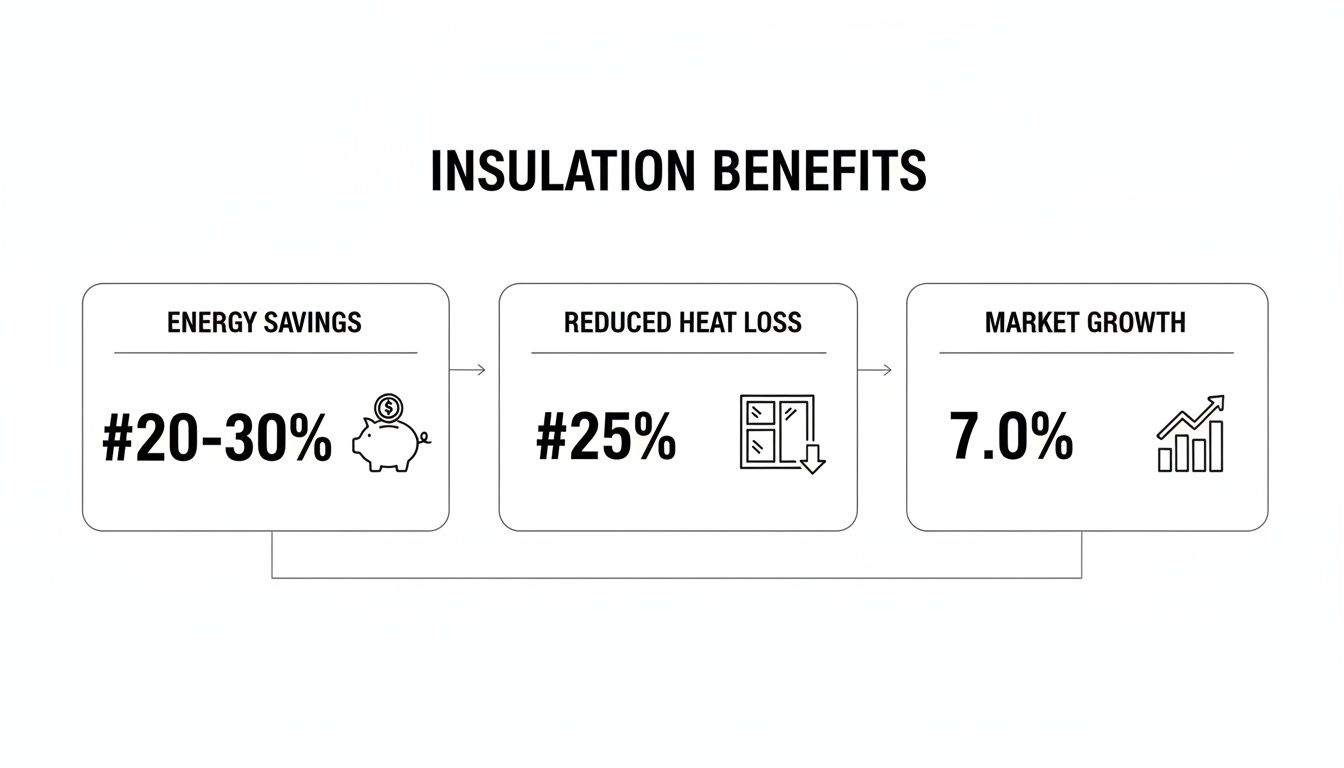
As the data shows, strategic upgrades pack a punch. For instance, the right window coverings can reduce heat loss through glass by up to 25%, boosting the effectiveness of your home's overall insulation.
From free in-home consultations to flawless installation, Home Blinds & Floors takes the stress out of selecting window treatments. When you combine our energy-efficient shades or shutters with traditional insulation, you create a powerful thermal shield that keeps your Delmarva home comfortable year-round.
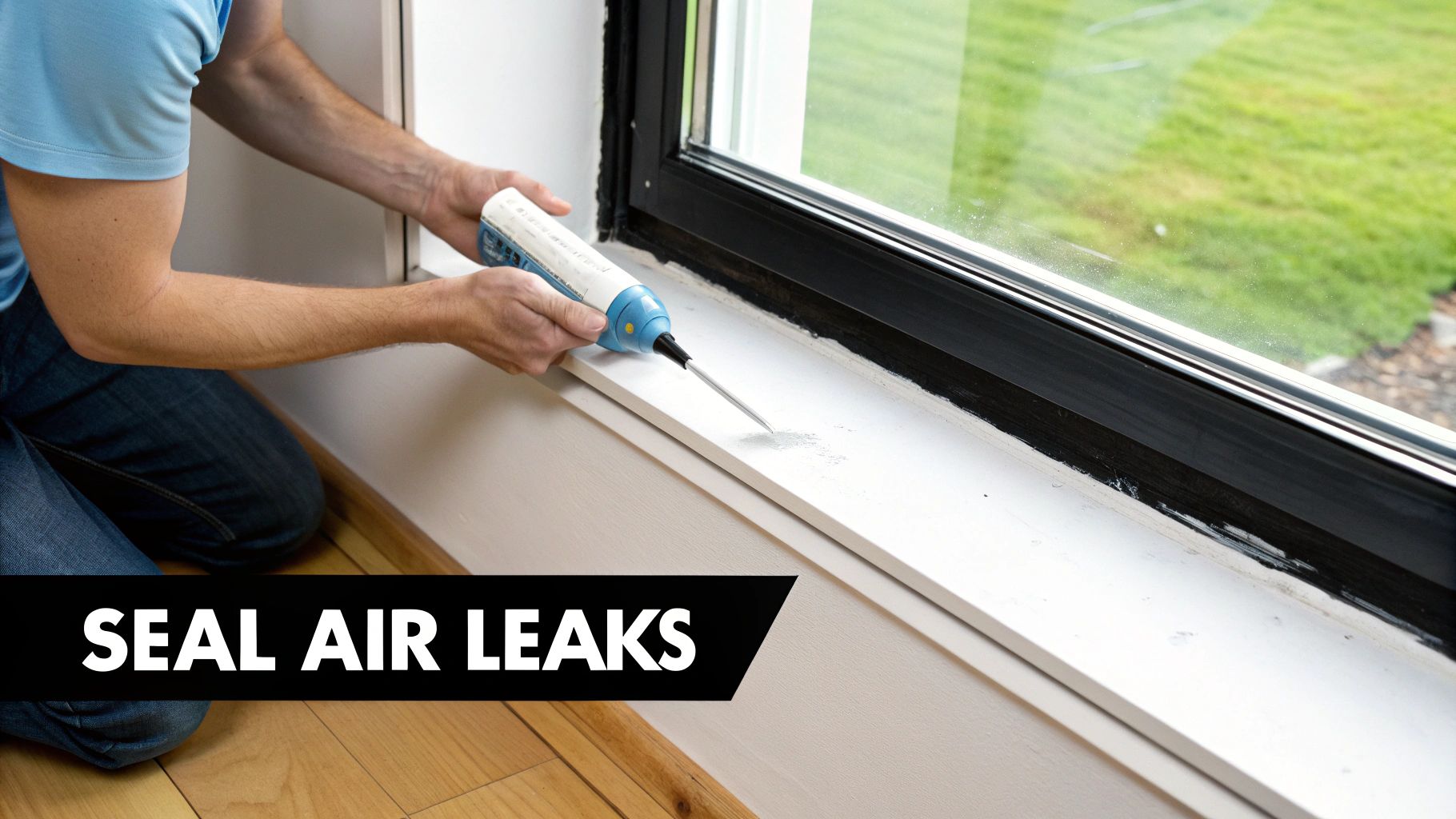
Find and Seal Air Leaks Before You Insulate
Before you even think about buying a single roll of insulation, we need to talk about the real energy vampires in your home: air leaks. Adding insulation without sealing leaks first is like putting on a brand-new winter coat but leaving it completely unzipped. You just won't get the protection you paid for.
Sealing up your home creates a tight "envelope," which is just an industry term for making sure the air you pay to heat or cool actually stays inside. This step alone can make a huge difference.
How to Play Detective: Conducting a DIY Energy Audit
You don't need fancy thermal cameras to find the major culprits. Grab a notepad and get ready to hunt for these common problem areas:
Windows & Doors: Are there visible gaps around the frames? A classic trick is the dollar bill test. Close a window or door on a bill—if you can pull it out without any drag, you've got a leak.
Outlets & Switch Plates: On your exterior walls, place your hand over electrical outlets. Feel a little breeze? That's a direct line to the outside.
Attic Hatch: Run your hand around the seam of your attic door. A leaky hatch is like leaving a window cracked open 24/7.
Basement Rim Joists: Head down to the basement and look for the wooden structure sitting on top of the concrete foundation. Gaps here let cold air seep in at the lowest level of your home.
Your Air-Sealing Toolkit
Once you've mapped out your home's leaky spots, it’s time to seal them. The key is using the right product for the right gap. For a deeper dive into window-specific fixes, check out our ultimate guide to DIY window insulation.
Material | Where to Use It |
|---|---|
Caulk | Perfect for sealing small, stationary cracks and gaps (less than 1/4 inch) around window and door trim. |
Weatherstripping | Ideal for the moving parts of your home. Use this to create a tight seal on the doors and windows themselves. |
Spray Foam | The heavy hitter for filling larger gaps, like those around pipes coming through a wall or in your basement rim joists. |
Foam Gaskets | These are a must-have. They’re pre-cut foam inserts you place behind your outlet and switch covers to stop those drafts dead in their tracks. |
By taking a weekend to hunt down and fix these leaks, you’re setting the stage for success. Your new insulation will finally be able to do its job properly, keeping your Delmarva home comfortable and your energy bills right where you want them.
Picking the Right Insulation for Your Home
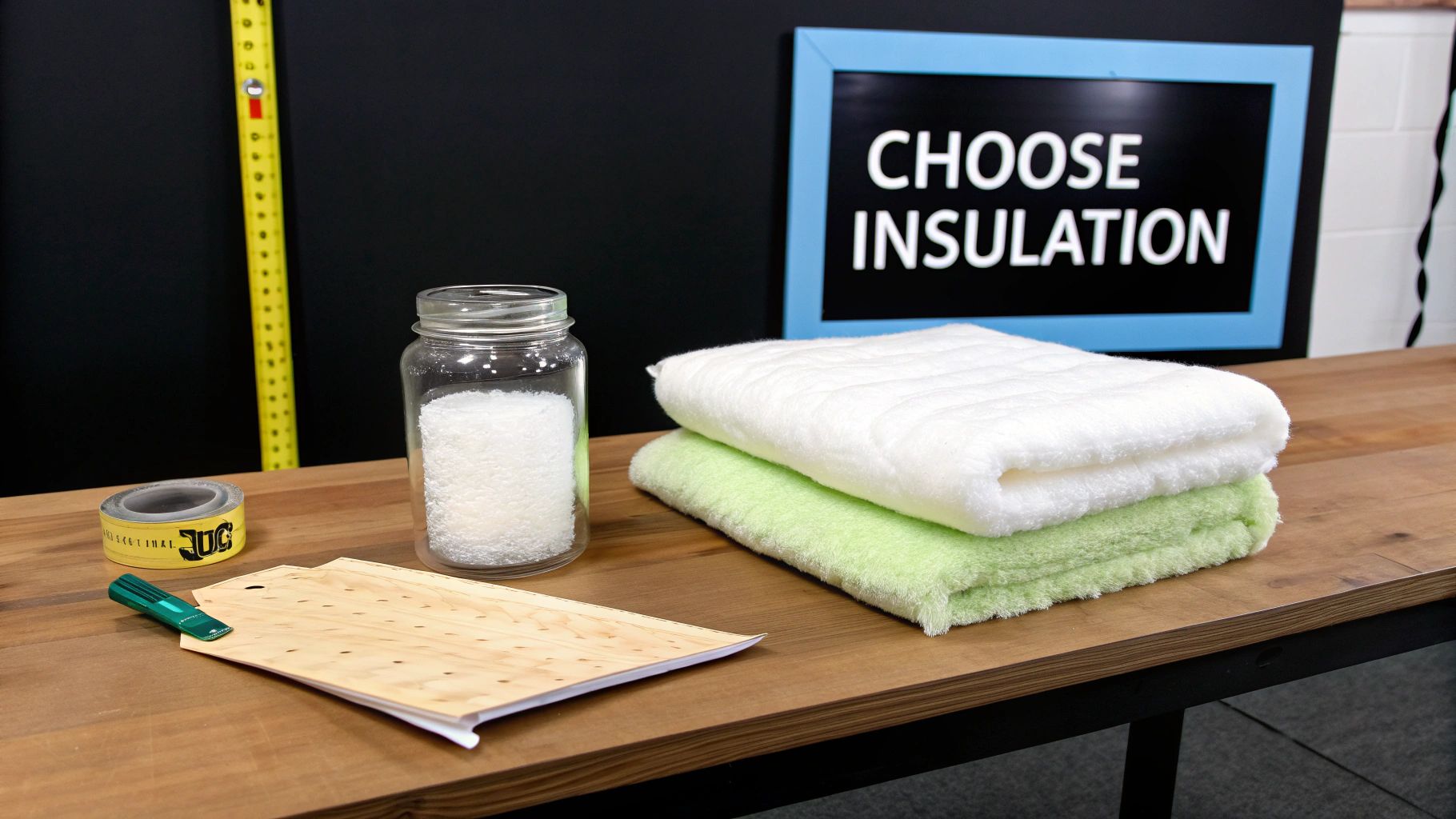
Once you’ve sealed up those pesky air leaks, it's time to tackle the main event: choosing your insulation. The "best" choice really comes down to your budget, which part of the house you're working on, and how much you're willing to do yourself.
Understanding R-Value
Before we get into materials, we need to talk about R-value. Think of it as a rating for thermal resistance—the higher the R-value, the better the insulation is at keeping heat where you want it. Here on the Delmarva Peninsula, we fall into ENERGY STAR Climate Zone 4. That gives us some clear targets to aim for:
Attics: R49 to R60
Walls: R13 to R15
Floors & Crawl Spaces: R25 to R30
Comparing Common Insulation Materials
Each type of insulation has its place. This table breaks down the essentials to help you compare.
Insulation Type | R-Value Per Inch | Best For | Pros | Cons |
|---|---|---|---|---|
Fiberglass Batts | R3.1 - R4.3 | Unfinished attics, floors, and walls with standard spacing. | Affordable and DIY-friendly. | Leaves gaps around obstacles; loses R-value if compressed. |
Blown-In | R3.2 - R3.8 | Topping up existing attic insulation; enclosed walls. | Fills irregular spaces well; cellulose is eco-friendly. | Requires a machine; can be messy and may settle over time. |
Spray Foam | R3.5 - R7.0 | Anywhere an air seal is critical; rim joists, crawl spaces. | Creates a powerful air and moisture barrier; high R-value. | Most expensive option; requires professional installation. |
As a local, family-run business, Home Blinds & Floors provides personal service, competitive pricing, and professional installation throughout Sussex, Wicomico, Kent, and beyond. While you’re beefing up your attic and walls, don't forget your windows. You can learn more in our guide to the best insulating blinds for Delmarva Peninsula homes.
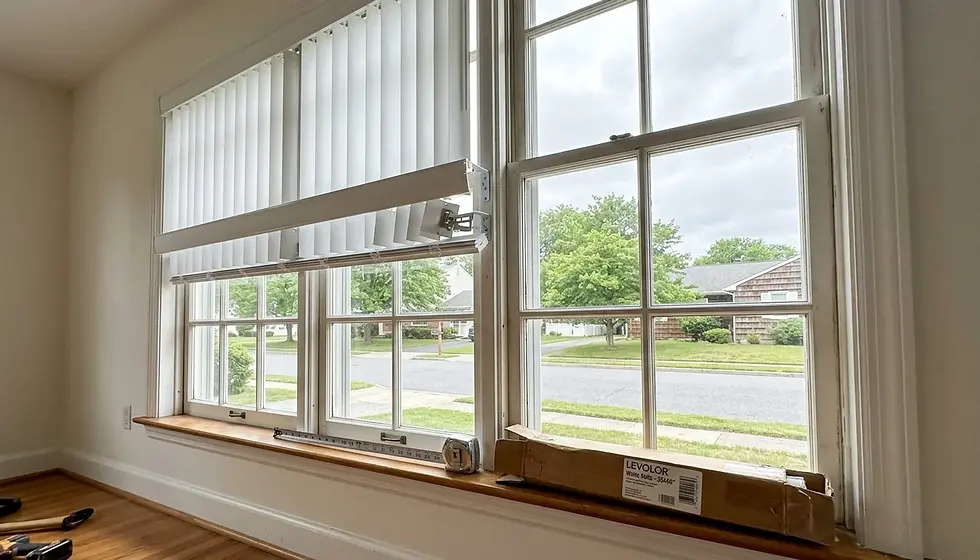
Don't Forget Your Windows—They're a Bigger Deal Than You Think
You've beefed up the insulation in your attic and walls, yet you still feel a chill. What gives? The culprit is often your windows. Glass is a terrible insulator by nature. In fact, studies consistently show that windows are responsible for up to 30% of a home's heating and cooling loss.
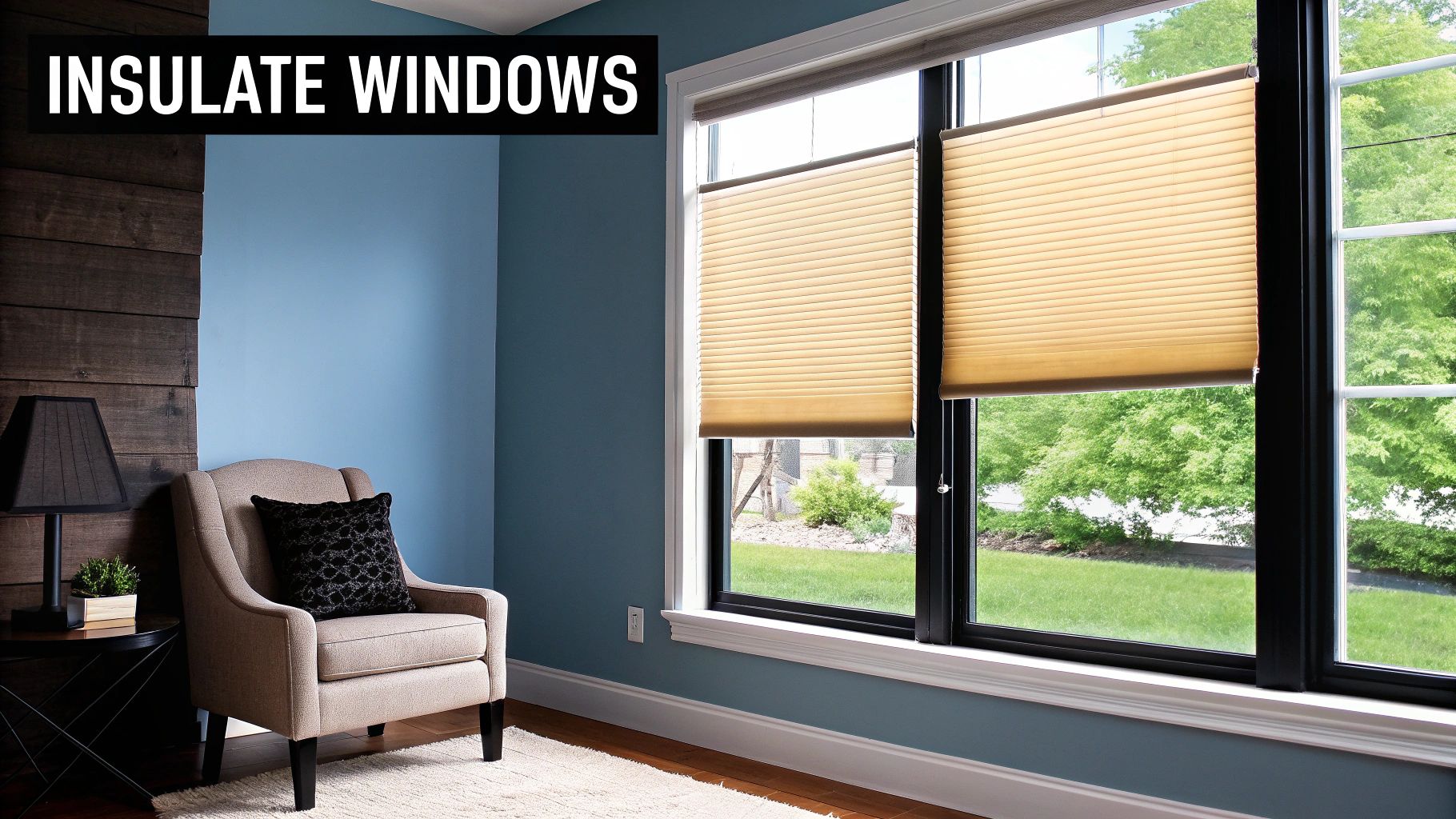
This is where modern, custom window treatments come into their own. They're not just for style and privacy anymore. The right products create a powerful insulating barrier right where it matters most.
Here are the heavy hitters:
Cellular (Honeycomb) Shades: These are the undisputed champions of window insulation. Their unique air-trapping pockets create a buffer that dramatically slows down heat flow.
Plantation Shutters: Crafted from solid wood or a durable polysatin compound, shutters offer a substantial physical barrier. When the louvers are closed, they create a nearly airtight seal against the window frame.
Insulated Draperies: Modern curtains can be lined with a thermal backing that reflects solar heat in the summer and holds onto your home’s warmth in the winter.
Home Blinds & Floors offers a wide selection of custom blinds and shades in Delmarva, with expert installers who bring the showroom to your living room. From Easton, MD, to Lewes, DE, we have seen firsthand how the right solution can stop energy loss at the source.
You can dive deeper into this topic by reading our guide on the best ways to block heat from windows. By making your windows a key part of your insulation plan, you finally complete your home's thermal shield.
Deciding Between DIY and Professional Insulation
Now comes the big question: Should you tackle this yourself or bring in the pros? The right answer really depends on what you're trying to do. Some projects are perfect for a determined DIY-er, while others are absolutely best left to the experts.
Tasks You Can Probably Handle Yourself
Air Sealing: Hunting down and sealing gaps around windows, pipes, and outlets with caulk and spray foam.
Weatherstripping: Adding new seals to drafty doors or windows is a fast, cheap fix.
Attic Insulation (Batts): If your attic is accessible, laying down new unfaced fiberglass batts is a very manageable job.
Garage Door Insulation: An often-overlooked area! Figuring out how to insulate a garage door is a great DIY project.
When to Call in a Professional
Spray Foam Insulation: This is a chemical process that needs precise mixing and application.
Dense-Packing Walls: To insulate existing, closed-in walls, you need a powerful blower and the skill to use it correctly.
Removing Old Insulation: If you're dealing with old, compacted, or pest-infested insulation, let a professional crew handle it.
While you might be rolling out batts in the attic, leave the windows to us. Home Blinds & Floors handles everything from free in-home consultations to a flawless installation, making sure your new energy-efficient shades or shutters perform at their absolute best. Learn more about the difference with professional window treatment installation in Delmarva.
FAQs: Insulating Your Delmarva Home
What are the best window treatments for energy efficiency?
Cellular (or honeycomb) shades are the top performers due to their unique air-trapping pockets. Plantation shutters and thermal-lined draperies are also excellent choices, creating a substantial barrier against heat transfer. At Home Blinds & Floors, we specialize in options from top brands like Hunter Douglas and Graber that are engineered for maximum insulation.
How much insulation do I need in my attic in Delmarva?
For homes on the Delmarva Peninsula (ENERGY STAR Climate Zone 4), you should aim for an R-value between R49 and R60 in your attic. This high level of insulation is crucial because the attic is a primary source of heat loss in winter and heat gain in summer. You can check your current level by measuring the depth of your existing insulation.
Can new blinds or shades really lower my energy bills?
Yes, absolutely. The U.S. Department of Energy confirms that high-performance window treatments can significantly reduce heat gain in summer and heat loss in winter. By choosing insulating products like cellular shades or shutters and using them properly, you can reduce the strain on your HVAC system, which translates directly into lower monthly utility bills.
What cities in Delmarva do you serve?
Home Blinds & Floors proudly serves homeowners and businesses across the entire Delmarva Peninsula. Our service area includes all of Sussex and Kent Counties in Delaware (Rehoboth Beach, Lewes, Dover) and Wicomico, Worcester, Somerset, and Talbot Counties in Maryland (Salisbury, Ocean City, Easton). We bring our showroom directly to you.
Summary
In summary, Home Blinds & Floors provides custom window treatments, expert advice, and in-home service to homes across the Delmarva Peninsula. A well-insulated home requires sealing air leaks, adding proper insulation to attics and walls, and installing energy-efficient window treatments. From Rehoboth Beach to Easton, our team is here to help you choose the best shades, shutters, or blinds for your space. Schedule your free in-home consultation today.


Comments