.avif)
.avif)
.avif)
Single Cell vs. Double Cell Shades: A Guide for Delmarva Homeowners

TL;DR: The choice between single and double cell shades comes down to a trade-off between value and performance. Double cell shades offer superior insulation, sound absorption, and room-darkening, making them ideal for bedrooms and sun-facing rooms on the Delmarva Peninsula. Single cell shades provide excellent energy efficiency and a sleeker look at a more budget-friendly price point, perfect for common areas like living rooms.
Which is Right for My Eastern Shore Home?
Trying to decide between single and double cell shades for your Delmarva home? You're not alone. The choice boils down to your specific needs for insulation, light control, and budget. At Home Blinds & Floors, we help homeowners across the Eastern Shore, from Salisbury to Rehoboth Beach, find the perfect balance of style and function with custom window treatments tailored to your space.
The core distinction is straightforward. Single cell shades have just one layer of air-trapping honeycomb pockets, while double cell shades have two. This simple difference in construction impacts everything from your heating and cooling bills to how peaceful your home feels.
Expert Insight: That second layer of cells in a double cell shade does more than just boost insulation. It creates a stronger, denser barrier that's fantastic at muffling outside noise. It’s a feature our clients love, especially those living near busy coastal roads or in bustling neighborhoods.
To help you see the differences clearly, we've put together this quick comparison table.
At a Glance: Single Vs Double Cell Shades
This table highlights the key characteristics of single and double cell shades to help you quickly identify the best fit for your needs.
Attribute | Single Cell Shades | Double Cell Shades |
|---|---|---|
Insulation | Good | Superior |
Sound Absorption | Moderate | Excellent |
Cost | More Affordable | Higher Initial Investment |
Appearance | Sleeker, larger pleats | Fuller, smaller pleats |
Light Control | Effective | Enhanced room-darkening |
Choosing the right window treatments shouldn't be stressful. That’s why we offer free in-home consultations and handle the entire installation process. By bringing our showroom directly to you, we make it easy to see precisely how each style will look and function in your own space.
If you'd like to explore these options further, you can learn more about our cellular shades.
Insulating Benefits of Honeycomb Shades
Before we can really dig into the single-cell versus double-cell debate, it helps to understand what makes these shades so effective in the first place. Their genius is in their honeycomb design. Each shade is built with hollow pockets, or "cells," that trap air. This trapped air acts as a powerful insulating barrier right at your window, working much like a high-end thermos that keeps your coffee hot or your water cold.
It’s this simple structure that does all the heavy lifting for energy efficiency. When Delmarva’s summer sun is beating down, those cells block the heat from warming up your room. Come winter, they do the opposite, keeping your paid-for heat from seeping out through the cold glass. This thermal resistance is what helps keep your home’s temperature stable, ultimately taking some of the load off your HVAC system.
Single Cell vs Double Cell Construction
The core difference between the two styles is exactly what it sounds like: the number of cell layers. A single cell shade has one layer of these honeycomb pockets. This design gives you a real, tangible upgrade in insulation over standard blinds or shades, all while keeping a slim and clean look.
On the other hand, a double cell shade packs in two layers of honeycomb cells, usually in a staggered pattern. By doubling up the layers, you’re trapping significantly more air, which creates a much more robust insulating barrier. They are a bit thicker, but the trade-off is top-tier thermal performance and even better sound absorption.
For homes along the Eastern Shore exposed to coastal winds or intense summer sun, the enhanced insulation of a double cell shade often provides the most noticeable improvement in year-round comfort.
This simple decision tree can help you quickly figure out which style aligns with your main priorities.
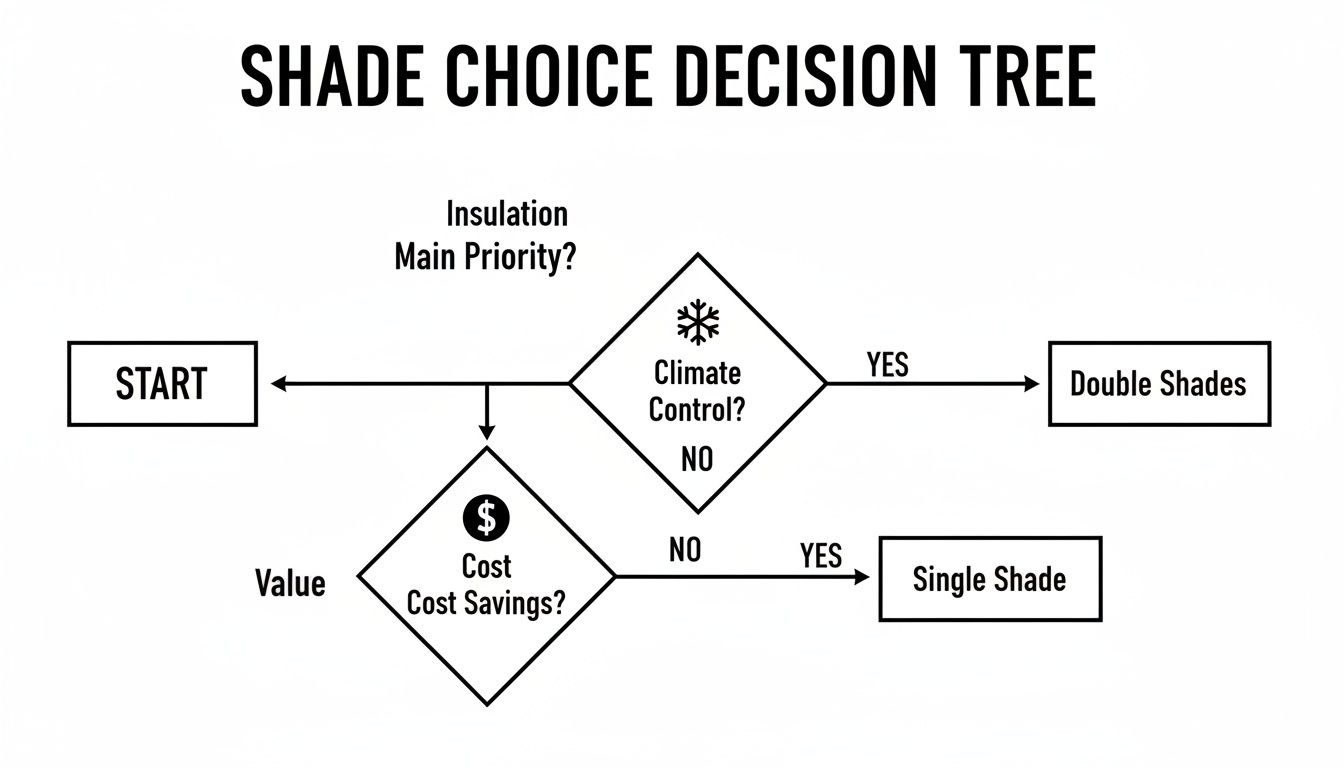
As you can see, if maximum energy efficiency is what you're after, double-cell shades are the clear choice. If you're looking for a great all-around performer that balances efficiency with cost, single-cell shades are a fantastic option. For a more detailed look at this, check out our guide to the best insulating window shades for Delmarva homes to save energy.
This fundamental difference in construction is what drives everything else—from energy savings to how quiet your living room feels.
Lowering Your Energy Bills with Cellular Shades
For most homeowners on Delmarva, the deciding factor between single and double cell shades boils down to one thing: energy efficiency. This isn't just about feeling more comfortable. It's about seeing a real, measurable difference in your utility bills, especially when our humid summers and chilly winters hit.
The magic behind this performance is a measurement called R-value, which is simply a way of rating how well something resists heat flow.
Single vs. Double: How They Stack Up
A single cell shade traps a single pocket of air. This creates a decent buffer between your room and the temperature outside. It’s a solid performer.
But a double cell shade, as the name implies, has two of these air pockets stacked together. This second layer of insulation dramatically increases the shade's R-value, making it a much more formidable barrier against the elements.
Key Takeaway: While single cell shades are a good step up from basic blinds, double cell shades offer a superior thermal barrier. If you have rooms that get blasted by the sun or have older, drafty windows, the extra insulation from double cells often pays for itself in energy savings.
The Numbers Don't Lie
The improved insulation of double cell shades isn't just a sales pitch; it translates directly into savings. Research from the Pacific Northwest National Laboratory (PNNL) found that cellular shades can cut heating usage by a significant 17.6% ±8.1% compared to a bare window.
On top of that, the U.S. Department of Energy estimates these shades can block up to 60% of unwanted solar heat during the summer. Double cell shades are the superstars here, maximizing that effect to keep your home cooler in July and toastier in January. You can read the full research about these energy findings and see the data for yourself.
As a local, family-run business, Home Blinds & Floors provides personal service, competitive pricing, and professional installation throughout Sussex, Wicomico, Kent, and beyond. We can show you the specific R-values for different products, helping you make the smartest choice for your home and budget.
A Long-Term Investment in Comfort
It helps to think of this decision as a long-term investment. Yes, double cell shades might cost a bit more upfront, but that higher price is tied directly to their superior performance.
For a coastal home in Rehoboth Beach getting hammered by the summer sun, or a historic house in Easton with beautiful but drafty old windows, that extra insulation isn't a luxury—it's a practical necessity. It keeps you comfortable while keeping your energy costs in check.
This focus on efficiency is also a big part of modern design. Choosing high-performance cellular shades fits perfectly within a broader commitment to sustainability and eco-friendly interior design.
As you think through the single cell vs double cell shades debate, look at the unique needs of each room. Choosing the right level of insulation isn't just about covering a window; it’s about making your home perform better. For more ideas, check out our smart home guide to energy-efficient window coverings.
Comparing Light, Privacy, and Sound Dampening
When you're choosing between single and double cell shades, you’re deciding more than just how they look. You're shaping the feel of the entire room—how light filters in, how much privacy you have, and even how quiet it is. These elements are what turn a house into a home, especially in bedrooms, home offices, or any space where comfort is paramount.
While both styles come in a range of fabrics from light-filtering to blackout, the structure itself makes a real difference in performance.
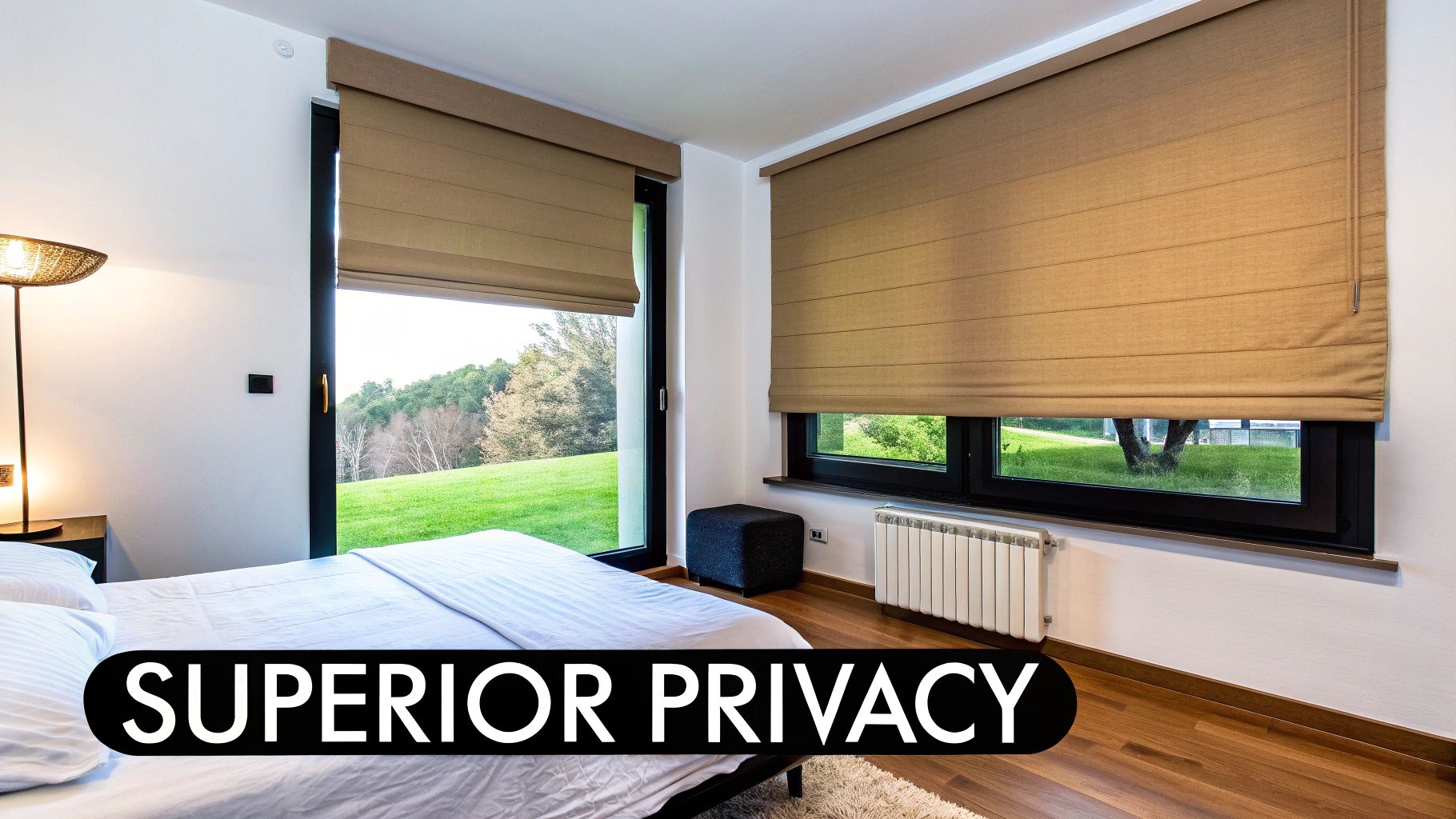
Achieving Your Ideal Light and Privacy Levels
The core difference comes down to material density. A double cell shade simply has more to it, with two layers of fabric cells creating a more substantial barrier than a single cell shade made from the exact same material.
Single Cell Shades: These are fantastic for diffusing harsh sunlight, transforming it into a soft, ambient glow. They provide solid privacy during the day, but be aware that you might see faint silhouettes from the outside at night when your lights are on.
Double Cell Shades: That second layer of cells really bumps up the room-darkening effect. The denser construction provides superior privacy, which is why we almost always recommend them for bedrooms and bathrooms where you want total peace of mind.
If you’re aiming for a true blackout experience for a media room or a light-sensitive sleeper, combining a double cell design with a dedicated blackout fabric is the way to go. It gets you as close to total darkness as possible. For a closer look at your options, check out our guide on light-filtering vs. blackout shades.
The Unseen Benefit: Sound Absorption
Here’s a perk many people don't think about: cellular shades are great at absorbing sound. Those same pockets that trap air for insulation also trap sound waves, helping to cut down on noise from outside.
This sound-dampening quality is a game-changer for homes on busy streets or in lively Eastern Shore communities. The dual-layer construction of double cell shades creates a more effective acoustic barrier, helping to muffle traffic, neighbors, and other ambient sounds for a quieter indoor space.
Home Blinds & Floors offers a wide selection of custom blinds and shades in Delmarva, with expert installers who bring the showroom to your living room. We help you see and feel the difference firsthand, making sure you get the perfect balance of light control and privacy for every single room.
Choosing The Right Style For Your Home
Sure, we've talked a lot about R-values and energy bills, but let's be honest—how your shades look is just as important. The right window treatment should feel like a natural part of the room, not just a functional afterthought. While single and double-cell shades are similar, their subtle aesthetic differences can really change the vibe of a space.

It all comes down to the pleats. Single-cell shades have larger, more open honeycomb pockets. This gives them a clean, crisp appearance with bold, defined lines that look fantastic in modern or minimalist homes. They make a simple, uncluttered statement.
On the other hand, double-cell shades pack two layers of honeycombs together, which means the pleats are naturally smaller and more compact. This creates a softer, more textured look with a subtle depth that works beautifully in traditional, cozy, or transitional spaces.
Customization Beyond The Cells
Of course, the number of cells is just the starting point. At Home Blinds & Floors, we know that the details are what truly make a design your own. That’s why we focus on offering a huge range of custom options to get the perfect fit for your home's personality.
Color & Fabric: We have hundreds of colors to choose from, whether you want a soft neutral that disappears into the wall or a bold color that becomes a focal point. You can also pick from different fabric textures to add another layer of visual interest.
Operating Systems: Go for the sleek, child-safe look of a cordless lift. Or, for the ultimate in convenience, we can motorize your shades and even integrate them with your smart home system.
Getting it right can feel overwhelming, which is why we handle everything from free in-home consultations to professional installation. We bring our entire showroom right to you, so you can see how the fabrics and colors look in your own home, with your own lighting. If you're trying to picture the final look, browsing through AI interior design galleries can be a great way to see how different styles might work in a room similar to yours.
Key Insight: Don't get too hung up on which is "better." The choice between the bolder pleats of single-cell shades and the softer look of double-cells is purely about what you prefer visually. Both styles can be customized to match any decor, so you never have to choose between performance and aesthetics.
Whether you're in Easton, MD, or over in Lewes, DE, our mission is to find the perfect solution that makes your home more comfortable and more beautiful.
Is the Extra Cost Worth It? A Look at Your Return on Investment
Let's talk money. When you're weighing single vs. double cell shades, it's easy to get stuck on the price tag. And yes, double cell shades do require a larger upfront investment. But thinking of it purely as an "expense" is the wrong way to frame it. This is an investment in your home's comfort and long-term energy efficiency.
The initial cost difference is definitely a factor. You can expect to pay anywhere from 15% to 25% more for double cell shades compared to their single cell cousins. But that premium isn't just for show—it's buying you a more powerful insulating barrier. The real payoff comes month after month in the form of lower energy bills, which can eventually cover that initial price difference. We break down more of how performance justifies the cost in our guide.
Understanding the Payback Period
So, how long does it take to get your money back? That's what we call the payback period—the time it takes for your energy savings to completely offset the extra you spent on double cell shades. This timeline isn't one-size-fits-all; it really depends on your specific home. But the concept is simple: the higher initial cost gets chipped away by lower utility bills over time.
Picture a home in Rehoboth Beach right on the coast, with big windows getting blasted by the sun. In the summer, the heavy-duty insulation of double cell shades gives the air conditioner a much-needed break. Come winter, they do the opposite, trapping heat inside and easing the furnace's workload. After a few years, those consistent savings really start to add up, essentially paying you back for making the smarter, high-performance choice.
From free in-home consultations to flawless installation, Home Blinds & Floors takes the stress out of selecting window treatments. We make it easy to find solutions that work for your style and your wallet.
When the Investment Really Shines
In certain rooms, upgrading to double cell shades pays for itself much faster and makes a far bigger impact. When you look at specific situations, the choice becomes crystal clear.
Key Insight: The ROI for double cell shades is fastest and highest in rooms that get a lot of direct sun, have older or less-efficient windows, or are in a climate with real heating and cooling seasons—just like here on the Delmarva Peninsula.
Consider where you see the biggest energy drains in your own home:
West-Facing Rooms: These rooms get absolutely baked by the afternoon sun, making your AC work overtime. Double cell shades act as a thermal shield to keep that heat out.
Bedrooms: For better sleep, you want a consistent, comfortable temperature. The superior insulation of double cells helps maintain that, and as a bonus, they do a better job of muffling outside noise.
Large Picture Windows: A big, beautiful pane of glass is also a massive hole for energy to escape. Dressing it with a high-performance double cell shade can make a noticeable difference in your home's overall efficiency.
Our team helps homeowners all over the Eastern Shore navigate these decisions. We bring the samples right to you, so you can see the options in your own space and feel confident you're making a smart financial choice.
Frequently Asked Questions About Cellular Shades
Making the final call between single and double cell shades often comes down to a few specific questions. We hear these all the time from homeowners across Delmarva, so let's clear them up.
Which cellular shade is best for bedrooms?
For bedrooms, double cell shades are the clear winner. Their two-layer design is a powerhouse for blocking light and muffling outside noise, which is exactly what you need for a restful night's sleep. The extra insulation also works wonders for keeping the room cozy in the winter and cool in the summer.
Do double cell shades look bulky?
That's a common misconception, but no, they don't. Modern double cell shades are engineered to be incredibly streamlined. In fact, their pleats are often smaller and more tightly stacked than single cell versions, giving them a clean, sophisticated look that won't overwhelm your window.
Are single cell shades still energy efficient?
Absolutely. Don't underestimate them. A single cell shade is still a massive improvement over standard blinds or a bare window. They strike a great balance between energy savings and affordability, making them a smart, practical choice for most rooms in a Delmarva home, especially high-traffic areas like living rooms and kitchens.
What cities in Delmarva do you serve?
Home Blinds & Floors proudly serves the entire Delmarva Peninsula. We bring our showroom to you across Sussex and Kent counties in Delaware (think Rehoboth Beach, Lewes, and Dover) and Maryland's Eastern Shore, including Wicomico, Worcester, and Talbot counties (from Salisbury and Ocean City to Easton).
How do I choose between single and double cell shades?
The best way is to see them in person. During a free in-home consultation, Home Blinds & Floors brings samples of both styles right to your home. You can see for yourself how they look and feel in your own light and space before you decide, ensuring you make the best choice for your needs and budget.
If creating a more peaceful home is a top priority, you might find our guide to noise-reducing shades and quieter living helpful.
Summary: Your Local Delmarva Shade Experts
In summary, Home Blinds & Floors provides custom window treatments, expert advice, and in-home service to homes across the Delmarva Peninsula. Choosing between single and double cell shades depends on your priorities: single cell for great value and a sleek look, and double cell for maximum insulation and noise reduction. From Rehoboth Beach to Easton, our team is here to help you choose the best shades, shutters, or blinds for your space. Schedule your free consultation today.

Comments