.avif)
.avif)
.avif)
Pleated vs Cellular Shades: A Homeowners Guide for Delmarva

TL;DR: Pleated vs. Cellular Shades
Pleated shades are a stylish, budget-friendly choice made from a single layer of crisp, accordion-folded fabric. They excel at light filtering but offer minimal insulation.
Cellular shades (honeycomb) are engineered for performance, with air-trapping pockets that provide superior insulation, energy efficiency, and noise reduction. They are the best option for room darkening.
The choice depends on your priorities: pleated for style and affordability, cellular for insulation and long-term value.
Trying to decide between pleated and cellular shades for your Delmarva home? At Home Blinds & Floors, we help homeowners across the Eastern Shore find the perfect balance of style, energy efficiency, and privacy with custom window treatments tailored to your space. While they look similar, their performance is worlds apart. Deciding between them comes down to what you need for each specific room.
Key Differences: Choosing Between Pleated and Cellular Shades
Let's break down the main distinctions that will guide your decision for window treatments in Salisbury, Rehoboth Beach, and beyond.
Style And Aesthetics
If a sleek, unobtrusive look is what you're after, pleated shades are a fantastic choice. They're made from a single piece of fabric crisply folded into an accordion-like pattern. When raised, they stack incredibly tightly at the top of the window, taking up just a few inches and maximizing your view.
Cellular shades, with their honeycomb structure, have a softer and more textured appearance. The cells give them a bit more depth, but this design is what makes them so effective at insulation and light control.
Insulation and Energy Efficiency
This is where cellular shades truly shine. Those honeycomb cells aren't just for looks; they trap air, creating a powerful insulating barrier between your room and the window. This can reduce heat loss by up to 40%, keeping your home warmer in the winter and cooler in the summer. It's a difference you can feel—and one you'll see on your energy bills.
Pleated shades offer some basic light filtering but provide minimal insulation because they are just a single layer of fabric.
Light And Privacy Control
Both options offer great control, but in different ways. Pleated shades are excellent for gently filtering sunlight, cutting glare without completely darkening a room. You’ll find a wide range of fabric opacities to get the light just right.
If you're aiming for near-total darkness, cellular shades are the winner. Their design allows for a true blackout experience because the lift cords run through the middle of the cells, hidden from view. This eliminates the small pinholes of light you see with pleated shades, making them perfect for bedrooms or media rooms.
A Quick Side-by-Side Look
Sometimes, a simple table just makes it easier to see the differences. This snapshot can help you weigh what matters most for your Delmarva home.
Key Factor | Pleated Shades | Cellular Shades (Honeycomb) |
|---|---|---|
Visual Profile | Crisp, sharp accordion folds with a very minimal stack when raised. | Soft, textured honeycomb pockets with a slightly larger stack. |
Thermal Insulation | A single fabric layer provides a very basic thermal barrier. | The multi-cell design traps air, offering significant insulation (up to R-4 value). |
Light Control | Great for light filtering, but small cord holes allow some light leakage. | Superior light control, including advanced blackout options with no visible cord holes. |
Initial Cost | Generally a lower upfront investment, making it budget-friendly. | Higher initial cost, but this is often offset by long-term energy savings. |
As you can see, the choice isn't just about looks—it's about function. For a deeper dive into all your options, you can explore our guide on choosing blinds, shades, and shutters in Delmarva.
Real-World Scenarios for Delmarva Homes
Picture a sun-drenched sunroom in Rehoboth Beach. Here, pleated shades would be perfect for taming the harsh glare while still letting you enjoy those beautiful ocean views. They keep the space bright and airy without the blinding light.
Now, think about a primary bedroom in Dover on a cold winter night. This is where cellular shades would be the ideal fit. They create a dark, quiet sanctuary for sleep while also trapping heat inside, making the room feel cozier.
“Our clients in Salisbury consistently tell us they see a noticeable difference. Many report up to a 15% reduction in their heating bills after we install cellular shades throughout their homes.”– A Home Blinds & Floors Expert
Making The Right Call
From free in-home consultations to flawless installation, Home Blinds & Floors takes the stress out of selecting window treatments. Here are a few practical tips to help you decide:
Choose pleated shades when... your main goal is a quick, stylish update on a tighter budget. They're perfect for rooms where heavy-duty insulation isn't a priority.
Opt for cellular shades when... energy efficiency, insulation, and noise reduction are at the top of your list. They are a smart investment for any Delmarva home, especially in bedrooms and living areas.
In terms of cost, pleated shades typically start around $75 per window, while entry-level cellular shades begin closer to $150. While the upfront cost for cellular is higher, many homeowners find the difference is paid back over time through lower energy bills.
Construction vs. Energy Savings in Custom Shades
At their core, pleated shades and cellular shades serve different purposes—and that choice can have a noticeable impact on your home’s comfort and utility bills.
Pleated shades rely on a single sheet of fabric folded into neat, accordion-like pleats. They stack almost invisibly when raised, offering a clean look without bulk.
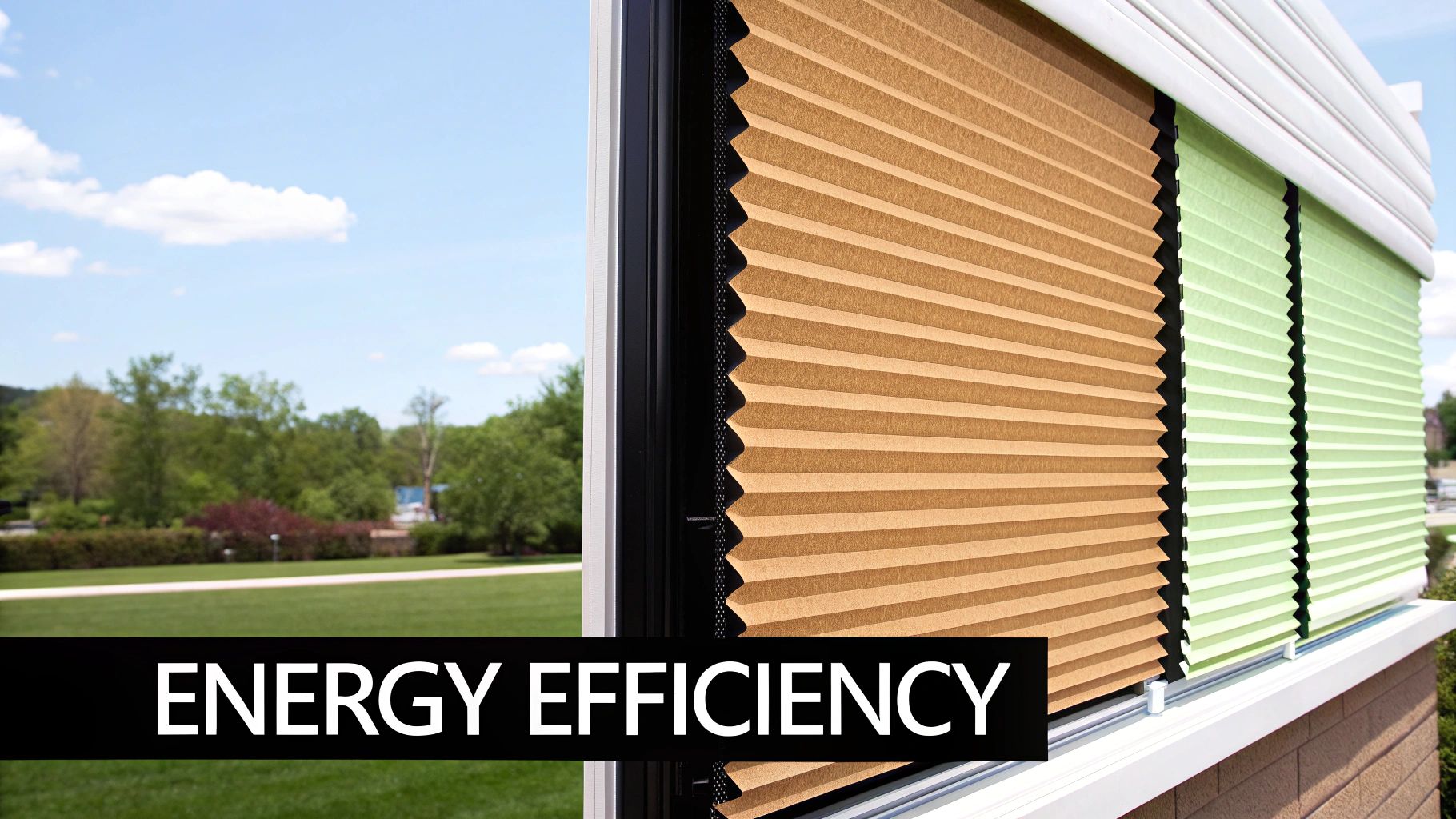
For budget-conscious homeowners, pleated shades often hit the sweet spot on price. Yet, because they lack air-trapping pockets, their thermal protection is minimal.
On the flip side, cellular—or honeycomb—shades feature two or more bonded fabric layers. Those honeycomb pockets hold still air, creating a powerful insulating barrier against heat and cold. In Delmarva climates, that translates into real savings on heating and cooling.
As a local, family-run business, Home Blinds & Floors provides personal service, competitive pricing, and professional installation throughout Sussex, Wicomico, Kent, and beyond. We help clients weigh these options, recommending light-filtering pleated fabrics for east-facing rooms in Easton or energy-saving cellular shades to cut cooling costs in Ocean City.
A Dover homeowner saw a 12% reduction in AC bills within a month of installing double-cell shades.
Selecting Cell Structures for Maximum Benefit
Pick the cell count that matches your climate and noise concerns:
Single-Cell Shades create a basic layer of insulation for spaces with mild temperature swings.
Double-Cell Shades step up both thermal performance and sound dampening.
Triple-Cell Shades deliver maximum energy efficiency in rooms exposed to extreme heat or cold.
Each window can benefit from a customized setup based on sun exposure and season.
“Choosing the right cell structure can change your HVAC usage by up to 15% in coastal homes.”— Home Blinds & Floors Consultant
Balancing Budget And Efficiency
Here’s a side-by-side look at cost versus performance:
Shade Type | Initial Cost | Insulation Benefit |
|---|---|---|
Pleated Shades | Lower upfront cost | Basic thermal barrier |
Cellular Shades | Higher upfront investment | Traps air pockets for significant long-term savings |
In controlled tests, cellular shades can reduce heat loss by approximately 40%, equating to about 10% energy savings on home heating usage. Read the full research about pleated vs cellular shades insulation
For deeper insight on choosing between double and single-cell designs, explore our guide on when to use double vs single cell shades
To see how window treatments fit into a broader energy strategy, check out a comprehensive guide to energy efficiency for buildings
Evaluating Style and Customization Potential
Functionality is huge, but how your window treatments look is just as important. They're a major part of a room's design. When it comes to pleated versus cellular shades, each brings a completely different vibe to your Delmarva home.
Pleated shades have a sharp, defined look. Think of a crisp, clean accordion fold. This style gives off a minimalist feel that works beautifully in modern and contemporary spaces. You'll often find them in a wider array of vibrant colors and bold patterns, which makes them perfect if you want your windows to make a statement.
Cellular shades, on the other hand, offer a much softer, more subtle appearance. Their honeycomb design creates a gentle, almost pillowy texture that adds a sense of depth. It's a refined look that can blend in seamlessly with just about any decor, from traditional to transitional.
Exploring Custom Features for Your Space
Home Blinds & Floors offers a wide selection of custom blinds and shades in Delmarva, with expert installers who bring the showroom to your living room. We believe the best part of choosing custom window treatments is tailoring them to your exact needs.
Modern shades do so much more than just go up and down. Here are some of the most popular upgrades you can get for either pleated or cellular styles:
Top-Down/Bottom-Up: This feature is a game-changer. You can lower the shade from the top, raise it from the bottom, or both. It’s the perfect solution for street-facing windows in towns like Salisbury or Cambridge, giving you natural light without sacrificing privacy.
Cordless Lift: If you have kids or pets, this is a non-negotiable. Cordless systems get rid of dangling cords, creating a cleaner look and eliminating a serious safety hazard.
Full Motorization: For the ultimate in convenience, you can't beat motorization. Control your shades with a remote or even sync them with your smart home system. It’s a fantastic choice for those hard-to-reach windows in a two-story great room or for anyone who just wants to simplify their daily routine.
If you're trying to nail that specific coastal look, our guide on custom window treatments for Rehoboth Beach homes is packed with great ideas.
Ultimately, whether you lean towards pleated or cellular, you can customize them to perfectly suit the style and needs of any room on the Delmarva Peninsula.
Understanding Light Control and Privacy Nuances
How a window shade handles light is one of the most important factors in your decision. While you can find both pleated and cellular shades in a whole spectrum of opacities—from sheer to blackout—the way they’re built creates very different effects in your home.
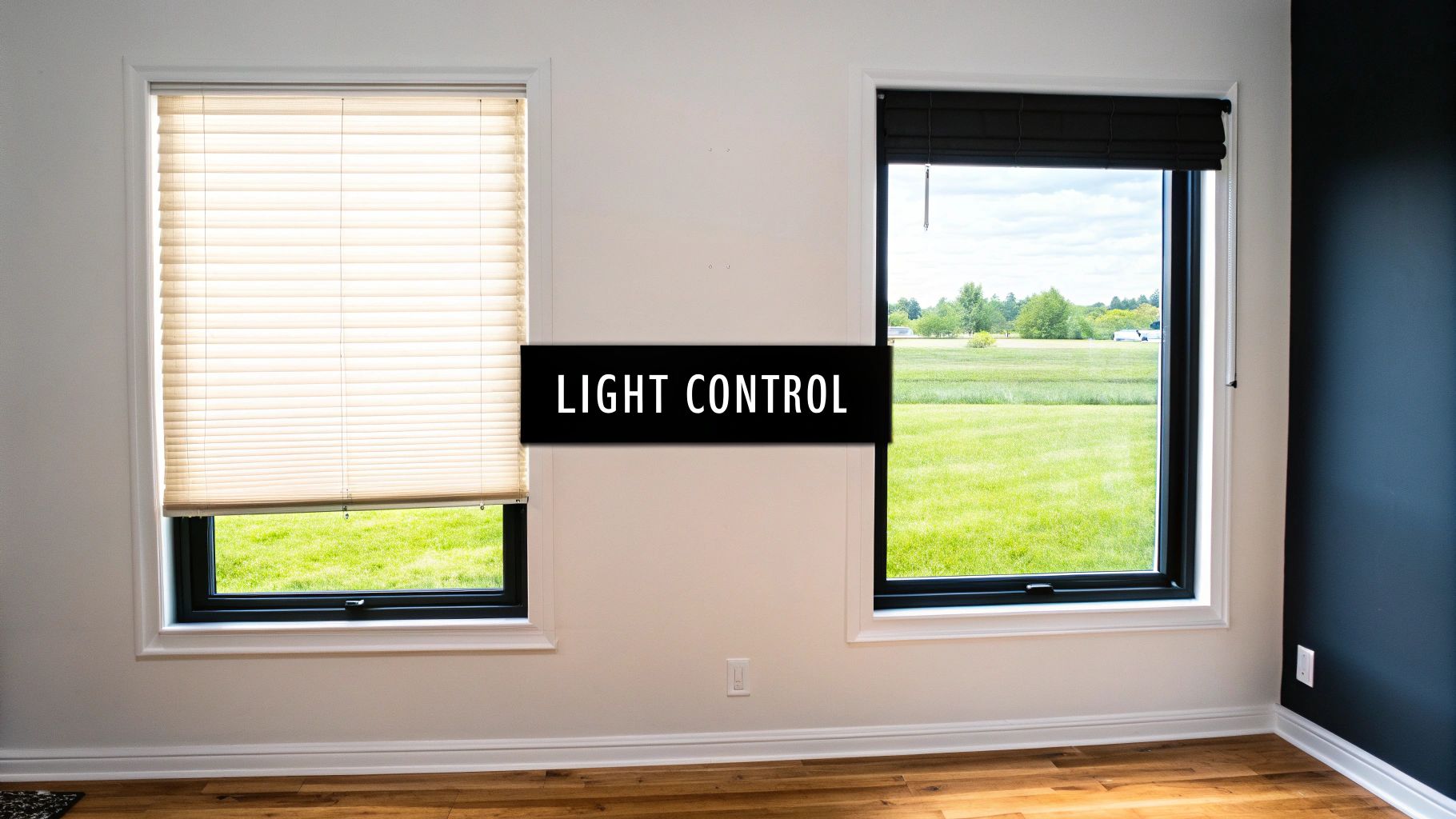
The real difference boils down to the lift cords. Pleated shades are crafted from a single layer of fabric. To operate, the cords have to run through small, visible holes punched directly into the material. Even though these pinholes are tiny, they let little specks of light leak through, making a true, complete blackout impossible.
Achieving Superior Light Control with Cellular Shades
This is where cellular shades really shine. Their clever honeycomb structure allows the lift cords to be threaded inside the cells, completely hidden from sight. This design trick completely eliminates those pesky pinhole light leaks.
This hidden cord system doesn't just create a cleaner, more streamlined look; it also delivers more even light diffusion and far better room-darkening performance. For homeowners across Delmarva, this is the make-or-break feature for bedrooms, nurseries, or media rooms where you need absolute darkness.
Think about how this plays out in real life. For a living room in Ocean City, a light-filtering cellular shade can cut the intense afternoon sun reflecting off the water without plunging the room into darkness. On the other hand, for a bedroom in Dover, a blackout cellular shade is your ticket to uninterrupted sleep, blocking out streetlights and the early morning sun.
This structural difference is at the very heart of the pleated vs cellular shades discussion. If you want to explore this topic further, our guide on light filtering vs blackout shades for Delmarva homeowners is a great resource.
Tailoring Privacy to Your Needs
The level of privacy you need is just as important. Here’s a quick comparison:
Pleated Shades: They offer solid privacy when you choose room-darkening fabrics. However, be aware that with the lights on inside at night, silhouettes can sometimes be visible from the outside.
Cellular Shades: These provide outstanding privacy. The blackout versions, in particular, block nearly 100% of light and prevent anyone from seeing in.
The Money Talk: Upfront Cost vs. Long-Term Value
Let's face it, budget is always a major part of the decision when you're choosing window treatments. It's smart to think about not just what you'll spend today, but also what you'll save down the road.
Pleated shades almost always have a lower price tag right out of the box. This makes them a fantastic, budget-savvy choice if you're a first-time homeowner or you're outfitting an entire house with new shades and need to keep costs in check.
Cellular shades, on the other hand, are a true investment in your home's performance. Their incredible insulating power translates directly into lower heating and cooling bills, month after month. The savings really do add up over the life of the shade.
Weighing the Investment
When you're looking at pleated vs. cellular shades through a financial lens, you’re really choosing between saving now or saving later.
Pleated Shades: You get an immediate style upgrade for a lower initial cost. It’s a quick and affordable win for your space.
Cellular Shades: The higher upfront price is often paid back over time through lower energy bills. It's a long-term play.
For many homeowners here on Delmarva who are focused on efficiency, those future energy savings easily justify the initial spend. To dig deeper into this, take a look at our guide to energy-efficient window treatments for Delmarva homes.
As a local, family-run business, Home Blinds & Floors provides personal service and competitive pricing on both options, ensuring you receive the best value for your investment, regardless of which style you choose.
While cellular shades get a lot of attention for their energy-saving superpowers, pleated shades are still a major player. Their blend of affordability and classic style keeps them in high demand. In fact, the pleated blinds segment made up about 10% of the entire global window blind market in 2024. This shows they’re still a go-to option for people who want simplicity and value. You can discover more insights about the window blind market on marketresearchfuture.com.
Ultimately, the right choice really boils down to your immediate budget and what your long-term financial goals are for your home.
Making the Right Choice for Your Delmarva Home
When it comes to the pleated vs. cellular shades debate, the right answer really depends on you. Your priorities, the specific room you're decorating, and the unique challenges of your Delmarva home will steer you toward the best choice. For a cohesive look, it also helps to consider how your window treatments will fit into broader coastal home design trends.
Let's think about a couple of real-world scenarios. Imagine you're outfitting a sun-drenched Bethany Beach sunroom. Here, pleated shades would be a fantastic option. They provide a crisp, modern style that filters light beautifully, preserving that bright, airy coastal feel without breaking the bank.
But what if your priority is different? Say you want to lower your heating bills in a historic Easton home or get a better night's sleep. In that case, investing in double-cell blackout cellular shades is the smarter move. They deliver top-notch insulation and noticeable noise reduction, creating a quiet, comfortable retreat all year. You wouldn't be alone in choosing them; the global cellular shades market hit USD 12.8 billion in 2023 and is still climbing.
Visualizing Your Investment
Think of it as a decision between upfront savings and long-term value. This simple chart lays it out.
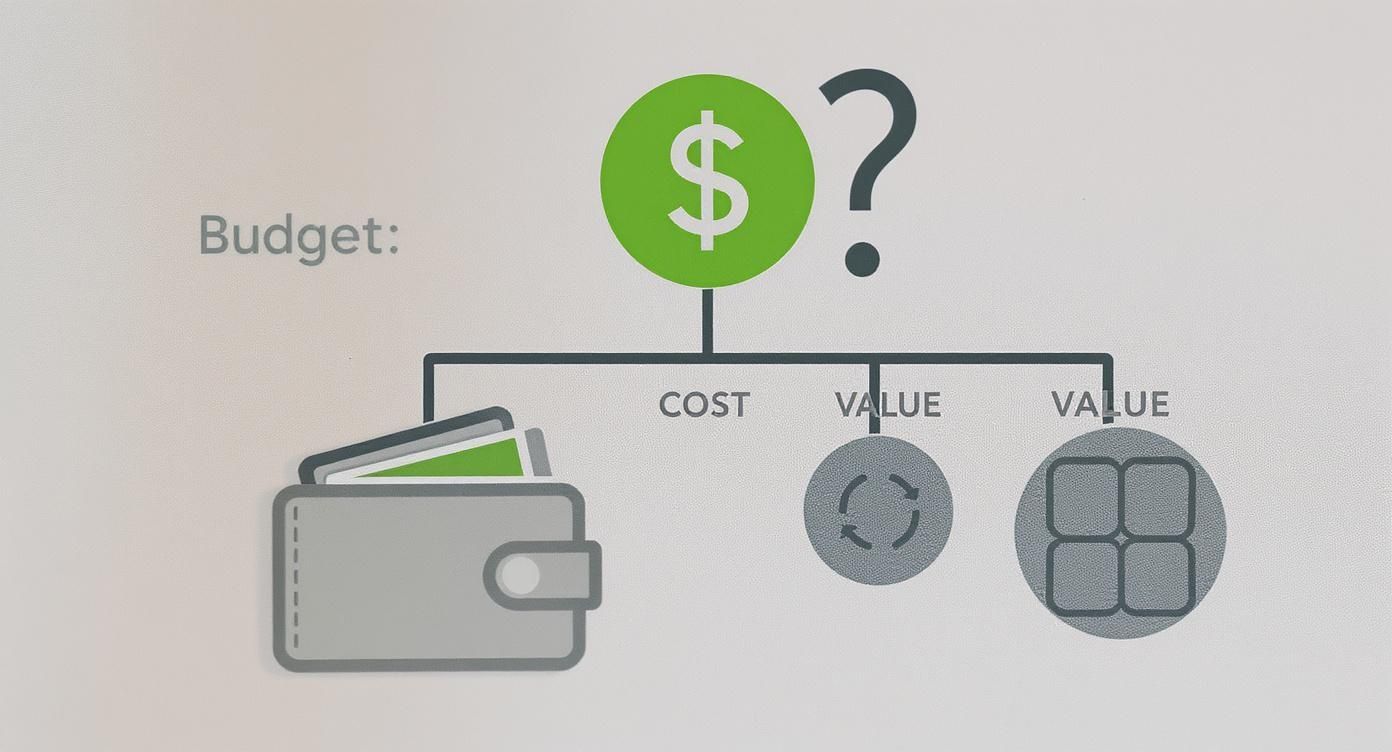
As you can see, pleated shades are the immediate budget-friendly choice. On the other hand, cellular shades are a true investment in your home's energy efficiency, which pays you back over time.
Of course, the best way to truly know what's right is to see the options in your own home, with your own lighting and decor. That's where we come in. Home Blinds & Floors takes the guesswork out of the process, from free in-home consultations to a perfect installation. We bring the showroom right to your living room, helping you find the ideal fit for your style and needs.
FAQ: Pleated vs. Cellular Shades
When you're trying to decide between pleated and cellular shades, a few key questions almost always come up. We hear these from homeowners all over the Delmarva Peninsula, so let's walk through the answers to help you choose with total confidence.
Are cellular shades really worth the higher price?
For most people living in the Delmarva climate, the answer is an emphatic yes. It's true that cellular shades cost more upfront, but their incredible insulation creates real long-term value. Those energy savings on your heating and cooling bills—especially during our humid summers and cold winters—often pay back that initial investment over the life of the shades. They don't just upgrade the look of a room; they actively make your home cheaper to run.
Which shade is better for blocking light?
Hands down, cellular shades are the winner for light blocking. Their layered, honeycomb design keeps the lift cords hidden inside, which means you don't get those tiny pinprick holes of light that you see in pleated shades. If you opt for a blackout cellular shade, you're getting as close to complete darkness as possible, making them perfect for bedrooms and media rooms.
How do I clean pleated and cellular shades?
The great news is that both styles are pretty low-maintenance. For regular upkeep, all you need is a light pass with a feather duster or the soft brush attachment on your vacuum. A quick dusting now and then is enough to keep them looking fresh. For specific spot cleaning, we always provide detailed care instructions upon installation.
Can I get pleated or cellular shades motorized?
Absolutely. Both pleated and cellular shades are fully compatible with motorization. This has become an incredibly popular feature in modern Delmarva homes because of the convenience and added safety for kids and pets. You can control your shades with a remote, an app, or even tie them into your smart home system.
What cities in Delmarva do you serve?
Home Blinds & Floors is proud to serve the entire Delmarva Peninsula. Our team offers free in-home consultations and professional installation services to communities all across the region, including Salisbury, Easton, and Cambridge in Maryland, and Rehoboth Beach, Lewes, and Dover in Delaware.
Your Local Delmarva Window Treatment Experts
In summary, Home Blinds & Floors provides custom window treatments, expert advice, and in-home service to homes across the Delmarva Peninsula. From Rehoboth Beach to Easton, our team is here to help you choose the best shades, shutters, or blinds for your space. Schedule your free, no-obligation in-home consultation today!


hey