.avif)
.avif)
.avif)
Hunter Douglas Shades Prices: What to Expect in 2026

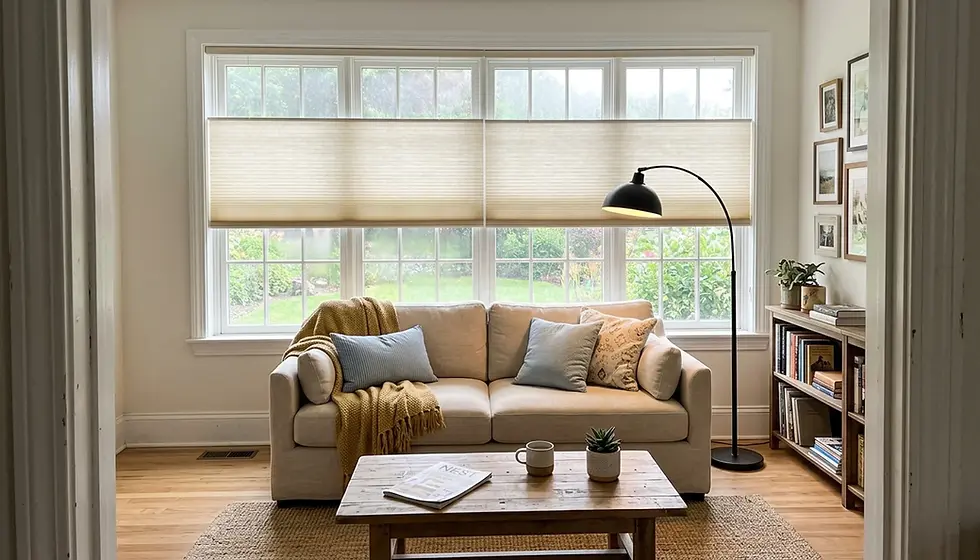
Hunter Douglas shades prices in 2026 typically range from $150 to $1,500 or more per window, depending on the product line, window dimensions, fabric selection, and whether you add motorization. Most residential installations in Delaware and Maryland land between $300 and $700 per window when professionally measured and installed through an authorized dealer. The final number varies meaningfully based on the collection you choose and how many windows you are covering.
Hunter Douglas shades prices in 2026 range from approximately $150 to $1,500+ per window based on product line, size, and motorization.
The Silhouette, Duette, and Pirouette lines represent distinct price tiers, with Silhouette and Pirouette commanding premium pricing for their vane-based soft sheer construction.
PowerView motorization adds $150 to $400 per shade over manual pricing and enables Alexa, Google Home, and Apple HomeKit compatibility.
Professional installation from an authorized dealer includes custom measurement, fabrication, and mounting, and is required to preserve the product warranty.
According to Coherent Market Insights, the global window shade market is valued at USD 5.01 billion in 2026, underscoring strong demand for quality residential window coverings.
Coastal properties in Rehoboth Beach, Bethany Beach, and Ocean City benefit most from professional fitting, since salt air and UV intensity accelerate wear on improperly selected or loosely mounted shades.
What Is the Average Cost of Hunter Douglas Blinds?
Hunter Douglas blinds and shades prices are set at the manufacturer suggested retail level and then priced by authorized dealers who include measurement, custom fabrication, and installation in the final quote. A single shade in a mid-range collection, covering a standard 36-inch-by-48-inch window, generally falls between $250 and $600 at dealer pricing before installation labor. Larger windows, specialty shapes, and motorization push that figure higher.
Specifically, the Duette Honeycomb shade, which is one of Hunter Douglas's most widely installed lines, typically starts around $200 per window in a single-cell configuration and rises to $500 or more for a double-cell blackout version in a larger window. The Silhouette Soft Sheer collection, known for its floating fabric vanes and ClearView option, generally runs $350 to $900 per window at MSRP, depending on vane width and window size.
Installation labor, when provided by a professional dealer, is often bundled into a project quote rather than listed as a separate line item. For a whole-home project covering eight to twelve windows across a Lewes or Easton home, that bundled pricing typically represents a meaningful savings compared to paying separately for a measuring visit, an order placement fee, and an installation appointment.
At Home Blinds and Floors, the in-home consultation is free, and our team travels across the Delmarva Peninsula, from Annapolis and Kent Island to Rehoboth Beach and Salisbury, to measure windows, walk clients through collection options, and provide a project-level quote that includes everything from fabrication to final installation.

How Do Hunter Douglas Shade Lines Compare in Price?
Hunter Douglas offers multiple shade collections that occupy different price tiers based on construction complexity, fabric quality, and available features. Understanding where each line sits helps you set a realistic budget before your dealer consultation, rather than being surprised at the quote stage.
The three most commonly installed collections are the Silhouette, the Duette, and the Pirouette, each appealing to a different combination of budget and light-control priority. Hunter Douglas positions these lines as premium products engineered for precision fabrication and longer product life, particularly in demanding coastal environments.
Collection | Typical Price Range Per Window (MSRP) | Key Feature | Best For |
Duette Honeycomb | $200 to $550 | Single or double-cell insulating fabric; blackout option | Bedrooms, energy efficiency, Delmarva winters |
Pirouette | $300 to $700 | Soft fabric vanes on a single sheer backing; open and closed positions | Living rooms with a view; daytime privacy |
Silhouette Soft Sheer | $350 to $900 | Floating vanes in 2", 3", or 4" widths; ClearView option for unobstructed views | Water-facing rooms, high-end interiors, coastal homes |
Luminette Privacy Sheers | $300 to $750 | Vertical fabric vanes for wide and sliding openings | Sliding glass doors, patio doors, floor-to-ceiling windows |
Sonnette Cellular Roller | $250 to $600 | Rounded cellular fabric with soft texture and light diffusion | Contemporary interiors; sun-drenched rooms |
The Duette line is generally the most practical entry point for homeowners covering several rooms at once on a defined budget. The Silhouette, by contrast, is the collection we recommend most often for ocean-facing or bay-facing rooms where preserving the view while filtering hard afternoon sun is the primary goal. The 3-inch vane configuration in particular delivers a clean horizontal line that reads beautifully in modern coastal interiors.
For sliding glass doors and wide patio openings in Bethany Beach or Ocean Pines homes, the Luminette Privacy Sheer is worth serious consideration. You can read more about treatment options for those specific openings in our guide to window treatments for sliding glass doors in Delmarva.
What Factors Drive the Final Price of Custom Shades?
The final price of custom Hunter Douglas shades is determined by a combination of physical specifications, fabric choices, and optional technology upgrades. Knowing which variables move the number most helps you prioritize when working within a budget.
Window Size, Vane Size, and Fabric Choice
Window dimensions are the single largest pricing variable. Hunter Douglas shades are fabricated to exact measurements, and pricing scales with square footage of fabric. A 24-inch-wide window costs materially less than a 72-inch picture window in the same collection. Additionally, collections that offer multiple vane sizes, specifically the Silhouette line with 2-inch, 3-inch, and 4-inch vane options, price differently across those configurations, with wider vanes generally at the upper end of the range.
Fabric opacity also affects price. Within the Duette collection, for example, a light-filtering single-cell fabric costs less per square foot than a double-cell blackout version designed for maximum insulation. For coastal Delaware homeowners dealing with intense summer sun, the energy savings from a double-cell configuration can offset the higher upfront cost, particularly in south- and west-facing rooms.
The Fabric Selection Guide from Hunter Douglas Architectural provides technical details on how fabric construction affects light transmission and insulation ratings if you want to compare options before your consultation.
Motorization and Smart Home Add-Ons
Motorization is the upgrade that most dramatically shifts the per-window price. Hunter Douglas's PowerView platform adds approximately $150 to $400 per shade over the manual list price, depending on the collection and motor type. In return, you get a system that integrates with Alexa, Google Home, and Apple HomeKit and can be programmed on schedules or controlled remotely.
For two-story great rooms in Kent Island or Annapolis waterfront homes where windows sit twelve to fifteen feet off the floor, motorization is not a luxury. It is the only practical way to operate those shades. Similarly, vacation rental owners in Ocean City and Rehoboth Beach increasingly install PowerView motorization because it eliminates cord mechanisms entirely, reducing one of the most common guest-caused damage items across rental properties.
Optional upgrades like the Duolite system, which layers a light-filtering and a room-darkening shade in a single headrail, add both cost and functionality. ClearView, available on the Silhouette line, provides a fully open position that removes the vanes from the sight line for unobstructed water views. Both options add roughly $75 to $200 per window at MSRP.

Are Hunter Douglas Shades Overpriced?
Hunter Douglas shades are not overpriced relative to what they deliver, but they are positioned squarely at the premium end of the market, and that distinction matters when you are comparing them to generic roller shades or big-box store alternatives. The value case depends entirely on what you need from the product and where it will be installed.
For a budget renovation covering a guest bedroom in a Millsboro or Milton home, a mid-market cellular shade from a reputable line will perform adequately at a lower price point. But for a sun-drenched south-facing living room in a Lewes waterfront property, the UV protection, light control precision, and fabric durability of a Hunter Douglas Silhouette or Duette are genuinely hard to replicate at a lower price. The collections are engineered with tighter tolerances, better lift mechanisms, and longer-lasting fabrics than most alternatives at their stated price tier.
The question to ask is not "is this shade expensive?" but rather "what does a replacement cost in two years if I buy something cheaper?" Coastal Delaware and Maryland homes face salt air, high humidity, and intense seasonal sun that accelerates wear on window coverings. At Home Blinds and Floors, we see this play out repeatedly: homeowners who installed lower-cost shades in beachfront properties return within eighteen to thirty months for replacements, while clients who invested in properly specified Hunter Douglas collections report significantly longer product life.
Fabric certifications also factor into the value calculation. For example, select Hunter Douglas roller shade fabrics hold GREENGUARD Gold certification, indicating tested low chemical emissions, which matters for homes with children or occupants with sensitivities to indoor air quality.
Is Hunter Douglas High End? Understanding the Brand's Position
Hunter Douglas is, by all standard industry measures, a premium window treatment brand. The company sits at the top tier of the residential and commercial shade market, above mass-market retailers and comparable in quality to other specialty trade-only lines. This positioning reflects the brand's engineering investment, its proprietary fabric technologies, and its dealer-exclusive distribution model.
Specifically, Hunter Douglas shades are sold through authorized dealers rather than off-the-shelf at general retailers. This matters for several reasons. First, an authorized dealer provides precise custom fabrication to your window's exact dimensions. Second, the warranty requires professional installation to remain valid. Third, your dealer handles any warranty claims directly with the manufacturer, so you are not navigating a return process on a specialty product.
According to Coherent Market Insights, the global window shade market is valued at USD 5.01 billion in 2026, with the residential segment holding a 46.6% share of global demand. North America leads regional consumption with a 37.1% market share. Within that landscape, premium brands like Hunter Douglas occupy the upper tier of a market where roller shades alone account for 51.9% of global volume, indicating that a large portion of purchasers are buying entry-level products. Choosing a premium line is a deliberate, informed step up the quality curve.
For tech-oriented homeowners in Annapolis, Grasonville, and Easton who already have Lutron or Control4 smart home systems, Hunter Douglas PowerView is one of the few motorized shade platforms with certified compatibility across major ecosystems. That compatibility is not accidental; it reflects the engineering investment that sets the brand apart from lower-cost alternatives.
How Does the Full Cost Break Down When You Buy Through a Dealer?
Buying Hunter Douglas shades through an authorized dealer like Home Blinds and Floors involves a total cost that includes the shades themselves, any motorization hardware, professional installation labor, and the dealer's project management service. Understanding each component helps you evaluate quotes accurately and avoid comparing apples to oranges when you get pricing from multiple sources.
A typical dealer-supplied project quote includes four components. First, the shade product cost at dealer pricing, which is typically below MSRP. Second, any hardware or motor components if motorization is selected. Third, installation labor, which for a standard eight-to-ten window home project commonly runs two to five hours depending on window accessibility and mounting complexity. Fourth, the in-home consultation and measurement visit, which Home Blinds and Floors provides at no charge across all Delmarva markets.
Compare this to purchasing shades from an online retailer and installing them yourself. The product cost may appear lower, but you absorb the measurement risk, the installation time, and the warranty exposure. If the shade arrives incorrectly sized because of a measurement error, or if the mounting damages the window frame, the remediation cost typically exceeds whatever was saved on the initial purchase. For a single window in a low-traffic guest room, that tradeoff may be acceptable. For twelve windows in a primary Rehoboth Beach residence, the professional installation route is the clearer value.
For a detailed look at what custom window treatment projects cost across Delaware and Maryland, our post on how much custom blinds cost on the Delmarva Peninsula walks through pricing by room type and material category.
What Should Delmarva Homeowners Know Before Buying?
Delmarva homeowners shopping for Hunter Douglas shades face a specific set of conditions that should shape both the collection they choose and the dealer they work with. The coastal environment, covering the stretch from Annapolis and Cambridge, MD down through Lewes, Rehoboth Beach, Bethany Beach, and Ocean City, creates UV exposure, salt air humidity, and seasonal temperature swings that directly affect how window coverings perform over time.
Specifically, south-facing and west-facing windows in coastal homes receive the most damaging sun. For those exposures, a shade with a higher openness factor in the fabric, combined with UV-blocking construction, extends both the shade's life and protects interior furnishings and flooring beneath the windows. The Attachments Energy Rating Council (AERC), established with support from the U.S. Department of Energy's Building Technologies Office and Lawrence Berkeley National Laboratory, provides third-party energy performance ratings for window coverings including shades and blinds. Choosing products with AERC-rated fabrics gives you a verifiable benchmark for energy efficiency rather than relying on marketing claims alone.
For ocean-facing rooms in Bethany Beach or direct bay-side exposures in Lewes or Milton, the Silhouette Soft Sheer is the collection that generates the most consistent satisfaction among clients we serve. The floating vane design controls glare without blocking the view, and the ClearView option allows for a fully unobstructed sight line when the vanes are rotated open. Bay-facing windows, which tend to catch diffused afternoon light rather than direct morning sun, pair well with the Pirouette collection's single-backing construction, which softens rather than filters incoming light.
If you are managing a vacation rental property in the Rehoboth Beach area or Ocean Pines, cordless and motorized configurations are worth the investment. Broken cord mechanisms are among the most frequently reported guest-caused maintenance items in coastal rental properties. Eliminating cords also meets child safety guidelines from the Window Covering Safety Council, which is relevant if your property hosts families with young children.
You can explore cellular shade options in more depth through our resource on cellular shades, and find fabric-specific guidance for your specific room type through our custom shades content library.
Still weighing which shade type is right for your specific room? That is exactly what the in-home consultation at Home Blinds and Floors is designed to resolve. We bring physical samples, evaluate your actual light conditions at different times of day, and make a specific recommendation. No pressure, no commitment required. Visit homeblindsandfloors.com to schedule yours.

Frequently Asked Questions About Hunter Douglas Shades Prices
What is the average cost of Hunter Douglas blinds per window?
Hunter Douglas shades prices in 2026 average between $250 and $600 per window in mid-range collections like the Duette Honeycomb, based on a standard residential window size. Premium collections such as the Silhouette Soft Sheer can reach $900 or more per window at MSRP before installation. Professional installation from an authorized dealer is typically bundled into a project quote and is required to maintain the product warranty.
Are Hunter Douglas shades overpriced compared to alternatives?
Hunter Douglas shades are premium products, not budget options, and the price reflects engineered fabric construction, proprietary lift mechanisms, and a dealer-backed warranty. For coastal homes in Delaware and Maryland, where UV intensity and salt air accelerate wear on lower-cost coverings, the longer product life and stronger warranty protection tend to justify the investment over two to four replacement cycles of a cheaper shade. For interior rooms with minimal sun exposure, a mid-market alternative may be a reasonable choice.
How much does motorization add to the price of Hunter Douglas shades?
The PowerView motorization platform adds approximately $150 to $400 per shade over the manual list price, depending on the collection and motor type selected. Motorized Hunter Douglas shades are compatible with Alexa, Google Home, and Apple HomeKit and can be programmed on daily schedules or controlled remotely via the PowerView app. For hard-to-reach windows or vacation rental properties where cord safety is a concern, motorization is typically the most practical long-term choice.
Is Hunter Douglas high end, and where does it sit in the market?
Hunter Douglas is definitively a premium brand and one of the most recognized names in the residential window treatment industry. The brand sells exclusively through authorized dealers rather than retail chains, which ensures custom fabrication and professional installation as standard components of every purchase. In 2026, the global window shade market is valued at USD 5.01 billion according to Coherent Market Insights, and Hunter Douglas occupies the upper tier of that market alongside other specialty trade-only lines.
What factors most affect the final price of custom Hunter Douglas shades?
The four primary pricing variables are window size, collection selection, fabric opacity, and motorization. Window dimensions drive the base cost since shades are custom-fabricated to exact measurements. Within any given collection, choosing a higher-opacity or double-cell fabric increases cost, as does selecting optional upgrades like ClearView on the Silhouette line or Duolite dual-shade configurations. Motorization via PowerView is the largest single add-on cost but delivers meaningful long-term value in high-use or hard-to-reach applications.
What should I expect during an in-home consultation for Hunter Douglas shades?
A professional in-home consultation typically takes thirty to sixty minutes for a standard residential project. Your consultant measures each window precisely, reviews fabric and collection options in your actual light conditions, and provides a project-level quote that includes product, installation, and any motorization components. At Home Blinds and Floors, the consultation is free for homeowners and businesses across the Delmarva Peninsula, covering markets from Annapolis and Centreville, MD to Lewes, Rehoboth Beach, and Ocean City.
Does Home Blinds and Floors install Hunter Douglas shades across all Delmarva markets?
Yes. Home Blinds and Floors serves residential and commercial clients across the Delmarva Peninsula, including Annapolis, Cambridge, Centreville, Easton, Grasonville, Kent Island, Salisbury, Middletown, Lewes, Millsboro, Milton, Bethany Beach, Rehoboth Beach, Ocean City, and Ocean Pines. The service includes free in-home measurement, custom fabrication through authorized channels, and professional installation with post-install support.
Can custom Hunter Douglas shades be ordered for unusually sized or shaped windows?
Hunter Douglas offers custom fabrication for a wide range of window configurations, including oversized windows, arched windows, and specialty shapes. Custom sizing is one of the key advantages of buying through an authorized dealer rather than an off-the-shelf source, since each shade is made to the exact dimensions recorded during the professional measurement visit. Our team at Home Blinds and Floors regularly handles non-standard window profiles throughout older Eastern Shore homes and newer coastal construction in Rehoboth Beach and Bethany Beach.
Ready to Get a Real Quote for Your Windows?
Hunter Douglas shades represent one of the more considered purchases a homeowner makes, and the final price depends on variables that are genuinely difficult to estimate without seeing your windows in person. The collection you choose, the fabric opacity, the number of windows, and whether you add PowerView motorization all interact to determine what a project costs. For Delmarva homeowners, the coastal environment adds another layer to that equation since fabric selection and installation precision directly affect how long the shades perform under salt air and UV exposure.
Home Blinds and Floors has been handling these exact conversations for homeowners and businesses across Delaware's Eastern Shore and Maryland's coastal communities, and the free in-home consultation is the right starting point. We come to you, measure every window, walk you through the Hunter Douglas collections in your own light conditions, and provide a clear project quote with no obligation. That is how you get a real number rather than a range pulled from a blog post.
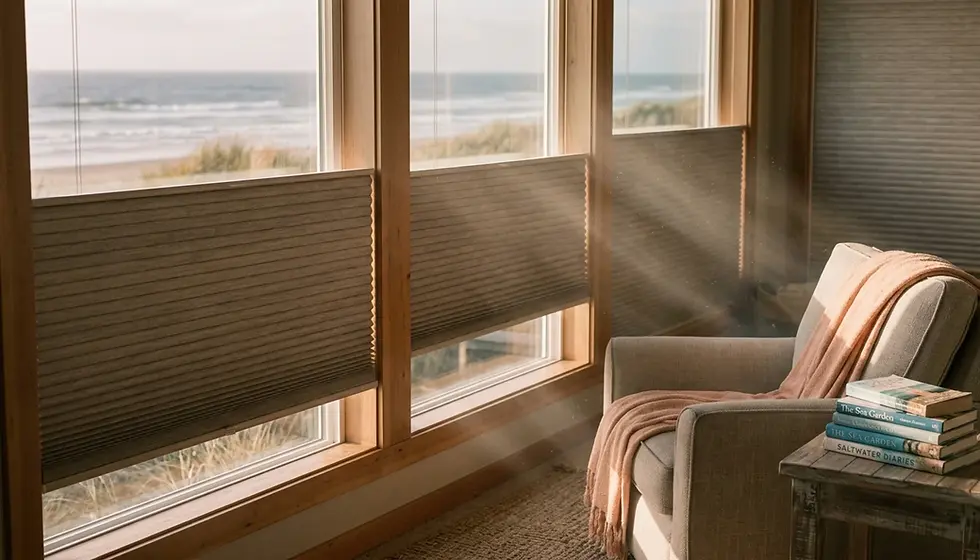
If your Rehoboth Beach, Lewes, or Annapolis home has windows that have gone too long without proper treatment, the team at Home Blinds and Floors can help you choose the right collection, at the right price, installed correctly the first time. Schedule your free in-home consultation with Home Blinds and Floors and get a quote tailored to your specific windows and your specific coastal environment.


Comments